

What To Look For In Dog Food Ingredients For Healthier Pets
Before you settle on any bag at the store, focus on named animal proteins, healthy fats, digestible carbs, fiber, and a complete vitamin/mineral profile. These core ingredients support strong muscles, a shiny coat, smooth digestion, and overall vitality. Add a light sprinkle of ChowPow for extra flavor and nutrients—ChowPow is a supplement, not a replacement for your pup’s regular kibble.
Key Ingredients To Look For In Dog Food
The Foundation: Protein, Fat, and Balanced Nutrition
Think of your dog’s kibble as a building: proteins are the bricks, fats are the mortar, and vitamins plus minerals are the finishing touches. If those bricks aren’t solid, the whole structure feels shaky. That’s why you want a named meat source right at the top of the list, alongside quality oils and a blend of essential vitamins.
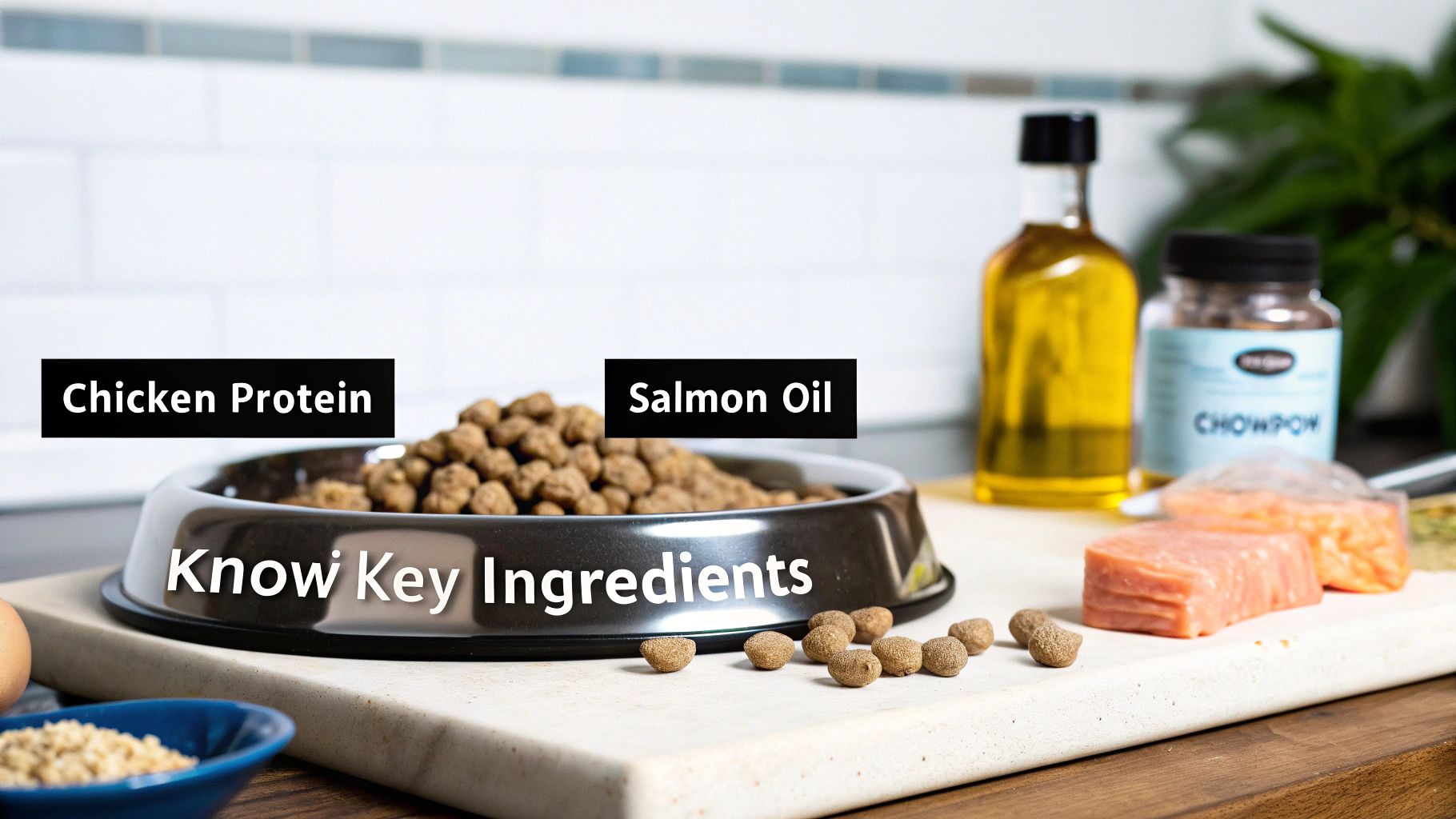
How To Read A Label Like A Pro
When you flip a bag over, remember: ingredients are listed by weight. The first few items matter most. Prioritize:
- Named Animal Protein (e.g., chicken, beef, salmon): Builds muscle and sustains energy.
- Quality Fats & Omega-3s (like salmon oil or flaxseed): Support skin, coat, and brain health.
- Digestible Carbs & Fiber (brown rice, sweet potato, beet pulp): Provide steady energy and gentle digestion.
- Complete Vitamins & Minerals (AAFCO “Complete & Balanced”): Ensures no gaps in nutrition.
- ChowPow Topper (dehydrated beef heart blend): A nutrient-rich finishing touch—not a substitute for the main meal.
Keep in mind, ChowPow is a supplement, not a swap. A quick dusting over your dog’s regular kibble can entice picky eaters and boost each bowl with extra protein, vitamins, and minerals.
Ingredient Checklist Summary
Carry this quick-reference table on your next trip to the pet store:
| Ingredient Type | What To Look For | Why It Matters |
|---|---|---|
| Animal Protein | Chicken, Beef, Salmon Named First | Builds and maintains lean muscle mass |
| Healthy Fats | Salmon Oil, Flaxseed, Chicken Fat | Nourishes skin, coat, and brain |
| Carbs & Fiber | Brown Rice, Sweet Potato, Beet Pulp | Sustains energy and gut motility |
| Vitamins & Minerals | AAFCO “Complete & Balanced” | Secures full-day nutrient coverage |
| ChowPow Topper | Dehydrated Beef Heart Blend | Enhances taste and nutritional density |
With this checklist, you’ll breeze through labels and spot the best ingredients every time. Then add a sprinkle of ChowPow for a mealtime boost.
Understanding Dog Food Labels
Reading dog food labels is the first step toward smart shopping. Every detail—from ingredient order to nutrient breakdown—hides clues about quality.
- Ingredients are in descending order by weight (before cooking).
- Moisture can inflate water-rich ingredients.
- Dry-matter analysis removes moisture to reveal real nutrient levels.
Ingredient Order On Labels
Wet ingredients weigh more but don’t add usable nutrition. A bag might list “chicken” first because of moisture, while chicken meal actually delivers more protein after cooking.
Moisture is like hidden water weight that inflates an as-fed percentage.
Converting To Dry-Matter Basis
Labels often show as-fed protein or fat, where water dilutes real values. Converting gives you a true comparison:
- Subtract moisture % from 100.
- Divide the as-fed nutrient by that result.
- Multiply by 100 for the dry-matter percentage.
| Label Term | As-Fed % | Dry-Matter % |
|---|---|---|
| Protein | 25% | (25 ÷ (100–10)) × 100 = 27.8% |
| Fat | 15% | (15 ÷ (100–10)) × 100 = 16.7% |
| Fiber | 5% | (5 ÷ (100–10)) × 100 = 5.6% |
Decoding Guaranteed Analysis
The guaranteed analysis panel shows crude protein, fat, fiber, and moisture. Converting to dry-matter uncovers true nutrient density:
- Crude Protein: Repairs and builds muscle.
- Crude Fat: Provides energy and supports skin and coat.
- Crude Fiber: Aids digestion.
- Moisture: Too much can dilute nutrients.
Comparing these numbers side-by-side exposes hidden fillers.
Using AAFCO Statements
An AAFCO statement confirms the food meets nutrient profiles for a life stage: puppy, adult, or senior.
- Check for “Complete and Balanced.”
- Match feeding guidelines to your dog’s weight and activity.
Spotting Gut Health Claims
Look for inulin, prebiotics, probiotics, or named fibers like chicory root. Avoid vague “digestive blend” claims. For more trends, see the Grand View Research Pet-Food Ingredient Market Analysis.
For step-by-step label decoding, visit How to Read Dog Food Labels.
Add a spoonful of ChowPow to lift flavor, protein, and micronutrients—always as a supplement.
Key Nutrients To Prioritize
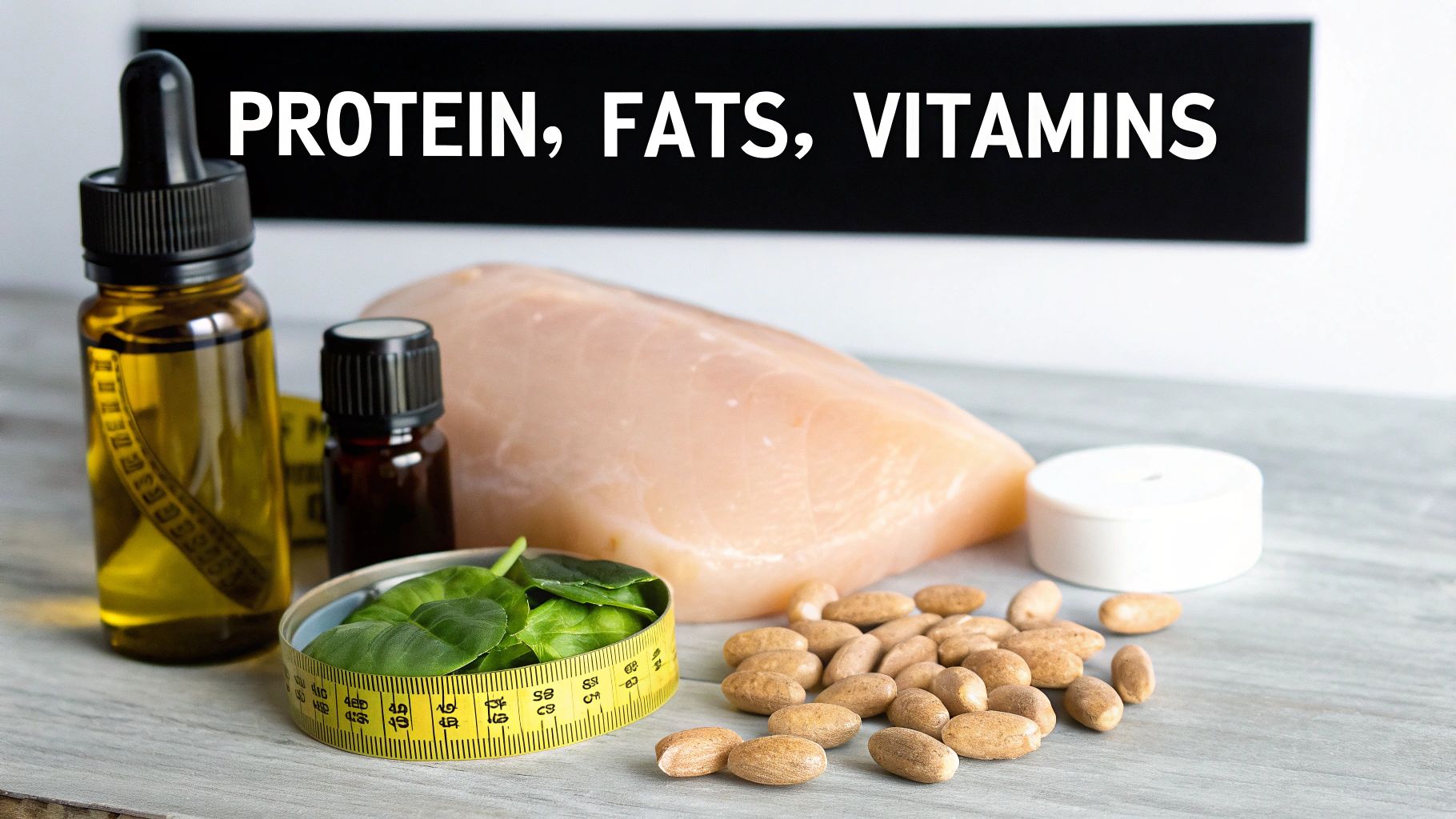
When you look at your dog’s bowl, think of the ingredients as a recipe for strength, energy, and comfort:
Protein: The Building Blocks
Quality starts at the ingredient list. Look for a named animal protein—chicken, salmon, or beef—first. Aim for 18–30% crude protein on a dry-matter basis for adult dogs.
- Named proteins supply essential amino acids.
- Check the AAFCO statement for life stage alignment.
Learn more in the 2025 pet food production report.
Understanding Essential Fats
Fats fuel the brain and nourish skin and coat. Seek named fat sources like salmon oil, chicken fat, or flaxseed:
- Salmon Oil: EPA & DHA for joints and cognition.
- Chicken Fat: Boosts calorie density.
- Flaxseed: Plant-based omega-3 precursor.
On the panel, look for 10–20% crude fat (dry-matter).
Considering Life Stage Needs
- Puppy Formulas: 22–32% crude protein.
- Adult Maintenance: 18–25% protein.
- Senior Recipes: Lower calories + joint support.
Match the life-stage label, then add ChowPow for extra amino acids without extra kibble. See Best Protein Sources for Dogs for more.
Essential Vitamins And Minerals
Choose foods with an AAFCO “Complete and Balanced” statement. Key micronutrients:
- Vitamin A for vision and skin.
- Vitamin D for bone health.
- Zinc & Iron for immunity and oxygen transport.
ChowPow adds B vitamins and iron to fill gaps.
Boost Mealtime With ChowPow
ChowPow is a supplement, not a replacement. Sprinkle one level scoop over each meal to boost protein, omegas, and micronutrients—while keeping your dog’s familiar kibble.
“I saw my senior dog regain enthusiasm at mealtime after adding ChowPow—no upset stomach, just wagging tails,” says Dr. Lee, canine nutrition specialist.
- Start with ½ scoop for two days.
- Increase to 1 scoop if tolerated well.
- Mix with warm water for puppies or dogs with dental issues.
By adding ChowPow, you cover muscle, skin, digestion, and overall vitality. Next: ingredients to avoid and red flags to keep meals clean.
Ingredients To Avoid In Dog Food
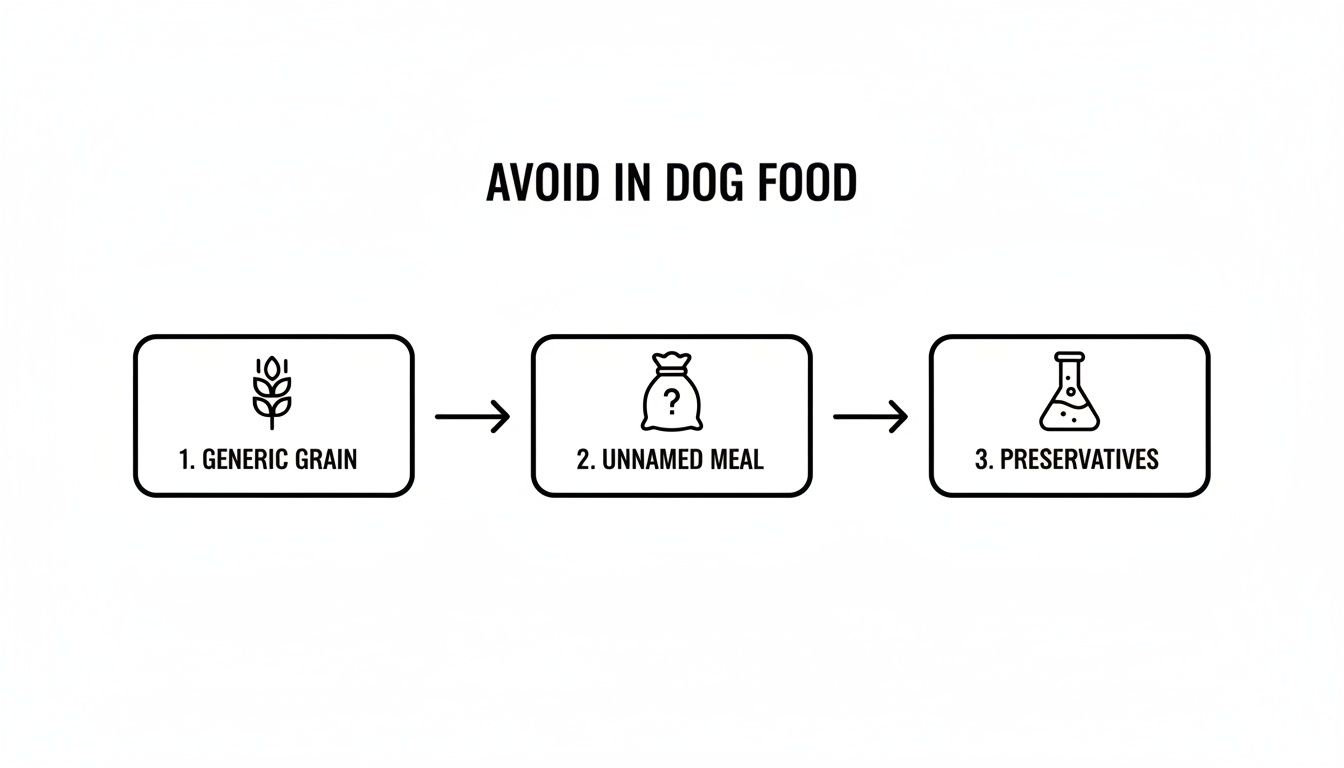
Some additives pad weight without nutrition. Stay away from generic grains, cornstarch, and unnamed meat meals:
- Generic Grains (corn, wheat): Can trigger inflammation.
- Cornstarch: Empty calories spike blood sugar.
- Unnamed Meat Meals: Low-value parts with little nutrition.
Artificial preservatives like BHA, BHT, and ethoxyquin may cause allergies or stomach upset.
Common Red Flags To Spot
Sugar hides under many names: maltodextrin, dextrose, cane molasses.
| Ingredient Type | Hidden Name Examples | Why It Matters |
|---|---|---|
| Sugar And Syrups | Maltodextrin, Dextrose | Raises blood sugar and risks weight gain |
| Ambiguous By-Products | Meat by-product, Animal Digest | Could be unspecified organs with low-quality protein |
| Vague Flavoring | Natural Flavor, Artificial Flavor | Masks poor ingredients, adds no nutrition |
“A clear ingredient list beats marketing buzz every time,” notes a veterinary nutritionist.
Spotting Harmful Preservatives
Look for natural alternatives:
- Mixed Tocopherols (Vitamin E)
- Rosemary Extract
- Ascorbic Acid (Vitamin C)
Quick check:
- First ingredient: named protein.
- Next: healthy fats like salmon oil.
- No vague by-products or synthetic preservatives.
Decoding Vague Claims
Terms like “natural flavor,” “animal digest,” or “digestive blend” often hide low-grade scraps. Ask brands for specific breakdowns if you see these.
Ingredient clarity beats catchy claims, advises canine dietitian Sara Mills.
When Shopping In Store
- Verify a named protein tops the list.
- Spot quality fats: chicken fat, salmon oil.
- Skip formulas hiding sugars or fillers in the top five.
If in doubt, a scoop of ChowPow can bridge nutritional gaps—not replace your core kibble.
Interpreting Guaranteed Analysis And AAFCO
The guaranteed analysis panel is your nutrition roadmap. It lists crude protein, crude fat, crude fiber, and moisture on an as-fed basis. Convert to dry-matter to compare brands fairly.
Read Crude Nutrient Percentages
- Crude Protein
- Crude Fat
- Crude Fiber
- Moisture
Steps to convert:
- Subtract moisture % from 100.
- Divide as-fed nutrient by that result.
- Multiply by 100 for dry-matter %.
| Nutrient | As-Fed % | Dry-Matter Calculation |
|---|---|---|
| Crude Protein | 24% | (24 ÷ (100–10)) × 100 = 26.7% |
| Crude Fat | 14% | (14 ÷ (100–10)) × 100 = 15.6% |
| Crude Fiber | 5% | (5 ÷ (100–10)) × 100 = 5.6% |
Understand AAFCO Nutritional Statements
An AAFCO claim means the food meets nutrient profiles for specific life stages. Match the profile to your dog’s age and energy needs.
Feeding directions also use kcal/kg calorie density. Factor your dog’s weight and activity to find the right scoop.
Spot Quality Fats On Labels
Look for:
- Named fats: salmon oil, fish oil, chicken fat
- EPA & DHA listings
- A high crude fat percentage
- AAFCO confirmation of essential fatty acids
For more on premium lipids, see the 2025 Pet Food Ingredient Report.
Introduce this infographic to spot fillers and preservatives:
Sprinkle ChowPow over your kibble to fill nutrient gaps—never as a substitute.
“Adding a little ChowPow made mealtime more exciting and nutritious,” says Dr. Lee, canine nutritionist.
Adjust Feeding Based On Calorie Density
- Check the bag’s kcal per cup.
- Multiply your dog’s calorie needs by an activity factor.
- Divide by the kibble’s kcal per cup for the right serving.
Example: A 20-lb adult dog with moderate activity needs 650 kcal/day. If the kibble has 350 kcal/cup, that’s about 1.85 cups/day instead of 1.75. Top each meal with one scoop of ChowPow.
Putting It All Together
Combine guaranteed analysis, AAFCO checks, and calorie tweaks to pick the perfect bag. Keep a shopping list of these numbers, and every bowl—plus a scoop of ChowPow—will support your dog’s health and happiness.
Shopping Checklist And Enhancing With ChowPow

Label reading doesn’t have to feel like code-breaking. With this checklist, you’ll decode ingredient lists, analyze nutrient panels, and verify AAFCO statements in no time.
Preparing Your Shopping List
Write down your pup’s core criteria:
- Named protein (chicken, beef, lamb) first.
- Quality fats (salmon oil, flaxseed).
- Digestible carbs (sweet potato, brown rice).
- Explicit AAFCO statement for life stage.
- Natural fiber sources (beet pulp, chicory root).
- Skip vague terms like “meat meal” or “natural flavor.”
Reading customer reviews can reveal how dogs with similar needs react before you add ChowPow.
Verifying Nutritional Details
Convert as-fed numbers to dry-matter for clear protein and fat levels:
| Checkpoint | What To Do |
|---|---|
| Ingredient Order | Scan first five items for named proteins |
| Analysis Panel | Compare crude protein and fat percentages |
| AAFCO Statement | Confirm “Complete and Balanced” for life stage |
Formulas with over 26% dry-matter protein fuel active dogs best. Snap label photos on your phone to compare side by side. Ask staff:
- Does the first ingredient stay muscle meat after cooking?
- Is the protein from local farms?
- What preservatives are used?
- What probiotic/prebiotic CFU counts are included?
Our guide on dehydrated dog food toppers has more tips.
Using ChowPow With Kibble
ChowPow pairs perfectly with your pup’s regular kibble. Start with ½ scoop per meal and adjust:
- Stir ChowPow into dry kibble.
- Add a splash of warm water or broth.
- Watch your dog’s response and adjust to 1 scoop if loved.
Store in a cool, dry place. Always factor total calories before scooping. This routine wins over picky eaters and supports extra dietary needs.
Addressing Special Diet Needs
Different life stages and conditions call for tailored nutrition:
- Puppies: 25–30% protein (dry-matter).
- Weight management: Lean proteins + higher fiber.
- Allergies: Single-source proteins + minimal ingredients.
- Recovery: Extra B vitamins and iron.
If your dog has health issues, consult your veterinarian first.
| Dog Weight (lbs) | ChowPow Scoop Size |
|---|---|
| 5–20 | ½ Scoop |
| 21–50 | 1 Scoop |
| 51+ | 1½ Scoops |
Expert tip: Pause at ingredient lists to spot special needs.
Finish each trip confident you’ve covered the essentials—and remember, one scoop of ChowPow turns every bowl into a balanced, delicious meal.
Frequently Asked Questions
Q1: Why Do Named Animal Proteins Matter?
Named proteins (chicken, beef, salmon) give your dog clear, high-quality amino acids that support lean muscle and energy. They beat vague labels like “meat meal,” which can hide low-grade ingredients.
Q2: Can I Replace My Dog’s Kibble With A Topper Like ChowPow?
ChowPow is a supercharged sprinkle, not a kibble substitute. It adds protein, vitamins, and minerals while keeping your dog’s base diet balanced.
Q3: How Do I Transition My Dog To A New Food Safely?
Gradually mix in new food (or topper) over seven days:
- Days 1–2: 25% new, 75% old
- Days 3–5: 50/50
- Days 6–7: 75% new, 25% old
- Day 8: 100% new or full ChowPow blend
Q4: How Often Should I Serve ChowPow?
Most adult dogs do well with ½–1 scoop per meal, once or twice daily. Adjust based on weight and watch appetite and stool quality.
Q5: Which Formulas Suit Dogs With Allergies Or Weight Concerns?
For allergies, choose single-protein recipes and avoid wheat, soy, and corn. For weight control, look for high fiber and lean proteins. A light dusting of ChowPow adds flavor and nutrients without extra calories.
Shop with confidence. Give your pup a nutrition boost with ChowPow. Visit ChowPow to shop now.
-
Product on sale
 Dog Food Topper - Beef HeartOriginal price was: $14.99.$10.95Current price is: $10.95. - or subscribe and save up to 20%