Why Is My Dog a Picky Eater and How Can You Help?
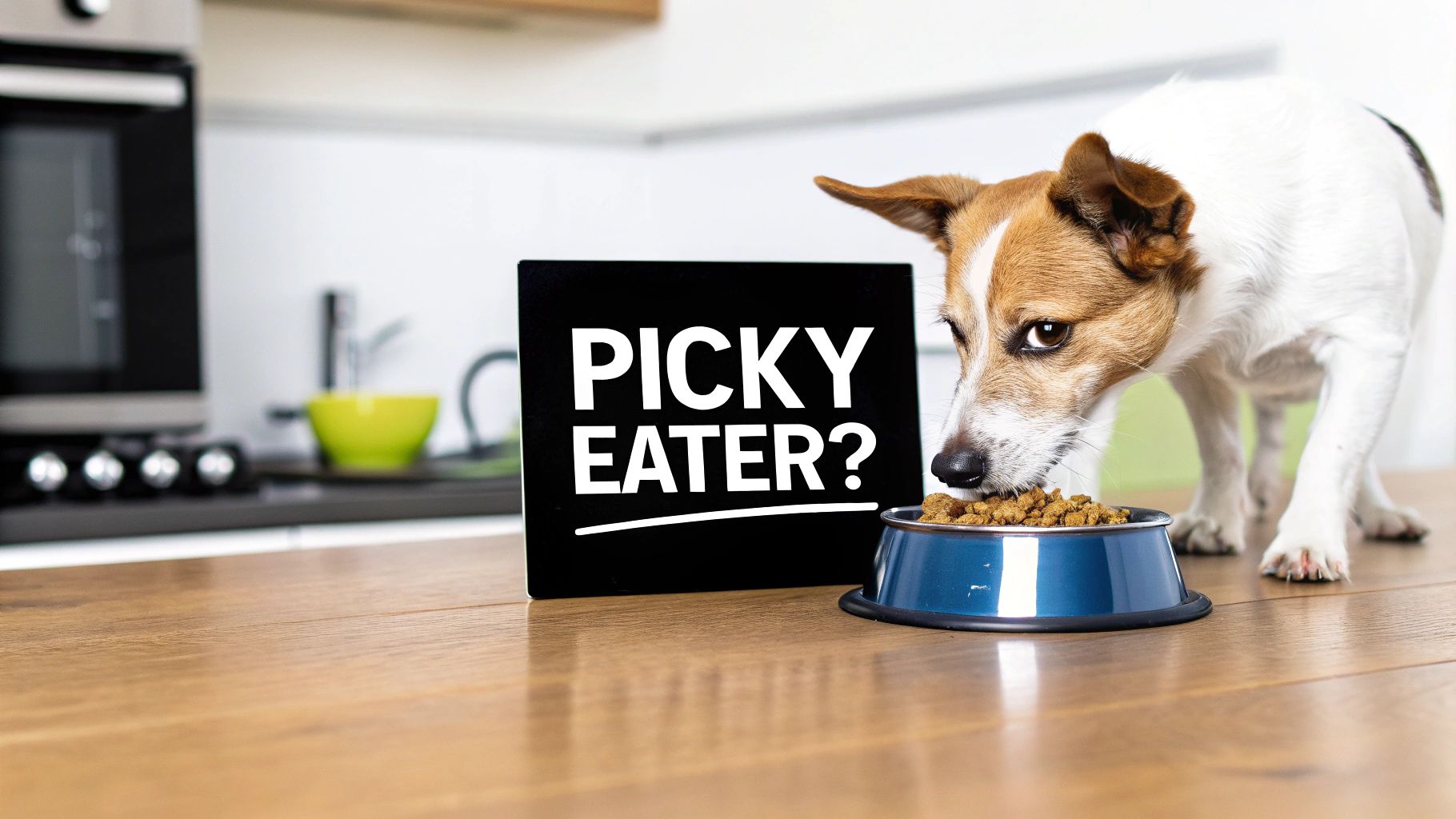
That sinking feeling you get when your dog gives their food bowl a quick sniff and then walks away? Yeah, we’ve been there too. It's frustrating, especially when you've spent time and money picking out what you thought was the perfect food. It leaves you wondering, why is my dog so picky, and should I be worried?
What Is Your Dog Trying to Tell You at Mealtime?
When a dog turns their nose up at their food, they're communicating something. The real challenge is decoding that message. Are they just holding out for something better, or is there a deeper issue at play? Figuring out if you have a finicky-but-healthy dog or one with a genuine problem is the first, most important step.
And if you’re dealing with this, you're definitely not alone. A 2023 survey found that 37% of owners considered their dog a “fussy eater.” Another poll of 2,000 U.S. dog owners revealed that a whopping 49% said they “always” or “often” struggle to get their dog to eat. It's a common problem.
To help you get started, here’s a quick rundown of the usual suspects behind picky eating. Think of it as a starting point for your detective work.
Quick Guide to Common Causes of Picky Eating
| Category | Common Reasons | What to Look For |
|---|---|---|
| Behavioral | Overfeeding treats, boredom with food, learned behavior (holding out for human food), stress or anxiety. | Still eager for treats or table scraps; turning down kibble but not other foods; changes in routine or environment. |
| Medical | Dental pain, upset stomach, food allergies, nausea, more serious underlying illnesses. | Lack of appetite for all food (including treats), lethargy, vomiting, diarrhea, weight loss, bad breath. |
| Environmental | New home, new pet or person in the house, changes in feeding location, loud noises. | Hiding, acting anxious or stressed, changes in potty habits, refusing to eat in a specific spot. |
This table can give you a clearer picture, but remember it's just a guide. Your dog's specific behavior will tell you the most.
Is It a Habit or a Health Concern?
Before you start swapping out expensive bags of food, take a moment to assess the whole situation. A dog who is just being selective will often gobble up a high-value treat or a piece of chicken without a second thought. A dog with a medical issue, on the other hand, might refuse everything you offer.
Changes in their world can also throw a dog's appetite off-kilter. A new baby, a recent move, or even just a different feeding schedule can be enough to cause a temporary hunger strike.
This decision tree can help you visualize the process and figure out which path you might be on.
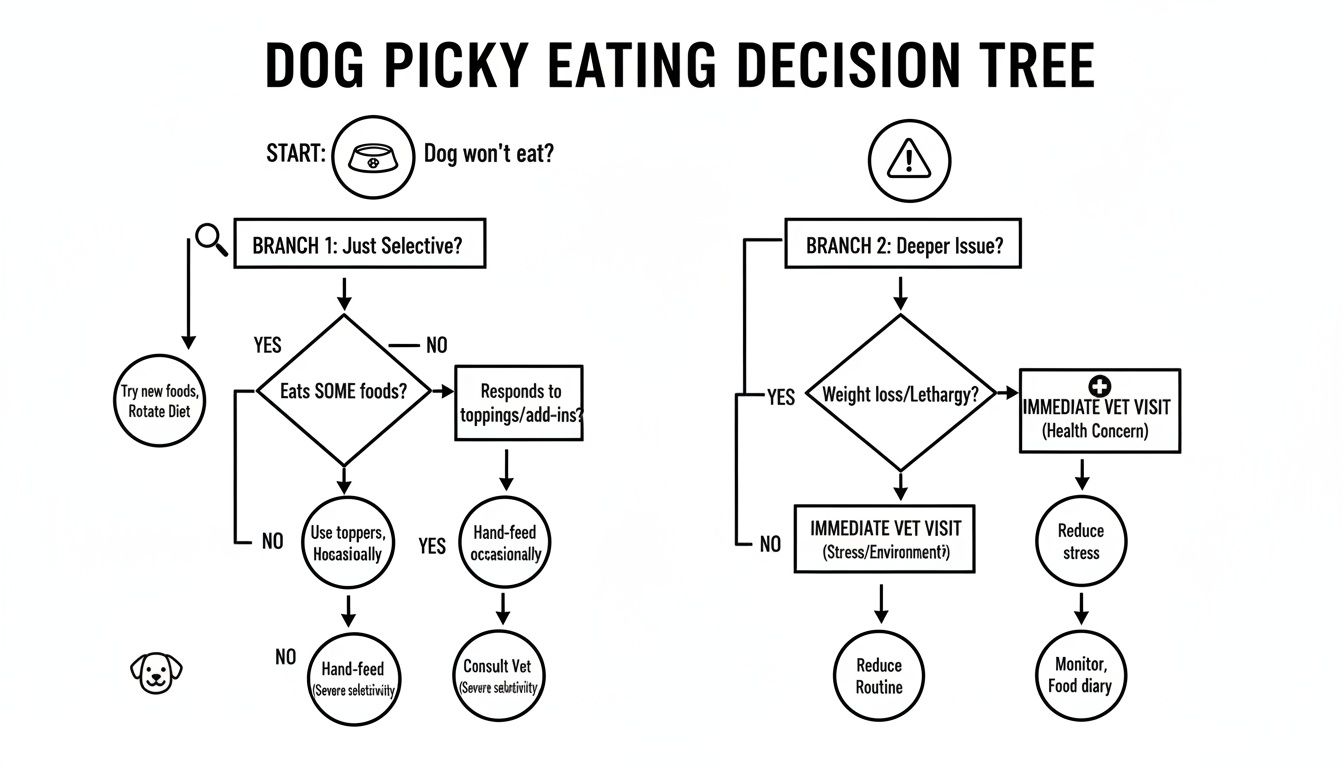
As the flowchart shows, paying attention to your dog's overall behavior is key. It provides the clues you need to get to the root of the problem.
Beyond the obvious, even a dog's general environment can affect their appetite. A comfortable, secure dog is more likely to eat well. Things like their sleeping area and overall living space play a part in their well-being, as explored in articles about dog kennels. A stressed dog is often an uninterested one.
Key Takeaway: A dog's refusal to eat is a form of communication. Your job is to become a detective and decipher whether they're saying "I don't like this" or "I don't feel well."
An Easy First Step to Entice Your Eater
Sometimes, the simplest fix works best. Instead of immediately starting a stressful and expensive diet overhaul, try making their current food more exciting. This is where a high-quality meal enhancement can be a game-changer.
Products like ChowPow are a meal enhancement or supplement designed to boost the nutritional value of the food your dog already eats, not replace it entirely. Sprinkling this nutrient-dense supplement over their kibble adds a burst of flavor and an irresistible aroma that can reignite their interest. For many picky eaters, this simple trick is all it takes to get them cleaning their bowl again, saving you the headache of a full diet change.
The Three Core Reasons Your Dog Is Refusing Food
Trying to figure out why your dog has suddenly started turning their nose up at dinner can feel like solving a puzzle with half the pieces missing. It’s frustrating, right? The good news is, most of the time, the answer falls into one of three buckets.
By breaking down the problem into Medical, Behavioral, and Environmental factors, you can stop guessing and start getting to the root of the issue.
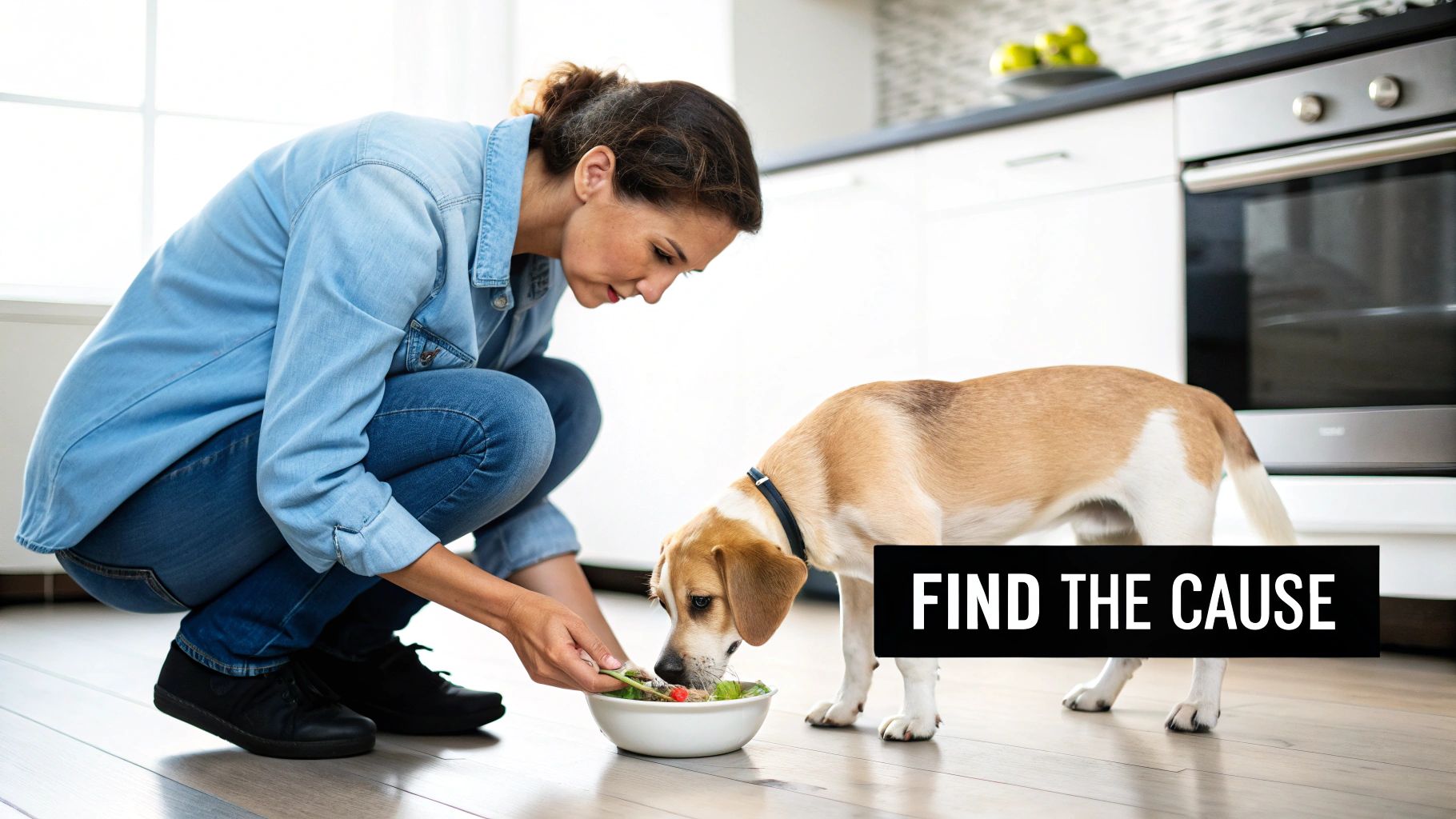
Let's dig into each of these areas to uncover what’s really going on at mealtime.
Medical Issues: The Silent Appetite Killers
Before you label your dog as just plain stubborn, it’s absolutely critical to rule out a health problem first. A sudden loss of appetite is one of the clearest signals a dog can give that something is physically wrong.
Think about it—when you have a nasty toothache or an upset stomach, the last thing you want is a big meal. Your dog feels the exact same way. Since they can't use words to tell you what hurts, refusing food becomes their main way of communicating pain or discomfort.
Here are some of the most common medical culprits:
- Dental Pain: A cracked tooth, sore gums, or an abscess can make every bite agony. Your dog might sniff their bowl and seem interested, only to back away because chewing is just too painful.
- Gastrointestinal (GI) Upset: Things like nausea, indigestion, or a food sensitivity can make eating seem like a terrible idea. This is especially common if a certain food has made them feel sick in the past.
- Underlying Illness: A poor appetite can also be a symptom of more serious conditions, like those affecting the kidneys, liver, or pancreas.
Your First Step: If picky eating is a new behavior or it’s paired with other symptoms like lethargy, vomiting, or weight loss, your first call should always be to your veterinarian. A professional check-up is the only way to be sure a medical issue isn't the cause.
Behavioral Patterns: How We Accidentally "Teach" Pickiness
Sometimes, we’re our own worst enemies. With the best of intentions, we can accidentally train our dogs to become fussy eaters. We just want them to be happy and fed, but our actions can backfire.
In fact, this is the most common non-medical reason for picky eating. Your dog quickly learns that if they just hold out long enough, something far more delicious is bound to show up.
Here's how we unintentionally create this habit:
- Too Many Treats: If your dog is snacking on high-value treats all day, they’re simply not going to be hungry for their actual meals. Snacks should make up less than 10% of their daily calories.
- Table Scraps: Giving your dog tastes from your plate teaches them that human food is on the menu. Why would they settle for plain old kibble when they know a juicy piece of steak might be coming their way?
- Constant Food Switching: Do you rush out to buy a new brand of food the second your dog skips a meal? This teaches them a powerful lesson: refusing dinner results in an exciting new flavor.
For dogs who have just grown bored with their regular food, a simple meal enhancement can make all the difference. Supplements like ChowPow, made from real beef heart, add a burst of flavor and an irresistible aroma that can make their old food exciting again. This is not a replacement for their current kibble, but a powerful nutritional boost to make mealtime more appealing.
Environmental Stressors: How Their Surroundings Affect Appetite
Dogs are creatures of habit and are incredibly sensitive to their environment. Any change in their routine or surroundings can spark stress and anxiety, which often shuts down their appetite.
Imagine trying to eat a nice meal in a chaotic, loud, or unfamiliar place. You’d probably be too on edge to have much of an appetite, and it’s no different for your dog. Their eating habits are often a direct reflection of their emotional state.
Consider these common environmental triggers:
- Changes in Routine: Moving to a new house, a shift in your work schedule, or a new family member (whether it's a baby or another pet) can totally disrupt your dog's sense of security.
- Feeding Location: Is their food bowl in a busy hallway? The constant foot traffic, loud kitchen noises, or other pets can make a nervous dog too anxious to settle down and eat.
- The Bowl Itself: Believe it or not, some dogs hate the clanging sound their tags make against a metal bowl. Others might be bothered by a bowl that slides around on the floor while they’re trying to eat.
If you suspect the issue is specifically a lack of interest in dry food, you can find more targeted ideas in our guide on what to do when your dog won't eat dry food. By carefully observing your dog and thinking through these three core areas—medical, behavioral, and environmental—you’ll be in a much better position to finally solve the picky eating puzzle.
What Your Dog's Instincts Are Telling You
Ever caught yourself wondering what’s going through your dog’s head as they just stare at a full bowl of food? It's easy to label it as stubbornness, but often, it's something much deeper—a primal instinct sending a very clear message. To get to the bottom of picky eating, we have to look back at what their wild ancestors were actually built to eat.
Think of your dog's instincts as a built-in compass that’s been fine-tuned over thousands of years. This internal guide doesn't point them toward fields of corn or wheat. It points directly at nutrient-dense sources of protein and fat.
The Ancestral Appetite
Long before they became our couch-cuddling companions, dogs were hunters and scavengers. Their bodies evolved to run efficiently on a diet packed with animal-based protein and fats, which gave them the sustained energy they needed to survive. Carbohydrates? They were a tiny fraction of what they naturally ate.
Just because our dogs live indoors now doesn't mean that biological wiring has vanished. That internal compass is still there, quietly guiding their preferences and telling them what their body really craves to function at its best. So, that picky behavior might just be their body’s way of saying, "Hey, this isn't the fuel I was designed for."
A Modern Mismatch in Macronutrients
This is where the wires often get crossed in modern pet food. Many commercial dry dog foods are designed for a long shelf life and affordability, which means they’re often heavy on carbohydrate fillers like corn, wheat, and soy. While these ingredients aren't necessarily "bad," the sheer quantity can create a huge mismatch with what a dog's body instinctively wants.
It’s kind of like being an elite athlete whose body is screaming for lean protein and healthy fats, but all you're offered are plates of sugary snacks. Sure, you'd eat if you got hungry enough, but you’d feel off. Your body would know something was missing. That's exactly what can happen with our dogs.
When given a choice, dogs instinctively lean towards a diet that mirrors their ancestral needs. Their pickiness is often a quiet protest against a nutritional profile that doesn't align with their biology.
And the science totally backs this up. Studies on canine nutrition have found that when dogs get to choose their own meals from different options, they consistently pick a diet where calories come from about 30% protein, 63% fat, and only 7% carbohydrates.
But here's the disconnect: a recent survey revealed that 56.5% of owners primarily feed their dogs dry kibble, which is often way higher in carbs than what dogs naturally prefer. You can explore more insights from this dog food survey here. This creates a pretty big gap between what we're feeding them and what their bodies are actually asking for.
Bridging the Nutritional Gap with a Simple Boost
So, what do you do if your dog’s instincts are pushing back against their high-carb kibble? You don't have to throw out their current food and start all over. A much simpler, and often more effective, route is to enhance what’s already in their bowl.
This is where a high-quality meal supplement like ChowPow can make all the difference. ChowPow isn't a replacement for kibble; it's a powerful nutritional boost. Made from dehydrated beef heart, it delivers that high-value, animal-based protein and fat your dog's instincts are searching for.
By simply sprinkling this meal enhancer over their food, you do two critical things at once:
- You seriously amp up the aroma and flavor, making the meal instantly more exciting to their senses.
- You help rebalance the macronutrient profile of their dinner, bringing it much closer to what their body is biologically wired to thrive on.
This simple addition can transform a boring meal into a satisfying, instinct-driven feast. It respects their natural cravings, bridges that nutritional gap, and can turn a frustrating mealtime standoff into a happy, bowl-licking success.
How Breed and Age Influence Your Dog's Appetite
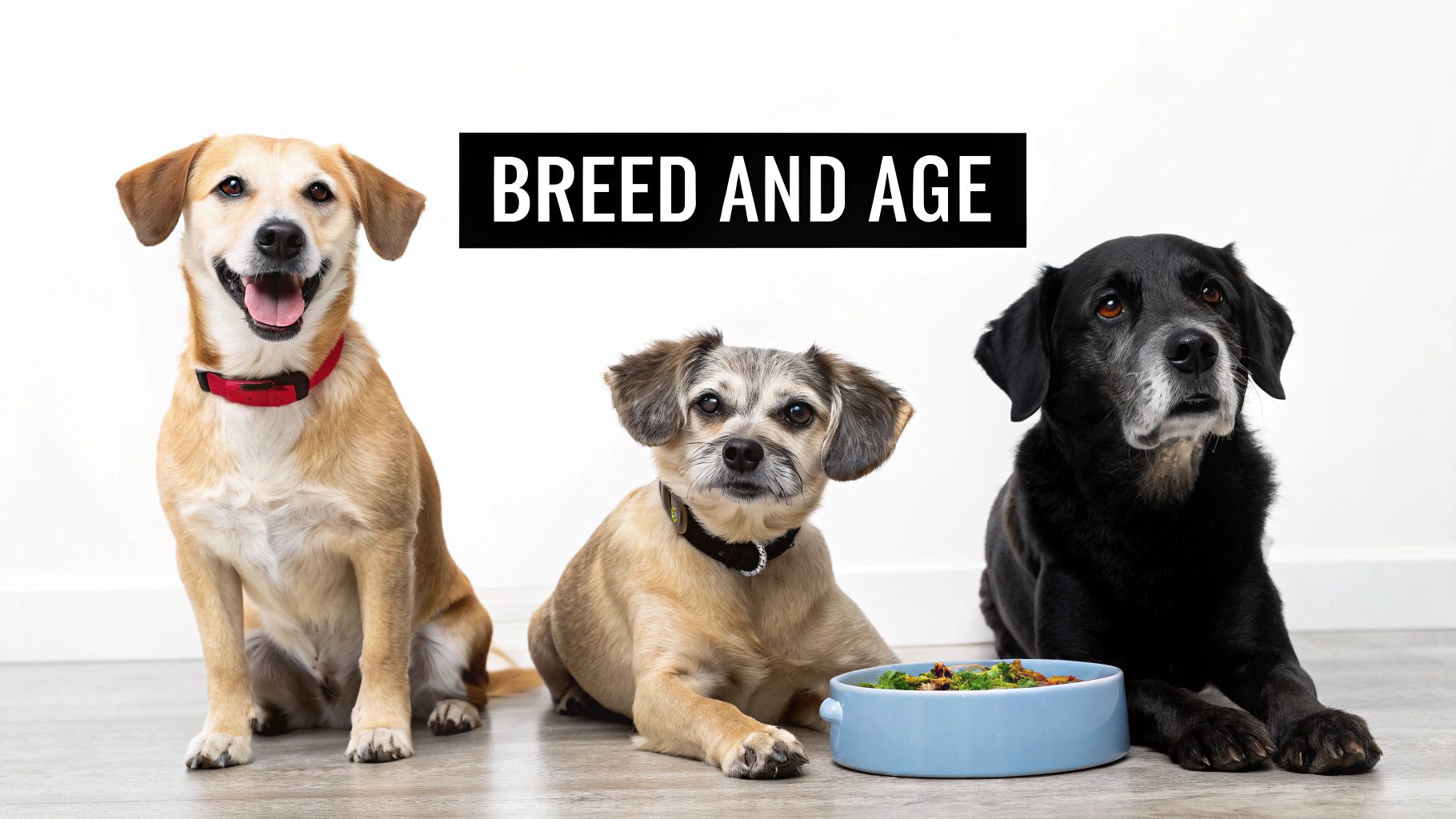
Just like us, a dog’s needs and tastes change as they go through life. That puppy who used to eat anything and everything might grow into a more selective adult, or even a senior with a much more sensitive palate. Getting to the bottom of picky eating often means looking at your dog's breed, size, and age.
Let's face it, not all dogs are built the same when the dinner bell rings. Your dog's breed can play a surprisingly big role in their eating habits. A big, goofy Labrador might inhale their food without a second thought, while a tiny Yorkshire Terrier is more likely to nibble cautiously.
Why Small Breeds Can Be Finickier
Small dogs have a reputation for being fussy, and there's actually some science to it. Their tiny stomachs mean they eat smaller meals, but their faster metabolism burns through calories like a furnace. Because of this, every single bite has to be packed with high-quality nutrition to keep them going.
This isn't just an observation from frustrated owners, either. A global study of over 2,400 dogs found real behavioral differences between small and medium breeds. In follow-up trials, medium-sized dogs stayed focused on their food about 93.1% of the time. The little guys? They were far more likely to get distracted, wander off, or just leave food behind.
For these small but mighty pups, the flavor and aroma of their food are everything. A boring, dry kibble just might not be interesting enough to hold their attention. This is where a simple tweak can make all the difference.
A nutrient-rich meal enhancement like ChowPow adds an irresistible, meaty aroma and flavor that can entice even the most selective small-breed dog, making sure they get the dense nutrition they need in every small bite.
The Unique Challenges of Senior Dogs
As dogs head into their golden years, their relationship with food can change dramatically. What used to be their favorite meal might suddenly become unappealing, and it rarely has to do with being stubborn. Aging brings on physical changes that directly affect their appetite and ability to eat comfortably.
Here are some common age-related issues that can lead to picky eating:
- A Weakening Sense of Smell: A dog's nose is their primary tool for getting excited about food. As that sense diminishes with age, their kibble can seem bland and uninteresting.
- Dental Pain: Years of chewing can lead to sensitive teeth, sore gums, or even tooth loss. The hard, crunchy texture of kibble can become genuinely painful to eat.
- Slower Digestion: An older dog's digestive system just doesn't work as efficiently, which can make large, heavy meals feel uncomfortable.
These challenges call for a gentler approach at mealtime. The goal isn't to force them to eat but to make their food more appealing and easier to handle. A soft, aromatic food supplement can be a game-changer here. Sprinkling ChowPow over their food and adding a little warm water creates a soft, gravy-like texture that's easy on sensitive mouths and releases a rich aroma that can tempt a fading sense of smell. For more tailored advice, check out our complete guide on how to get an old dog to eat.
Practical Vet-Approved Strategies to Encourage Eating
Alright, so we've dug into the why behind your dog's picky eating habits. Now it's time to shift gears and tackle the how—how do we get them excited about mealtime again? The solution isn't a frantic dash to the pet store every week to try a new food. In fact, that can make things worse. The real secret lies in building a solid routine and making their current food more appealing.
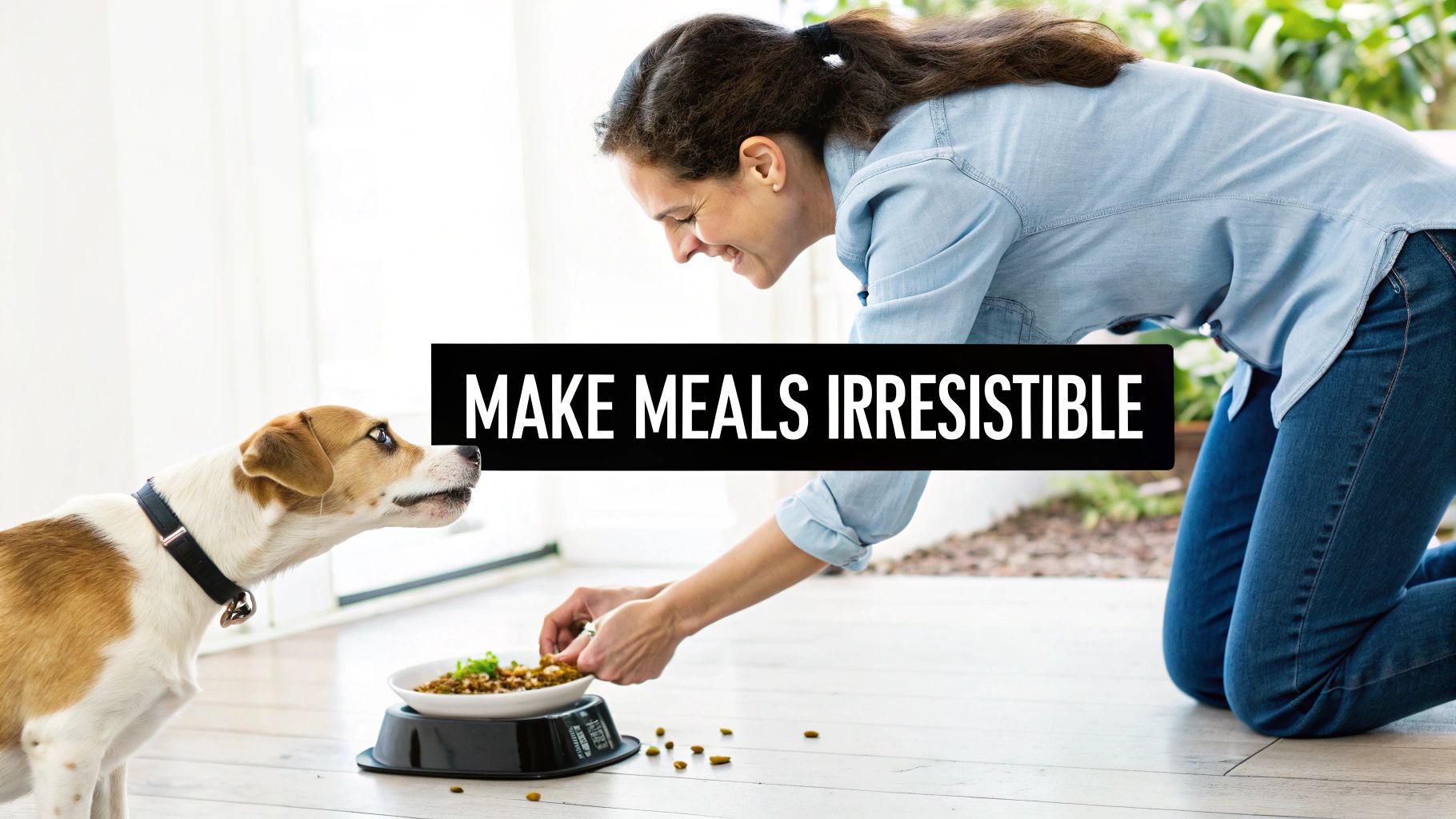
Think of these strategies as your personal toolbox for turning things around. These are vet-approved, field-tested tips that focus on consistency and enhancing what you already provide. Let's turn mealtime from a stressful standoff into a happy part of their day.
Establish a Predictable Feeding Routine
Dogs are creatures of habit. They absolutely thrive on a predictable schedule. When meal times are all over the place, it can create anxiety, and anxiety is a notorious appetite suppressant. If your dog has no idea when their next meal is coming, it's tough for their body to get into a natural rhythm of hunger.
By feeding your dog at the same times and in the same quiet spot every day, you create a powerful psychological cue. Their internal clock starts to anticipate meals, which helps kickstart their appetite naturally. This consistency sends a clear message: food is a reliable, stress-free event.
Implement the 15-Minute Rule
One of the biggest mistakes loving owners make is leaving food out all day. This practice, often called "free-feeding," inadvertently teaches your dog that food is a constant, low-value resource. There's simply no urgency to eat now if the bowl will still be there in four hours.
To fix this, give the "15-minute rule" a try. It’s incredibly effective.
- Place your dog's food bowl down in their usual spot.
- Walk away and give them 15 minutes to eat. No hovering, no coaxing.
- Once the 15 minutes are up, calmly pick up the bowl—whether it's licked clean or untouched.
- That’s it. No more food is offered until their next scheduled meal.
This simple technique quickly re-establishes the structure of mealtime. Your dog learns that if they're hungry, this is their window of opportunity to eat.
Cut Back on Treats and Table Scraps
It's not hard to see why a dog might give their kibble the side-eye when they know a juicy piece of chicken or a tasty biscuit might be on the horizon. We often spoil our dog's appetite without even realizing it.
As a rule of thumb, treats should make up no more than 10% of your dog's daily calorie intake. If they're filling up on high-value snacks between meals, they genuinely won't be hungry when dinner is served. The same goes for table scraps, which only teach them to hold out for the more exciting "human food."
Key Insight: Reducing extra snacks is one of the fastest ways to reignite your dog's interest in their actual meals. A hungry dog is far less likely to be a picky dog.
A great first step is also to evaluate the quality of their main diet and learn more about proper dog nutrition.
Enhance Their Current Food Instead of Replacing It
Constantly switching foods is not only expensive, but it can also train your dog to be even pickier. They learn that if they refuse a meal, something new and different will appear. A much better strategy is to make their current, vet-approved food more enticing.
This is where a high-quality food supplement can be a game-changer. It works with their existing diet instead of completely overhauling it.
ChowPow, for example, is made from dehydrated beef heart and designed specifically for this purpose. It is not a replacement for their current kibble; it’s a powerful supplement that taps into a dog's natural craving for meat, boosting the nutritional value and appeal of what they already eat.
By simply sprinkling a little ChowPow over their regular food, you solve several problems at once:
- Boosts Aroma: A dog's sense of smell is everything. The rich, meaty scent is incredibly enticing and signals that something delicious is on the menu.
- Improves Flavor: It adds a high-value, savory taste that can turn boring kibble into a five-star meal in their eyes.
- Adds Nutrition: You're supplementing their diet with clean protein and amino acids without adding a bunch of fillers.
This one simple step can make their familiar food suddenly irresistible. It’s an easy, effective way to solve the picky eating puzzle without the stress and expense of a never-ending food trial. For a deeper dive, check out our guide to the best dog food toppers for picky eaters.
When Picky Eating Becomes a Red Flag
Most of the time, a dog turning their nose up at dinner is just a harmless quirk. But it's absolutely vital to know when that little quirk crosses the line into a serious health concern. A dog who skips a meal here and there but is otherwise their happy, energetic self probably isn't a cause for panic.
But what if that finicky habit shows up with other worrying symptoms? That’s when we need to switch from dog parent to dog detective.
Think of it this way: it’s the difference between your kid not wanting to eat their broccoli versus a kid who refuses all food for days. One is a preference, the other is a potential crisis. Knowing how to spot the difference means you can get your dog the help they need, right when they need it.
Vet Visit Checklist: When to Call Immediately
One of the most common signs that something is genuinely wrong is a sudden, dramatic change in appetite. Don't wait and see. If your dog's picky eating is paired with any of the following signs, it's time to call your veterinarian right away:
- Sudden and Significant Weight Loss: If your dog is noticeably losing weight without a change in diet or exercise, it’s a major red flag that needs immediate veterinary attention.
- Vomiting or Persistent Diarrhea: These symptoms can dehydrate your dog quickly and could point to anything from GI distress to a more serious underlying illness.
- Extreme Lethargy or Weakness: A dog who is suddenly too tired to play, walk, or greet you at the door is often a dog who doesn't feel well. This is a big one.
- Complete Refusal of Food and Water: This is a true medical emergency. If your dog won't eat anything—not even their most prized, high-value treats—or stops drinking water for more than a day, they need to be seen by a vet.
Your vet is your partner in your dog's health. When you see these signs, you are not overreacting by making that call. Acting quickly is always the best way to ensure a good outcome when dealing with a serious health issue.
Have Questions About Your Picky Eater? We've Got Answers.
When you're dealing with a picky eater, a million questions can run through your mind. It's totally normal. Here are some of the most common concerns we hear from dog owners, with straightforward answers to help you navigate mealtimes with more confidence.
Should I Keep Changing My Dog’s Food?
It's a classic move: your dog turns their nose up, so you rush out to buy a totally new brand of food. While your heart is in the right place, this can actually backfire and make the pickiness worse. Constantly switching their main kibble can accidentally teach them that holding out for something new is a winning strategy.
A much better approach is to stick with their current high-quality food and find ways to make that more enticing. This is where a great meal supplement can be a game-changer. Instead of a dramatic diet overhaul, you can add a simple boost of flavor and nutrition. A sprinkle of a high-value meal enhancement like ChowPow amps up what they already have, reigniting their interest without rewarding the hunger strike.
How Long Is Too Long for a Dog to Go Without Eating?
A healthy adult dog skipping a meal or two usually isn't cause for panic, especially if they’re otherwise their happy, playful self. However, if your dog has refused all food for more than 24 hours, it’s time to start paying closer attention.
The real red flag is when picky eating comes with other symptoms. If you're seeing lethargy, vomiting, diarrhea, or they've stopped drinking water, don't wait. Call your vet right away. When it comes to their health, it's always better to be safe than sorry.
Key Reminder: You know your dog better than anyone. If their behavior just seems off or out of character, trust your gut. A quick call to your vet for professional advice is always the right move.
Will Adding a Topper Just Make My Dog Even Pickier?
This is a really common and valid concern. The key is to understand the difference between a high-quality food supplement and random table scraps. A purpose-made meal enhancement like ChowPow isn't just "human food"—it's a carefully formulated supplement designed to round out their nutrition and make their regular meals irresistible.
Unlike leftover bits of your dinner, which can be inconsistent and nutritionally unbalanced, a dedicated supplement adds predictable, healthy value. It helps your dog build a positive association with their kibble by linking it to a delicious, meaty flavor. More often than not, it actually strengthens their interest in their primary food instead of creating a new problem. It’s a smart way to satisfy their natural cravings while keeping them on a balanced, healthy diet.
Ready to turn mealtime struggles into a thing of the past? See how ChowPow can make your dog’s food something they genuinely get excited about. Click here to explore the benefits of ChowPow.
-
Product on sale
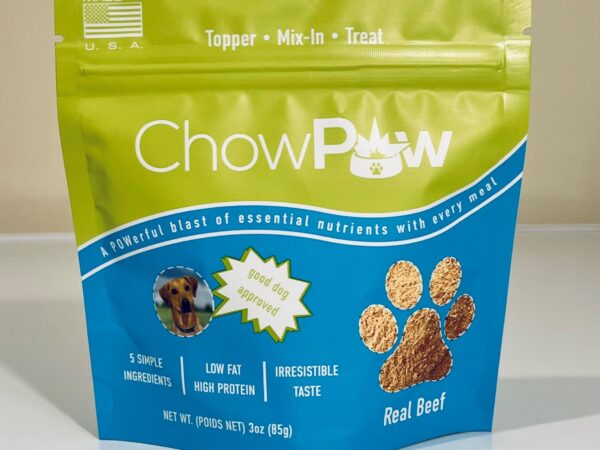 Dog Food Topper - Beef HeartOriginal price was: $14.99.$10.95Current price is: $10.95. - or subscribe and save up to 20%