ACL Repair in Dogs: Your Complete Owner’s Guide
You take your dog out for a normal walk, or maybe a joyful sprint at the park, and later that day something feels off. They're toe-touching on one back leg. They hesitate before sitting. They stand up slowly and look at you like they want help but can't explain what hurts.
That moment can be frightening. A lingering limp in a dog often leads to one big question. Is this just a strain, or is it something more serious?
If your veterinarian has mentioned ACL repair in dogs, they're usually talking about the cranial cruciate ligament, often shortened to CCL. It's the dog version of the human ACL. The name is different, but the problem feels familiar. The knee becomes unstable, painful, and harder for your dog to trust.
The good news is that many dogs recover well with the right plan. The harder part is that the journey usually doesn't end with the surgery date. The real work often happens at home, where you're managing rest, bathroom breaks, meals, pills, and a dog who doesn't understand why they suddenly can't zoom around the house.
That Limp Isn't Going Away What's Next
One day your dog is mostly fine. The next, they are touching one back toe to the ground like they are testing thin ice. By evening they may seem better, then limp again after a nap or the next walk. That stop-and-start pattern is one reason owners wait, hope, and wonder if they are overreacting.

A lingering limp deserves attention because dogs are good at masking discomfort. They may still wag, eat, and ask to go outside while a painful knee keeps slipping out of its normal track. What looks like a minor soreness can turn into a cycle of inflammation, strain, and guarding that is hard on both the joint and your dog's confidence.
When the limp deserves a vet visit
A brief misstep can happen. A limp that returns, lasts, or changes how your dog moves should be checked.
Call your vet if you notice:
- Limping that lasts more than a day
- Toe-touching or holding the leg up
- Trouble getting up from the floor or bed
- Hesitation with stairs, jumping, or getting into the car
- Stiffness after resting
- Swelling around the knee
- A change in mood, such as irritability, restlessness, or not settling comfortably
If you are having trouble describing what you see, this checklist for concerned owners about signs of pain in dogs can help you put your observations into words before the appointment.
One simple rule helps here. If the limp keeps coming back, your dog has not fully bounced back.
Why getting answers early helps
The goal is not just to label the limp. The goal is to slow more joint irritation, control pain, and make a plan before your dog starts shifting weight in unhealthy ways.
Dogs with knee pain often compensate without meaning to. They sit crooked, unload one leg, tense their lower back, or put extra stress on the other rear limb. Owners sometimes notice these small changes before they realize how uncomfortable their dog has become. Early care gives your veterinarian a better chance to sort out what is injured and what support your dog needs now, not after weeks of protecting the leg at home.
This also matters for you as the caregiver. The sooner you know whether you are dealing with a strain, a cruciate injury, or another orthopedic problem, the sooner you can prepare for the part many articles skip over. Rest restrictions, bathroom routines, medications, appetite changes, and keeping an active dog calm after surgery.
What usually happens at the appointment
The first visit is usually more straightforward than owners expect. Your veterinarian starts by watching your dog stand, walk, turn, and sit. Those little movements give clues. A dog who eases weight off one leg, sits with the sore leg kicked out, or resists bending the knee is showing the vet a pattern.
Next comes the hands-on exam. Your vet feels for swelling, joint thickening, pain, and looseness in the knee. X-rays are often recommended, not because the ligament itself shows up clearly on every image, but because the joint can leave footprints of trouble such as inflammation or other changes that help explain the limp.
If cruciate disease is high on the list, you may hear several treatment paths in the same conversation. That can feel like a lot at once. It helps to remember that the diagnosis is only the first step. The bigger picture is choosing a plan your dog can recover from well, and that you can realistically manage at home day after day.
Understanding Your Dog's Knee Injury
A dog's knee is usually called the stifle. Inside that joint, the cranial cruciate ligament acts like a firm stabilizing strap. Its job is to keep the shin bone from sliding too far forward when your dog bears weight.
One simple way to think about it is this. The ligament works like a support rope keeping a mast steady. If the rope frays, the structure may still stand for a while, but it starts shifting in ways it shouldn't. Eventually, normal movement becomes painful movement.
What the ligament is supposed to do
When your dog steps down on a back leg, force travels through the knee. A healthy cranial cruciate ligament helps control that force so the joint glides smoothly. When the ligament weakens or ruptures, the tibia can slide forward under load.
Vets often call that abnormal motion cranial tibial thrust. In plain language, the lower part of the leg wants to scoot forward every time your dog puts weight on it. That sliding creates instability, inflammation, and pain.
Why this often isn't one dramatic accident
Owners sometimes expect a story like, “He tore it when he landed badly.” That can happen, but many dogs don't have a single clean injury event. Cruciate disease is strongly associated with a degenerative process. The ligament can slowly wear down, fray, and weaken over time until an ordinary movement becomes the moment things finally give way.
That's why some dogs seem to “suddenly” tear a ligament while doing something routine like trotting across the yard.
A cruciate tear can look sudden from the outside even when the damage has been building for months inside the joint.
What that feels like for your dog
Instability changes everyday motions you normally never think about:
- Standing up becomes awkward because the knee doesn't feel secure
- Turning quickly can cause pain or slipping in the joint
- Sitting squarely may be uncomfortable, so dogs sit off to one side
- Running or jumping becomes risky because the knee can't stabilize load well
Once the joint becomes unstable, the body tries to protect it. Dogs shift weight, tense nearby muscles, and change how they move. That compensation helps in the short term, but it can lead to muscle loss in the injured leg and strain elsewhere.
Why surgery is often designed around mechanics
Many owners assume surgery means “stitch the torn ligament back together.” Some procedures try to stabilize the joint from outside. Others change the geometry of the knee so it functions better even without relying on the damaged ligament the same way.
That mechanical idea is the key to understanding why your vet may recommend one procedure over another. The question isn't just “How torn is it?” The question is also “How do we best stop that painful forward slide in this specific dog?”
Comparing Your Dog's Repair Options
Not every dog needs the same fix. Age, size, activity level, weight, other medical conditions, and your home setup all matter. A calm small dog and a young athletic large dog may both have the same diagnosis but very different best options.
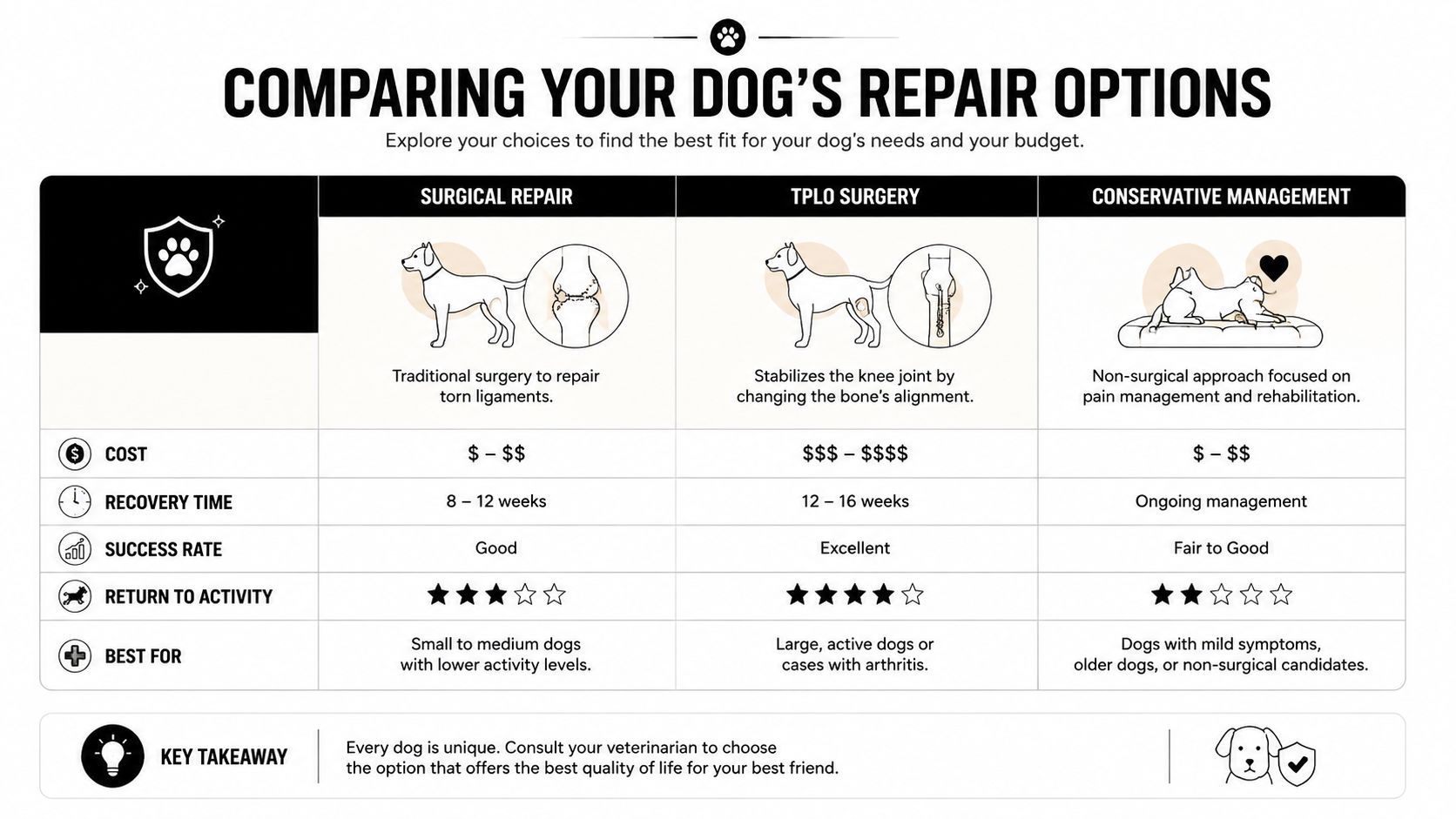
Dog ACL repair options at a glance
| Option | Best For | Mechanism | Pros | Cons |
|---|---|---|---|---|
| TPLO | Large, active dogs and dogs needing strong mechanical stability | Changes the angle of the tibial plateau and stabilizes it with a plate and screws | Strong functional outcome, widely used, designed around weight-bearing mechanics | More invasive, requires bone healing, possible complications |
| TTA | Some dogs with cruciate instability where anatomy and surgeon preference support it | Changes force direction in the knee to reduce instability | Another osteotomy-based option for mechanical stabilization | Not every dog is a candidate, still requires surgery and recovery |
| Extracapsular lateral suture | Often small to medium dogs, especially less heavy or less athletic patients | Places heavy suture outside the joint to mimic ligament support while scar tissue forms | Less invasive than osteotomy procedures, familiar technique | Often less suitable for larger or highly athletic dogs |
| Conservative management | Selected dogs such as older, medically fragile, or some smaller patients | Uses rest, weight control, rehab, pain management, and sometimes external support | Avoids surgery | Knee remains mechanically unstable, progress can be slower and less predictable |
TPLO in plain language
TPLO stands for tibial plateau leveling osteotomy. It sounds intimidating because it is a real orthopedic procedure. The surgeon makes a cut in the top part of the tibia, rotates it to a new angle, then secures it with a plate and screws. The goal is to reduce the forward sliding force in the knee during weight bearing, instead of trying to make the torn ligament do its old job again.
This is why TPLO is often recommended for larger, active dogs. It changes the mechanics of the joint in a way that better handles force.
A summary of outcomes notes that, in a clinical outcomes study, TPLO showed a 93% return of limb function at one year, with overall complication rates reported between 14% and 34%. The same summary notes that post-operative care matters because not every dog returns to completely normal biomechanics, even when surgery is considered successful. You can see those figures in this TPLO success rates and alternatives overview.
TTA and why you may hear about it
TTA, or tibial tuberosity advancement, is another osteotomy-based option. It also aims to stabilize the knee by changing how forces act across the joint. Owners often hear TPLO and TTA mentioned together because both focus on mechanics rather than replacing the torn ligament.
Whether one is better for your dog depends on your dog's anatomy, your surgeon's training, and the details of the knee injury.
Extracapsular repair
The extracapsular lateral suture technique uses strong suture material placed outside the joint to act like an external support. Over time, scar tissue and surrounding structures help add stability.
This option is typically recommended more often for small to medium dogs, commonly under about 50 lb, and one surgical handout describes it for dogs under about 25 to 30 lb. Larger and more athletic dogs often place too much force on this style of repair, which is why many of them do better with TPLO or TTA. That size-based guidance is explained in this overview of ACL and CCL surgery approaches for dogs.
The “best” surgery isn't the fanciest one. It's the one that matches your dog's body, lifestyle, and the forces acting on that knee every day.
Conservative management
Sometimes surgery isn't the right path. A dog may be elderly, have other health issues, or be a poor anesthesia candidate. In those cases, vets may discuss conservative care, which can include strict rest, weight management, pain control, rehabilitation work, and sometimes a brace.
Conservative care can be reasonable in selected cases. The tradeoff is that it doesn't change the underlying instability the same way osteotomy surgery does. That makes expectations especially important. Some dogs become comfortable enough for a good quality of life. Others continue to struggle with lameness or limited mobility.
Questions worth asking your vet
Bring these to your consult:
- Which option fits my dog's size and activity level
- How stable is the knee right now
- What kind of recovery effort will happen at home
- Is my dog a realistic candidate for non-surgical care
- What does success look like for this specific dog
Those questions usually lead to a much clearer decision than asking only, “Which surgery do you do most?”
Budgeting for Surgery and Recovery
The surgery itself gets most of the attention, but it's only one part of the full commitment. Owners often feel blindsided not because anyone hid information, but because so many smaller pieces add up around the procedure.
The total plan usually includes the initial exam, imaging, pre-anesthetic testing, the procedure, medications, recheck visits, possible rehab support, and practical home items like gates, a crate setup, non-slip rugs, and a sling. The exact price depends on your region, your veterinary team, and the procedure chosen, so it's better to ask for an itemized estimate than to chase generic internet numbers.
Where the costs usually come from
When you review an estimate, look for these categories:
- Diagnostics such as the orthopedic exam and imaging
- Pre-surgical screening like bloodwork and anesthesia planning
- Procedure-related fees including surgery, monitoring, and hospitalization
- Aftercare such as pain medication, anti-inflammatory medication, and rechecks
- Rehabilitation support if your vet recommends formal rehab exercises or therapy
- Home recovery supplies like an e-collar, bedding, barriers, and traction aids
A useful way to think about it is that you're paying for three things. Diagnosis, stabilization, and recovery. Skipping the third category in your planning is where stress often begins.
Time matters as much as money
Recovery asks for schedule changes. The first days after surgery are hands-on. You may be helping your dog stand, carrying water over to the recovery area, monitoring the incision, and walking them outside on a short leash for bathroom breaks.
After that, the challenge becomes consistency. Dogs often feel better before the bone, soft tissues, and surrounding muscles are ready for normal life. That's when owners need the most patience.
Here's the rhythm most families experience:
- First 48 hours involve grogginess, careful bathroom trips, and close observation.
- Weeks 1 to 4 usually require strict confinement, short controlled leash walks, medication schedules, and incision checks.
- Weeks 5 to 8 often bring gradual increases in activity if healing is on track.
- Months 3 to 6 may include a fuller return to routine, depending on the procedure and your vet's guidance.
For a practical overview of daily recovery tasks, this post-surgery care for dogs guide can help you think through the home side before your dog even comes back from the hospital.
Questions to ask before you schedule
You'll feel more prepared if you ask for specifics:
- What follow-up visits are already included
- What restrictions will my dog have in the first month
- Do you recommend rehab exercises or formal physical therapy
- What supplies should I buy before surgery day
- Who do I call after hours if something looks wrong
Ask for the recovery plan in writing. When you're tired and your dog is uncomfortable, written instructions are much easier to follow than memory.
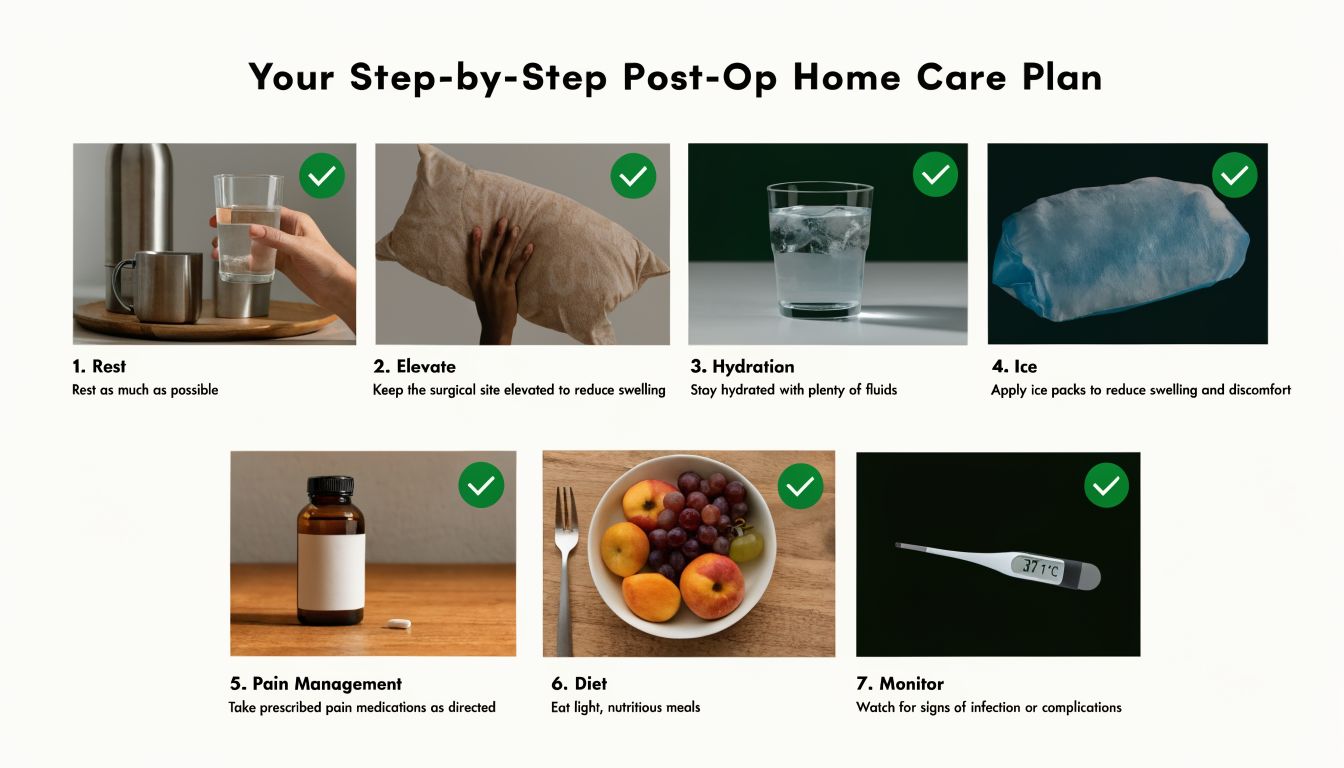
Your Step-by-Step Post-Op Home Care Plan
This is the part many owners wish someone had explained more clearly ahead of time. Surgical consults often focus on technique, but daily life after your dog comes home is where most questions show up. One summary notes that most online resources focus on surgical choices but give little practical guidance for the first 1 to 4 post-op weeks, which is exactly when owners are managing appetite loss, medication refusal, and strict confinement at home. That gap is described in this MedVet guide to ruptured cranial cruciate ligament repair in dogs.
Set up the recovery zone before surgery day
Pick one small, quiet area of the house where your dog can rest without slipping, jumping, or pacing. For some dogs, that's a crate. For others, it's an exercise pen or a blocked-off room with stable flooring.
You want:
- Non-slip footing with rugs or mats
- Easy access to water
- A low-stress place away from rowdy kids or other pets
- Enough space to turn around comfortably, but not enough to build momentum
Some dogs settle better with a soft, bolstered bed that supports the body without encouraging awkward twisting. If you're looking for a cozy option for a confined recovery space, the Pandemonium Millinery Royal Opulence pet bed is the kind of supportive setup many owners find helpful during crate or pen rest.
The first few days at home
Your dog may be sleepy, mildly confused, less hungry, or hesitant to move. That's common after anesthesia and pain medication. Keep things quiet and predictable.
Focus on four basics:
Bathroom breaks only
Short leash trips. No wandering. No stairs unless your vet has specifically cleared them.Medication on schedule
Don't wait for obvious pain. Staying ahead of pain usually works better than trying to catch up.Incision checks
Look at the surgical site at least once or twice a day so you notice changes early.Prevent licking
Use the cone or recovery collar exactly as directed.
Weeks 1 through 4 at home
This stage is mentally harder than many owners expect. Your dog may start acting brighter while the knee is still healing. That can tempt you to loosen the rules too soon.
Use this checklist:
- Leash every trip outside. Even fenced yards aren't safe for free movement yet.
- No couch, bed, or car jumping unless your veterinary team says it's okay.
- Support when needed. A sling under the rear end can help with balance on slick surfaces or during bathroom trips.
- Keep meals simple and routine. Nausea, boredom, and medication can all affect appetite.
- Add quiet enrichment. Food puzzles used calmly, sniffing games in place, and chew time can reduce frustration without adding movement.
Recovery often goes best when the house feels boring for a while.
When to call the vet
Some signs mean your dog should be checked sooner rather than later.
Call if you notice:
- Increasing swelling instead of gradual improvement
- Redness, discharge, or a foul odor at the incision
- Sudden worsening of lameness
- Vomiting or diarrhea after medication
- Refusal to eat for more than 24 hours
- Extreme lethargy
- A slipped bandage or concern about the incision opening
Protect recovery from other pets and household chaos
Even a friendly housemate can disrupt healing. A playful dog can bump the recovering leg. A curious cat can trigger sudden movement. Separate spaces are often safest during the first part of recovery.
If your dog seems restless, try lowering stimulation rather than adding activity. Dimmer evenings, white noise, and calm human company often help more than repeated excitement.
Nutrition and Appetite Support During Recovery
One of the most upsetting post-op moments for owners is setting down food and watching their dog walk away. After surgery, appetite can drop for several reasons. Anesthesia can leave dogs feeling off. Pain medication can upset the stomach. Reduced activity can make them seem less interested in meals. Stress alone can do it too.
That doesn't mean every missed meal is an emergency, but it does matter. Healing takes energy. Tissue repair, immune support, and maintaining strength all depend on steady nutrition and hydration.

Why dogs sometimes won't eat after knee surgery
A recovering dog doesn't always feel hungry on your schedule. They may sniff the bowl and turn away, or they may eat only if hand-fed. Sometimes they'll accept treats but refuse regular food.
Common reasons include:
- Mild nausea after anesthesia or medication
- Pain or stress lowering interest in food
- Less movement, which can change feeding behavior
- Medication timing, especially if a bitter pill creates food aversion
If this is happening, keep your vet informed, especially if poor appetite continues. For a deeper look at that problem, this guide on what to do when your dog won't eat after surgery can help you sort out what's common and what deserves a call.
Make meals easier, not bigger
Owners often try to fix appetite loss by offering a huge special meal. That can backfire. Smaller, more appealing portions usually work better than a giant bowl.
Try these practical adjustments:
- Warm the food slightly if your vet says it's okay. Aroma often matters more than volume.
- Offer smaller meals more often instead of expecting one normal-sized meal.
- Add moisture to dry kibble to soften it and support hydration.
- Keep food bowls close to the recovery area so your dog doesn't have to choose between comfort and eating.
Hydration counts too
A dog who isn't moving much may also drink less. That can make them feel worse and can complicate recovery from medications or mild nausea.
Ways to help:
- Refresh water often so it smells and tastes clean
- Use a second bowl nearby if your dog is confined in a larger room
- Ask your vet whether adding water to meals is appropriate
- Watch for patterns like dry gums, concentrated urine, or reduced interest in drinking
Eating and drinking are part of pain monitoring. A dog who's comfortable enough to eat usually tells you something useful about how recovery is going.
Medication and food often need to work together
Many owners discover that the hardest pill to give is the one their dog tasted yesterday and now distrusts. If a medication is safe to give with food, pairing it with a small, appealing bite can make the process much smoother. Always check your discharge instructions first, because some medications have timing rules.
If your dog starts refusing food because they expect a hidden pill, switch tactics. Use a treat for practice, offer a medication-free bite first, or ask your vet whether another form of the medication is available.
Frequently Asked Questions About ACL Recovery
Will my dog still get arthritis after surgery
Possibly. Surgery stabilizes the knee and usually helps comfort and function, but it does not erase wear already starting inside the joint.
A helpful way to look at it is this. Surgery repairs the wobble. It does not turn the knee back into a brand-new joint. Many dogs still do very well after repair, and stabilizing the knee often slows the cycle of irritation that makes arthritis progress faster.
Can I just use a brace instead of surgery
Sometimes, but a brace and surgery do different jobs. A brace offers outside support. Surgery addresses the instability inside the knee.
For some dogs, especially seniors or dogs with other health problems, a brace may be part of a reasonable plan. The core question is whether your dog can stay comfortable and functional with that level of support. Your veterinarian will look at size, activity level, pain, muscle loss, and how unstable the knee feels before advising one path over another.
How do I know if my dog is overdoing it
Look for the "later" signs.
Many dogs feel excited in the moment and will try to do more than the knee can handle. The clues often show up afterward. More limping after a potty break, stiffness after resting, trouble getting up, toe-touching the next morning, or less interest in food can all mean the day was too active.
Recovery is a little like walking on wet cement. Even if the surface looks better, it still needs protection while it sets.
Will my other dog interfere with recovery
Often, yes. Even sweet, friendly dogs can cause problems during healing because they invite sudden twisting, bouncing, spinning, or wrestling.
That is why many veterinary teams recommend supervised separation for a while. Baby gates, crate rotation, leash walks to the yard, and calm greeting routines can protect the healing leg without making your recovering dog feel isolated.
When is my dog fully recovered
Full recovery is usually a process, not a single day on the calendar.
Your dog is getting close when the leg is being used well, muscle is returning, follow-up exams look good, and activity has increased without a setback. Some dogs get back to hiking, running, and play. Others return to a happy, active life but still need lifelong attention to weight, strength, and sensible exercise. That outcome is still a success.
Should I worry about the other knee
Stay observant, yes. Dogs who injure one cruciate ligament can later have trouble in the other knee too.
That does not mean it will definitely happen. It means a subtle new limp, uneven sitting, stiffness after rest, or a shift in how your dog stands is worth mentioning early. Catching changes sooner gives you more options.
What matters most for a good result
Owners often expect the surgery itself to be the hardest part. At home, the hard part is usually the daily routine. Keeping activity controlled, getting meals and medications in, watching bathroom habits, and noticing small behavior changes all add up.
Three things help most:
- A repair plan that matches your dog's size, lifestyle, and knee injury
- Consistent home care, even when your dog starts acting normal before the knee is ready
- Quick communication with your veterinary team if appetite drops, pain seems worse, or something feels off
Recovery tends to go better when food, water, and medication work together instead of becoming a daily battle. ChowPow is a dehydrated beef heart meal enhancer you add to your dog's current food, not a replacement for their kibble. It can help make meals more appealing, add nutrient-dense support during healing, mix with water for extra moisture, and make pill time less stressful for picky or recovering dogs.
-
Product on sale
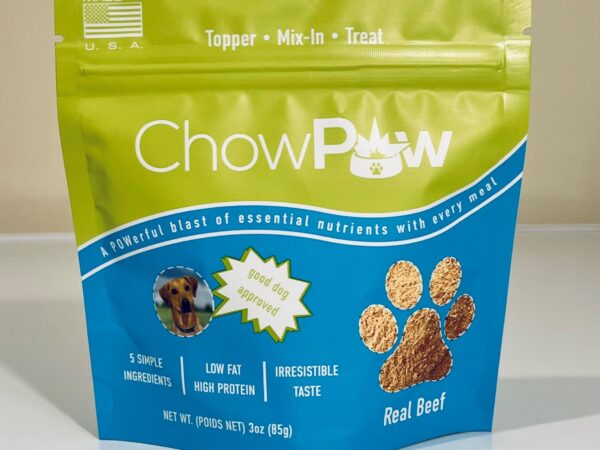 Dog Food Topper - Beef HeartOriginal price was: $14.99.$10.95Current price is: $10.95. - or subscribe and save up to 20%