
Apples for Dogs: A Guide to This Crunchy, Healthy Treat
We've all been there—snacking on a crisp, juicy apple when a pair of pleading eyes looks up at you. The big question is, can you share?
The answer is a resounding yes! Apples for dogs are a safe and healthy treat, as long as you serve them correctly. This crunchy fruit is a fantastic, low-calorie snack loaded with vitamins and fiber, making it an excellent choice for a wholesome reward.
The Surprising Health Benefits in Every Bite
You might just see a simple snack, but for your dog, that apple is a little powerhouse of nutrition. It’s far more than empty calories; apples offer real health advantages that support your dog's well-being from the inside out. They're basically nature’s perfect low-calorie, vitamin-rich treat.
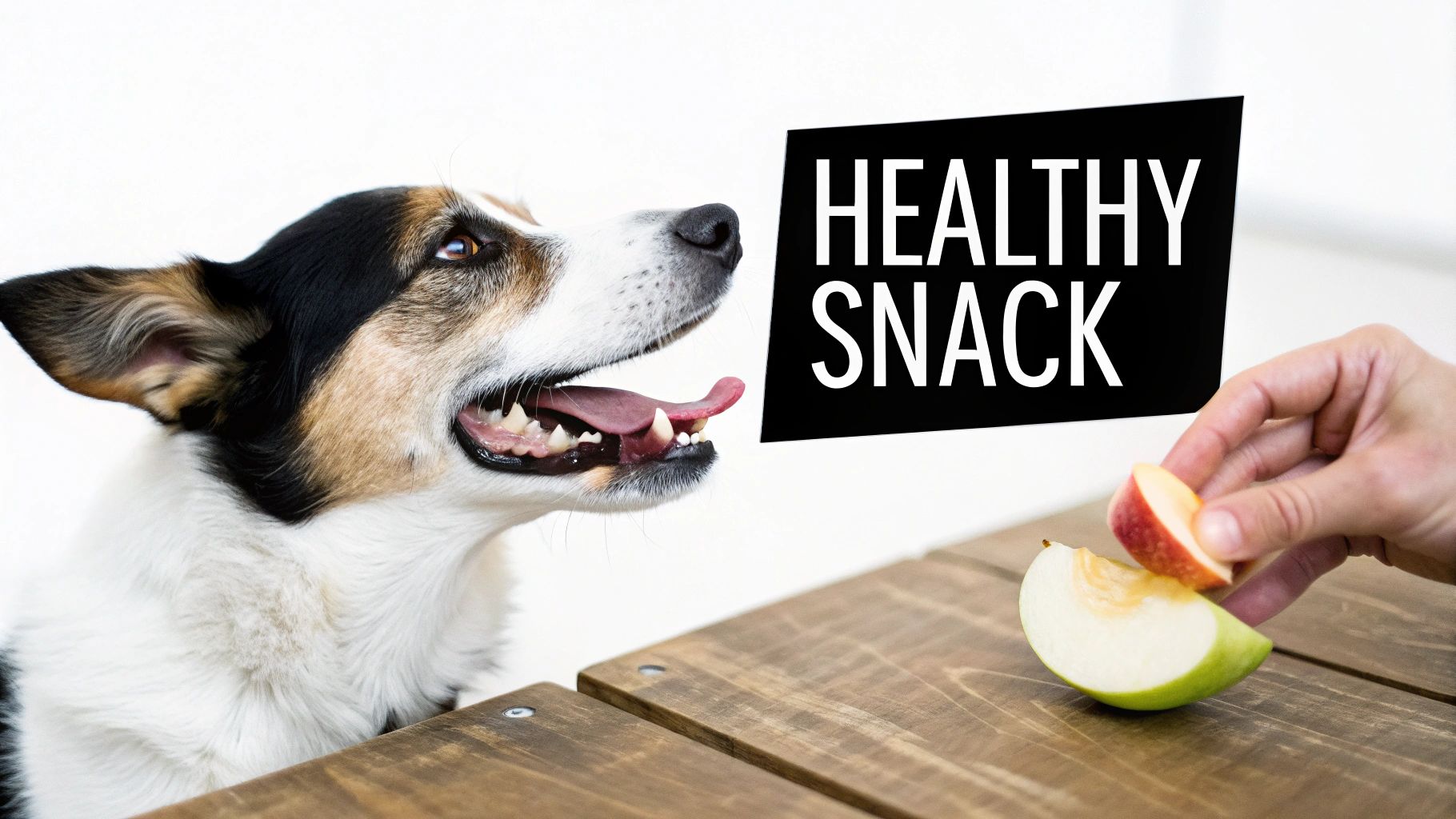
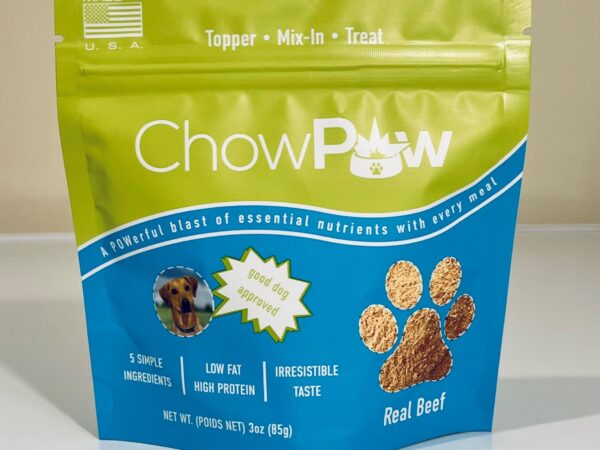
This philosophy of using simple, whole ingredients is exactly what we believe in here at ChowPow. We know that real food provides real benefits. Just as apples add a natural vitamin boost, our ChowPow meal supplement adds nutrient-dense protein to boost the nutritional value of your dog's daily kibble. It's an easy way to make their regular meal even better.
A Boost of Essential Vitamins
Apples are a great source of key vitamins that play a huge role in your dog's overall health. The two most important ones are:
- Vitamin A: This is crucial for maintaining healthy skin, a shiny coat, strong muscles, and proper nerve function.
- Vitamin C: A powerful antioxidant that helps reduce inflammation and fight off harmful free radicals, giving their immune system solid support.
These vitamins work together to keep your dog feeling their best, much like they do for us.
A Gentle Broom for Digestion
One of the best things about apples is their high dietary fiber content. You can think of this fiber as a gentle "broom" for your dog's digestive tract. It sweeps through their system, helping to keep everything moving along regularly and promoting a healthy gut.
This natural fiber aids digestion and can help prevent issues like constipation, ensuring your dog's tummy stays happy and comfortable. You can learn more about the benefits of fiber for canine digestion in our detailed guide.
A medium apple has about 2.5 grams of fiber and is nearly fat-free, making it an ideal treat. This is especially important when you consider that dog obesity affects a staggering 60% of pets in the US.
Pairing the natural fiber from an apple with the high-quality protein in ChowPow creates a balanced boost for your dog's bowl. It’s not about replacing their main meal; it's about enhancing it with whole-food ingredients that work together. This combination supports digestion and adds incredible flavor, turning an ordinary bowl of kibble into something special.
How to Safely Prepare Apples for Your Dog
So, you’re sold on the amazing benefits tucked inside an apple and are ready to share one with your pup. Awesome! But before you toss a slice their way, let's talk prep. A few simple steps are all it takes to turn this healthy fruit into a perfectly safe and delicious treat.
Taking a moment to prep an apple correctly is non-negotiable—it removes all potential risks and gives you complete peace of mind. Think of it like you would when preparing food for a toddler; you automatically cut things into manageable pieces and remove any hard-to-chew parts. The same common-sense logic applies here.
Removing the Core and Seeds
This is the most critical step, so listen up: always, always remove the apple core and all of the seeds before serving. The core itself is tough and fibrous, making it a serious choking hazard, especially for smaller dogs or eager pups who gulp their food down without much chewing. If swallowed whole, it could even cause an intestinal blockage.
Then there are the seeds. Apple seeds contain a compound called amygdalin, which can release trace amounts of cyanide when chewed or digested. Now, a dog would have to eat a huge number of crushed seeds for it to be truly toxic, but why take any risk at all when it’s so easy to avoid?
Bottom line: Removing the core and seeds is a must-do. By simply coring the apple, you eliminate both the primary choking risk and the minimal toxic risk in one quick motion.
Washing and Slicing to Perfection
Once the core and seeds are gone, the rest is a breeze. These next few habits will ensure every crunchy bite is a good one.
- Wash Thoroughly: Give the apple a good rinse under running water before you start slicing. This gets rid of any lingering pesticides, dirt, or bacteria hanging out on the surface, which is especially important if you’re leaving the nutrient-rich skin on.
- Cut Into Appropriate Sizes: The right size depends entirely on your dog. A tiny Chihuahua needs much smaller, bite-sized pieces than a big Golden Retriever. Your goal is to create pieces that are easy for your dog to chew and swallow safely, taking any choking risk off the table.
- Introduce Slowly: If your dog has never had an apple before, start small with just one or two little slices. This gives you a chance to see how their stomach handles it and watch for any signs of an uncommon allergic reaction. While most dogs do just fine with apples, it’s always a smart move to introduce any new food gradually. For more on this, check out our guide on what to do if you suspect your dog might have an apple allergy.
Follow these simple rules, and you can confidently share this healthy snack. In just a minute or two, you’ll transform a whole apple from a potential hazard into a safe, delicious, and nutritious treat your dog will absolutely love.
Finding the Right Portion Size for Your Pup
When it comes to treats, even healthy ones like apples, there can definitely be too much of a good thing. While a few slices are a fantastic, low-calorie snack, moderation is the name of the game. Giving your dog too much apple can lead to an upset stomach or pile on extra calories they just don’t need.
The best way to keep things in check is to follow the 10% Rule. It's a simple and effective guideline used by vets and nutritionists: treats should make up no more than 10% of your dog's total daily calories. This ensures their main meals provide all the core nutrients they need, while treats stay in their proper place as a fun bonus.
The Golden Rule of Treating
Think of your dog's daily kibble or wet food as their main course—it's carefully balanced to meet all their nutritional requirements. Treats, including apples, are the dessert. They're a tasty extra, but they shouldn't throw the whole meal out of whack. Sticking to that 10% limit is key to preventing weight gain and keeping their diet on track.
And before you even slice one up, remember that proper prep is everything. This infographic highlights the parts of an apple you absolutely need to avoid.
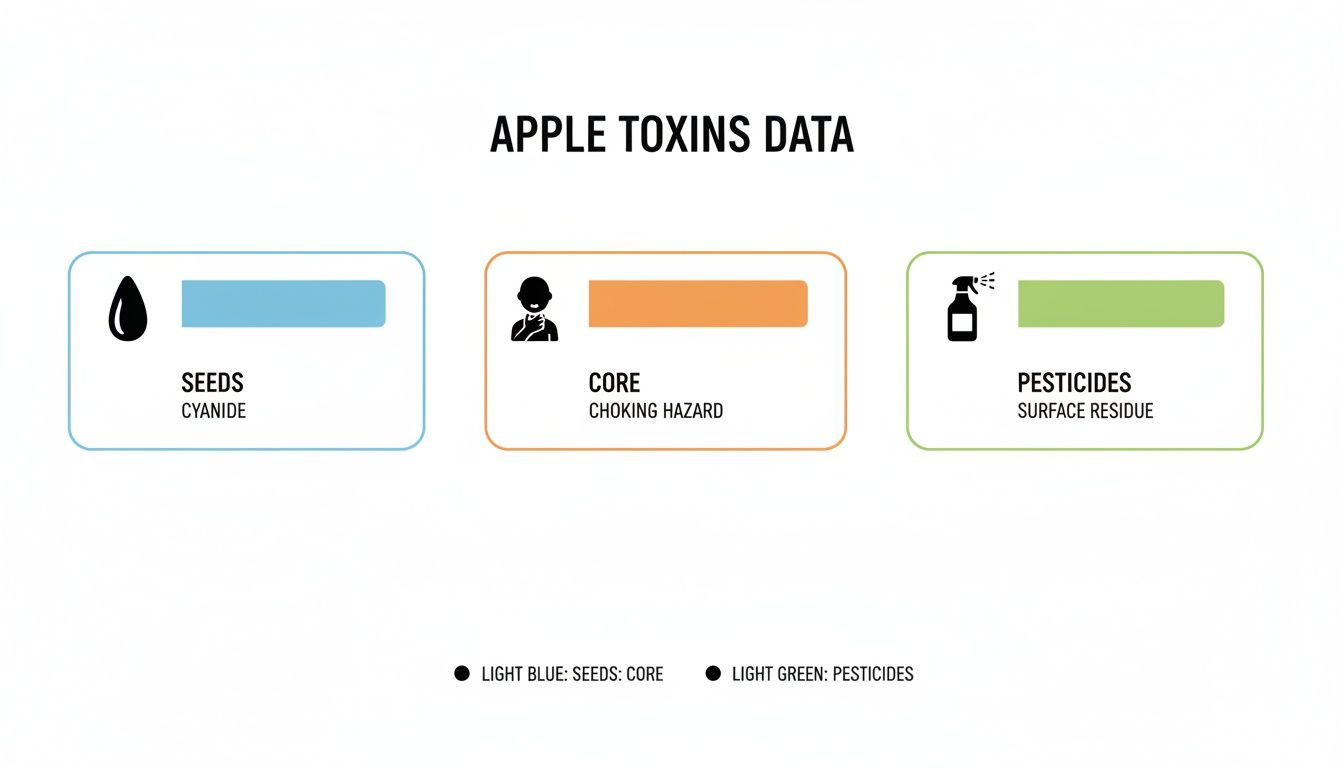
As you can see, the main risks—cyanide in the seeds, the choking hazard of the core, and pesticides on the skin—are all easy to manage if you just prepare the apple correctly.
With over 70% of dogs in the U.S. now considered overweight or obese, mindful treating has never been more important. To put it in perspective, a 50-pound dog on a 1,000-calorie diet should have no more than 100 calories from treats. That works out to about half a medium apple, max. For a more detailed look at canine calories, PetMD offers a great breakdown.
Daily Apple Serving Guide by Dog Weight
So, what does the 10% rule actually look like in terms of apple slices? It really comes down to the size of your dog. What's a light snack for a Great Dane could be a whole meal for a Chihuahua.
To make it easy, here’s a quick reference table to help you figure out the right portion for your pup.
| Dog Size & Weight | Recommended Daily Apple Amount (Slices) | Example Breeds |
|---|---|---|
| Extra-Small (Under 10 lbs) | 1-2 small, thin slices | Chihuahua, Pomeranian, Yorkie |
| Small (11-20 lbs) | 2-3 small slices | Pug, Shih Tzu, Boston Terrier |
| Medium (21-50 lbs) | 3-4 medium slices | Beagle, Border Collie, Bulldog |
| Large (51-90 lbs) | 4-5 medium slices | German Shepherd, Golden Retriever |
| Extra-Large (91+ lbs) | 5-6 large slices | Great Dane, Mastiff, Saint Bernard |
Of course, these are just starting points. If your dog has a sensitive stomach or is trying apples for the first time, start with an even smaller amount and see how they do.
By keeping portions in mind, you can share the crunchy goodness of apples without a second thought. It's all about adding to their diet in a healthy, responsible way—just like sprinkling some ChowPow meal topper on their dinner for an extra boost of whole-food nutrition.
Creative Ways to Boost Your Dog's Bowl
Ready to move beyond plain old slices? While a simple piece of apple is a great treat, you can get creative and turn snack time into a fun, enriching experience for your dog. A little variety keeps things interesting and your pup happy.
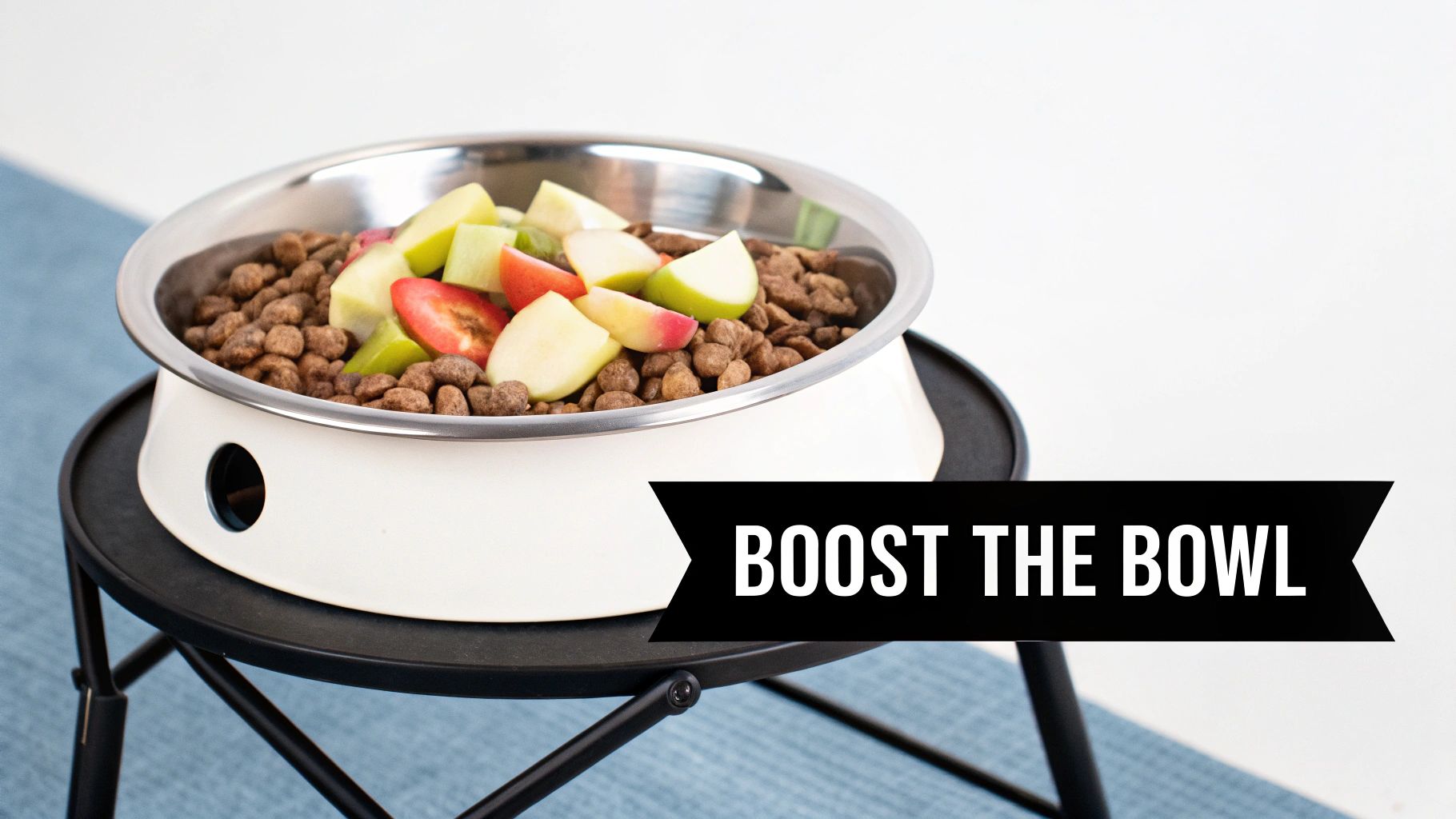
Even simple ideas make a huge difference. On a hot summer day, try freezing small apple chunks in an ice cube tray with some water. For a bit of mental work, spread a spoonful of plain, unsweetened applesauce on a lick mat. It’s an easy way to turn a quick snack into a longer, more engaging activity.
Simple Apple Treat Ideas
Here are a few easy ways to serve up apples that your dog is guaranteed to love:
- Frozen Apple Pupsicles: Puree some unsweetened applesauce with a little plain yogurt and freeze the mix in molds. Perfect for a hot day!
- Apple "Croutons": Dice a cored apple into small, kibble-sized bits. Toss them right into your dog's food for a juicy burst of texture and sweetness.
- Puzzle Toy Filler: Stuff small apple pieces into a Kong or another puzzle toy. This makes your dog work for their treat, which is great for their brain and keeps boredom at bay.
You might be surprised to learn that apples for dogs have been a go-to healthy treat for decades, backed by trusted sources like the American Kennel Club. Vets often recommend them as a low-calorie snack because they're an excellent source of vitamins A and C, plus fiber—perfect for dogs watching their weight. A medium-sized dog can have 3-4 small pieces of apple a day, just remember to keep treats to about 10% of their total daily calories. You can find more info about safe fruits and veggies for your pup on AKC.org.
The Ultimate Mealtime Upgrade with ChowPow
Now, for the real magic. Combine the wholesome goodness of apples with the nutritional power of ChowPow. This is how you take standard kibble from boring to brilliant, creating a meal that even the fussiest eaters can’t turn down.
The mix of textures and flavors is a game-changer. The natural sweetness and satisfying crunch of a diced apple are the perfect partners for the savory, nutrient-packed beef heart in our ChowPow meal supplement. It's a simple pairing that creates a feast for their senses.
By mixing a few pieces of diced apple with a scoop of ChowPow over your dog's regular food, you're not just making it tastier. You're adding a powerful combination of vitamins, fiber, and high-quality protein, seriously boosting the nutritional value of their meal. This is a meal enhancement, not a meal replacement.
This just goes to show how a simple ingredient you probably already have in your kitchen can make our meal supplement even more effective. If you're struggling with a picky dog, this combo is a proven winner. It adds moisture, flavor, and texture that encourages a healthy appetite. To learn more, check out our guide on the benefits of adding food toppers to your dog's diet.
What to Watch for When Serving Apples
While apples are a fantastic treat, it's smart to keep an eye on your pup anytime you introduce a new food. Just like people, some dogs can have sensitivities. Knowing what to look for is the key to making sure apple time is always a good time for your furry friend.
The golden rule here is to start small and go slow. A single, small slice is the perfect introduction. This gives your dog's digestive system a chance to get acquainted with the new snack and lets you watch for any reactions.
Tummy Troubles and Allergic Reactions
The most common issue you might run into is a bit of digestive upset, especially if your dog gets a little too enthusiastic and eats too many apples at once. The fiber content is great in small doses, but too much can overwhelm their system.
You might see:
- Diarrhea or loose stools
- Gas or bloating
- A mild stomach ache
These signs are usually temporary and clear up on their own. If they stick around, it's a good signal to cut back on the portion size or take a break from apples for a bit.
Allergic reactions to apples are pretty rare in dogs, but they aren't impossible. The signs are usually skin-related and can pop up shortly after they've had their snack.
Keep an eye out for excessive itching, skin redness, hives (little bumps on the skin), or any swelling around their face or muzzle. If you spot these more serious signs, stop serving apples and give your vet a call.
This careful, observant approach is at the very heart of what we do at ChowPow. We believe that giving you clear, honest information builds the trust you need to make the best choices for your pet. We're not just here to sell a product; we want to be your partner in your dog's health journey.
Even though apples are safe when prepared right (no seeds or core!), it’s important to be aware of other household items that can be dangerous. It's always a good idea to brush up on other potential toxic substances for dogs to keep your home as safe as possible. Your awareness is the best line of defense.
Answering Your Top Questions About Apples for Dogs
Even when you've done your homework, a few questions can still pop up. That's totally normal. When it comes to our dogs' health and what they eat, being sure is everything. So, let's tackle some of the most common questions dog owners have about apples.
My goal here is to give you direct, easy-to-understand answers so you can feel completely confident. After all, sharing a healthy snack with your pup should be fun, not stressful.
Can Dogs Eat Green Apples or Just Red Apples
Yep, they sure can. Dogs can safely munch on all kinds of apples, from the sweet red ones to the tart green varieties. The good stuff—like fiber and vitamins—is the same no matter the color.
The only real difference is the taste. Some dogs might give a sour Granny Smith the side-eye, while others will go nuts for it. You might be wondering specifically if your dog Can dogs eat green apples? and that resource has a great breakdown. Just remember, the prep rules never change: wash well, and get rid of the core and seeds before serving.
Is Unsweetened Applesauce Safe for My Dog
Absolutely! Plain, unsweetened applesauce is a fantastic and safe treat. It's especially great for senior dogs or pups with dental problems who might find crunchy apple slices a bit much. The trick is to become an ingredient detective.
Before you serve it, you have to read the label. Make sure it contains no added sugar or artificial sweeteners. Be on high alert for xylitol, which is extremely toxic to dogs. Honestly, the safest bet is to find an applesauce where the only ingredient you see is "apples."
Plain applesauce can be a game-changer for hiding medication or for spreading on a lick mat to give your dog some fun mental stimulation. Just keep it to a spoonful or two to avoid overdoing it on the natural sugars.
What if My Dog Accidentally Eats an Apple Core or Seeds
First off, take a breath—don't panic. If your dog nabs a few apple seeds, it's highly unlikely to cause any real harm. A dog would have to chew and swallow a huge number of seeds for the tiny traces of cyanide to become an issue.
The apple core itself is the bigger, more immediate worry. It's a serious choking hazard and could potentially create a blockage in their gut. If your dog swallows a core, just keep a close eye on them. Watch for any signs of distress like vomiting, acting lethargic, or showing signs of belly pain. If you see anything that concerns you, the best move is always to call your vet for advice.
How Do Apples and ChowPow Work Together
This is where the magic happens. Think of apples and ChowPow as the ultimate nutritional tag team for your dog's food bowl.
Apples bring the healthy fiber, vitamins, and that little bit of sweetness dogs love. Meanwhile, ChowPow delivers a powerful punch of high-quality, muscle-building protein and essential amino acids from real beef heart.
When you mix a few pieces of diced apple with a scoop of ChowPow over your dog's regular food, you're boosting the meal's nutrition, flavor, and texture. It's important to understand that ChowPow is a supplement designed to enhance their current food, not replace it. This simple trick is an amazing way to entice picky eaters and add a wholesome, delicious kick to their daily diet.
Ready to take your dog's mealtime from "meh" to "more, please!"? Add a scoop of ChowPow to their bowl and see what real, whole-food nutrition can do. Give their kibble the power of real beef heart and watch them lick the bowl clean. Visit our shop to learn more and grab your first bag!
-
Product on sale
 Dog Food Topper - Beef HeartOriginal price was: $14.99.$10.95Current price is: $10.95. - or subscribe and save up to 20%