Are Almonds Bad for Dogs? A Pet Parent’s Guide
You're enjoying a healthy handful of almonds and see those big puppy eyes staring up at you. It’s so tempting to share, but should you? When it comes to dogs and almonds, the simple answer is a firm no.
While a single almond isn't toxic like a macadamia nut, they’re still a bad snack choice for our canine pals. The risks just aren't worth it.
So, Are Almonds Actually Bad for Dogs?

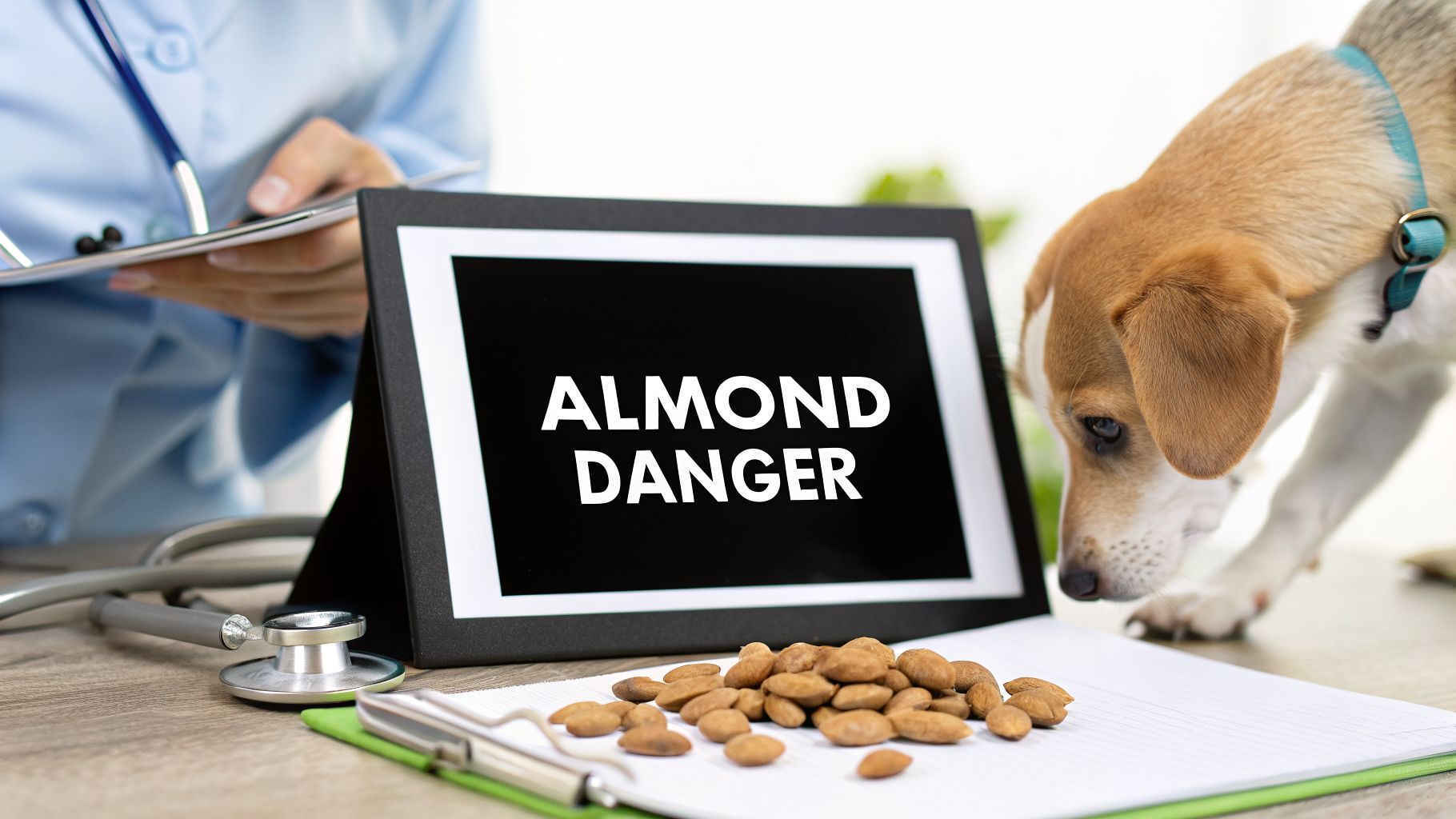
Alt text: A yellow Labrador dog wears a blue collar, sitting by a bowl of almonds with a warning 'AVOID ALMONDS'.
It’s a common mistake to think that because almonds are a “superfood” for us, they must be great for our dogs, too. But a dog’s digestive system is a whole different ball game. They simply aren't designed to handle the high fat content and dense plant matter in nuts, which often leads to some serious tummy trouble.
Think of it this way: giving a dog an almond is a bit like handing a toddler a marble. It's not food, and it's the perfect size and shape to cause a problem. One dropped almond might not send a Great Dane to the emergency vet, but it could be a major choking hazard for a smaller pup.
A Quick Look at the Dangers
The problems with almonds go way beyond a simple upset stomach. The risks are real, ranging from physical blockages to painful and serious health conditions. Knowing what could happen helps you make the best choices to keep your dog safe and healthy.
To make it clear, here’s a quick breakdown of the main reasons almonds are on the "do not feed" list.
Quick Guide to Almond Risks for Dogs
This table sums up the most significant dangers when a dog eats almonds, helping you see at a glance why it's best to keep them out of reach.
| Risk Factor | Why It's a Concern for Dogs | Severity Level |
|---|---|---|
| Choking Hazard | Almonds are perfectly sized to get stuck in a dog's windpipe or esophagus, a particular danger for small breeds. | High |
| Digestive Blockage | If swallowed whole, an almond can create a painful and dangerous intestinal obstruction that may require surgery. | High |
| Stomach Upset | The high fat content is tough for dogs to break down and often causes vomiting, diarrhea, and gas. | Medium to High |
| Pancreatitis Risk | A high-fat snack can trigger pancreatitis, a severe and painful inflammation of the pancreas that needs immediate veterinary attention. | High |
The bottom line is that almonds offer no nutritional value that your dog can’t get from safer, dog-friendly foods.
Instead of sharing a risky human snack, consider boosting their regular kibble with a safe and nutritious meal enhancement. A high-quality supplement like ChowPow is designed specifically for a dog's system. It adds a tasty, healthy bonus to their current food without any of the risks.
Why Almonds and a Dog's Digestive System Don't Mix
Ever wondered why a snack that's perfectly healthy for you can cause a world of trouble for your dog? A dog’s body is a finely tuned machine, but it’s just not built the same way ours is. When it comes to almonds, their digestive system simply isn’t equipped for the job.
Think of it like trying to run a high-performance gasoline engine on diesel fuel. The engine just isn’t designed to process that kind of fuel, and forcing it will only lead to sputtering, stalling, and an eventual breakdown. That’s a pretty good picture of what happens when a dog eats an almond—their gut just doesn't have the right tools to handle it.
Unlike us, dogs don't produce the right enzymes to efficiently break down the dense plant proteins and high fat content packed into nuts. This fundamental mismatch is why even a few almonds can kick off a cascade of painful gastrointestinal issues.
The Biological Mismatch Explained
The digestive challenges almonds pose to dogs are a growing concern in the veterinary world. While they aren't directly toxic like macadamia nuts, almonds consistently rank among the most problematic nuts for our canine friends.
It all comes down to a dog's biology. Studies show that dogs lack the specific salivary enzymes needed to start breaking down almonds, and their digestive tracts can't soften these hard nuts the way a human system can. This is especially risky for smaller breeds, where the chance of a dangerous obstruction skyrockets.
This biological incompatibility is what leads to a whole range of uncomfortable and distressing symptoms for your pup.
Key Takeaway: A dog's digestive system is fundamentally different from ours. It's not a matter of being "sensitive"—they literally lack the biological machinery to process high-fat, hard-shelled nuts like almonds, leading to predictable and painful results.
Common Symptoms of Digestive Distress
When a dog’s body rejects almonds, it’s going to try and get them out, one way or another. This usually results in some pretty obvious signs of discomfort that every pet parent should be able to spot.
If you suspect your dog got into some almonds, keep a close eye out for these common symptoms:
- Vomiting and Diarrhea: This is the body’s most direct way of expelling something it can’t digest.
- Bloating and Gas: Undigested food starts to ferment in the gut, which causes painful gas and a swollen, hard belly.
- Lethargy or Weakness: Dealing with digestive upset takes a ton of energy, leaving your dog feeling tired, sluggish, and just not like themselves.
- Loss of Appetite: It’s no surprise that a dog with a tummy ache will likely turn their nose up at their regular food.
Recognizing these symptoms helps you understand when a seemingly "harmless treat" has actually caused a real problem. Instead of risking digestive upset, it's far safer to support your dog’s gut health with foods they are actually meant to eat. For a deeper dive into what keeps their system running smoothly, check out our guide on the benefits of fiber for canine digestion.
This is exactly where a supplement like ChowPow shines—it’s designed to boost the nutritional value of your dog's existing food with powerful ingredients their bodies can actually use, without causing all that distress.
The Life-Threatening Risks of Choking and Blockages
Beyond just an upset stomach, one of the most immediate dangers almonds pose is a physical one. When a dog gets excited about a new treat, their first instinct is often to gulp it down without chewing. This very normal dog behavior turns a seemingly harmless nut into a serious hazard.

Alt text: A man offers almonds to an eager small dog on a table, with a "choking risk" sign above them.
A hard, awkwardly-shaped almond can easily get stuck in your dog’s esophagus or windpipe, causing them to choke. And even if they manage to swallow it whole, the danger isn't over. That same almond can travel down into the intestines and create a blockage, which is a life-threatening emergency.
Think of it like a big, solid rock trying to pass through a small, flexible garden hose. It’s a recipe for a serious clog that stops everything from moving.
Why Size and Age Matter
The risk of choking and internal blockages isn't the same for every dog. Some pups are far more vulnerable due to their size, age, and anatomy.
- Small Breeds: Pups like Chihuahuas, Yorkies, and Dachshunds have tiny throats and digestive tracts, making it much easier for an almond to get lodged.
- Puppies: Young dogs are still figuring out how to eat properly and are notorious for swallowing things they shouldn't. Their small bodies also put them at a much higher risk.
- Senior Dogs: Older dogs might have dental problems that keep them from chewing well, or they could have weaker esophageal muscles, increasing the odds of an obstruction.
The threat from whole almonds is one of the most serious health risks for dogs, and small breeds face a much higher danger. When dogs swallow hard nuts whole, they can get stuck in the esophagus, stomach, or windpipe. For a little dog, this can quickly turn fatal. You can learn more about how common foods present hidden dangers at PetMD.com.
An internal blockage is a severe medical emergency. It often requires expensive, invasive surgery to remove the object and can lead to permanent damage—or even be fatal—if not treated immediately.
Recognizing an Emergency
Knowing the signs of a blockage is absolutely critical for any pet parent. If an almond gets stuck, you might see your dog gagging, drooling way more than usual, or struggling to breathe. They might also vomit, refuse to eat, or show signs of intense stomach pain.
These symptoms mean you need to get to an emergency vet right away. The consequences of what seems like a simple treat can be devastating, which is why choosing snacks designed for a dog's safety and nutritional needs is so important.
Instead of taking a chance with risky human foods, you can confidently boost your dog’s meals with a supplement like ChowPow. It’s a powder, so there’s zero risk of choking, and it delivers nutrients their bodies can actually use. Just adding a scoop to their kibble enriches their diet safely and gives you complete peace of mind.
The Hidden Dangers in Seasonings and Molds
The trouble with almonds often goes way beyond the nut itself. Sure, plain almonds have their own set of problems, but the ones we love to snack on? They’re usually coated in ingredients that can be seriously harmful to our dogs. What makes for a delicious handful for us can unfortunately be toxic for them.
Take salt, for instance. Many almonds are heavily salted, and all that sodium can lead to sodium ion poisoning in dogs. It’s a nasty condition that can trigger everything from extreme thirst and vomiting to seizures and kidney damage. Think of it like over-fertilizing a plant—a little might be fine, but too much burns the roots and throws the whole system out of whack.
Even worse are the other common flavorings. Lots of seasoned almonds contain garlic powder or onion powder, both of which are big no-nos for dogs. These ingredients are toxic and can actually damage a dog's red blood cells, leading to a dangerous condition called anemia.
Invisible Threats Lurking Inside
Beyond the seasonings you can see, there's another sneaky danger hiding in some almonds: mold. Even nuts that look perfectly fine on the outside can harbor microscopic molds that produce some pretty nasty toxins.
One of the most worrying is aflatoxin, a poison produced by the Aspergillus mold. This is an often-overlooked but very real risk for our pups, who seem to be especially sensitive to it. Even high-quality almonds can carry this mold, which creates a potent compound capable of causing severe liver damage. While it's bad for many animals, dogs show a heightened vulnerability, making any almond a bit of a gamble. You can dig deeper into the risks of almonds and canine health on lorentanuts.com.
The risk of aflatoxins means that even plain, unsalted almonds are not guaranteed to be safe for your dog. This invisible threat adds yet another compelling reason to avoid them altogether.
This contamination risk is exactly why it’s so important to choose foods and supplements made specifically for dogs. A carefully formulated meal topper like ChowPow, for example, uses simple, locally sourced ingredients that are tested for safety.
When you choose a supplement designed just for canines to add to their existing food, you’re getting a nutritional boost without the hidden risks of aflatoxin or toxic seasonings. It's all about giving them the good stuff they need, with none of the dangers you want to avoid. A simple scoop mixed into their kibble is a much safer way to liven up their dinner and give you total peace of mind.
What To Do If Your Dog Accidentally Eats Almonds
That sinking feeling when you realize your dog has eaten something they shouldn’t is all too familiar for pet parents. The most important thing to do right now is take a deep breath, stay calm, and figure out what happened. A clear head is your best tool for keeping your dog safe.
Your first job is to play detective. What kind of almonds and how many did your dog get into? There's a world of difference between a single, plain almond that your Great Dane snatched off the floor and a small Yorkie devouring a whole bag of chocolate-covered, salted nuts. The quantity and the type are everything here.
Next, get any remaining almonds out of your dog's reach immediately. But here's a crucial point: do not try to make your dog throw up unless your vet specifically tells you to. Inducing vomiting at home can go wrong and cause serious problems, like aspiration pneumonia. Right now, your focus should be on careful observation.
Monitor for These Warning Signs
After a dog eats almonds, symptoms can show up within minutes or take a few hours to appear. Keep a close eye on your pup for any of these signs of distress, which could mean anything from a simple upset stomach to a life-threatening blockage.
- Gagging or trouble breathing: This is a classic sign of a choking emergency.
- Vomiting or diarrhea: The most common signs of a bad reaction or GI upset.
- Lethargy or weakness: Is your dog suddenly acting unusually tired or sluggish?
- Signs of abdominal pain: Look for a hunched-over posture, whining when you touch their belly, or a stomach that feels hard and bloated.
This quick decision-tree can help you figure out if the almonds your dog ate were a definite "unsafe" or just a "risky" situation.

Alt text: Flowchart illustrating almond safety decisions based on plainness and mold presence, leading to unsafe or risky outcomes.
As the chart shows, any almonds that are seasoned, coated, or moldy are an immediate no-go. But even plain almonds aren't entirely off the hook—they still carry risks.
When to Call the Vet Immediately: If you see any signs of choking, repeated vomiting, or your dog seems to be in severe pain, don't wait. Call your veterinarian or an emergency animal hospital right away. For small dogs, even a single almond can be a big problem, so it's always best to call your vet for advice due to the high risk of obstruction.
Being prepared makes all the difference in a stressful situation. For more tips on what to have on hand, check out our guide on the 8 essential items you should have in your dog’s emergency kit.
How to Safely Boost Your Dog's Nutrition
Alright, so we've established why almonds are a definite no-go for our dogs. The next logical step is to figure out what you can safely give them. Moving away from risky human snacks opens up a whole world of healthy, dog-friendly options that actually provide benefits without making you worry.
Plenty of common fruits and vegetables make fantastic, low-calorie treats when you give them in moderation. Think about the satisfying crunch of a carrot stick, the sweet burst of antioxidant-packed blueberries, or a few crisp apple slices (just be absolutely sure you've removed all the seeds and the core). These are simple, safe ways to share a healthy moment with your best friend.
While you're focused on safe foods, it’s also a good idea to think about the bigger picture of your dog's environment. For total peace of mind, consider using one of the top picks for dog-safe floor cleaners in your home.
The Ultimate Solution for Picky Eaters
For dog parents looking to go beyond the occasional healthy treat and truly supercharge their dog’s daily meals, a purpose-built meal supplement is the way to go. This is especially true if you've got a picky eater, a senior dog, or a pup who could use an extra nutritional push. A high-quality topper can turn a boring bowl of kibble into something they get genuinely excited about.
This is exactly where ChowPow comes in. It's important to understand that ChowPow is a meal enhancement, not a replacement for your dog's regular food. Its job is to boost the nutritional value of their kibble, adding powerful nutrients that are often missing from even high-quality commercial diets.
Think of it like adding a high-quality protein powder to your own smoothie. You aren't replacing the meal, but you're making it significantly better and more targeted to your body's needs.
Peace of Mind in Every Scoop
ChowPow is a dehydrated beef heart topper made with just four simple, locally sourced ingredients. That's it. When you sprinkle a scoop over their food, you’re providing a concentrated source of top-tier protein and essential amino acids without any of the red flags that come with almonds. There are no high-fat risks, no choking hazards, and definitely no hidden salt or seasonings to worry about.
Instead of second-guessing whether a snack is safe, you get the confidence of knowing you’re giving them something designed specifically for their health. It’s all about peace of mind at mealtime while giving your dog a delicious—and genuinely healthy—boost to their current diet. It’s the perfect way to show your love and support their well-being from the inside out.
Got More Questions About Dogs and Nuts?
After digging into the specifics of almonds, you might be wondering about other nuts and treats. It's a common concern! Here are some quick, clear answers to help you navigate your pup's diet with confidence.
Can My Dog Have Just One Almond?
Look, if your Great Dane snags a single almond off the floor, it probably won't cause a major meltdown. But is it a good idea? Nope. The risk of choking is always there, and for smaller breeds, just one almond can be a serious obstruction hazard.
Bottom line: they offer zero real nutritional value for your dog, so it’s safest to avoid them completely.
Is Almond Butter Safe for Dogs?
Plain, unsalted almond butter without any extra junk is less of a choking hazard, sure. But it's incredibly high in fat, which can be a fast track to an upset stomach, pancreatitis, or unhealthy weight gain over time.
The biggest red flag, though, is xylitol. This artificial sweetener is popping up in more and more nut butters, and it's extremely toxic to dogs. Always, always check the label.
A much safer and smarter choice for a nutty treat is a small spoonful of dog-specific peanut butter that's guaranteed to be xylitol-free. We break down all the differences and risks in our complete guide on whether peanuts are bad for dogs.
What Other Nuts Should My Dog Avoid?
Lots of nuts are a no-go for dogs and should be kept well out of paw's reach. Here are the top offenders to keep on your radar:
- Macadamia Nuts: These are a huge no. They're seriously toxic and can trigger scary neurological problems, weakness, and vomiting.
- Walnuts & Pecans: Both are way too high in fat for a dog's digestive system and can harbor molds that are dangerous for them to ingest.
- Pistachios: Just like almonds, these little guys are a major choking hazard and are packed with fat.
And while you're thinking about what's safe on the menu, don't forget about their environment. Keeping a clean home with safe floor cleaners for pets is just as important for their overall well-being.
The easiest rule to live by? Just avoid giving your dog any nuts at all. If you want to boost their meal's nutrition, there are far better and safer ways to do it. A simple scoop of a supplement designed for them, like ChowPow, adds powerful, dog-friendly nutrients right on top of their kibble, with none of the risks. https://chowpownow.com
-
Product on sale
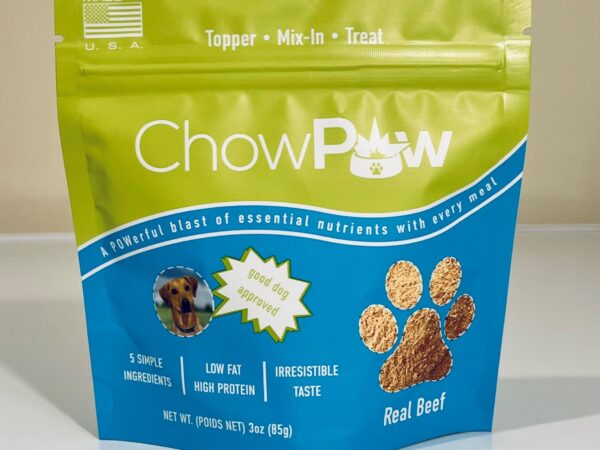 Dog Food Topper - Beef HeartOriginal price was: $14.99.$10.95Current price is: $10.95. - or subscribe and save up to 20%