
Are Antlers Safe for Dogs to Chew? The Real Risks
You're standing in the pet aisle, trying to do something good for your dog. You want a chew that lasts. You want something “natural.” You want relief for a busy chewer and, ideally, something that feels safer than plastic or rawhide.
Then you see antlers.
They look clean, sturdy, and wholesome. The label may suggest they're durable and satisfying. For a lot of loving dog owners, that sounds like a smart choice. It's a reasonable question to ask: are antlers safe for dogs to chew?
As a veterinarian-style educator, my answer is simple. In most cases, no. The biggest problem is not that antlers are dirty or artificial. The problem is that they are too hard. That hardness can injure teeth, and if pieces break off, those fragments can become dangerous in a completely different way.
This matters even more if you share your home with a senior dog, a dog with worn teeth, a picky eater, or a dog recovering from illness. For those dogs, the safer path often isn't a tougher chew. It's gentler support, better meal-time enrichment, and nutrition that helps them feel good without putting their mouth or gut at risk.
The Allure of the Natural Chew
A lot of dog owners arrive at antlers for understandable reasons. Their dog destroys plush toys in minutes. Rubber toys get ignored. Softer chews disappear too fast. So when they see an antler, they see a product that seems built for a real chewer.

The appeal is easy to understand. Antlers look natural. They don't seem greasy. They don't smell as strong as some animal-based chews. They also last a long time, which can make them feel economical.
If you've been comparing options, guides like this overview of safer chew choices for dogs can help sort through the marketing. That's important, because the word “natural” often gets confused with “safe.”
Why the idea feels so convincing
Dog owners usually want three things from a chew:
- Something durable: A chew that won't be gone in a few minutes.
- Something satisfying: Dogs like to gnaw, scrape, and mouth objects.
- Something simple: Fewer ingredients and less processing can feel reassuring.
Antlers seem to check all three boxes at first glance.
Natural doesn't always mean gentle. A tree branch is natural too, but that doesn't make it safe for a dog's teeth.
Where people get tripped up
The main confusion is this: owners often judge a chew by how long it lasts, while veterinarians judge it by what it does to the dog's body.
A very hard chew may last longer because your dog's teeth are doing the wearing down instead of the chew. That's not a benefit. That's the warning sign.
So while antlers may look like the ideal “tough dog” solution, the key question isn't whether your dog enjoys chewing one. The key question is whether that enjoyment comes with avoidable risk.
Why Vets Warn Against Antler Chews
Your dog may look perfectly content, front paws braced, happily grinding away on an antler. Then later that evening, he eats more slowly, drops a piece of kibble, or turns his head when you touch his muzzle. That is one reason veterinarians worry about hard chews. The injury often happens during an ordinary, supervised moment.

The main concern is dental fracture. A hard antler can crack a tooth with enough force to expose the living tissue inside, which can lead to pain, bleeding, infection, and expensive treatment. In Dr. Julie Buzby's summary of veterinary dental observations, one in four animals presented for routine dental cleanings had traumatic dental injuries, and 50% of those injuries were fractured or broken teeth.
What a fractured tooth means for your dog
A broken tooth is not always a small cosmetic chip. Often, the tooth that breaks is a large back tooth used for crushing and gnawing. Those teeth absorb a lot of pressure, so when they fail, the damage can go deeper than many owners expect.
A fractured tooth may cause:
- Sharp pain that dogs hide surprisingly well
- Bleeding from the mouth or on the chew
- Bacterial invasion into the pulp and root
- Abscesses that can spread below the gumline
- Extraction or advanced dental repair
Treatment can also be costly. Broken tooth repair can average $500 to $2,000 per tooth.
Why antlers create this problem
A dog's tooth is strong, but it is not built to win against an object with almost no give. Antlers wear slowly because they are extremely hard. That same hardness is what puts the tooth at risk.
A simple way to judge a chew is this: if it feels like something your dog has to hammer with the back teeth, the tooth may absorb the force instead of the chew. That is why veterinary dentists warn against items that seem impressively durable.
Dr. Jan Bellows of the American Veterinary Dental College has said antlers are “too hard and cause too many fractured teeth” for dogs.
Signs a tooth injury can show at home
Many dogs do not yelp when a tooth cracks. They keep going, then show small behavior changes later.
| Sign | What it can look like |
|---|---|
| Chewing changes | Using one side of the mouth or avoiding firm food |
| Facial sensitivity | Pulling away when you touch the muzzle |
| Drooling | More saliva than usual, sometimes on one side |
| Visible blood | Blood on the antler, toy, or lip |
| Appetite changes | Interested in food, but hesitant to bite down |
That last point matters more than it may seem. Oral pain does not just affect chewing. It can reduce appetite, make picky eating worse, and turn mealtimes into a struggle, especially for seniors and smaller dogs who already need gentle, reliable nutrition.
For those dogs, enrichment does not have to come from a rock-hard object. It can come from scent, licking, food puzzles, or a flavorful topper that makes a meal more engaging without asking the teeth to do dangerous work. If you want a broader look at bones and safe chewing decisions for dogs, that guide can help you compare options with dental safety in mind.
Veterinary advice is often firm here because the tradeoff is poor. Antlers may keep a dog busy, but they do it in a way that can injure the mouth and make eating less comfortable. A safer goal is gentle enrichment that supports both oral comfort and nutrition.
Beyond Broken Teeth Choking and Internal Dangers
A common scenario in exam rooms goes like this: a dog seemed happily occupied with an antler, then later starts vomiting, refusing dinner, or acting uncomfortable. At that point, the concern shifts from the mouth to the digestive tract.
The American Kennel Club's review of antler safety describes antler fragments as “common causes” of blockages and notes that 10 to 15% of all foreign body surgeries are tied to hard chews. The same review includes Dr. Sean McPeck's warning about “serious issues” such as internal perforations from sharp swallowed shards.
How a chew turns into an emergency
An antler does not behave like a soft treat or a chew designed to break down in the stomach. It acts more like a hard splintering material. Once a piece snaps off, the problem is no longer boredom relief or dental wear. It becomes a question of where that fragment travels and what it scrapes, lodges in, or blocks on the way.
That can lead to several kinds of emergencies:
- A piece stuck in the throat, which can cause choking or panic
- A fragment trapped in the stomach or intestines, which can block normal digestion
- Sharp edges scraping or puncturing tissue, especially in narrower parts of the gut
- Pain that makes a dog stop eating or drinking, which can worsen weakness and dehydration
This matters for more than immediate safety. A dog with mouth pain or stomach pain often loses interest in food. For seniors, small dogs, and picky eaters, that loss of appetite can become a second problem fast. What started as “chewing enrichment” can end with a dog who is uncomfortable and harder to nourish.
What symptoms can look like at home
Swallowed fragments do not always cause dramatic signs right away. Some dogs look only a little “off” at first.
Watch for:
- Repeated vomiting
- Restlessness or inability to get comfortable
- A tense, painful belly
- Loss of appetite
- Low energy
- Straining or trouble passing stool
Those signs can overlap with many stomach problems, which is part of why antler injuries are easy to underestimate. If they appear after antler chewing, quick veterinary care is the safer choice. If you are unsure how urgent the situation is, this guide to signs of bowel obstruction in dogs can help you judge when to seek care right away.
Why supervision has limits
Watching your dog helps, but it does not change what the material can do. A determined chewer can snap off and swallow a dangerous piece in seconds, often before anyone can react.
That is the larger issue here. Oral health and nutrition are connected. A “long-lasting chew” is not a good trade if it can injure the mouth, upset the gut, and make meals harder for a vulnerable dog to enjoy. Safer enrichment usually works better when it supports the whole dog, including comfort, appetite, and the simple pleasure of eating well.
Identifying Which Dogs Are Most at Risk
Some dogs are at higher risk than others, but that doesn't mean antlers are a good choice for the rest. It means certain dogs have even less margin for error.

Puppies and young dogs
Puppies explore the world with their mouths, so it's easy to see why owners look for durable chews. But young teeth and developing chewing habits are not a good match for very hard materials.
A puppy may gnaw awkwardly, bite with sudden force, or try to swallow pieces without understanding what they're doing. Teething mouths also need relief, not a contest against a rigid surface.
Senior dogs
Older dogs often have the most to lose. Even when they still seem eager to chew, they may have worn teeth, hidden dental disease, or more sensitivity than they show.
Senior dogs also frequently overlap with another group that needs gentle handling: dogs with reduced appetite. If chewing hurts, some will back away from food or start eating more cautiously.
Power chewers
Owners of strong chewers often get drawn toward antlers because they want something that lasts. Ironically, these dogs may be the least suitable candidates.
A forceful chewer is more likely to:
- Crack a tooth by bearing down hard
- Break off a larger fragment
- Swallow pieces before an owner can react
Dogs with existing mouth or health issues
Some dogs need extra caution even if they aren't puppies or seniors.
That includes dogs with:
- Previous dental work
- Known cracked or worn teeth
- Sensitive gums
- Recent illness or surgery
- Reduced appetite or trouble chewing
For these dogs, “long-lasting chew” may not even be the right goal. Safer enrichment may come from soft food puzzles, snuffle activities, gentle toys, or making meals more engaging instead of harder.
If your dog already struggles with chewing, swallowing, or appetite, adding a rigid chew can create problems instead of solving them.
A Harm Reduction Guide for Choosing Chews
I don't recommend antlers. Still, some owners will use them, so it's worth talking about ways to reduce risk, even though risk can't be removed.
If someone insists on using an antler
These steps don't make antlers safe. They only make a risky choice a little less risky.
- Stay present the entire time. This means active watching, not checking in from across the room.
- Choose a size your dog can't fit deep into the mouth. Small pieces are easier to swallow.
- Inspect the surface often. Sharp edges, cracks, or loose bits are reasons to stop.
- End the session early. Long chew sessions increase opportunities for injury.
- Throw it away once it becomes small enough to swallow. If you hesitate, err on the side of tossing it.
Where owners often get confused
Some people believe split antlers are automatically safe because the inside is more accessible. In practice, the hard outer shell is still there. Others assume a “gentle chewer” will stay gentle forever. Many dogs change their chewing style when they get excited, frustrated, or determined to get at the center.
Better questions to ask in the store
Instead of asking, “Will this last?” ask:
- Does this material have any give?
- Could a sharp piece break off?
- Would I worry about my dog swallowing part of it?
- Does my dog's age and dental history make this a poor fit?
Those questions usually lead owners away from antlers and toward softer, more forgiving options.
Beyond the Chew Safer Alternatives for Happy Dogs
Your dog drops the antler at your feet and looks ready for more. You want to keep that spark of enjoyment without risking a trip to the emergency clinic. Ensuring safe enrichment is paramount. Safe enrichment should meet your dog's need to chew, lick, sniff, solve, and enjoy food, while also respecting teeth, gums, and digestion.
Safer physical options
A better chew choice usually has some give. I often tell pet parents to picture the difference between biting a stale crust and biting a hard stone. One gives a little. One can crack a tooth. Dogs do not always know that difference in the moment, so we need to choose for them.
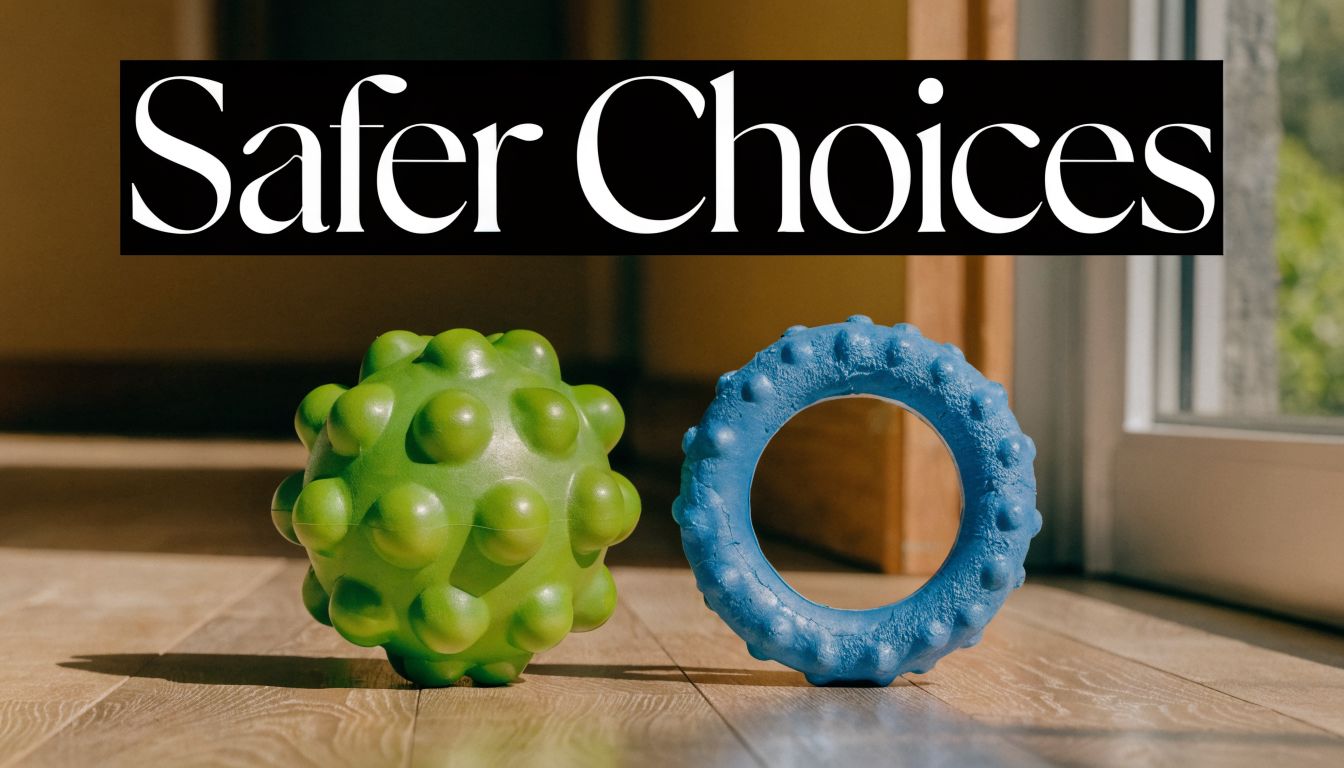
Options that often fit better into a safer routine include:
- Durable rubber toys: They let dogs mouth, chew, and work at a challenge without the same rigid force as antlers. Many can be stuffed to add licking and problem-solving.
- Dental treats accepted by veterinary oral health programs: These can support oral hygiene in a way that is more forgiving than dense bone-like chews.
- Food puzzle toys: These shift the activity from forceful gnawing to sniffing, pawing, licking, and rolling.
- Softer chew products matched to your dog's size and chewing style: The fit matters more than the trend.
Daily life matters too. Dogs rarely chew in a neat little corner. If toys, feeders, and shedding are part of the picture in your home or car, The Mobile Buff's pet hair removal tips can help keep the mess manageable.
Enrichment can start at the food bowl
Many owners hear “enrichment” and picture a long-lasting chew. Dogs often care more about the experience than the hardness. Smell matters. Texture matters. Licking can be calming. Working for food can satisfy the brain without putting heavy stress on the mouth.
This matters most for dogs whose bodies need a gentler approach. Seniors may have worn teeth or tender gums. Picky eaters may need more aroma and flavor to stay interested in meals. Dogs recovering from illness may benefit more from easy eating and hydration than from any chew session.
That is why food-based enrichment deserves more attention. A meal topper can turn dinner into an activity and a source of support at the same time. Instead of asking a vulnerable dog to grind away at a rigid object, you can add interest directly to the meal they already need.
ChowPow is one example. It is a dehydrated beef heart meal topper meant to be added to a dog's existing food, not used as a replacement diet. It can be sprinkled over kibble, mixed with water, or used to help with medication. For some dogs, that kind of gentle nutrition does more for comfort and quality of life than any hard chew.
What this can look like in real life
An older dog who has lost interest in hard treats may still come eagerly to the bowl when dinner smells richer.
A picky dog may ignore plain kibble but respond when the meal has more scent and taste.
A dog healing from dental work, stomach upset, or illness may need soft, appealing food and a calm routine more than “chew time.”
Here's a simple comparison:
| Option | Main benefit | Main concern |
|---|---|---|
| Antler | Long-lasting gnawing | Tooth injury and swallowed fragments |
| Rubber food toy | Chewing plus mental work | Must be size-appropriate |
| Dental treat | Oral care routine | Needs label scrutiny and supervision |
| Meal topper on kibble | Sensory enrichment and nutrition support | Should complement, not replace the base diet |
For a quick visual idea of food-based enrichment in a dog routine, this video is worth a look.
A gentler definition of “treating your dog”
Treating your dog well is not about finding the toughest item on the shelf. It is about choosing something their body can enjoy safely.
For many dogs, especially seniors, picky eaters, and dogs with sensitive mouths, the kindest form of enrichment is nourishment with interest built in. A safer routine can still be fun. It can also protect comfort, support appetite, and make everyday care easier.
Your Dog Deserves Safe and Savory Nutrition
Antlers are popular for understandable reasons. They look natural, they last, and many dogs enjoy them. But enjoyment alone doesn't make a chew safe.
The concerns are serious. Hard antlers can break teeth. Broken pieces can be swallowed. Sharp fragments can choke a dog or create internal problems that may need urgent care. For puppies, seniors, powerful chewers, and dogs with sensitive mouths, the risk becomes even harder to justify.
There's a better way to think about enrichment. Instead of asking your dog's teeth and stomach to manage a rigid chew, you can choose options that are gentler and still satisfying. Soft puzzle feeding, appropriate rubber toys, dental products chosen carefully, and meal enhancement all move in a safer direction.
That's especially important for dogs who need encouragement to eat or support through aging and recovery. In those cases, improving the value and appeal of the meal can do more good than offering a hard chew ever could.
Choosing a safer path isn't about depriving your dog. It's about protecting comfort, preventing pain, and making everyday care easier on their body.
If your dog needs gentler enrichment at mealtime, ChowPow is a simple meal topper option that can be added to your dog's current food to boost flavor and nutritional value without replacing their kibble. It's a practical fit for picky eaters, seniors, and dogs who do better with soft, easy-to-enjoy support.
-
Product on sale
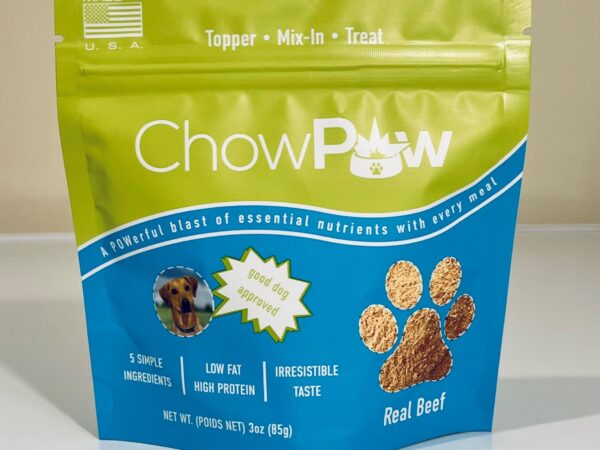 Dog Food Topper - Beef HeartOriginal price was: $14.99.$10.95Current price is: $10.95. - or subscribe and save up to 20%