
Are Dogs Allergic to Onions? A Guide to Toxicity
You’re probably here because your dog grabbed a dropped bite of dinner, licked a spoon from the sink, or cleaned up crumbs before you could react. That moment is stressful, especially when the food had onion in it and you start searching, are dogs allergic to onions?
The short answer is no, onions are not mainly a dog allergy problem. They’re a toxicity problem. That distinction matters because an allergy and a poison behave very differently in the body, and the right response is different too.
With onions, the concern isn’t usually itching, hives, or a typical food sensitivity. Instead, the danger is that onion can damage a dog’s red blood cells, and signs may not show up right away. That delay is what catches many owners off guard.
That Fallen Scrap Why Onions Are a Bigger Risk Than You Think
A lot of owners use the word “allergy” when they really mean “bad reaction.” That’s understandable. If your dog ate a bite of burger, stew, pizza, or rice from your plate and onion was in it, you want to know one thing fast. Is this going to hurt my dog?
With onions, think toxic, not allergic.
An allergy is an immune response. Onion exposure in dogs is different. Onion contains compounds that can injure red blood cells. So even if your dog seems fine right after eating it, there can still be a problem developing inside the body.
Why this gets missed at home
Most onion exposures don’t happen because someone fed a whole onion on purpose. They happen in ordinary kitchen moments:
- Dropped table scraps from fajitas, burgers, omelets, or stir-fry
- Leftover takeout with diced onion mixed into rice or sauce
- Snack foods seasoned with onion powder
- Prepared foods where onion isn’t obvious at a glance
That’s why this household risk feels sneaky. You may not even be looking at a visible onion slice. You may be looking at a chip crumb, gravy, broth, or seasoned meat.
Bottom line: A dog doesn’t need to “be allergic” to onion for onion to be dangerous.
If your dog is the type who samples anything that hits the floor, it’s smart to treat onion the same way you’d treat other well-known food hazards. If you’re building your mental list of foods to avoid, this guide on whether grapes are okay for dogs to eat is another useful one to bookmark.
The Real Danger Onion Toxicity Explained
Onion toxicity sounds technical, but the basic idea is simple. A compound in onions called N-propyl disulfide damages red blood cells. According to the Merck Veterinary Manual on garlic and onion toxicosis in animals, onions trigger Heinz body hemolytic anemia in dogs through this process, and clinical signs can appear 1 to 5 days after ingestion.

What’s happening inside the body
Think of red blood cells as tiny delivery trucks carrying oxygen. Onion compounds can damage the hemoglobin inside those cells. A simple way to picture it is rust-like injury. Once that damage happens, the cells don’t move and function the way they should.
The damaged hemoglobin forms Heinz bodies, which are clumps of denatured hemoglobin. The body then starts removing those injured red blood cells from circulation. When enough are damaged, the dog can develop anemia.
That means less oxygen gets delivered to tissues. Dogs may look tired, weak, pale, or short of breath because their body isn’t carrying oxygen efficiently.
Why onion powder is such a blind spot
Owners often watch for visible onion pieces and miss the more common trap. Processed foods and seasonings. Powdered or dehydrated onion can be present in foods where you’d never notice it just by looking.
That matters because the onion doesn’t need to look obvious to still be harmful. A dog can be exposed through seasoned meat, soup, gravy, snack coatings, or a “plain” leftover that wasn’t plain.
Some owners only worry if their dog ate chopped onion. In practice, the hidden ingredient can be the real issue.
If your veterinarian later talks about anemia after a food exposure, this article on causes of anemia in dogs can help make that conversation easier to follow.
How Much Onion is Dangerous for a Dog
This is the part most owners want immediately. How much is too much?
Veterinary sources confirm that 15 to 30 g/kg of body weight in raw onions can cause clinically significant blood changes, and toxicity is consistently noted when ingestion exceeds 0.5% of a dog’s body weight, according to this dvm360 review of allium species poisoning.
That sounds abstract, so let’s make it practical.
A simple way to think about the threshold
If a dog eats onion amounting to more than 0.5% of body weight, concern rises quickly. The same source gives a helpful example: 50 grams for a 10 kg dog, which is about 1/3 of a medium onion weighing around 150 g. It also notes that a 20 kg dog can face toxic effects from about 100 grams, or roughly one medium onion.
Some dogs may react more strongly than others. Dogs with underlying illness and some Japanese breeds, including Akitas, can be more vulnerable.
Practical rule: Small dogs have much less room for error. A scrap that looks minor to you may be a meaningful exposure for them.
Onion toxicity levels by dog weight
| Dog Weight | Approximate Toxic Amount (Fresh Onion) |
|---|---|
| Small dog around 10 kg | 50 g |
| Medium dog around 20 kg | 100 g |
| Larger dog around 50 kg | More than 0.5% of body weight remains the key concern |
The exact risk depends on the dog, the form of onion, and health status. A powder-heavy food can be especially concerning because concentrated forms are harder to judge by eye.
Where owners get tripped up
The hardest part isn’t always the math. It’s the mixed food. Dogs rarely eat a neat, weighable onion serving. They eat meatloaf, casserole, seasoned chicken, broth, or a spoonful of dip.
When you can’t measure the exact onion amount, don’t guess based on how “small” the bite looked. Think about what the food was, whether onion or onion powder was in it, and how big your dog is.
Symptoms of Onion Poisoning and When They Appear
One of the most confusing parts of onion poisoning is timing. Dogs don’t always look sick right away. The PDSA guidance on onion and garlic poisoning in dogs notes that symptoms can take 1 to 5 days to appear, and some dogs, especially seniors or those with pre-existing conditions, may be more sensitive.

Early signs owners may dismiss
At first, the changes can look like a routine stomach upset or a tired day.
- Low energy that feels out of character
- Less interest in food
- Vomiting or diarrhea
- General discomfort or restlessness
These signs are easy to brush off if you didn’t see the onion exposure happen.
Signs that suggest anemia is developing
As red blood cell damage becomes more significant, symptoms often look more serious:
- Pale gums
- Weakness
- Faster breathing
- Increased heart rate
- Red or brown urine
- Trouble standing or collapse in severe cases
If your dog vomits after eating a questionable food, you may also have a practical mess to deal with at home. If that happens on carpet, this guide to professional dog vomit carpet cleaning is a useful cleanup resource while you focus on your dog’s care.
A dog can seem normal for a while after eating onion. Don’t use “he looks okay” as proof that everything is fine.
Dogs who deserve extra caution
Some dogs need a lower threshold for concern:
- Senior dogs
- Dogs recovering from illness
- Dogs with anemia or other ongoing medical problems
- Dogs with known breed sensitivity
Those dogs may have less reserve if red blood cell damage begins.
What to Do If Your Dog Eats Onion
If you know or strongly suspect your dog ate onion, stay calm and act quickly. Fast, organized action helps your veterinarian much more than panic does.

Immediate steps at home
Remove access to the food
Pick up the plate, leftovers, packaging, or spill so your dog can’t eat more.Check what was eaten
Look for ingredient labels. “Onion,” “dehydrated onion,” and “onion powder” all matter.Call your veterinarian right away
Tell them your dog’s weight, what form of onion was involved, about how much may have been eaten, and when it happened.Don’t induce vomiting unless a veterinary professional tells you to
Owners often want to do something immediately, but the safest next step depends on the dog, the timing, and the food involved.
Bring the package, ingredient list, or a photo of the food with you if you can. That can save time.
It also helps to keep poisoning basics in your home plan. This checklist of items for your dog’s emergency kit is worth keeping handy.
What your vet may do
Your veterinarian may recommend monitoring, an exam, bloodwork, or treatment depending on how much onion was eaten and how recently it happened. They’ll be looking for signs of red blood cell injury and anemia.
This short video gives a helpful overview of onion risk in dogs and why prompt care matters.
If your dog seems weak, has pale gums, trouble breathing, or red-brown urine, treat that as urgent. Don’t wait for the next day to “see how it goes.”
Boosting Nutrition Without the Risk Safe Topper Alternatives
The tricky part about onion isn’t only the obvious onion ring or diced topping. It’s the hidden version. The Purina article on whether dogs can eat onions notes that onion and garlic powders are surprisingly common in human foods like soups and baby food, and these concentrated forms are even more potent than fresh onions.
That’s why “just a little taste” can be a poor test of safety. A spoonful of broth, gravy, seasoned meat, or snack crumbs may contain allium ingredients you can’t see.
Smarter label reading
When you’re checking foods before sharing them, scan for:
- Onion powder in chips, crackers, seasoning blends, and snack coatings
- Dehydrated onion in soups, gravies, sauces, and frozen meals
- Garlic and onion together in broths or savory prepared foods
- Flavoring blends that make ingredients less obvious at a glance
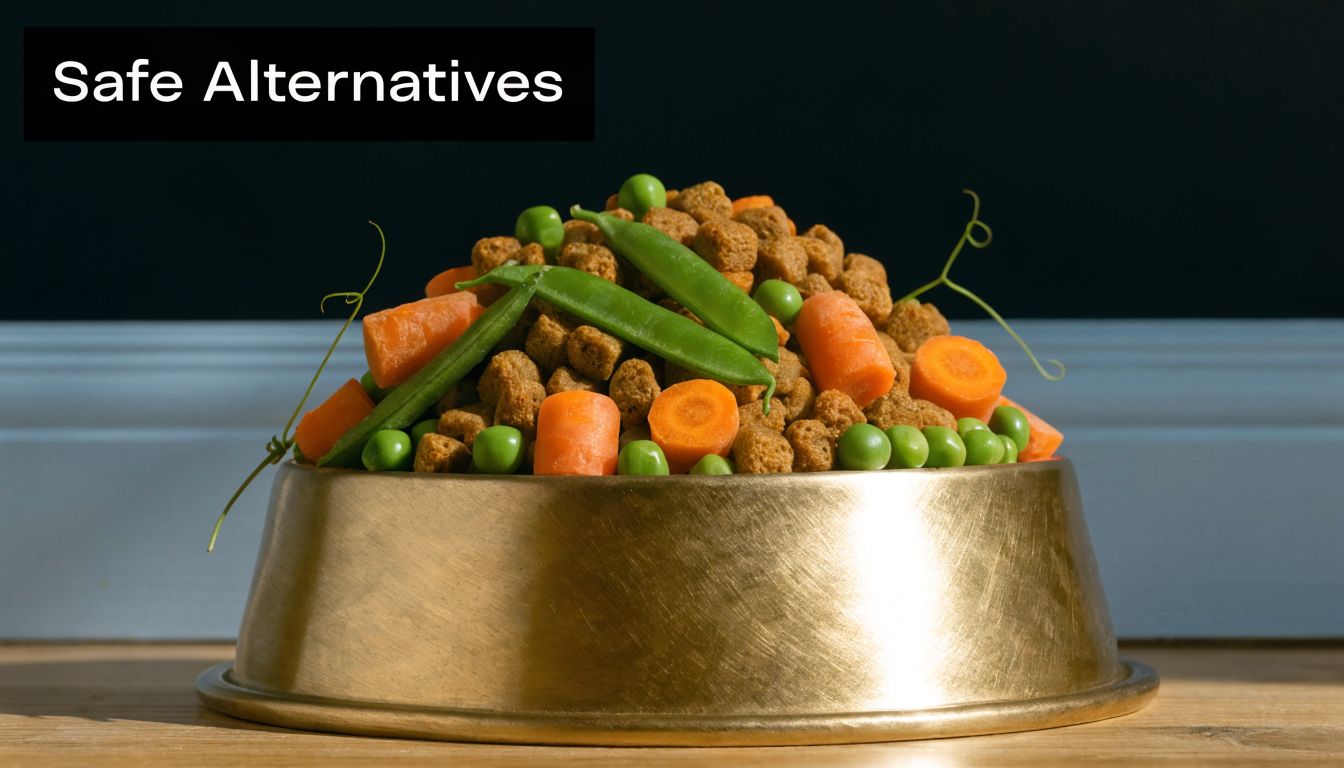
Fresh, simple dog-safe additions are easier to judge than heavily seasoned foods. Carrot and celery are examples of non-toxic alternatives often used by owners who want to add interest to a meal without introducing allium risk.
Better ways to upgrade a bowl
If your goal is to make kibble more appealing, choose meal additions with a short, clear ingredient list and no allium ingredients. That matters most for picky eaters, older dogs, and dogs recovering from illness, because these owners often reach for toppers, broths, or hand-fed extras to encourage appetite.
A topper should enhance your dog’s current food, not replace a balanced daily diet unless your veterinarian says otherwise. The safest choices are the ones you can understand at a glance.
The more transparent the ingredient list, the easier it is to avoid accidental onion exposure.
If you want a simple way to boost your dog’s bowl without hidden onion ingredients, ChowPow is designed as a meal topper, not a kibble replacement. Its small-batch formula uses straightforward ingredients like beef heart, carrots, celery, and apple cider vinegar, which makes it easier for careful dog owners to know exactly what they’re adding to the bowl.
-
Product on sale
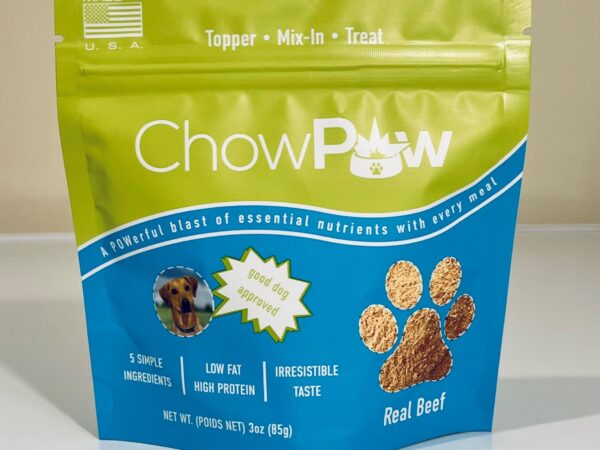 Dog Food Topper - Beef HeartOriginal price was: $14.99.$10.95Current price is: $10.95. - or subscribe and save up to 20%