Ativan for Dogs: A Complete Guide for Owners
When your dog is shaking through a thunderstorm, pacing before fireworks, or melting down when you leave the house, it's hard to know what helps. You want relief for your dog, but you also want to make the right choice. That's where Ativan for dogs often comes up in a veterinary conversation.
Ativan can be useful, but it isn't a casual medication. It's a prescription drug with real effects, real risks, and very specific situations where a veterinarian may decide it fits. For some dogs, it helps take the edge off intense fear. For others, the plan needs more than medication alone, especially if the dog is also a picky eater, a senior, or recovering from illness.
A lot of worried owners are dealing with more than one problem at once. Their dog may panic during storms, then refuse dinner. Or they may struggle with alone-time distress that looks a lot like panic. If that sounds familiar, this overview of autophobia and separation anxiety can help put the behavior in context. Noise sensitivity can also have a big impact on appetite, sleep, and routine. This deeper look at why fireworks terrify our furry friends is helpful if loud events are your dog's main trigger.
The goal isn't to make you afraid of the medication. It's to help you use it wisely, with your vet's guidance, and with a whole-dog approach that includes routine, environment, and practical feeding support.
A Guide for Worried Pet Parents
A storm rolls in. Your dog starts panting before the rain even hits the windows. Then come the pacing, the trembling, the desperate attempt to wedge behind the toilet or under the bed. If you've been through that, you know how helpless it feels.
Many owners first hear about Ativan for dogs during moments like these. A veterinarian may bring it up for severe fear, anxiety-related behavior, or as part of seizure care. That can be reassuring, but it also raises a lot of questions. Is it safe? Will it knock my dog out? Will it help my dog eat, or make things worse?
Those are good questions. Ativan isn't a magic fix, and it's not a substitute for finding the reason your dog is struggling. But it can be an important tool when your vet decides your dog needs short-term support.
Some dogs need a quieter room and a predictable routine. Some need medication. Many need both.
Owners often feel pressure to solve everything at once. Calm the dog. Get the pill in. Keep dinner down. Prevent another panic episode. Real life doesn't usually work that neatly. Dogs with intense fear may also skip meals, resist medication, or act differently than expected once a sedative is on board.
That's why informed care matters so much. A good plan looks at the whole picture, not just the moment of panic. It considers timing, your dog's trigger, what happens after the dose, and whether your dog can still rest, eat, and recover comfortably.
What Ativan Is and How It Works for Dogs
Ativan is the brand name for lorazepam, a medication in the benzodiazepine family. In dogs, vets prescribe it off-label, which means it was developed for human use but can still be prescribed legally and appropriately for animals when a veterinarian decides it fits the case.
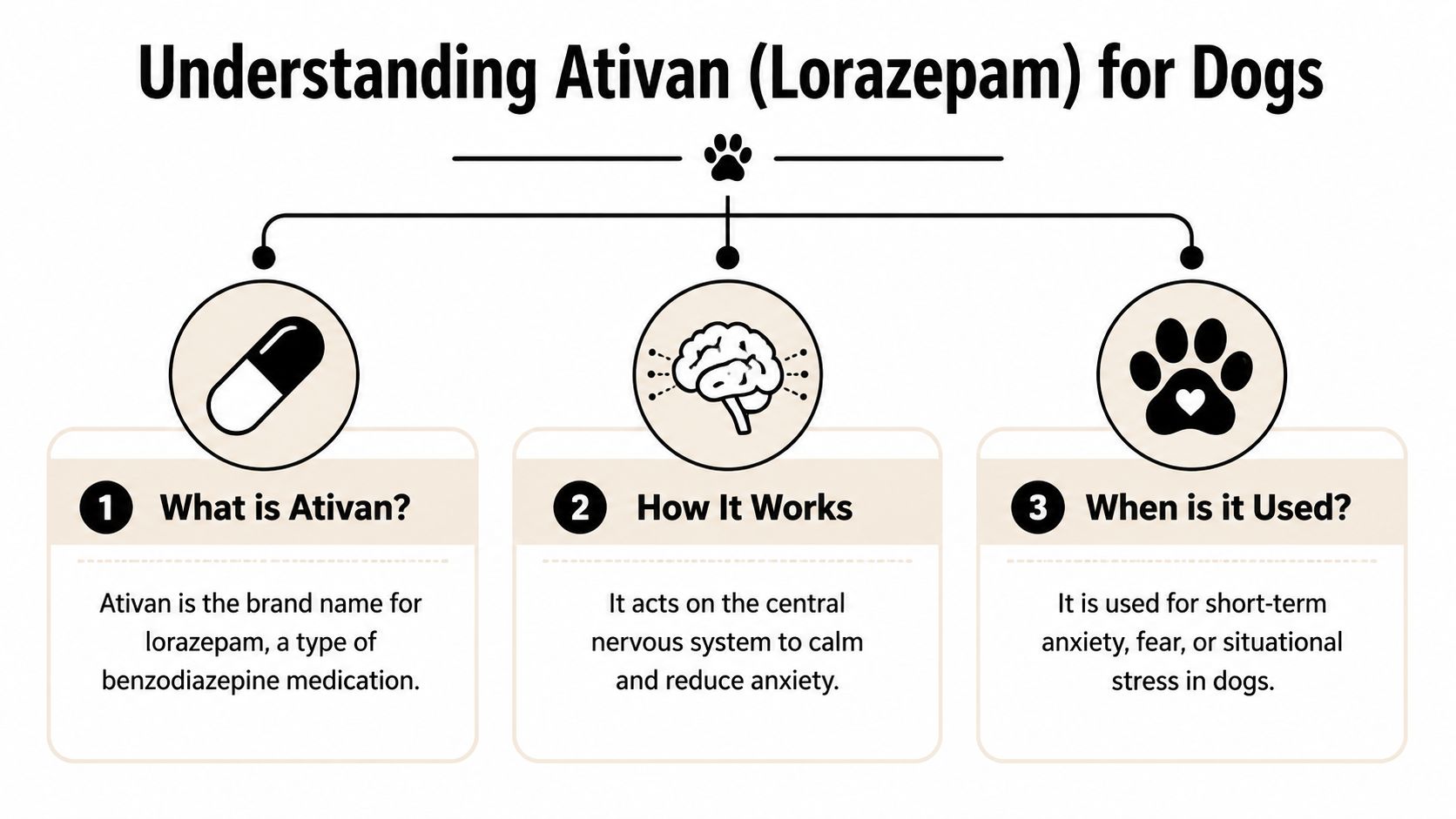
At the brain level, lorazepam strengthens the effect of a calming chemical messenger called GABA. You can picture GABA as the nervous system's brake pedal. When that braking signal gets stronger, the brain becomes less reactive, so a dog may feel less panicked, less wound up, and more able to settle.
That calming effect can be helpful. It can also create confusion for owners.
A dog may look quieter because the medication reduced anxiety, because it caused sedation, or because both happened at the same time. That distinction matters. If your dog seems sleepy but still refuses food or still startles easily, the medication may not be solving the whole problem on its own.
This is also where the appetite stimulation paradox can show up. Some dogs seem more willing to eat once fear eases. Others get so drowsy that eating becomes less appealing. Owners sometimes expect an appetite boost and feel alarmed when their dog just stares at the bowl.
In real life, that means your plan may need to cover both medication and nutrition. If your dog is picky, nauseated, or recovering from illness, a strong-smelling food topper such as ChowPow can help make a small meal or a hidden pill more appealing. The goal is simple. Get the medication in safely, then make it easier for your dog to take in enough food to recover.
Vets use lorazepam in a few different ways, including short-term anxiety support and some seizure-related situations. The same drug can serve different purposes depending on the dog, the problem being treated, and how quickly relief is needed. That is why dosing and timing should come from your veterinarian, not from another pet owner, an old prescription bottle, or a social media post.
A broad dose range does not mean the medication is casual to use. It means vets have to tailor it carefully. They look at your dog's size, age, liver health, current medications, trigger pattern, and how strongly sedation would interfere with normal eating, walking, and recovery.
Here's the practical takeaway for home care:
- Lorazepam calms the nervous system, so your dog may seem less reactive or more sleepy.
- Calmer does not always mean comfortable enough to eat, especially if sedation is strong.
- Food support matters, particularly for dogs that are sick, stressed, or refusing meals.
- Your vet should decide the dose and schedule, because the right plan depends on why your dog is getting Ativan in the first place.
If your dog has ever skipped dinner after a stressful event, this part is easy to understand. A calmer brain helps, but a sleepy dog still may not feel interested in a plain bowl of food. Sometimes the best results come from pairing the medication plan with a practical feeding strategy that makes swallowing the pill and finishing a meal much easier.
Is Ativan Right for Your Dog
The right question usually isn't “Can dogs take Ativan?” It's “Why does my dog need help, and is Ativan the best tool for that specific problem?”
Some dogs are good candidates for vet-prescribed lorazepam. Others need a different medication, a behavior plan, or a medical workup before anyone should assume the problem is anxiety.
Situations where a vet may consider it
Ativan may come up when a dog has intense, predictable fear episodes. Common examples include fireworks, thunderstorms, travel panic, or severe distress during separations. A dog that starts drooling, trembling, and trying to escape before every car ride is dealing with a different problem than a dog that only seems restless at bedtime.
Vets also think about how often the problem happens. A dog with occasional event-based panic may need a different approach than a dog that seems anxious every day. If anxiety is chronic, the long-term plan may need more than a short-acting sedative.
Why the exam matters first
A dog can look anxious for reasons that have nothing to do with behavior. Pain, cognitive changes, neurologic problems, and other illnesses can all change how a dog acts. If a dog suddenly becomes clingy, restless, vocal, or unwilling to settle, your vet has to ask whether anxiety is the cause or just the visible symptom.
That's especially important in older dogs and dogs recovering from surgery or illness. Owners may notice pacing, poor sleep, and appetite changes and assume fear is the whole story. Sometimes it is. Sometimes it isn't.
Questions your vet may weigh
Instead of thinking in terms of “my dog is nervous,” your vet is usually sorting through a more detailed checklist:
| What your vet looks at | Why it matters |
|---|---|
| Trigger pattern | Predictable triggers can make timing easier |
| Overall health | Other illnesses can mimic or worsen anxiety |
| Appetite and eating habits | Sedation may complicate feeding in some dogs |
| Behavior history | Dogs with certain behavior patterns may respond differently |
| Safety risk | Escape attempts, self-injury, or severe panic change the urgency |
A thoughtful prescription is usually part of a broader treatment plan. It isn't a shortcut, and it shouldn't replace training, trigger management, or medical evaluation.
Understanding Risks and Potential Side Effects
If your vet prescribes Ativan, the next step is observation. You don't just give the pill and hope for the best. You watch how your dog responds.

Common side effects owners may notice
Lorazepam can cause several side effects in dogs. Based on the verified veterinary information provided earlier in this article, the commonly reported ones include:
- Drowsiness. This is one of the most common reactions.
- Increased appetite. Some dogs may seem much more interested in food.
- Excitability or heightened activity. Not every dog gets calmer.
- Aggression. Behavioral changes need prompt veterinary attention.
The tricky part is that these effects don't always line up the way owners expect. A dog may take a medication for anxiety and become sleepy but still not settle enough to eat or function normally.
The appetite stimulation paradox
This is one of the biggest points of confusion with ativan for dogs. Some owners hear that lorazepam can increase appetite and hope it will help a picky eater or a recovering dog start eating better. That can happen, but it doesn't happen in a simple, reliable way.
According to PetMD's lorazepam for dogs overview, lorazepam can stimulate appetite in some animals, but common side effects in dogs include drowsiness and sedation lasting 6 to 8 hours. That sedation can suppress eating, especially in dogs who already feel unwell or hesitant about food.
A dog can be hungry in theory and still be too sleepy, wobbly, or disconnected to walk over and eat normally.
That's why owners of seniors, rescue dogs, and dogs in recovery need to pay attention to what happens after the dose. If your dog eats less, seems too groggy to approach the bowl, or only nibbles and then lies back down, your vet needs that information.
When side effects become urgent
Some reactions move beyond “expected” and into “call now.” Keep a close eye out for:
- Extreme sleepiness that seems deeper than normal sedation
- Collapse or inability to rouse
- Severe agitation or sudden aggression
- Trouble standing or walking safely
- Any signs that make you worry about overdose
The supplied veterinary data also notes that severe complications of overdose can include coma or circulatory collapse, which makes dose accuracy and storage critically important.
How to Give Ativan Safely and Reduce Stress
Medication time goes better when it feels routine instead of confrontational. If your dog already associates pills with being restrained, pried open, or tricked at the last second, the whole process gets harder for both of you.

Timing matters as much as technique
For anxiety, Ativan isn't usually something you wait to give until your dog is already in full panic. The timing has to match the trigger as closely as possible.
According to Veterinary Place's Ativan for dogs guide, oral Ativan tablets can be given with or without food, but giving them with food can reduce GI upset. The same source says that for anxiety, it's typically given about 1 hour before an anticipated stressful event, and it also notes that a common side effect is a significant increase in appetite that needs careful management.
That means your plan should be concrete. If a storm is expected in the evening, don't wait until your dog is already shaking. If fireworks start at dark every year, talk with your vet ahead of time about exactly when to dose.
Make the pill routine easier
Owners usually have the most success when they remove the drama from the process. A few practical habits help:
- Use a familiar food routine. Dogs are less suspicious when medication shows up in a normal feeding pattern.
- Avoid chasing with the pill. If your dog bolts at the sight of medication, pause and reset.
- Watch after the dose. Make sure the pill was swallowed and note how your dog responds over the next several hours.
If pill-giving has become a battle in your house, this guide on the best way to give dogs medication offers practical handling ideas.
Keep the whole event calm
Your body language matters. Dogs often pick up on tension before the medication is even offered. If you sound worried, rush the process, or repeatedly attempt and fail, many dogs become harder to medicate.
A short demonstration can help if your dog resists tablets or notices hidden medication right away.
Home care reminder: Give the medication exactly as prescribed, then monitor appetite, alertness, and mobility so you can give your vet a clear report.
Ativan Alternatives and Complementary Strategies
Ativan is one option. It's not the entire toolbox.
Some dogs need medication for acute events. Others improve most when owners focus on environment, routine, enrichment, and behavior work. Many do best with a combination.
Medication versus non-medication support
Here is a simple explanation:
| Approach | Best fit |
|---|---|
| Event-based medication | Intense, predictable fear episodes |
| Long-term anxiety medication | Ongoing anxiety that isn't limited to one trigger |
| Behavior modification | Dogs that need new coping skills, not just sedation |
| Environmental management | Dogs triggered by noise, chaos, or routine disruption |
If your dog only panics during fireworks, your vet may focus on situational support. If your dog struggles daily, they may talk about a broader anxiety plan.
Useful non-drug supports
A lot of improvement can come from changes that seem small at first:
- Safe space setup. Some dogs settle better in a covered crate, quiet closet, or interior room with familiar bedding.
- Predictable routine. Regular meal, potty, and sleep times can reduce baseline stress.
- Calming tools. Your vet may suggest pheromone products, pressure wraps, or other supportive items.
- Mental work. Food puzzles, scent games, and low-pressure enrichment can reduce overall arousal in some dogs.
This article on canine cognitive health and mental stimulation is useful if your dog seems anxious and under-stimulated at the same time.
Nutrition support can matter too
Dogs under stress don't always eat well. Some overeat, some pick, and some stop finishing meals when their routine changes. That's one reason overall nutritional support matters, especially for seniors and recovering dogs.
Owners who are exploring broader ingredient quality may also want to read about premium hemp for animal nutrition as part of the bigger conversation around feed ingredients and supportive care. It's not a substitute for veterinary treatment, but it helps to understand the wider nutrition environment.
The best anxiety plan often looks boring on paper. Fewer surprises, steadier routines, safer spaces, and better observation.
When to Call Your Vet A Clear Action Plan
It's 9 p.m., your dog got Ativan earlier, and now you're staring at the food bowl wondering what matters and what can wait until morning. That moment is stressful because Ativan can create a confusing mix of effects. In some dogs, it may help appetite. In others, the sleepy feeling is stronger than the urge to eat. That appetite stimulation paradox is one reason it helps to have a simple plan before something feels off.
A good rule is to watch three things together, not one by one: alertness, walking, and eating. A dog who is a little drowsy but can still get up, move normally, and show interest in food is very different from a dog who is hard to wake, cannot stand well, or refuses all food after a dose.
Call your regular veterinarian if
These problems usually call for advice from your primary vet:
- Your dog is so sleepy that meals become difficult
- Your dog's appetite changes in a way that complicates dosing or recovery
- The medication does not seem to calm the trigger your vet prescribed it for
- Your dog becomes unusually agitated, restless, or irritable after taking it
- You missed a dose or are unsure when the next dose should be given
Be ready to share specifics. Write down the dose, the time you gave it, when you noticed the change, and whether your dog ate before or after the medication. Those details help your vet sort out whether you are seeing expected sedation, a dosing issue, or a reaction that needs a different plan.
Food notes matter here more than many owners realize. If Ativan seems to reduce your dog's interest in eating at pill time, ask your vet whether you can pair the dose with a small, highly appealing bite of food. For picky eaters or recovering dogs, a topper can make the meal smell and taste more inviting, which can help with both nutrition and medication routines.
Seek emergency care right away if
Get urgent veterinary help if your dog shows any of these signs:
- Your dog is difficult to wake
- Your dog collapses
- You suspect an overdose
- Your dog shows severe aggression or a sudden behavior change that creates immediate danger
- Your dog has signs of a serious reaction, not ordinary drowsiness
- Your dog is having prolonged or repeated seizure activity
Seizures are a true emergency. If your dog is seizing for a prolonged period, or has repeated seizures without recovering normally in between, do not wait to see if it passes.
Keep this checklist handy
Use this at home:
- Confirm the prescribed dose before giving it
- Give Ativan at the timing your vet recommended
- Watch alertness, balance, and interest in food
- Record anything unusual
- Call your vet sooner if the pattern changes suddenly
You do not need to guess your way through this. You need a clear baseline and a way to notice change early.
If your dog is a picky eater, a senior, or recovering from illness, meal support can make daily care easier. ChowPow is a dehydrated beef heart meal enhancer designed to sprinkle over your dog's current food, not replace it. It can help boost the appeal and nutritional value of kibble while supporting dogs who need a more tempting, nutrient-dense meal routine.
-
Product on sale
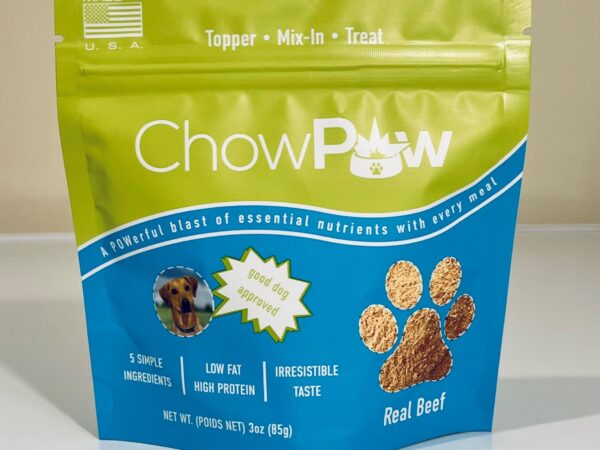 Dog Food Topper - Beef HeartOriginal price was: $14.99.$10.95Current price is: $10.95. - or subscribe and save up to 20%