Autoimmune Skin Disease in Dogs: A Complete Guide
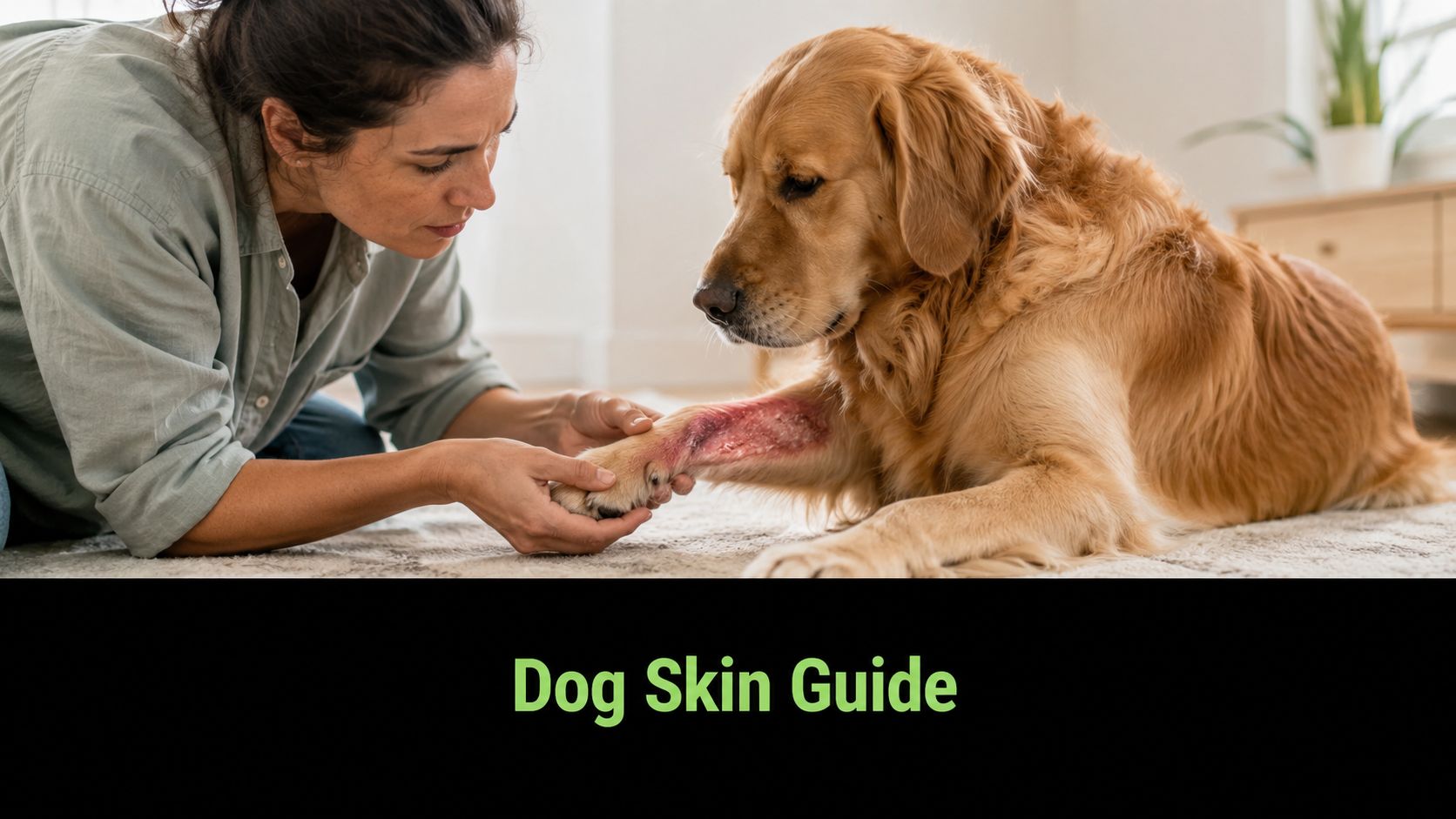
Your dog has a sore on the bridge of the nose that keeps coming back. You clean it. It crusts over. A few days later, the ears look irritated too, and now there are patches of hair loss that don't fit the usual pattern of fleas, hot spots, or seasonal itch. At that point, most owners feel the same mix of worry and frustration. You want answers, but every search result seems to jump straight to scary diagnoses or strong medications.
That reaction makes sense. Autoimmune skin disease in dogs sounds intimidating because it is. But it also becomes easier to handle once you understand what the term means, how veterinarians sort look-alike problems apart, and where supportive care fits in.
If your dog is dealing with crusts, ulcers, blisters, pigment changes, or stubborn skin inflammation, this isn't a sign that you've done something wrong. In these conditions, the body is misreading its own tissues. The skin gets caught in friendly fire.
Some dogs need long-term medication. Some need a careful search for triggers before anyone commits to that path. That part matters more than many owners realize. A new drug, a recent change in routine, heavy sun exposure, or a pattern that points more toward allergy or parasites can change the whole plan.
What helps most is to think like a detective, not just a worrier. Take photos. Track timing. Write down new medications, diet changes, and flare patterns. That information can be as valuable as any lab test.
A Pet Parent's Guide to Autoimmune Skin Disease in Dogs
A Labrador comes in with crusting around the nose and ear edges. The owner has already tried a medicated shampoo, changed treats, and washed the bedding twice a week. Nothing has fixed it. By the time they reach my exam room, they're often carrying two burdens at once. Fear that the problem is serious, and guilt that they missed something.
Skin disease creates that kind of stress because it lives where you can see it. Every scab looks dramatic. Every new patch of hair loss feels like proof that things are getting worse. When it doesn't respond to simple treatment, owners start wondering whether the food is wrong, the shampoo is wrong, or they've failed their dog somehow.
They haven't.
Autoimmune skin disease in dogs happens when the immune system misfires. Instead of protecting the body from outside threats, it starts damaging parts of the dog's own skin. That process can produce crusts, sores, ulcers, blisters, hair loss, and secondary infections. It can also be confusing because many of those signs overlap with allergies, mites, bacterial skin infections, and other common problems.
Skin lesions are a clue, not a diagnosis.
That's why a good workup is so important. The visible sore is only the surface story. The underlying question is what created it.
Some autoimmune skin diseases are uncommon. Some are severe. Some can be controlled for long stretches with the right treatment and monitoring. Many owners hear the word "autoimmune" and assume it means there is no hope. That's not how I want you to think about it. I want you to think in terms of management, pattern recognition, and informed decisions.
A calm, organized approach helps:
- Photograph changes: Use the same lighting and angle when you can.
- Track timing: Note when each lesion started and whether it flares after sun exposure, medication changes, or seasonal shifts.
- Record symptoms beyond the skin: Appetite, energy, eye changes, limping, or fever can all matter.
That kind of record gives your veterinarian a much clearer picture than memory alone.
What Is an Autoimmune Skin Disease
The easiest way to understand this is to picture the immune system as a country's defense force. Its job is to identify invaders and protect the population. In a healthy dog, that system recognizes bacteria, viruses, and other threats and responds to them.
In an autoimmune disease, the defense force makes a recognition error. It starts treating normal body tissue as if it were an enemy target.

The basic immune mistake
When that mistaken attack happens in the skin, the results show up on the outside. The dog may develop crusting, blisters, ulcers, hair loss, or inflamed areas that don't heal the way a simple scratch should.
If you want a beginner-friendly refresher on antigens and antibodies before going deeper, this practical guide to immunity concepts helps explain the vocabulary in plain language.
Here's the distinction that trips many people up:
| Condition | What the immune system reacts to | Typical idea |
|---|---|---|
| Allergy | Something outside the body | An overreaction to pollen, food, or flea saliva |
| Autoimmune disease | The dog's own tissue | A case of mistaken identity |
That difference shapes treatment. With allergies, we often focus on avoiding triggers, reducing itch, or calming inflammation. With autoimmune disease, the immune system itself is part of the main problem, so treatment often involves suppressing that misdirected response.
Rare, but important
These conditions aren't common. Immune-mediated skin diseases make up exactly 1.4% of all canine skin diseases, and pemphigus accounts for approximately one-third of all canine autoimmune disorders, according to Frontiers in Veterinary Science.
That rarity is one reason owners often feel lost. Owners often have little prior knowledge of them before their own dog develops suspicious lesions.
Practical rule: If a skin problem looks dramatic and keeps returning despite routine care, don't assume it's "just a rash."
The important takeaway isn't that every crust is autoimmune. It isn't. The important takeaway is that when skin damage is persistent, unusual, or poorly responsive, your veterinarian has to consider whether the body's own defenses are involved.
Common Types and Their Telltale Signs
Not every autoimmune skin disease in dogs looks the same. Each one has a favorite pattern. Learning those patterns won't replace a diagnosis, but it will help you describe what you're seeing more clearly.
Pemphigus and related skin lesions
Pemphigus foliaceus is the form owners hear about most often. Within the pemphigus group, it's the most common autoimmune skin disease. Dogs may develop crusts, pustules, hair loss, and erosions, often beginning around the face, nose bridge, and ear pinnae. Secondary bacterial infection can pile on and make the skin look even angrier.
Pemphigus vulgaris is less frequent but more severe. The lesions tend to be deeper and more ulcerative, and affected dogs can look quite painful.
A clue many owners miss is the role of sunlight. Ultraviolet exposure can trigger or worsen signs in pemphigus foliaceus, so veterinarians often recommend strict sun avoidance as part of treatment. That guidance comes from a review available through PubMed Central.
Conditions that don't look exactly like pemphigus
Some autoimmune diseases target pigment cells rather than the upper skin layers. Uveodermatologic syndrome and vitiligo are the recognized autoimmune diseases affecting skin melanocytes in dogs. Uveodermatologic syndrome has been documented across Asia, Europe, South America, and North America, which tells us it isn't restricted to one small region. It can involve both skin and eyes, so eye symptoms matter a lot in those cases.
If your dog has red, painful, cloudy, or irritated eyes along with skin lesions, don't write that off as coincidence. Owners often benefit from reading about other eye problems too, because not every red eye is autoimmune. For a simple breakdown of one common eye issue, Passpaw's guide to dog conjunctivitis can help you understand some look-alikes.
A simple comparison guide
- Face and ears first: Think harder about pemphigus-type disease when crusts and erosions start on the nose bridge or ear edges.
- Pigment loss with eye trouble: Ask about melanocyte-targeting diseases such as uveodermatologic syndrome.
- Hair loss without the usual itch pattern: Keep an open mind. Some immune-related disorders can mimic more familiar coat problems.
Hair loss especially can send owners in the wrong direction. Some dogs with endocrine or inherited coat issues lose hair in a very different way, which is why comparison helps. If you want to see how another non-autoimmune hair loss pattern differs, this Alopecia X overview is a useful contrast.
Don't focus only on what the lesion looks like. Focus on where it started, how fast it spread, and whether the eyes, feet, ears, or nose are also involved.
That pattern-based thinking helps your veterinarian narrow the list much faster.
How Vets Diagnose the Underlying Cause
Diagnosis usually feels slower than owners expect. That's frustrating, but it's also appropriate. Many things can mimic autoimmune skin disease in dogs, and some of them are far more common.
A smart workup starts with history, not the biopsy punch.

The history can change the whole case
Before I worry about a lifelong autoimmune condition, I want a detailed timeline. When did the first lesion appear? What medications started before that? Was there a recent vaccine, supplement, diet change, or abrupt seasonal shift? Did the problem worsen after heavy sun exposure?
That history matters because drug-induced autoimmune skin disease can resemble primary autoimmune disease, and identifying a trigger can allow spontaneous resolution after the trigger is removed. VCA explains this clearly in its discussion of autoimmune skin disease in dogs.
Owners can greatly assist. Bring a list, not a vague memory.
- Medication record: Include prescriptions, preventives, supplements, shampoos, wipes, and anything recently stopped.
- Diet details: Write down the main food, treats, table scraps, and any recent switch. If food allergy is part of the differential, an elimination diet for dogs may become part of the conversation.
- Environmental clues: Note pollen seasons, new cleaners, boarding, grooming products, and outdoor habits.
Tests that rule out the pretenders
Many dogs need skin cytology and skin scraping early in the process. Those tests help look for bacteria, yeast, parasites, and inflammatory patterns. Bloodwork can help assess overall health and organ function, especially before immunosuppressive drugs are considered.
A biopsy is the definitive test. That's the point at which a small sample of affected skin goes to a pathologist who looks at the tissue architecture and cell pattern.
This short video gives owners a helpful visual sense of how veterinarians think through difficult skin cases:
What owners often misunderstand
Owners sometimes worry that more testing means the veterinarian is unsure. Often, it's the opposite. The vet is trying to avoid a premature label.
A biopsy can confirm what the skin is doing. A timeline often explains why it started.
That's why the sequence matters. If you skip the trigger hunt and jump straight to long-term immunosuppression, you may miss a reversible cause. If you assume every crust is allergy and never biopsy suspicious lesions, you may delay needed treatment.
The best diagnosis usually comes from combining both approaches. Careful history. Basic rule-outs. Then biopsy when the picture demands it.
Modern Treatment Options Explained
Once the diagnosis is firm, treatment usually centers on one main goal. Reduce the immune attack enough that the skin can heal and the dog can stay comfortable. That isn't always the same as a cure.
Corticosteroids and fast control
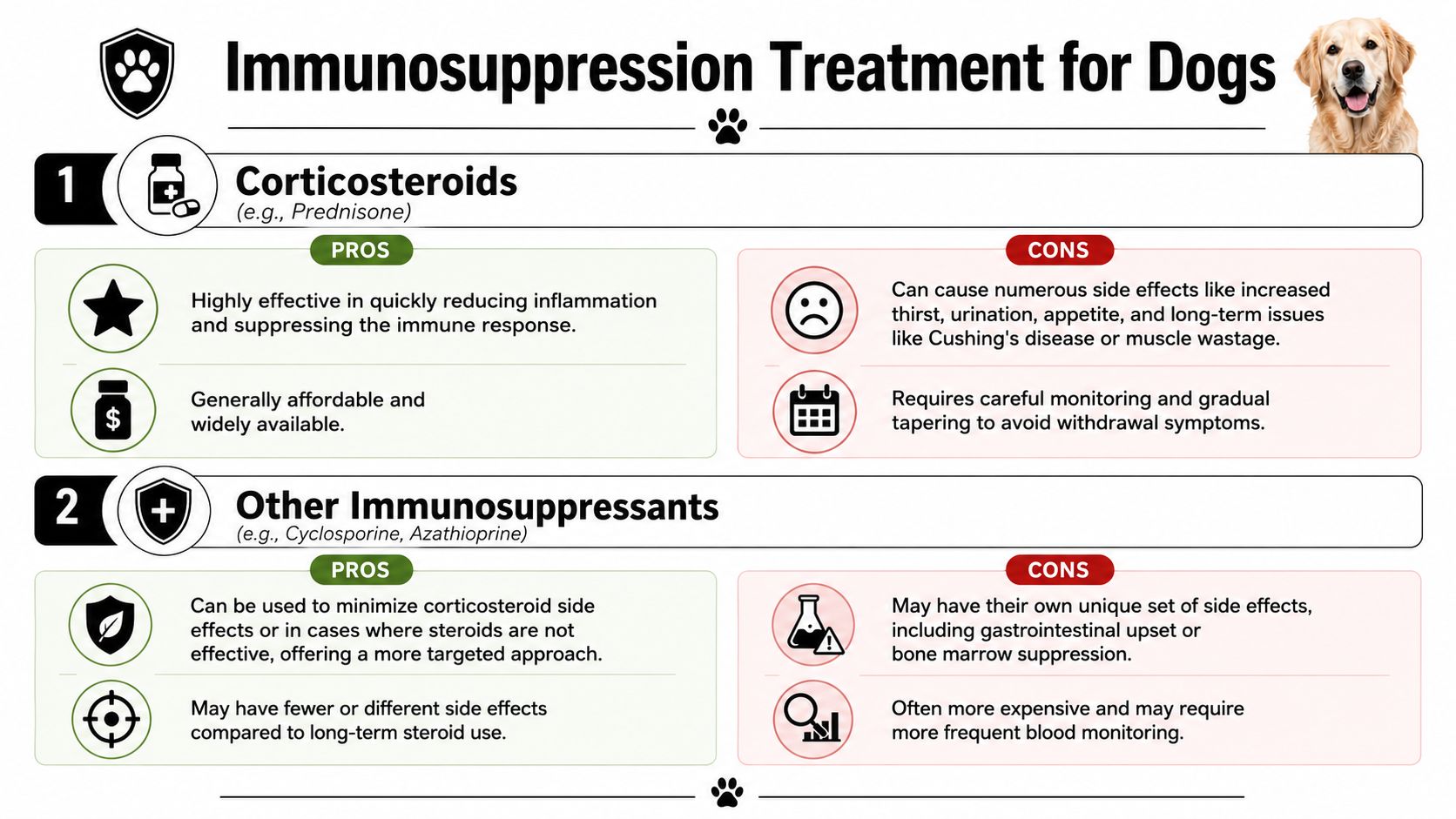
Prednisone is commonly used because it works quickly and many dogs need fast relief. When a dog has widespread crusting, painful lesions, or rapidly progressive disease, veterinarians often reach for corticosteroids first to get control.
The trade-off is that steroids can cause side effects. Owners often notice increased thirst, increased urination, a bigger appetite, panting, or behavior changes. Longer use may create more problems, which is why tapering and monitoring are so important.
Steroid-sparing drugs and combination plans
If steroids alone aren't enough, or if we want to reduce steroid exposure over time, veterinarians may add drugs such as azathioprine, cyclosporine, or other immunosuppressants. These medications help maintain control but need respect. They are not casual long-term drugs.
For azathioprine, a veterinary reference from VIN lists a typical dosage of 2.2 mg/kg orally once daily for one month, then every 48 hours thereafter to reduce side effects while maintaining control, as outlined in this VIN dosing reference.
Some dogs also need antibiotics if bacteria have taken advantage of damaged skin. Others need topical therapy in addition to systemic medication.
What success usually looks like
Owners often expect treatment to erase the disease completely. Sometimes that happens for a period. More often, success looks like remission or partial remission with monitoring and adjustments over time.
A practical way to think about it is this:
| Treatment goal | What it means at home |
|---|---|
| Control flares | Fewer new lesions and less discomfort |
| Heal damaged skin | Crusts and ulcers improve instead of spreading |
| Use the lowest effective medication load | Enough treatment to keep the dog stable without unnecessary drug burden |
The right plan is the one that your dog can live with safely, not the one that sounds strongest on paper.
That usually means rechecks, lab monitoring, and medication changes based on response. This is not a set-it-and-forget-it diagnosis.
Nutrition and Long-Term Supportive Care
Owners almost always ask the same question after hearing about steroids or other immunosuppressants. "What else can I do at home?" That's the right question.
Diet doesn't replace appropriate medical care for autoimmune skin disease in dogs. But it does support the dog carrying the burden of disease, inflammation, skin repair, appetite shifts, and medication stress.
What nutrition can and cannot do
Cornell's canine health guidance addresses this directly. Diet is not a cure, but a high-quality, nutrient-dense diet is an important part of integrative management, especially for dogs taking long-term medication. You can read that perspective in Cornell's page on canine skin autoimmune diseases.
That framing matters because owners are often pushed into a false choice. Either "use drugs" or "go natural." Real medicine usually isn't that simple. A dog can need prescription treatment and still benefit from stronger nutritional support, steady hydration, and careful meal planning.

Supportive care at home
When dogs don't feel well, eating can become inconsistent. Some are uncomfortable. Some are tired. Some are on medications that change appetite in one direction or the other. For these reasons, meal quality and consistency matter.
Good supportive care often includes:
- Reliable nutrition: Keep the main diet consistent unless your veterinarian specifically wants a diet trial.
- Hydration support: Dogs on medication or with inflamed skin do better when water intake stays steady.
- Body condition protection: Chronic illness can chip away at muscle and energy if meals become a battle.
If your dog's coat and skin are part of the bigger health picture, this guide to best dog food for skin and coat can help you think through what supportive nutrition should look like.
A useful mindset for owners
Food works best here as a support beam, not a rescue fantasy. Don't put pressure on one ingredient, one supplement, or one internet theory to do the job of a full medical plan.
Better nutrition won't silence a misfiring immune system by itself. It can make the dog stronger while the real treatment does its work.
That's why I encourage owners to think in layers. Medication addresses the immune attack. Sun avoidance may reduce flares in some cases. Skin care helps protect the barrier. Nutrition helps the whole dog stay resilient enough to recover and maintain condition over time.
When to Call the Vet Red Flags for Owners
Some skin problems can wait a day or two for a scheduled visit. Others shouldn't. If your dog has an autoimmune skin condition, or you're worried one may be developing, call your veterinarian promptly if you notice any of the following:
- Rapid spread of lesions: New crusts, ulcers, or blisters appearing over a short period.
- Eye involvement: Squinting, cloudiness, redness, discharge, or sudden vision changes.
- Pain or lethargy: A dog that seems weak, withdrawn, reluctant to move, or generally unwell.
- Possible infection: Bad odor, pus, increasing redness, or skin that becomes much more tender.
- Medication side effects: Vomiting, diarrhea, marked behavior change, poor appetite, or anything that feels out of proportion after starting treatment.
- Heat or sun-related flare pattern: Lesions that worsen after outdoor exposure.
- Any symptom that feels urgent: Trust your instincts. Owners often recognize "not normal" before they can describe it perfectly.
For other urgent toxic situations, fast action matters just as much. If you're ever dealing with a very different emergency such as possible raisin or grape exposure, this guide to dog grape poisoning treatment is worth bookmarking too.
The big picture is simple. Autoimmune skin disease in dogs can be serious, but it isn't hopeless. Care works best when you and your veterinarian act like partners, stay curious about triggers, and support the whole dog instead of chasing the skin alone.
If your dog needs extra support at mealtime, ChowPow is an easy way to boost the nutritional value and appeal of their current food. It's a meal enhancer, not a replacement for your dog's kibble, so you can keep the base diet your veterinarian recommends and add a nutrient-dense topper to support appetite, energy, and everyday wellness.
-
Product on sale
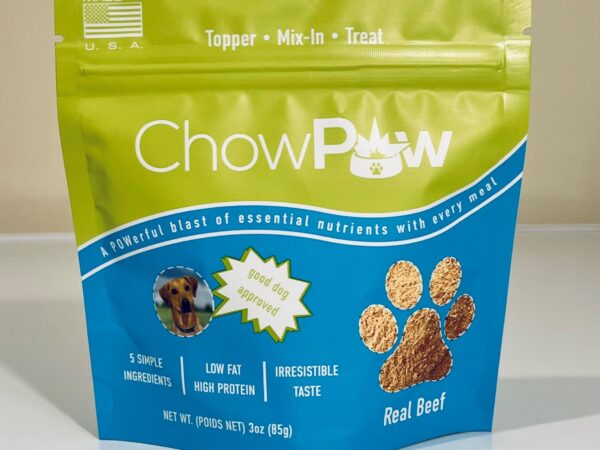 Dog Food Topper - Beef HeartOriginal price was: $14.99.$10.95Current price is: $10.95. - or subscribe and save up to 20%