Bathe a Dog: Stress-Free Steps for a Happy Pet
The scene is familiar. Your dog sees the towel, backs away, and suddenly you're kneeling beside a tub with shampoo in one hand, a handheld sprayer in the other, and water somehow already on the walls.
A rough bath usually isn't about a “bad dog.” It's about a rushed setup, slippery footing, water in the wrong place, or a dog who doesn't know what comes next. Once you fix those pieces, bath time gets much easier.
Transforming Bath Time from Chaos to Calm
Most bad baths start the same way. The dog is uncertain, the owner is improvising, and the whole thing turns into a wrestling match that leaves everyone damp and irritated.
I've seen the pattern over and over. A dog slips once and decides the tub is unsafe. Someone forgets the towel and has to step away. Shampoo gets on the face, the dog shakes hard, and now nobody feels calm. That doesn't mean your dog hates baths forever. It means the process needs to feel predictable.
Bath time gets better when your dog knows three things. Where to stand, what the water feels like, and how the whole thing ends.
That matters even more for sensitive dogs. Seniors with stiff joints don't do well in slick tubs. Dogs with chronic ear trouble often react before the water even touches them because past baths were uncomfortable. The fix isn't force. It's adapting the bath to the dog in front of you.
A good bath should clean the coat without stripping the skin, protect the ears and eyes, and finish with your dog feeling relieved instead of overwhelmed. That's the standard to aim for.
Preparing for a Successful Dog Bath
The easiest way to bathe a dog well is to do most of the work before the water turns on. Preparation cuts panic. It also prevents the classic mid-bath scramble for towels, treats, or a brush while your dog tries to climb out.
Pick the right bathing setup
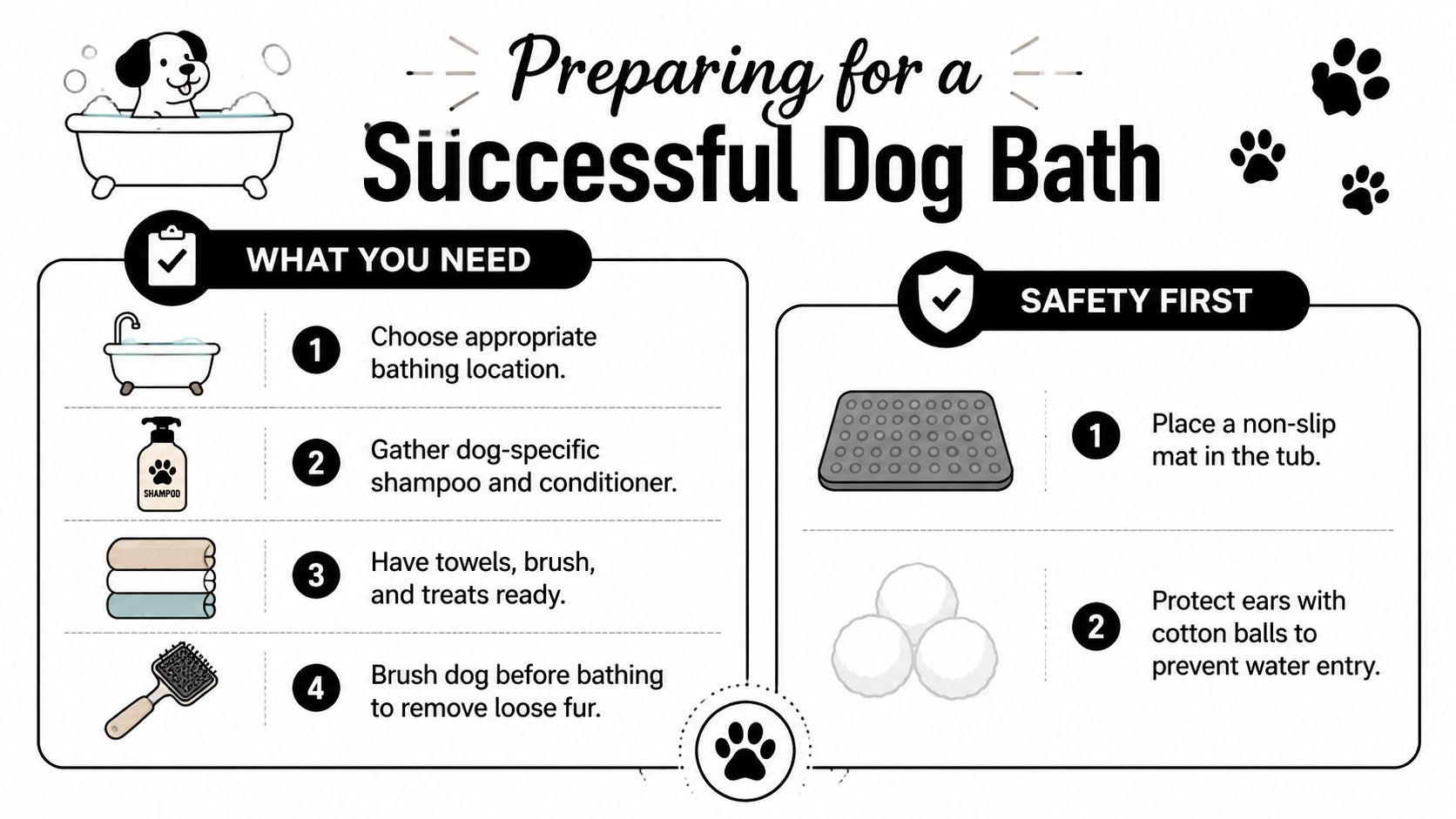
Choose the location based on your dog's size, confidence, and mobility. A small dog may do well in a sink or compact tub. A large dog often does better in a bathtub with a handheld sprayer or in an outdoor setup where you have more room to work.
If your dog sheds heavily or likes to launch onto the furniture after a bath, it helps to think one step ahead. Afterward, protecting your seating with The Sofa Cover Crafter's dog couch covers can save you from the damp zoomies aftermath.
A non-slip mat isn't optional. Dogs panic when their feet slide. Secure footing changes their posture right away. Instead of bracing and trembling, they can stand and let you work.
Gather everything before your dog gets wet
Keep supplies within arm's reach. Once the bath starts, you shouldn't need to leave the room.
- Dog-specific shampoo: Human shampoo is the wrong tool. Use a formula made for dogs, and keep a tear-free option for the face.
- Conditioner if your dog needs it: Long coats and dry skin often benefit from it.
- Brush or comb: This belongs in the prep stage, not as an afterthought.
- Towels: More than one. One will get soaked fast.
- Cotton balls: These help protect the ear canals from water entry during a standard bath.
- Treats: Small, fast rewards work best.
- A washcloth or cup: Useful for controlled cleaning around the head.
If you want more practical care tips beyond bathing, the ChowPow dog grooming articles are a helpful place to keep learning.
Brush first, bathe second
Many home baths often go wrong. Mats tighten when they get wet. Loose fur turns to clumps. Dirt stays trapped close to the skin.
The pre-bath brush-out matters because skipping it results in a 60% higher incidence of water retention within matted hair, which creates the kind of damp environment that can lead to hot spots. The same guidance also notes that visual rinsing alone misses 40% of residual suds, which is why hands-on coat checking matters so much during cleanup.
Practical rule: If the brush can't move through the coat before the bath, water won't fix the problem. It will usually make it worse.
Know how often your dog actually needs a bath
Bathing frequency isn't one-size-fits-all. According to the American Kennel Club guidance summarized by Hills Pet, hairless breeds may need weekly baths, sedentary short-coated dogs may need only 3 to 4 baths per year, short-coated dogs average once every 2 to 3 months, and longer-coated dogs often need a bath every 4 to 6 weeks to help prevent matting and maintain skin health in the right context (AKC bathing frequency guidance via Hills Pet).
Here's the practical version:
| Dog type | Good starting point |
|---|---|
| Hairless breeds | Weekly |
| Short-coated, average activity | Every 2 to 3 months |
| Sedentary indoor short coats | About 3 to 4 times per year |
| Longer coats | Every 4 to 6 weeks |
Too many baths can dry the skin. Too few can leave oils, debris, and tangles building up. The right schedule depends on coat type, lifestyle, and how your dog's skin responds.
Your Step-by-Step Guide to the Bathing Process
Bring your dog into the bathing area only after everything is ready. Calm starts before the water does. Let your dog sniff the tub, mat, and towels for a moment, then reward quiet standing.
Start with comfort, not speed
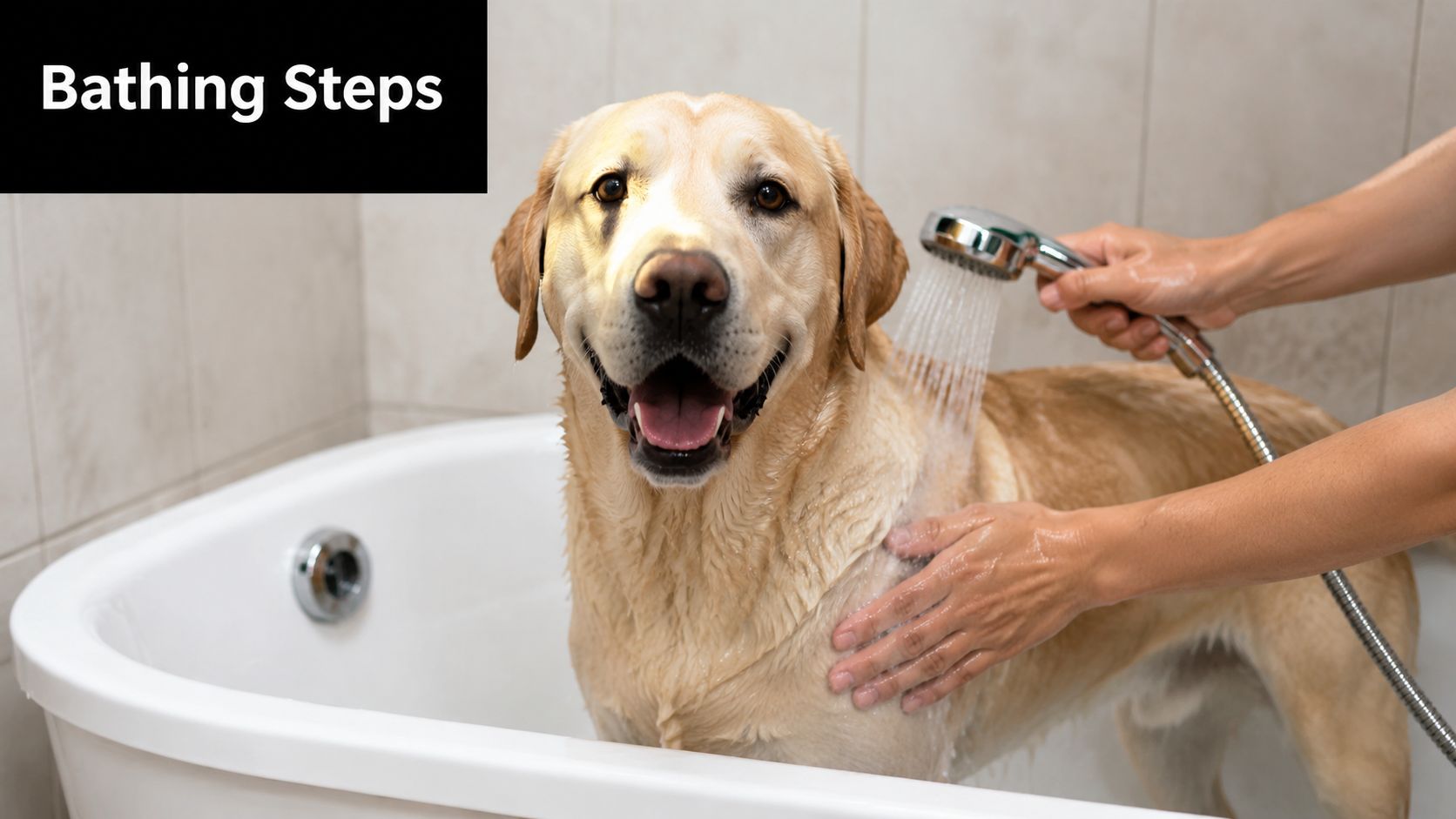
Use lukewarm water, around 100°F or 38°C, because water that's too hot or too cool can stress the skin. Before the coat is soaked, place cotton balls securely in the ears during a standard bath to help block water entry. Water exposure can contribute to ear trouble, affecting up to 15% of dogs in this context, so ear protection matters.
Wet the body gradually. I prefer starting from the rear and working forward rather than spraying the face or head first. That feels less startling to most dogs and gives them time to settle into the sensation.
Keep one hand on the dog whenever possible. A steady hand at the chest or shoulder often works better than constant verbal reassurance because it gives the dog a clear point of contact.
Apply shampoo where it counts
Work the shampoo through the coat from tail toward the ears, massaging it in with your fingers instead of scrubbing hard with your nails. Focus on the areas that collect grime fastest:
- Underside and chest: These trap splashback and dirt.
- Paws and lower legs: Mud and street residue build up here.
- Rear and tail base: These usually need a little extra attention.
- Neck and collar area: Especially if your dog wears gear all day.
Avoid putting regular shampoo on the face. Use a tear-free formula there, or a damp washcloth if your dog is sensitive around the eyes and nose. This is one of the biggest upgrades you can make to a home bath. Dogs remember face discomfort.
If skin pests are part of your concern, pair good bathing habits with a prevention plan. A product like powerful flea and tick prevention can be one piece of that bigger routine when it's appropriate for your dog's needs.
Rinse longer than you think you need to
The rinse is where a clean bath becomes a skin-friendly bath. Soap left behind is one of the main reasons dogs itch after bathing.
Run water through the coat and use your fingers to separate the fur as you rinse. Check the dense spots, not just the easy ones.
The underside, paws, and tail are the places owners miss most often. If the coat still feels slick, there is still product in it.
That finger-rinse technique matters because hidden suds can stay trapped close to the skin. Don't trust the topcoat alone. Reach in and feel.
For a visual walkthrough, this short demo can help you match the mechanics to your own setup.
Keep the mood steady
If your dog stiffens, don't rush to finish. Pause the water. Put a hand on the chest. Offer one treat. Then continue.
A good rhythm looks like this:
- Wet a small area.
- Reward stillness.
- Lather calmly.
- Rinse completely.
- End before your dog tips from uneasy into frantic.
That pacing helps you bathe a dog without turning the experience into a struggle session. Your goal isn't to “get through it.” Your goal is to get through it cleanly, safely, and with as little stress as possible.
Proper Drying and Creating a Positive Reward
A lot of owners think the bath ends when the shampoo is gone. It doesn't. Drying is part of skin care.
When a dog comes out of the tub, use thick towels and pat the coat dry. Don't rub aggressively. Vigorous rubbing can cause hair breakage, and it's especially rough on longer coats and dogs with delicate skin.
Dry without overheating the skin
If you use a dryer, keep it on a cool setting. High heat can cause dryer burn, and that's a preventable problem. Move the airflow constantly and hold the nozzle far enough back that the dog never flinches from the temperature.
A good drying routine looks like this:
- First pass with towels: Press and pat to remove surface water.
- Second pass in dense areas: Get into the chest, belly, feathering, and tail.
- Cool-air dryer if needed: Best for thicker coats that stay damp underneath.
- Final hand check: Feel for moisture in hidden spots before your dog settles down.
Dogs don't need rough drying. They need thorough drying.
That last check matters because poor rinsing and poor drying often show up later as itchy skin. If your dog tends to struggle with recurring ear trouble after baths, this guide on common causes of ear infections in dogs can help you spot patterns worth discussing with your veterinarian.
End with a routine your dog wants to repeat
The emotional ending of the bath matters almost as much as the mechanics. If every bath ends with restraint, frantic towel wrestling, and being ignored afterward, your dog learns to dread the whole event. If it ends with calm praise, warmth, and dinner, the memory changes.
That post-bath meal is also a good moment to support recovery from the stress of grooming with hydration and steady nutrition.

For dogs who come out of the bath a little unsettled, I like a quiet reset. Dry bed. Fresh water. Meal served once the coat is mostly dry. That pattern helps the dog understand bath time has a predictable, pleasant finish.
Adapting Bath Time for Seniors and Sensitive Pups
Some dogs don't need a standard bath plan. They need a gentler one.
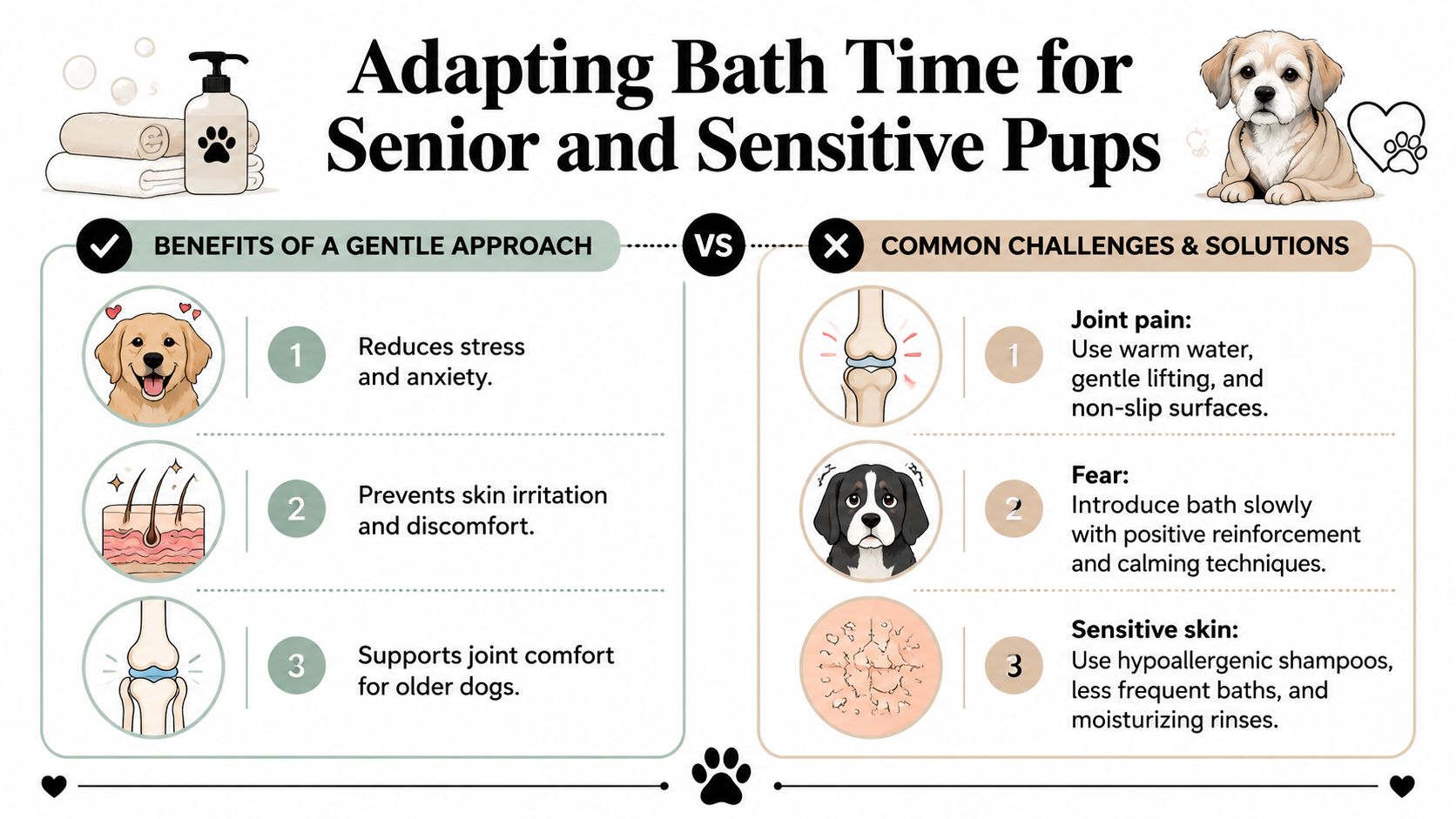
Senior dogs with arthritis, hip dysplasia, or weakness often struggle less with water than with the mechanics around water. Lifting, turning, and balancing in a slick tub can make them tense before the shampoo ever comes out. One study of 1,200 senior dogs found that 78% experience bath-related anxiety due to slippery surfaces, which is why raised, non-slip platforms or outdoor hose bathing can be safer alternatives for some dogs.
Better options for older dogs
The usual bathtub isn't always the kindest choice. For a senior dog, a lower step-in point and secure footing often matter more than convenience for the owner.
Consider these adjustments:
- Raised non-slip platform: Good for dogs who can't brace in a tub but can stand briefly with support.
- Outdoor hose bathing in warm weather: Useful for dogs who fear enclosed spaces.
- Shorter sessions: Clean the dirtiest areas first instead of insisting on a long full-body wash.
- Support under the chest or belly: A folded towel or sling can reduce strain during standing.
If your dog also has allergy-prone skin, the resources on canine atopic dermatitis can help you think through what kind of bathing routine may be gentler.
Dogs with chronic ear issues need a different approach
Generic bath guides often prove insufficient. Standard cotton-ball advice doesn't fit every dog, especially those with chronic ear conditions or recent ear surgery.
For these dogs, skip deep wetting around the head. Use a handheld sprayer angled away from the ear canal and keep the flow low and controlled. A shallow-water splash bath can also work better than anything that resembles submersion. The point is to clean the coat without sending water toward the ears.
The most useful adaptation is often a change in direction, not a change in product. Wet the neck and body carefully. Clean the face separately with a damp cloth. Keep the ears dry on purpose.
A sensitive dog doesn't need tougher handling. The dog needs fewer triggers.
Positive reinforcement works best when it's quiet and consistent
Sensitive dogs usually do better with small rewards delivered throughout the bath, not one big reward at the end. One treat for stepping onto the mat. One for standing still. One after the rinse.
That approach changes the bath from a single overwhelming event into a series of manageable moments. For seniors and medically sensitive dogs, that shift is often the difference between resistance and cooperation.
Quick Fixes and Final Thoughts on Bath Time
A lot of owners assume bath time is supposed to be messy, dramatic, and exhausting. It doesn't have to be. Most bath struggles come from a mismatch between the dog and the method.
If your dog panics at running water, start with a wet washcloth on the shoulders and legs before introducing the sprayer. If your dog keeps trying to jump out, lower the stimulation. Less talking, slower hand movements, steadier touch. If your dog freezes, don't drag the process out with repeated false starts. Commit to a calm, simple bath and finish cleanly.
A few fast fixes help right away:
- For tub refusal: Let the dog practice standing on the dry mat on non-bath days.
- For shaking during the bath: Pause after each rinse section instead of soaking the whole dog at once.
- For face sensitivity: Use a damp cloth and tear-free cleanser instead of direct spray.
- For post-bath itching: Check your rinse quality and drying routine before blaming the shampoo.
The best way to bathe a dog is rarely the fastest. It's the method your dog can tolerate well, repeat safely, and recover from without stress. Once you build that rhythm, bath time stops feeling like a fight and starts feeling like regular care.
If you want an easy way to make the post-bath meal more appealing, ChowPow is a smart add-on to your dog's current food. It isn't a replacement for kibble. It's a meal enhancer that boosts the nutritional value and taste of what you're already feeding, which can be especially helpful for picky eaters, seniors, and dogs getting back on track after stress or illness.
-
Product on sale
 Dog Food Topper - Beef HeartOriginal price was: $14.99.$10.95Current price is: $10.95. - or subscribe and save up to 20%