A Pet Parent’s Guide to the Best Dog Food for Liver Disease
When your vet says your dog has liver disease, it’s a moment that can leave you feeling scared and overwhelmed. It's a serious diagnosis, for sure. But the first step to helping your best friend is understanding what’s really going on inside their body.
Armed with the right knowledge and a solid partnership with your vet, you can make choices that truly support your dog’s health and give them the best possible quality of life.
So, What Does a Dog's Liver Actually Do?
Think of your dog’s liver as the body’s ultimate multitasking superstar. It's the main filtration system, a digestive aid, and a master processing plant all rolled into one. This powerhouse organ has hundreds of jobs, from clearing toxins out of the blood to helping digest food and creating vital proteins the body needs to function.
A healthy liver is incredibly resilient. But when it gets damaged or has to work too hard for too long, its ability to juggle all those critical tasks starts to slip.
When the Liver Can't Keep Up
An unhealthy liver is like a factory floor with a broken production line. Toxins that should be filtered out can start to build up in the bloodstream, which can impact other organs, including the brain. The body also loses some of its ability to pull nutrients from food, often leading to weight loss and a lack of energy.
Liver disease in dogs isn’t a one-size-fits-all problem. Just like a car can break down for lots of different reasons, a dog's liver can run into trouble from several sources:
- Genetics: Some breeds are just more prone to certain liver issues. Doberman Pinschers and Labrador Retrievers, for instance, can be susceptible to a condition called copper storage disease.
- Infections: Nasty bacterial or viral infections can trigger inflammation in the liver, a condition known as hepatitis.
- Toxins: If a dog accidentally gets into something poisonous—like certain plants, household chemicals, or even some human medications—it can cause sudden, severe liver damage.
- Other Health Problems: Sometimes, other conditions like Cushing's disease or diabetes put extra strain on the liver over time, leading to secondary issues.
No matter what caused it, the goal for managing liver disease is always the same: to support the liver by reducing its workload. This gives the organ a chance to rest and, in some cases, even start to regenerate. And this is exactly where diet becomes your most powerful tool.
Why Diet Is the Cornerstone of Liver Care
The food your dog eats has a massive and direct impact on the liver, simply because every single nutrient gets processed through it. A regular, off-the-shelf diet can force a sick liver to work way too hard, which can make the whole situation worse. A therapeutic, liver-friendly diet is designed to do the complete opposite.
The primary goal of a liver-support diet is to provide all the necessary nutrition for your dog's body to function while minimizing the metabolic stress on the liver itself.
This strategy involves some very specific nutritional tweaks. For example, protein is absolutely essential for repairing cells. But when protein is broken down, it creates byproducts like ammonia that a healthy liver easily filters out. A compromised liver really struggles with this job.
That's why the best dog food for liver disease is formulated with moderate levels of high-quality, easily digestible protein. It provides the building blocks the body needs for repair without totally overwhelming the system. The diet also typically restricts things like copper and sodium to further ease the liver's burden.
By getting a handle on these key ideas, you’re no longer just a worried pet parent—you're an empowered partner in your dog’s care. You’ll be much better prepared to understand why your vet recommends a specific food, turning a scary diagnosis into a clear, manageable plan for your furry family member.
What Does a Liver-Supportive Diet Actually Look Like?
When your vet says your dog needs a "liver-friendly" diet, what does that really mean? It’s more than just grabbing a bag of “healthy” kibble off the shelf. It’s a targeted nutritional strategy designed to ease the burden on one of your dog’s most vital organs.
Think of it this way: your dog's liver is an overworked factory. A therapeutic diet is like bringing in a specialized crew with the exact right materials to keep things running smoothly, without causing any more system failures.
Let's break down what your dog really needs.
The Truth About Protein
Protein is probably the most misunderstood part of a liver diet. It’s absolutely essential for life—it builds and repairs tissue, keeps muscles strong, and powers the immune system. But here's the catch: when the body breaks down protein, it creates a waste product called ammonia. A healthy liver filters this out no problem.
A compromised liver, however, can't keep up. When ammonia builds up in the blood, it can lead to serious neurological problems, a condition called hepatic encephalopathy.
The goal isn't to cut out protein, but to be smart about it. A liver-supportive diet provides moderate levels of high-quality, easily digestible protein to give your dog the building blocks they need without overwhelming their system.
It’s a delicate balancing act. We often turn to high-quality sources like eggs, dairy, or certain plant-based proteins (like soy) because they produce less ammonia during digestion compared to some red meats.
Managing Fats and Adding Bodyguards (Antioxidants)
Fat is a fantastic, dense source of calories—crucial for energy. But just like with protein, the liver has to work hard to process it. Dialing back the fat content is a simple way to lighten its metabolic load.
At the same time, a struggling liver is under a ton of oxidative stress. This is where antioxidants come in. Think of them as the liver's personal security team, fighting off cell-damaging molecules called free radicals.
- Vitamin E: This is a potent, fat-soluble antioxidant that shields liver cell membranes from damage.
- Zinc: This mineral does double duty. It not only has antioxidant properties but also helps reduce how much ammonia is produced and absorbed in the gut.
These nutrients work together to protect the liver's remaining healthy cells, giving the organ a fighting chance to rest and recover. Many dogs with liver issues also get support from supplements like milk thistle or SAMe, but you should only use these under your vet's direct guidance.
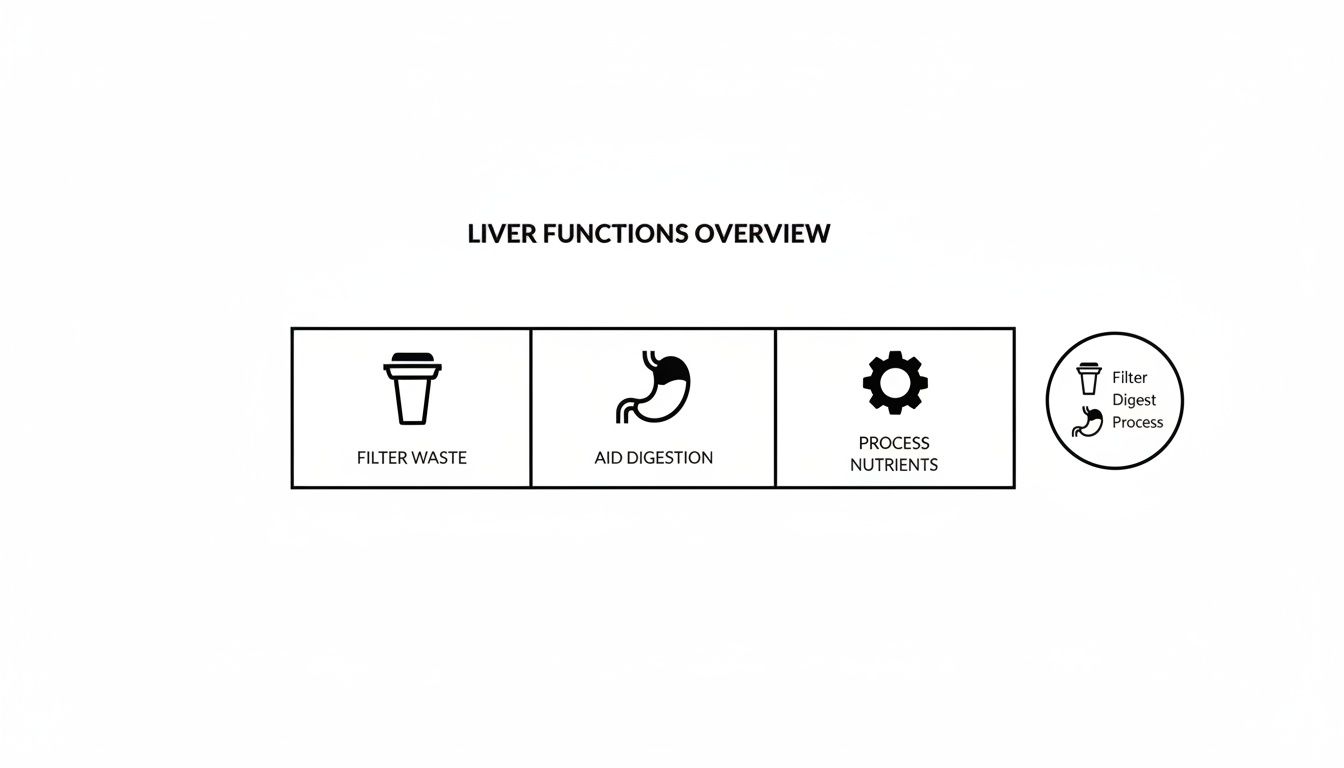
The diagram below shows the liver's main jobs, which really drives home why reducing its workload is so important.
As you can see, the liver is a filter, a digestive partner, and a nutrient processor—and every one of these functions is directly affected by what your dog eats.
Why We Restrict Copper and Sodium
For some dogs, certain minerals can be a real problem, building up in the liver and causing serious damage. Copper is the prime example. While it’s an essential nutrient for a healthy dog, some breeds are genetically prone to storing too much of it, which can lead to chronic inflammation and even liver failure.
Because of this, the best dog food for liver disease is almost always formulated to be low in copper.
Similarly, sodium (salt) is often kept low to help manage fluid retention (ascites), a common and uncomfortable complication of more advanced liver disease.
To give you a clearer picture, here's how a liver-support diet stacks up against a standard one:
Nutrient Goals for a Liver-Supportive Diet vs Standard Diet
| Nutrient | Liver-Support Diet Goal | Standard Diet Level | Reason for Adjustment |
|---|---|---|---|
| Protein | 15-20% (Dry Matter), High-Quality | 22-30% (Dry Matter) | Reduces ammonia production, easing the liver's filtration workload. |
| Fat | 10-15% (Dry Matter) | 12-18% (Dry Matter) | Lowers the metabolic demand on the liver for processing fats. |
| Copper | Restricted (often <5 mg/kg) | Varies (often 10-20 mg/kg) | Prevents toxic accumulation in dogs with copper storage diseases. |
| Sodium | Restricted | Varies | Helps manage and prevent fluid retention (ascites). |
| Antioxidants | High (e.g., Vitamin E, Zinc) | Standard levels | Protects remaining liver cells from oxidative stress and damage. |
As the table shows, these adjustments aren't random; they're targeted changes designed to provide maximum support. For dogs dealing with copper toxicity, some studies recommend an even stricter diet with fat between 10-15% dry matter and copper restricted to under 2.6mg/kg.
Knowing what ingredients to keep out of the bowl is just as critical as knowing what to put in. Our guide on what ingredients to avoid in dog food can give you some extra pointers. By focusing on these specific nutritional tweaks, you're giving your dog’s liver the best possible support to do its job.
What Should You Feed a Dog With Liver Disease? Your 3 Main Choices
Trying to pick the right dog food can feel overwhelming on a good day. But when your dog has been diagnosed with liver disease, the pressure is really on. The good news is, you generally have three main paths to explore: veterinary prescription diets, certain over-the-counter foods, and specially prepared homemade meals.
Let's break down what each option means so you can walk into your vet's office feeling prepared and confident.
Veterinary Prescription Diets: The Gold Standard
Think of a veterinary prescription diet as medicine in a food bowl. These aren't just "healthy" foods; they are scientifically engineered formulas created to give a struggling liver the specific support it needs to function.
There's a reason your vet will almost always recommend one of these diets first. They are built from the ground up based on solid research to provide:
- Controlled, high-quality protein to keep ammonia levels down.
- Restricted copper and sodium to stop toxic buildup and fluid retention (ascites).
- Added antioxidants like Vitamin E and zinc to shield liver cells from further damage.
This level of nutritional precision is why these therapeutic diets are the cornerstone of managing canine liver disease. The global prescription dog food market was valued at a staggering USD 6.68 billion in 2026 and continues to grow, which shows just how vital these foods are in veterinary care.
Commercial Over-the-Counter Foods
Next up are the commercial "liver support" or senior diets you can find on pet store shelves without a prescription. While they're certainly more accessible, this route requires you to put on your detective hat and become an expert label-reader.
Not every bag that hints at "liver health" actually meets the strict nutritional profile your dog's condition demands. You’ll have to carefully check the guaranteed analysis and ingredient list for those key targets we've covered—moderate protein, low copper, and a boost of antioxidants. Learning how to read dog food labels is a non-negotiable skill here.
Important Takeaway: Even if an over-the-counter food looks perfect, you absolutely must run the brand and its nutritional info by your veterinarian for approval before you make the switch. Never try to self-prescribe a diet for a dog with a diagnosed medical issue.
Homemade Diets: A Path for the Truly Dedicated
Finally, there’s the homemade diet. It’s easy to see the appeal—you know and control every single ingredient that goes into your dog's bowl. But be warned: this path carries the biggest risk and should never, ever be attempted without professional guidance.
Building a diet that is nutritionally complete and balanced is incredibly complex. If you get it wrong, you can cause serious deficiencies or excesses that could actually make your dog’s liver disease much worse.
If you’re set on this route, it's absolutely essential to work with a board-certified veterinary nutritionist. They can create a custom recipe that’s perfectly tailored to your dog's specific medical needs. While it's often more expensive and time-consuming, for some dogs—especially those with multiple health problems—it can be a fantastic option.
At the end of the day, choosing the best food is a team effort between you and your vet. Each of these options has its place, and the right one will depend on your dog’s unique diagnosis, your lifestyle, and your veterinarian’s expert advice.
Enhancing Your Dog's Food for Liver Disease with ChowPow
One of the toughest parts of managing canine liver disease is, without a doubt, a sudden loss of appetite. It's incredibly frustrating when your dog, who used to love mealtime, now sniffs and walks away. This gets even harder when they’re refusing the new, blander prescription diet you’ve been told is essential for their health. This is exactly where a quality meal enhancement like ChowPow can be a total game-changer.
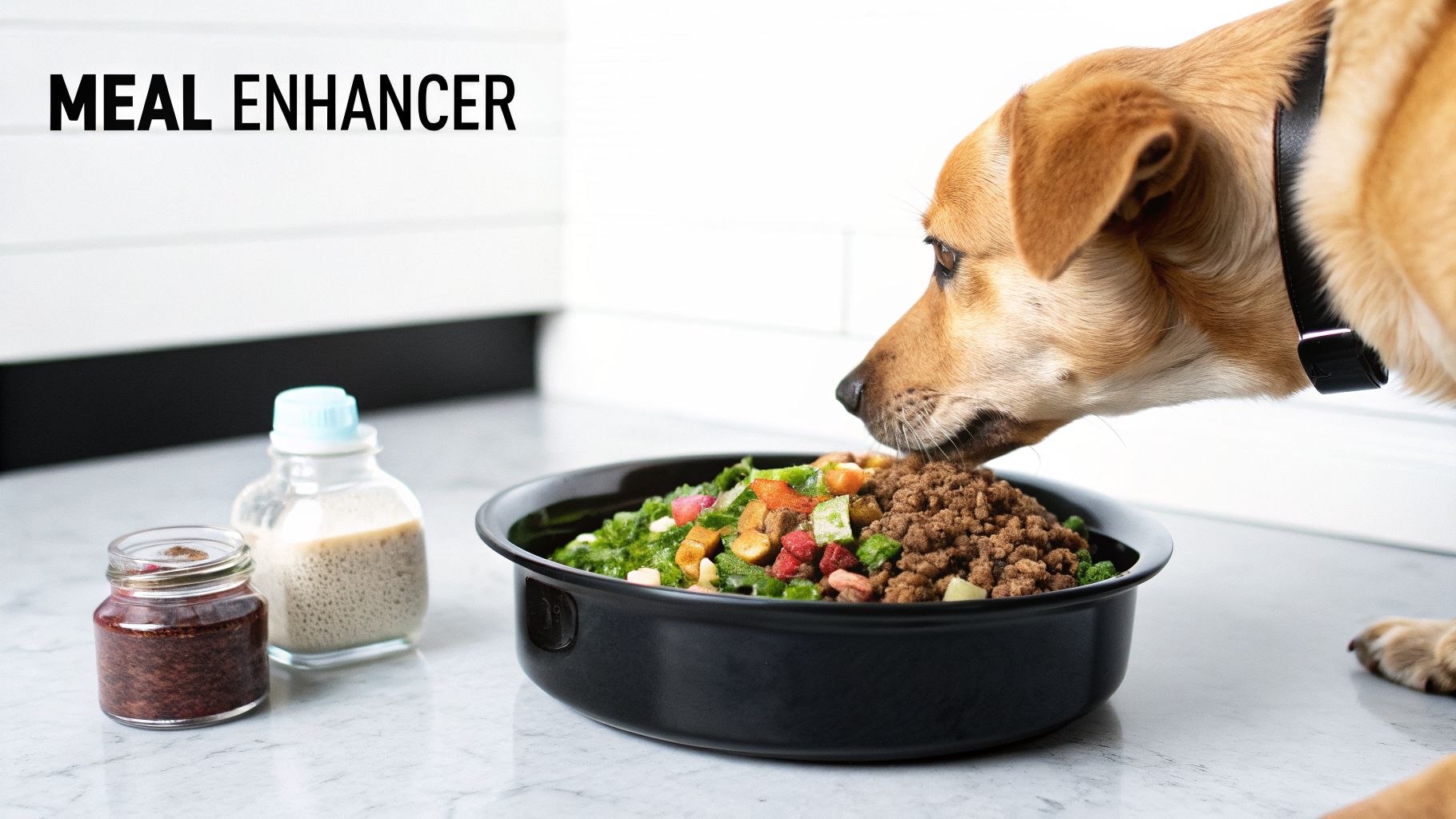
Let's be clear: a supplement like ChowPow is not a replacement for your dog's current food. Think of it as a nutritional booster for their main meal. Its job is to ramp up the nutritional value and, most importantly, make their existing food completely irresistible. This ensures your dog actually eats the therapeutic diet they so desperately need.
Why ChowPow Is a Smart Choice for Liver Support
When you're navigating the world of the best dog food for liver disease, every single ingredient counts—and that goes for any meal enhancements you add, too. We designed ChowPow with this exact principle in mind. It relies on simple, whole-food ingredients that deliver a pop of flavor and a dose of high-quality protein without adding anything that could put more strain on a sensitive liver.
The formula is refreshingly simple, with just four ingredients:
- Dehydrated Beef Heart: This organ meat is an amazing source of highly digestible protein and key amino acids. It helps maintain muscle mass without overworking their system.
- Carrots: Bursting with beta-carotene (which the body converts to Vitamin A) and fiber, carrots add a touch of natural sweetness and support good digestion.
- Celery: This adds a savory flavor that dogs go nuts for, along with vitamins and antioxidants.
- Apple Cider Vinegar: A natural component that helps with preservation and promotes a healthy gut.
What’s not in the mix is just as crucial. You won't find any artificial flavors, fillers, excessive fats, or ingredients high in copper. This way, you know you're only adding beneficial nutrition to their existing food, not creating new problems.
Transforming Mealtime from a Struggle to a Success
There's nothing more stressful than a dog who won't eat. It puts their recovery at risk, often leading to weight loss and weakness right when their body needs to be strong. ChowPow helps close that gap by making their essential therapeutic diet exciting again.
Your number one goal is getting your dog to consistently eat the food your vet prescribed. A sprinkle of a natural, delicious meal enhancement can be the key, turning a daily battle into a moment your dog actually looks forward to.
This idea fits right in with the growing shift towards more natural pet care. Dog owners everywhere are looking for high-quality, organic-style foods to help their companions thrive. In fact, the global market for organic pet food was valued at USD 2.29 billion in 2024 and is expected to grow, showing just how much we all want cleaner diets for our pets.
ChowPow is a perfect match for this philosophy. It's not about replacing their special diet, but about making that diet work. By boosting your dog’s current food with a little ChowPow, you can entice them to eat, making sure they get the full benefits of the best dog food for liver disease your vet recommended. You can explore all the benefits of our dehydrated dog food toppers and see how they can support your dog on their journey back to health.
How to Transition Your Dog to a New Diet
Switching to a new, liver-friendly diet is a fantastic step toward managing your dog's health. But hold on! A sudden swap can easily send their digestive system into a tailspin, leading to tummy troubles they definitely don't need right now.
The secret to a happy gut is taking it slow. A gradual transition gives their body the time it needs to adjust to the new food.
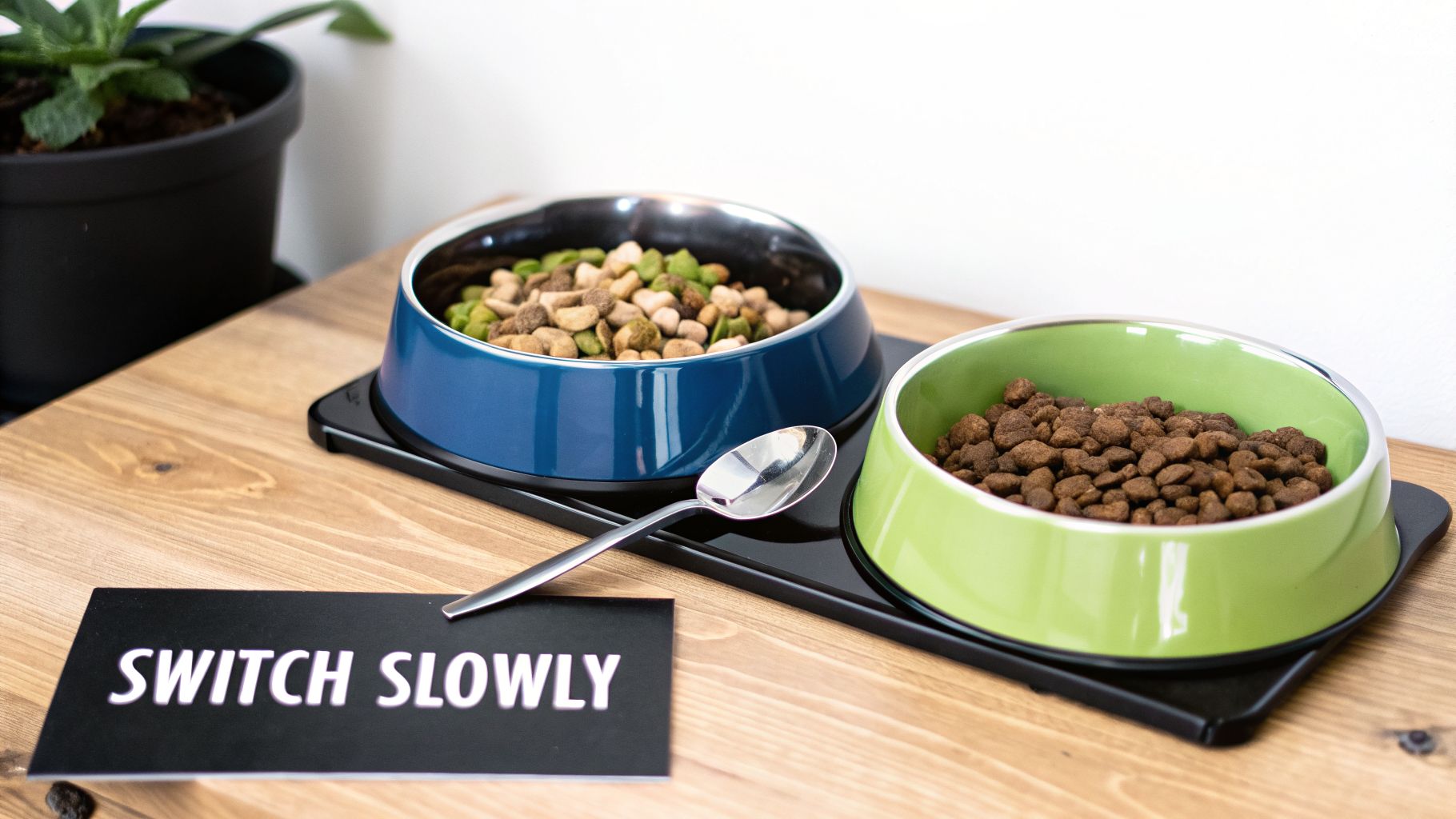
Think of it like this: you wouldn't jump off the couch and run a marathon tomorrow. Your dog’s digestive tract needs a similar warm-up period to get used to the new ingredients and nutrient levels. This careful approach is your best defense against an upset stomach.
The 7-10 Day Transition Plan
Patience is your best friend here. The goal is to slowly phase in the new food while phasing out the old. For most dogs, a 7-10 day schedule is perfect, but don't be afraid to take a little longer if you have a particularly sensitive pup.
Here’s a simple, day-by-day plan to follow:
- Days 1-3: Mix 75% of their old food with 25% of the new liver-support diet.
- Days 4-6: Move to a 50/50 split of the old and new foods.
- Days 7-9: Increase the new food to 75%, leaving just 25% of the old stuff.
- Day 10: If everything's looking good, you can serve 100% of their new diet!
Throughout the switch, keep a close eye on your dog's appetite, stool quality, and overall energy. If you see any signs of trouble like vomiting or diarrhea, just dial it back to the previous ratio for a couple more days before trying to move forward again.
What to Do When Your Dog Won't Eat
It's one of the most common and frustrating challenges for dogs with liver disease: a poor appetite. That new prescription diet might be exactly what the doctor ordered, but it can be a lot less appealing than what they're used to. When your dog turns their nose up at the bowl, it's time to get creative.
Your number one job is making sure your dog gets the nutrition they need to heal. Making their therapeutic diet more appetizing isn't about spoiling them—it's a critical part of their treatment.
If you’re facing a hunger strike, here are a few simple tricks that can make all the difference:
- Warm it up: Add a splash of warm, low-sodium chicken broth (make sure it's vet-approved!) or even just a little warm water. This releases the food’s aroma and can make it way more tempting.
- Try smaller, more frequent meals: Instead of two big meals, try offering four or five small ones throughout the day. This can feel less overwhelming for a dog who isn't feeling their best.
- Give it a flavor boost: This is where a meal enhancement like ChowPow can be your secret weapon. A small sprinkle over their food adds a burst of savory, meaty flavor that can entice even the pickiest eater. Because ChowPow is a nutritional supplement, it boosts the meal's appeal and nutrition without throwing off the carefully balanced diet your vet prescribed.
By pairing a slow transition with these simple appetite-boosting tips, you can set your dog up for a smooth and successful dietary change. This thoughtful approach helps ensure your dog eats the best dog food for liver disease and gets the support they need to feel their best.
Partnering with Your Veterinarian for Best Results
When you’re dealing with your dog’s liver disease, think of it as a team effort. You’re a key player, but your veterinarian is the head coach. This guide will arm you with knowledge, but nothing replaces professional medical advice. Going it alone and trying to pick a food can be risky, as the wrong nutrients could actually make things worse.
Your relationship with your vet is the absolute cornerstone of your dog's care. They’re the only one who can properly diagnose the condition, monitor how it's progressing, and map out a treatment plan that’s built just for your dog.
What to Expect from Your Vet Visits
Managing liver disease isn't a one-and-done deal; it’s an ongoing journey. Your vet will set up a regular schedule for check-ups and tests to see how well the entire plan—diet included—is working.
One of the most powerful tools they'll use is regular bloodwork. These tests look at key liver enzymes like Alkaline Phosphatase (ALP) and Alanine Aminotransferase (ALT). Watching these numbers helps your vet see, at a biological level, if the new diet and any medications are helping to take the stress off the liver.
Think of regular blood tests as a progress report for your dog's liver. They provide concrete data that shows whether the current plan is effective or if adjustments are needed to better support your dog's health.
These appointments are also your time to share what you’re seeing at home. Any changes in your dog’s appetite, energy, or general mood are vital clues that help your vet get the full picture.
Asking the Right Questions
The more you know, the more confident you'll feel. To be a true partner in your dog's health, you need to ask questions that bring you clarity. Trust me, your vet wants you to understand the game plan, so don't ever be shy about asking for more details.
Here are a few great questions to have ready for your next vet visit:
- What specific nutrient levels (protein, fat, copper) should we be aiming for in their diet? This helps you understand the "why" behind any food recommendation.
- Based on these blood test results, is the current diet working as we hoped? This opens the door to a conversation about progress and what might need to be tweaked.
- Are there any specific treats or human foods that are safe for my dog? Knowing what's okay can make life more fun for your pup without setting them back.
- What positive signs should I be looking for at home? This helps you celebrate the small wins, like a boost in energy or a better appetite.
This guide is here to make you an informed advocate for your dog. When you combine this knowledge with your veterinarian’s expertise, you’re creating the strongest possible support system. That partnership is truly the key to giving your dog the best shot at a happy, comfortable life.
Got Questions? We've Got Answers
Living with and feeding a dog with liver disease often brings up a lot of questions. It's totally normal. Here are some quick answers to the things we hear most often from concerned pet parents.
Can My Dog with Liver Disease Have Treats?
Yes, but you have to be very picky about what you offer. Think of treats as a tiny fraction of their daily food, not as an extra bonus. The best treats are ones that fit right in with their special diet—low in protein, low in fat, and especially low in copper.
Often, the simplest options are the best. Small bites of vet-approved fruits and veggies can be a great choice. Try offering:
- Apple slices (seeds removed, of course)
- Carrots
- A few blueberries
- Green beans
Honestly, the safest bet of all is to just use a few pieces of their prescription kibble as a reward. Steer clear of all commercial jerky, rawhide, and anything with a long, mysterious ingredient list. And remember, even with "healthy" options, always run it by your vet first.
How Do I Know if This New Diet Is Actually Working?
Your vet is your partner in this journey. They'll schedule follow-up blood tests to check on important liver enzymes (like ALT and ALP) and other health markers. Seeing those numbers start to trend down is a fantastic sign that the diet is easing the burden on their liver.
Back at home, you’re the one on the front lines. Keep an eye out for positive changes, which are often the best indicators. You might see:
- More energy and a renewed interest in playtime.
- A stronger, more consistent appetite.
- Their coat looking healthier and shinier.
- Their weight holding steady.
Don't hesitate to call your vet with any significant changes you notice, good or bad. You know your dog better than anyone.
Is a Grain-Free Diet Good for Liver Disease?
Not necessarily, and in many cases, it's not the right move. The whole "grain-free" trend is more about marketing than medical science. For a dog with liver issues, the real focus needs to be on hitting very specific nutrient targets: highly digestible protein, controlled fat, and restricted copper.
In fact, if you look at the top prescription liver diets, you'll see many of them use specific grains. These aren't just fillers; they are carefully chosen to provide easy-to-digest energy and helpful fiber that actually reduces the liver's workload. Always trust your vet's guidance over the latest food fads.
What if My Dog Just Won't Eat the Prescription Food?
Oh, this is a tough one, and it's incredibly common. Let's be real: therapeutic diets are made for function, not for five-star flavor, and many dogs will turn their nose up at them. First things first, make sure you're doing a slow transition over 7-10 days.
You can also try making the food a bit more appealing by adding a splash of warm water to bring out the aroma. But this is the exact situation where a meal enhancement like ChowPow can be a lifesaver. Just a small sprinkle adds a savory beef heart flavor that can entice even the pickiest eater, all without throwing their strict diet out of balance. If your dog still refuses to eat, it's time to call the vet; there might be another prescription food you can try.
A little sprinkle of ChowPow can make all the difference in turning a stressful mealtime into a happy one. Boost your dog’s bowl with all-natural goodness at ChowPowNow.com.
-
Product on sale
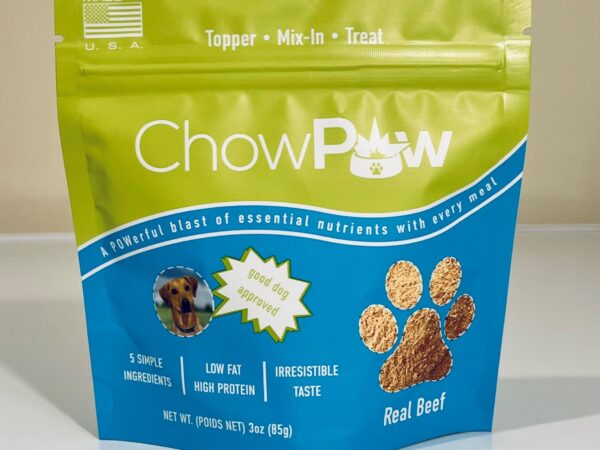 Dog Food Topper - Beef HeartOriginal price was: $14.99.$10.95Current price is: $10.95. - or subscribe and save up to 20%