Best Dog Food for Skin and Coat A 2026 Guide
You run your hand over your dog’s back and pause. The coat feels rougher than it used to. Maybe you’ve noticed flakes on the bed, extra scratching at night, or fur that looks a little faded instead of soft and glossy.
That change can feel small at first. Then it starts to nag at you, because coat quality is one of those things owners notice early. Dogs cannot tell us, “My skin feels dry,” but their body often shows us.
Food is not the only reason skin and coat problems happen. Allergies, parasites, weather, and medical conditions can all play a role. Still, nutrition is one of the most useful places to start, because skin and fur need a steady supply of the right building materials every single day.
If you’re searching for the best dog food for skin and coat, the answer is usually less about trendy labels and more about a few basics done well. Good protein. Useful fats. Key vitamins and minerals. Ingredients your dog can digest and use.
For many dogs, that does not mean throwing out the current kibble and starting over. Sometimes the smarter move is to improve what is already in the bowl.
Your Dog's Coat Is a Window to Their Health
A healthy coat is not just about looks. It tells you a lot about what is happening inside your dog’s body.
Soft fur, normal shedding, and comfortable skin usually suggest that your dog is getting what they need. A dull coat, brittle fur, flaky skin, or constant scratching can be the opposite. Those signs often show up when the skin barrier is struggling or when the body is short on key nutrients.

Why the coat changes first
Skin and coat are busy tissues. They need constant repair and renewal. Hair is made mostly of protein, and skin depends on fats and micronutrients to stay flexible and protective.
When nutrition is weak, the body tends to prioritize major organs first. That means the coat may lose shine or feel coarse before you notice other problems. In plain language, fur is often the canary in the coal mine.
What worried owners usually see
Worried owners often seek help after noticing one or more of these:
- Dry flakes: Skin looks dusty or dandruff-like.
- A rough feel: The coat feels wiry, harsh, or thin.
- More scratching: Your dog seems bothered even when fleas are not obvious.
- Patchy areas: Fur looks uneven or sparse.
- Less shine: The coat looks flat, not healthy and light-reflective.
None of these signs automatically mean you picked the “wrong” food. But they do mean it is worth looking closely at what is going into the bowl.
A shiny coat usually starts long before bath time. It starts with nutrients your dog can digest and use every day.
Start with calm observation
Before changing anything, watch patterns for a few days. Is your dog itchy after meals? Worse during certain seasons? Is the stool normal? Has appetite changed? Small clues help you separate a nutrition issue from a bigger skin problem.
The best dog food for skin and coat is not a magic bag. Instead, it is a feeding approach that supports healthy skin from the inside out.
What Your Dog's Coat Is Telling You
Think of your dog’s coat like a garden. The fur is the plant you see above ground. The skin, digestion, and overall health are the soil underneath.
If the soil is poor, the plant struggles. You can trim it, wash it, and brush it, but it still will not thrive. The same idea applies to dull fur and irritated skin.
Nutrition is often the foundation
One of the most common causes of poor skin and coat quality is simple nutritional mismatch. According to VCA Hospitals’ guidance on nutrition and skin in dogs, adult dogs need 25% to 30% protein and 10% to 15% fat on a dry matter basis to support skin and haircoat development, and nutritional deficiencies are a common cause of skin problems in 10% to 20% of dogs presented to vets.
That does not mean every dog with dry skin has a deficiency. It means skin and coat problems often start when the body is not getting enough usable protein, enough fat, or both.
Other common reasons a coat looks unhealthy
Food is a big piece, but not the only one. Coat changes can also come from:
- Environmental irritation: Dry indoor air, heavy bathing, grass, pollen, or seasonal shifts can all bother the skin.
- Parasites: Fleas, mites, and other pests can cause intense itching and coat damage.
- Food sensitivities: Some dogs react poorly to certain ingredients even when the food looks decent on paper.
- Underlying illness: Hormonal issues, infections, and other medical problems can show up as coat changes.
If your dog’s skin looks angry, not just dry, keep a wider lens. The bowl matters, but so does the whole dog.
The difference between dry skin and inflamed skin
Owners often use the same words for very different problems. That causes confusion.
A dog with dry skin may have flakes, a rough coat, or mild itchiness. A dog with inflamed skin may be red, hot, greasy, very itchy, or developing sores. Both can affect the coat, but they are not the same problem.
That difference matters because adding better nutrition can support skin repair, but obvious inflammation may need medical treatment as well.
What to watch at home
You do not need to become a vet to get useful clues. Start with a simple check:
- Look at the skin under the fur. Is it dry, red, greasy, or darkened?
- Feel the coat with your hands. Is it soft, brittle, thinning, or sticky?
- Notice the pattern of scratching, licking, or chewing.
- Check appetite and stool because digestion and skin often move together.
- Think about recent changes like treats, new shampoo, a move, or seasonal weather.
If the coat looks off, do not focus on fur alone. Look at skin comfort, digestion, appetite, and behavior together.
Why “good enough” food is not always enough
A food can meet a basic standard and still fail a particular dog in real life. Senior dogs may eat less. Picky eaters may leave part of the bowl untouched. Dogs with sore teeth may crunch less than usual. In those situations, the label may look fine, but the dog still may not take in enough usable nutrition.
That is why the best dog food for skin and coat is not just about the formula. It is also about what your dog will eat, digest, and benefit from consistently.
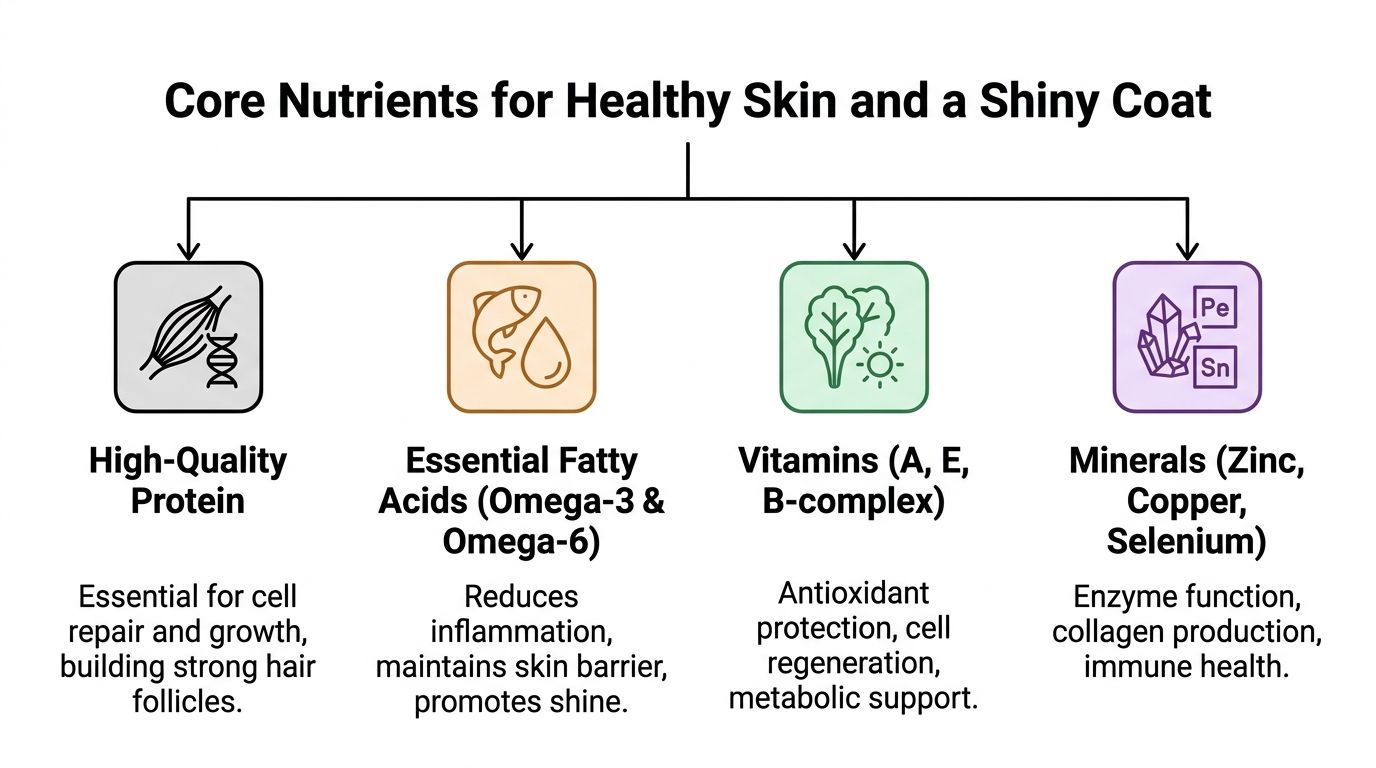
Core Nutrients for Healthy Skin and a Shiny Coat
If you want to judge any food for coat support, focus on nutrients before marketing terms. “Sensitive skin,” “glossy coat,” and “premium” sound nice, but they do not tell you much by themselves.
Four nutrient groups matter most. Think of them as a small repair team working on your dog’s skin every day.
Protein builds the coat
Hair is mostly protein. Skin cells also need protein to renew themselves and stay strong. If your dog does not get enough high-quality protein, or cannot use it well, coat quality often suffers.
Owners can find this aspect confusing. A protein percentage on the bag is only part of the story. Quality and digestibility matter too. Animal proteins with complete amino acid profiles do more for hair follicles and skin structure than vague, low-value protein sources.
A simple way to think about it is this. Protein is the brick pile. If the bricks are weak, crumbly, or hard to access, the building crew cannot do good work.
Essential fatty acids protect the skin barrier
If protein is the brick, fat is the waterproofing.
Hill’s Pet explains that omega-3 and omega-6 fatty acids help maintain the skin barrier, and omega-3s such as EPA and DHA also provide anti-inflammatory support for issues like skin inflammation, greasy skin, sensitive skin, and fur loss.
That barrier matters because it helps the skin hold moisture and keep irritants out. When the barrier gets weak, the skin dries out more easily and becomes more reactive.
Common practical sources include fish oil and foods made with oily fish. Less processed foods and enhancers may also help preserve useful fats better than heavily processed options.
Vitamins help with repair and protection
Vitamins do not get as much attention as protein and fish oil, but they matter.
Vitamin E helps protect skin cells from oxidative stress. Biotin supports hair shaft integrity. Vitamin A supports normal skin function. In real feeding terms, these are part of the support crew that helps cells repair themselves and keeps the coat from looking tired or brittle.
You do not need to memorize every vitamin pathway. Just remember this. A strong coat is not built from protein alone. It also needs the helpers that keep repair and turnover moving smoothly.
Minerals keep skin turnover working
Zinc deserves special mention.
Skin turns over quickly, and zinc supports cell division. When a dog is low in zinc, skin problems can show up directly. Some breeds are more prone to zinc-related skin trouble, but any dog can suffer if the overall diet is weak or poorly absorbed.
Copper and selenium also help with normal tissue function, but zinc is the mineral many owners hear about first because skin tends to show the effects of deficiency quickly.
Quick Guide to Skin & Coat Nutrients
| Nutrient | Its Role in Skin & Coat Health | Excellent Food Sources |
|---|---|---|
| High-quality protein | Builds hair structure, supports skin cell repair, helps maintain strong follicles | Beef heart, chicken, other quality animal proteins |
| Omega-3 and omega-6 fatty acids | Support the skin barrier and help regulate inflammatory response | Fish oil, oily fish, omega-rich whole-food ingredients |
| Vitamin E and biotin | Protect cells and support coat strength and hair shaft integrity | Nutrient-dense whole-food ingredients, fortified complete diets |
| Zinc | Helps skin cell turnover and skin repair | Animal-based ingredients and balanced foods with adequate mineral support |
Why whole-food enhancement can help
Many owners assume they need a totally different diet to support skin. Sometimes they do. Often, they just need to improve nutrient density in the current bowl.
That is one reason meal enhancers and toppers can make sense. They can add concentrated, useful nutrition without forcing a full food switch. If you want a simple primer on that idea, this ChowPow article on the food-fur connection gives a practical overview.
When you shop for the best dog food for skin and coat, ask one question first. Does this bowl provide strong building blocks, skin-friendly fats, and the small nutrients that help the body use them?
A simple mental checklist
If labels and ingredient panels make your eyes glaze over, use this short checklist:
- Protein first: Look for real animal protein that your dog can digest well.
- Useful fats present: Skin support usually needs more than a dry, low-fat formula.
- Micronutrient support: Zinc, vitamin E, and biotin all matter.
- Digestibility counts: A food only helps if your dog eats it and absorbs it.
That checklist will take you farther than almost any trendy front-of-bag claim.
Decoding the Dog Food Label for Skin Health
Dog food labels can feel like a puzzle. The bag is covered in appealing words, but the most useful information is usually printed in smaller type on the back or side.
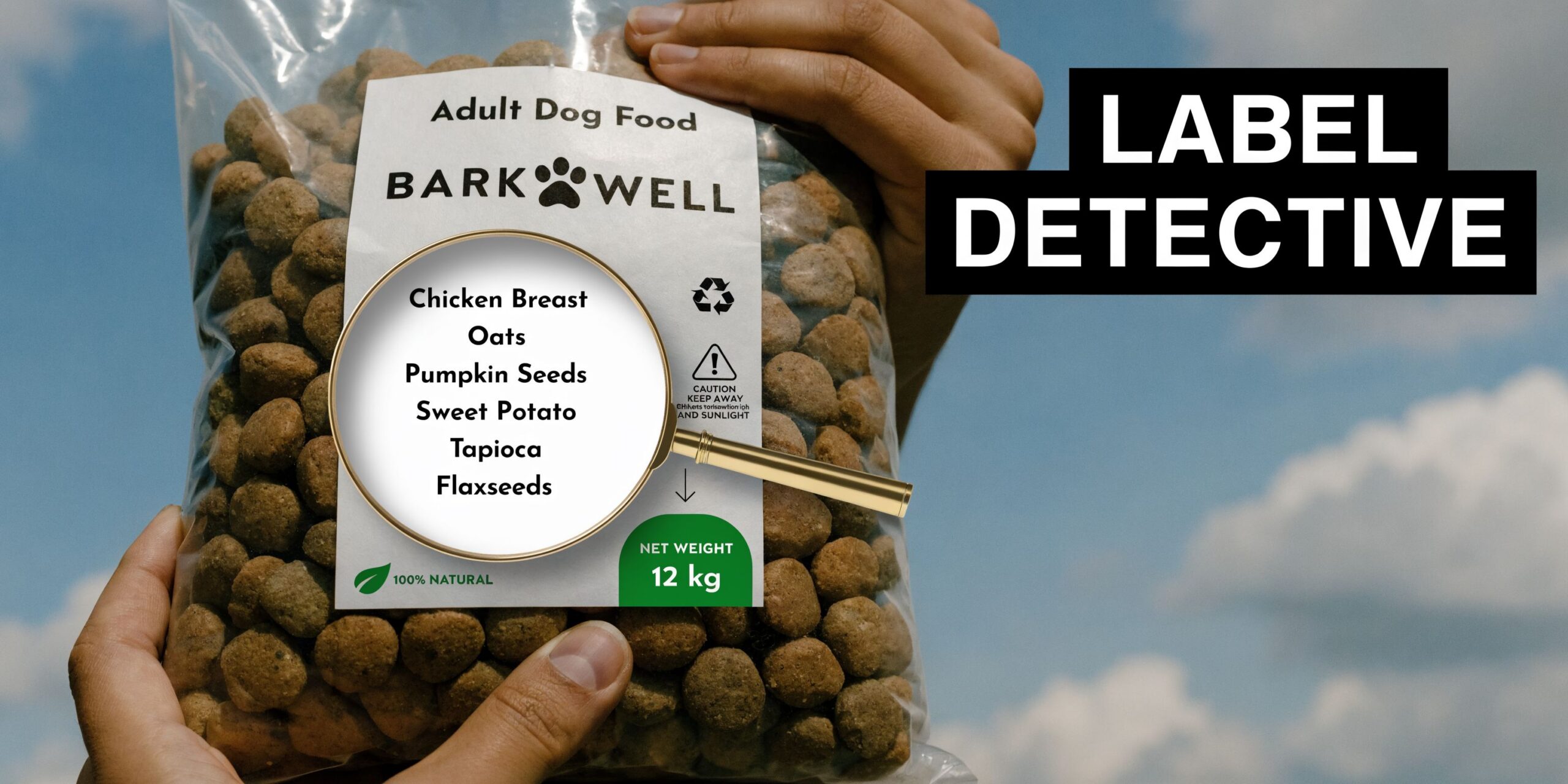
When owners search for the best dog food for skin and coat, I tell them to become a quiet detective. You are not looking for hype. You are looking for evidence.
Start with the ingredient list
The first five ingredients tell you a lot. They will not tell you everything, but they give you the strongest first impression of what the food is built on.
Look for a named animal protein near the top. Chicken, beef, salmon, turkey. Something specific. That usually gives you more confidence than vague phrases like “meat meal” or “animal by-products.”
This is important because a dog’s coat is over 90% protein, and The Honest Kitchen notes that protein quality and bioavailability matter more than the percentage alone, while zinc is critical for skin cell turnover.
Then check the guaranteed analysis
The guaranteed analysis tells you the minimum protein and fat levels in the product. This panel is helpful, but it is easy to misread.
A common mistake is assuming higher numbers automatically mean better skin support. Not always. The source of that protein and fat matters, and so does whether your dog digests the formula comfortably.
Still, this panel helps you screen out foods that may be too lean or too weak in protein to support skin well.
Look for the AAFCO statement
Find the nutritional adequacy statement. This tells you whether the food is intended to be complete and balanced for a life stage.
A topper, mixer, or supplement should support a complete food, not replace it. That distinction is important. If your dog’s base kibble is incomplete or poorly matched to their life stage, no topper can fully fix that.
For a deeper walk-through, this guide on how to read dog food labels is useful if you want to practice with a real bag in your hand.
Red flags worth noticing
Not every red flag is an automatic deal-breaker. But when several pile up together, I start asking harder questions.
- Vague protein names: These make it harder to judge ingredient quality.
- Heavy reliance on fillers: Some lower-value fillers can crowd out more useful nutrition.
- Artificial extras: Colors and unnecessary additives do not improve skin health.
- No obvious fat support: A very dry, low-fat formula may leave some dogs short on skin-friendly fats.
A short visual can help make label reading less abstract:
A practical store test
If you are standing in the aisle comparing two bags, try this:
- Read the first five ingredients.
- Find the protein and fat numbers.
- Check for a complete-and-balanced statement.
- Ask whether the ingredients sound like real food or vague commodity inputs.
- Think about your dog, not the trend. A picky senior dog has different practical needs than a young dog who eats anything.
The label is only half the story
A bag can look excellent and still not work for your dog. Stool quality, appetite, itch level, and coat feel matter just as much as label language.
That is why I encourage owners to use the bag as a starting point. Let the dog “vote” with their body. The best dog food for skin and coat should look reasonable on paper and perform well in the bowl.
The Smart Way to Boost Your Dog's Nutrition
A full diet change sounds simple until you try it. Your dog may dislike the new food. Their stomach may protest. The cost can jump fast. And if the old kibble is mostly working, replacing the whole thing may be more disruption than you need.
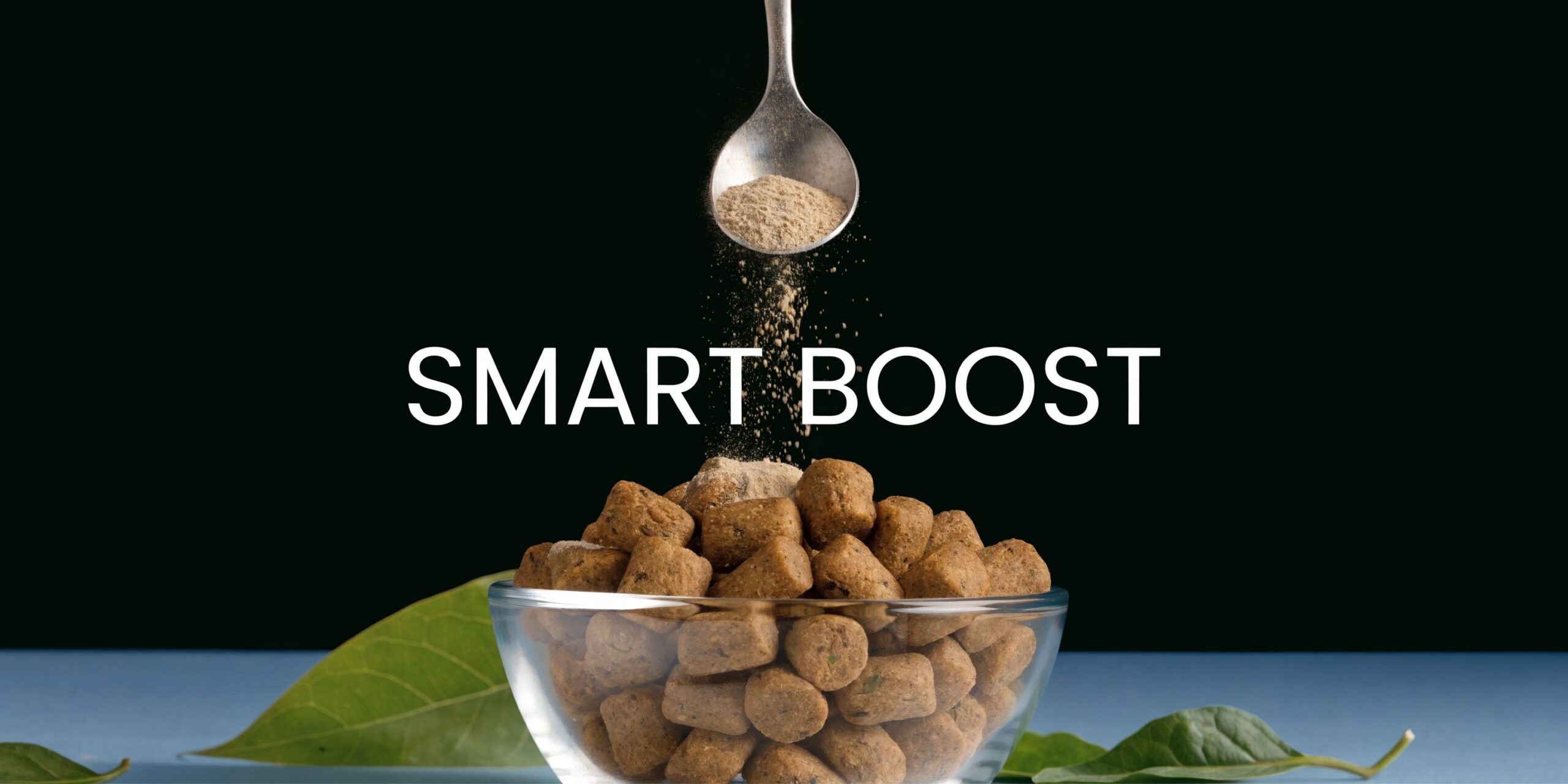
That is why a meal enhancer can be a practical middle path. Instead of rebuilding the entire bowl, you strengthen it.
Why toppers help in real life
A lot of dogs do not need a dramatic makeover. They need better nutrient density, better palatability, or easier digestion.
That is especially true for seniors, picky eaters, and dogs recovering from illness. Some dogs technically eat a food with enough protein on paper, but they do not eat enough volume to benefit from it. Others crunch around the bowl and leave food behind.
What a good enhancer should add
A useful topper is not just flavor dust. It should bring something meaningful to the bowl.
Look for options that can contribute:
- Concentrated animal protein: Helpful for coat structure and maintenance.
- Bioavailable nutrients: Ingredients the body can access and use.
- Simple composition: Easier for owners to understand and dogs to tolerate.
- Flexible use: Easy to sprinkle over kibble or mix with water.
Where a beef-heart topper fits
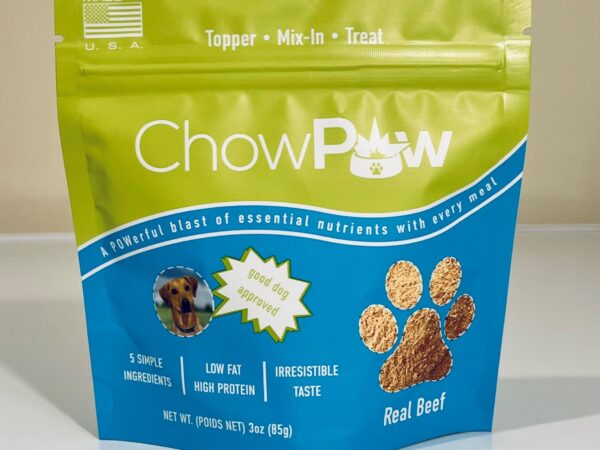
A dehydrated beef-heart topper can make sense for dogs that need a boost in protein quality and meal appeal. Beef heart is an animal-based ingredient that naturally supplies protein and micronutrients, and it can be easier to add to the current routine than a full diet switch.
One example is ChowPow’s omega-3 supplement resource. This product sits in the broader category of bowl enhancement rather than meal replacement. In practical terms, products like this are meant to boost the nutritional value of existing kibble, not replace a complete and balanced diet.
Why this approach works for cautious owners
Owners often worry that “doing more” means “changing everything.” It usually does not.
If your dog already tolerates their kibble, adding a nutrient-dense enhancer can be a lower-stress way to improve the bowl. That matters when your dog is older, choosy, or just not enthusiastic about meals.
A topper is best used like a booster, not a substitute. The main food stays in place. The enhancer improves nutrient density, taste, and sometimes hydration support.
Good candidates for a topper-first strategy
This approach is often worth considering for:
- Senior dogs: They may need softer, more appealing meals.
- Picky eaters: Extra aroma and flavor can help them finish the bowl.
- Dogs recovering from illness: Simple, concentrated support can be easier than changing diets.
- Owners who want a gradual approach: Enhancing the current food is easier than a full replacement plan.
For many households, that is the most realistic route to better skin and coat support.
Transitioning Foods and Knowing When to Call the Vet
Even a smart change can go badly if you move too fast. Dogs often do best with small adjustments, especially when you are adding a new topper or changing the main food.
A gentle way to introduce a topper
Start small. Sprinkle a light amount over one meal and watch how your dog responds. If stool stays normal and appetite improves, you can slowly work up to the intended serving.
If you are also changing the base kibble, go even slower. Mix the old and new foods gradually so the stomach has time to adapt. Consistency matters more than speed.
Hydration helps too. Some dogs do better when a dehydrated enhancer is mixed with a little water before serving. That can make meals more aromatic and may support dogs that are not enthusiastic drinkers.
Why less processing can matter
Processing affects how much nutrition stays available to the dog. A 2022 beagle study published in PMC found that dogs eating less-processed, human-grade diets had lower hair surface damage than dogs eating extruded kibble, which supports the idea that nutrient bioavailability plays a role in skin and coat quality.
That does not mean every owner must switch to a totally different feeding system. It does mean that improving the quality and usability of what goes into the bowl is worthwhile.
Red flags that need a veterinary exam
Diet is powerful, but it has limits. Call your vet if you notice any of these:
- Intense itching: Your dog cannot settle, sleep, or stop chewing.
- Open sores or scabs: Broken skin can become infected quickly.
- Sudden or widespread hair loss: Especially if it looks symmetrical or severe.
- Strong odor from the skin or ears: This can point to infection.
- Red, hot, painful skin: That suggests inflammation beyond simple dryness.
Trust the timeline, but do not ignore worsening signs
Nutrition-related skin improvements usually take patience because skin and coat renew gradually. You are waiting for better growth, not applying instant polish.
But if your dog is getting worse while you wait, stop and get help. Responsible skin care means knowing when food support is enough and when the dog needs medical treatment too.
Your Questions Answered About Skin and Coat Health
How long does it take to see coat improvement
Coat change is usually gradual. Skin has to repair, and new hair has to grow in looking healthier than the old hair. With consistent feeding, some owners notice a softer feel first, then less flaking, then better shine.
The key is consistency. If the bowl changes every few days, it becomes hard to tell what is helping.
Is fish oil alone enough for skin and coat support
Sometimes fish oil helps, especially when inflammation is part of the picture. But a shiny coat does not come from one nutrient alone.
Skin needs protein, fats, vitamins, and minerals working together. If the base diet is weak, adding one oil may help a little without fixing the bigger problem. That is why a more balanced food upgrade often makes more sense than relying on a single isolated supplement.
Is grain-free always better for skin problems
No. Grain-free is not a shortcut to the best dog food for skin and coat.
What matters more is ingredient quality, nutrient balance, and whether your dog tolerates the formula well. Some dogs do fine with grains. Others do better with different ingredient choices. The label trend is less important than what the food delivers.
My dog is picky. Does that change what I should choose
Yes, because the perfect formula on paper does not matter if your dog refuses to eat it.
For picky dogs, look for food or meal enhancers that increase aroma and make meals more appealing without replacing a complete base diet. This is one of the most practical cases for a topper-first strategy. It improves the bowl your dog already knows instead of asking them to accept a totally new meal.
Can I use a topper instead of complete dog food
No. A topper should support the main diet, not replace it.
That point matters. Meal enhancers are useful because they can increase nutrient density, taste, and sometimes hydration support. But your dog still needs a complete and balanced primary food matched to their life stage.
What if my dog’s coat is dull but they seem otherwise fine
That is often a good time to review the bowl before the problem gets bigger.
Look at ingredient quality, protein source, fat support, and whether your dog is eating enough. Also think about stress, bathing frequency, and seasonal dryness. A dull coat may be the first small sign that the current routine needs a tune-up.
Should I switch foods immediately if the coat looks bad
Not always. A sudden full switch can create digestive issues and confuse the picture.
If the dog is otherwise stable, many owners do better by making one measured change at a time. That could mean improving the base food, adding a targeted topper, or checking with a vet first if the skin looks inflamed rather than dry.
If your dog’s coat feels dull, meals have become a struggle, or you want to add more nutrient density without replacing the whole diet, ChowPow is one practical way to enhance your dog’s current kibble. It’s designed as a meal booster, not a substitute, so you can support appetite and everyday nutrition with a simple addition to the bowl.
-
Product on sale
 Dog Food Topper - Beef HeartOriginal price was: $14.99.$10.95Current price is: $10.95. - or subscribe and save up to 20%