Best Dog Food for Small Dogs & Picky Eaters (2026 Guide)
You buy a premium bag of kibble. You read the label. You feel good about the choice. Then your tiny dog walks over, sniffs the bowl, and looks at you like you’ve offered cardboard.
If you’ve been there, you’re not doing anything wrong. Small dogs can turn feeding time into a daily negotiation, and it’s stressful when you know nutrition matters but your dog won’t cooperate.
A lot of articles on the best dog food for small dogs give you a brand list and stop there. That’s not very helpful if your dog is picky, has a sensitive stomach, is getting older, or is recovering from illness and needs support now, not another expensive bag that may also go untouched.
The better approach is to understand what your small dog needs, learn how to judge the food already in your pantry, and then make that food easier to eat and more rewarding to finish. That’s often simpler than starting over with a full diet change.
The Search for the Best Food for Your Little Companion
A common scene plays out like this. A pet parent has a small dog who seems interested in food right up until the bowl hits the floor. Then the hesitation starts. One bite, maybe two, then nothing.
That hesitation can mean different things. Some small dogs are selective about texture. Some lose interest quickly. Some are fine one week and fussy the next. Senior dogs and dogs coming back from stress, medication, surgery, or illness can be even harder to feed.
What makes this extra frustrating is that “just switch brands” isn’t always practical. You may already be feeding a good food. You may not want to upset your dog’s digestion with constant changes. And you may be tired of buying bag after bag in search of a miracle.
A nutritionally balanced food only helps if your dog eats it.
For many owners, the main question isn’t only “What is the best dog food for small dogs?” It’s also, “How do I make a good food work better for my specific dog?”
That shift matters. It moves you away from chasing marketing claims and toward a more useful plan. Start with solid nutrition. Make sure the food fits small-breed needs. Then solve the everyday obstacles that get in the way, especially pickiness and meal fatigue.
When you look at feeding that way, you stop feeling stuck. You start making decisions based on your dog’s body, appetite, and routine.
Why Small Dog Nutrition Is a Big Deal
Your little dog can look full after a few bites and still miss the nutrition those bites were supposed to deliver. That is the challenge with small breeds. They do not have much room for error.

A small dog’s metabolism works like a fast-burning engine with a small fuel tank. Many small breeds burn through energy quickly, but they cannot eat a large volume at once. That is why food for small dogs usually needs to deliver more energy and nutrition in a smaller serving.
According to Chewy’s guide to small dog nutrition, small breeds are often under 20 pounds and commonly do best with calorie-dense food, along with higher protein and fat, because their bodies use energy faster than larger dogs.
That helps explain a common owner frustration. You can choose a decent food, follow the feeding guide, and still end up with a dog who seems hungry, uninterested, or inconsistent at mealtime. The issue is not always the brand. Sometimes the food is not working hard enough per bite, or it is not appealing enough for a small dog with strong preferences.
Small stomachs change the math
Large dogs can eat more volume in one sitting. Small dogs often cannot.
So each mouthful has a bigger job to do. It needs to provide energy, protein, fats, and everyday nutrients without asking your dog to eat a large bowl. If the food is too bulky, a small dog may stop eating before nutritional needs are met. If the kibble is too hard or too large, some dogs lose interest before the meal really starts.
This is one reason many owners do better by improving the food they already trust instead of changing bags over and over. A well-chosen topper can add flavor, aroma, and targeted nutrition to the base diet without forcing a full food switch.
Chewing comfort matters more than many owners expect
For a Chihuahua, Yorkie, Maltese, or toy poodle, kibble size is not a minor detail. It affects whether eating feels easy or annoying.
Practical rule: If your dog noses food around the bowl, drops pieces, or leaves hard chunks behind, kibble size or texture may be part of the problem.
That behavior is often read as stubbornness. Sometimes it is just mechanics. A small mouth has a harder time with oversized pieces, and repeated effort can turn meals into a chore. Adding moisture, aroma, and soft texture on top of kibble can make a good food easier to finish.
Weight gain happens fast in a small frame
Small dogs need concentrated nutrition, but portion mistakes show up quickly. An extra spoonful here, a few treats there, and the balance shifts.
That creates a tricky feeding pattern. Owners want to tempt a picky dog to eat, but they also want to avoid turning every meal into a calorie overload. The better approach is to make each bite count. Improve the nutritional value and appeal of the main meal, instead of relying on random extras.
Small Dog vs. Large Dog Nutritional Needs at a Glance
| Nutritional Factor | Small Breed (e.g., Chihuahua) | Large Breed (e.g., Labrador) |
|---|---|---|
| Metabolism | Faster | Slower relative to body size |
| Stomach capacity | Smaller, fills quickly | Larger, holds more volume |
| Food density need | Higher calorie density | Less concentrated per bite |
| Kibble size | Smaller pieces are easier to chew | Larger kibble is usually manageable |
| Weight management | Easier to overfeed accidentally | Still important, but small errors may be less obvious day to day |
Small choices matter over a long life
Small dogs often live many years, which is wonderful for owners and important for feeding decisions. Daily nutrition adds up over time. A pattern of skipped meals, inconsistent intake, or low-interest eating can chip away at body condition, digestive comfort, and energy.
If you want help comparing ingredient panels and nutrient claims, this guide on how to read dog food labels for small breeds can make the package easier to interpret.
The big idea is simple. Small dogs do not just need a “small breed” label on the bag. They need food that suits their metabolism, stomach size, chewing comfort, and appetite. For many households, the smartest fix is not another full diet change. It is strengthening the food already in the bowl with something more enticing and more useful, such as ChowPow.
Decoding the Dog Food Label for Your Small Breed
Dog food packaging is built to catch your eye. The label’s value is in the small print.
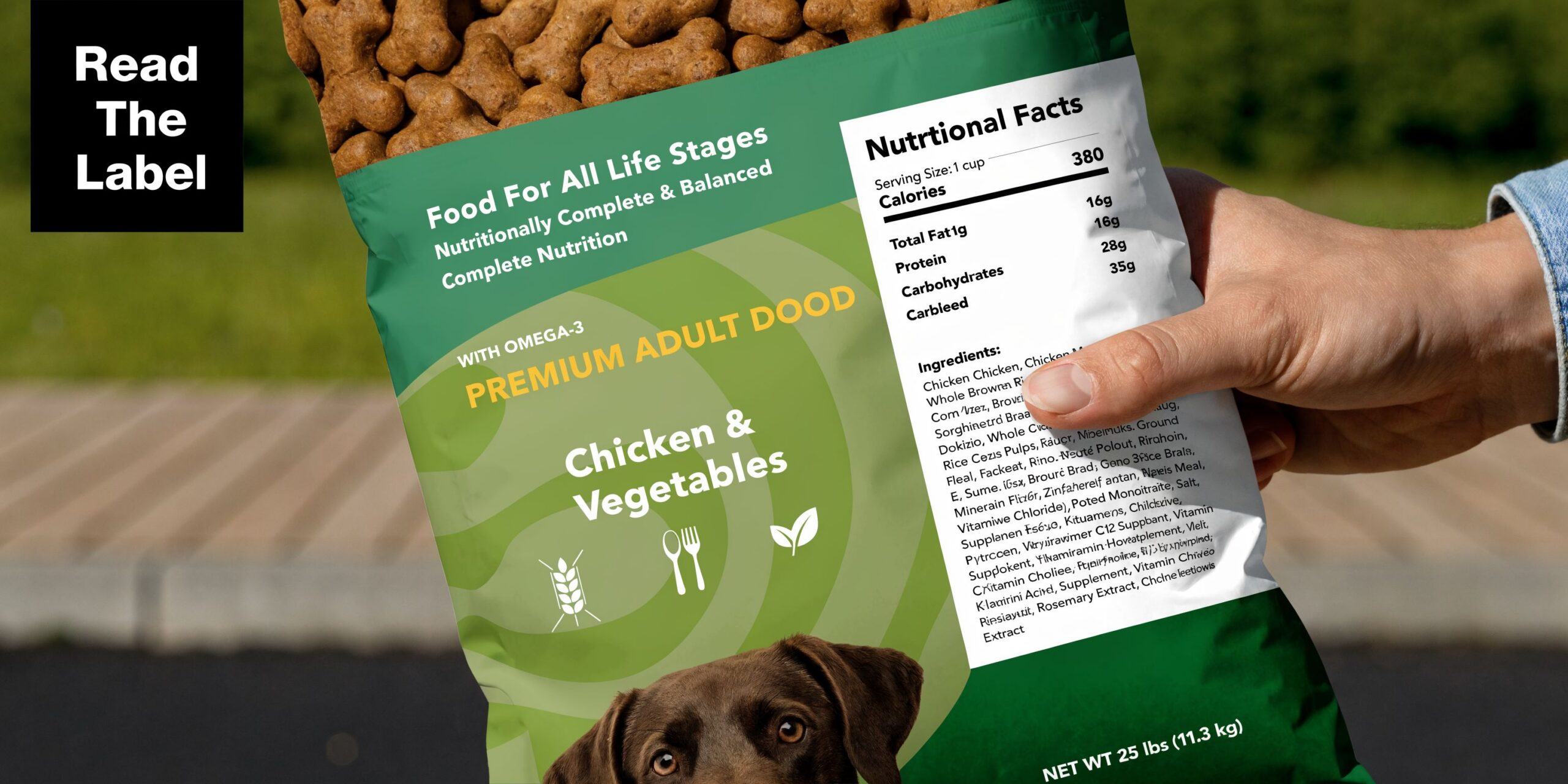
If you want to choose the best dog food for small dogs, learn to ignore the front-of-bag romance first. Terms like “premium,” “wholesome,” and “gourmet” don’t tell you much by themselves. The useful clues are the guaranteed analysis, ingredient list, feeding directions, and whether the food clearly fits your dog’s size and life stage.
Start with the guaranteed analysis
The guaranteed analysis tells you the minimum protein and fat in the food. For small breeds, that section matters a lot.
Veterinarians recommend 30% to 38% crude protein and 15% to 18% fat in small-breed formulas to match their 20% to 50% higher daily energy expenditure per kg of body weight versus large breeds, with Merrick Lil’ Plates Grain-Free Real Chicken + Sweet Potato Small Breed at 38% protein and 17% fat as one example, according to Furrylicious’ small-breed nutrition summary.
That doesn’t mean every dog must eat the exact same formula. It means you should know what range small-breed foods often target, and compare your current food against that reality.
Then read the ingredient list like a detective
Look for a named animal protein near the top of the ingredient list, such as chicken, turkey, beef, or salmon. That’s more informative than vague terms like “meat” or “animal.”
A few quick label-reading habits help:
- Check the first ingredients: The first several ingredients tell you more than the marketing panel.
- Look for fit, not hype: A food can sound fancy and still be a poor match for a small dog.
- Notice texture and form: Some dogs do better with smaller kibble, softer texture, or a food that moistens well.
If you want a deeper walkthrough of ingredient panels, percentages, and common label terms, this guide on how to read dog food labels is a helpful practical reference.
Don’t panic when you see “meal”
Many owners see “chicken meal” or “turkey meal” and assume it’s lower quality. The word itself isn’t automatically a red flag. What matters is whether the ingredient is clearly named and whether the overall formula suits your dog.
The label needs context. A food with a strong protein profile and sensible fat level may be a better choice for a small dog than one with prettier marketing and weaker nutrition.
Here’s a short visual primer before you compare your next bag:
A simple label checklist
Bring this list to the pet store or keep it on your phone.
Is it made for small breeds?
That often signals more appropriate kibble size and nutrient density.Does the protein and fat profile look strong?
Compare the guaranteed analysis against the ranges noted above.Is the main protein clearly named?
You want clarity, not vague ingredient language.Will your dog eat it?
A great label still has to work in the bowl.
If you’re stuck between two foods, pick the one that matches your dog’s eating ability and consistency, not just the one with the flashier bag.
Solving the Picky Eater Predicament
A lot of feeding advice assumes one thing. If the food is good enough, the dog will eat it.
Small dog owners know that’s not always true.
Many resources admit small dogs “can be finicky eaters, making regular meals a challenge” and suggest “irresistible proteins,” but they often stop at brand switching, especially for seniors or dogs recovering from illness when appetite support matters most, as noted by JustFoodForDogs’ discussion of food for small breeds.
That gap is a big deal in real life. Brand switching may help sometimes, but it can also create new problems. A dog with a sensitive stomach may not handle frequent transitions well. A senior dog may struggle more with texture than formula. A recovering dog may need something gentler and more enticing without changing the whole meal plan.
Why small dogs get labeled “picky”
Sometimes they dislike a food. Sometimes they’ve learned to hold out for something tastier. Sometimes the issue is chewing comfort, smell, stress, medication, or lowered appetite.
Those causes don’t all need the same solution.
A few patterns show up often:
- Texture refusal: The kibble is too hard, too large, or boring to chew.
- Flavor fatigue: The food is fine nutritionally, but the dog has lost interest.
- Temporary appetite drop: Recovery, age, or stress can make a normally food-motivated dog hesitant.
- Owner overcorrection: Constantly swapping foods can train a dog to wait for something different.
Why “just switch brands” falls short
Changing the entire diet every time your dog hesitates can turn mealtime into a moving target. Your dog never settles. You never know what’s working. And each new bag becomes another guess.
A steadier approach is often better. Keep the nutritious base food when it suits your dog. Then make the meal more appealing or easier to eat.
For dogs that routinely ignore kibble, practical strategies for dog food for picky eaters usually work best when they focus on palatability, consistency, and gentle support instead of constant replacement.
If your dog refuses food suddenly, acts unwell, or stops eating altogether, call your veterinarian. Pickiness and illness can look similar at first.
How to Supercharge Your Dog's Kibble with ChowPow
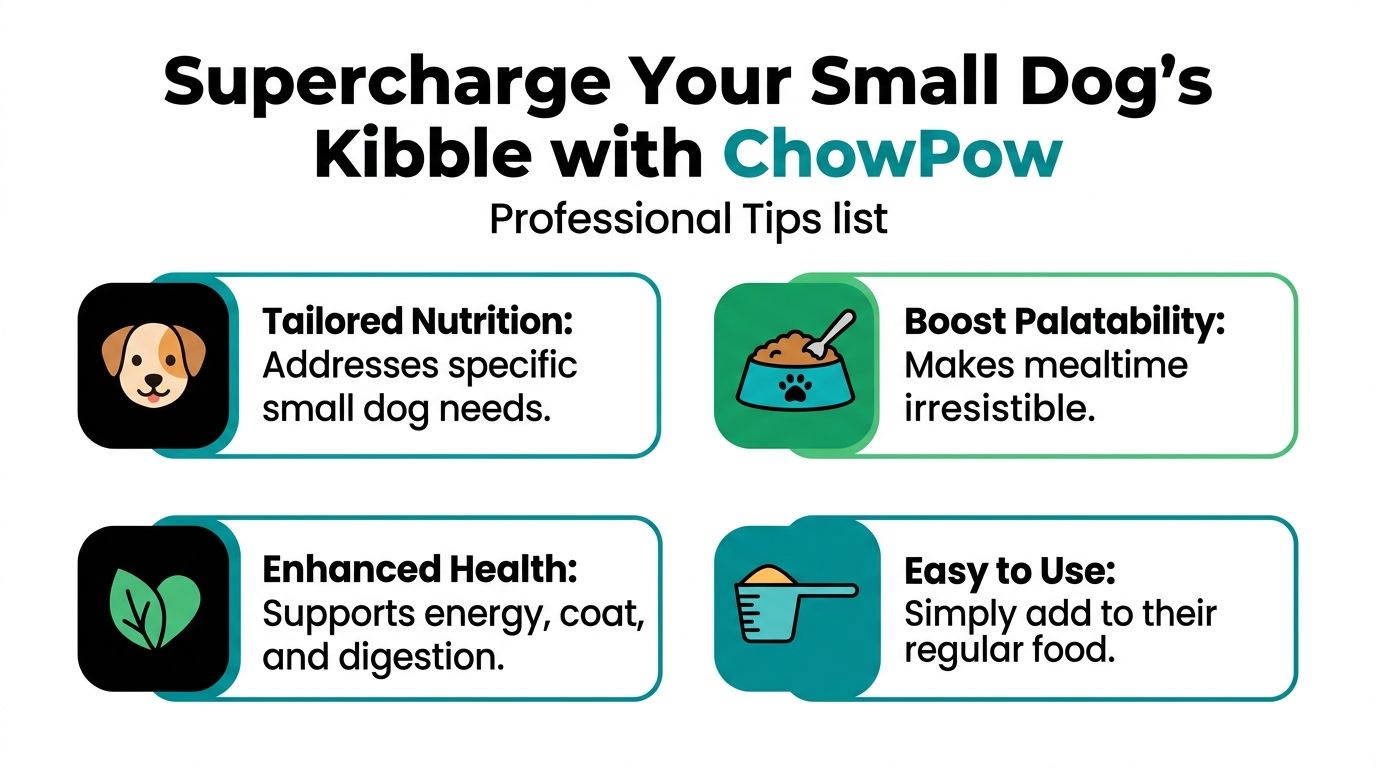
When a dog’s base food is decent but mealtime still feels like a struggle, a topper can be one of the simplest tools you can use.
A topper doesn’t replace kibble. It enhances it. That distinction matters. You keep the structure of your dog’s regular food, then add concentrated flavor and nutrition to improve acceptance and support the meal overall.
What a topper does well
A good topper helps in three areas at once.
- Palatability: It makes the meal smell and taste more inviting.
- Nutrient density: It adds useful whole-food support without requiring a full diet overhaul.
- Flexibility: It can be adjusted for dogs who need variety, hydration encouragement, or help taking medication.
This is why toppers are so useful for small dogs. You’re working with a small bowl, a small appetite window, and sometimes a very opinionated eater.
Why ChowPow fits this job
ChowPow is a dehydrated dog food topper made with beef heart, carrots, celery, and apple cider vinegar. It’s designed to be used with your dog’s existing food, not in place of it.
That matters if you’ve already found a kibble your dog tolerates, but they don’t finish consistently. Instead of restarting from scratch, you can build on what’s already working.
ChowPow’s ingredient profile also suits the practical needs many small-dog owners care about. Beef heart is a rich animal ingredient. The dehydrated powder format is easy to sprinkle, mix, and portion. The simple recipe keeps the use case straightforward.
For owners comparing options, ChowPow belongs in the broader category of dehydrated dog food toppers, but its appeal is the simplicity. It’s not trying to become your whole feeding system. It helps your current feeding system work better.
Three easy ways to use it
Sprinkle it over kibble
This is the most direct use. Add a small amount over the top of your dog’s regular food.
For many picky dogs, smell is the first hurdle. A topper can change the aroma of the bowl before your dog even takes a bite. That can break the standoff that starts with sniffing and walking away.
This method is especially useful for:
- Routine picky eaters who lose interest in plain kibble
- Dogs eating smaller portions that need every bite to count
- Owners who don’t want a messy prep routine
Mix it with water for a savory broth
Some dogs respond better when food is softened or moistened. Turning a topper into a light broth can help with both aroma and hydration.
This works well for dogs with sensitive teeth, older dogs, or dogs who seem more interested in moist food than dry kibble. It can also make food easier to chew and more appealing without replacing the meal entirely.
A warm, savory topper mixture often helps small dogs engage with food faster than dry kibble alone.
Use it to help with medication
Medication can ruin a dog’s appetite and turn trust into suspicion. Powders are useful because they can cling to a small bite of food and help mask taste and smell.
That gives owners a low-drama option for dogs who detect pills easily or become wary after one bad experience.
When this approach makes the most sense
A topper-first strategy tends to fit these situations best:
| Situation | Why a topper helps |
|---|---|
| Your dog’s kibble is nutritionally solid but ignored | Improves aroma and interest without changing the whole diet |
| Your dog is older or chewing more slowly | Can be mixed with water to soften meals |
| Your dog is recovering and eating lightly | Makes small meals more tempting |
| Your dog needs pills | Helps disguise medication in food |
Keep expectations realistic
A topper isn’t magic, and it shouldn’t be treated like a cure-all. If your dog has an underlying medical issue, no sprinkle-on product replaces veterinary care.
But in normal day-to-day feeding, a topper can remove a lot of friction. It can turn “my dog won’t eat this food” into “my dog finally finishes dinner.” For many owners, that’s the practical difference between stress and consistency.
Beyond Palatability The Benefits of Enhanced Nutrition
Getting a small dog to eat is the first win. What happens after that matters just as much.
When you improve the quality and appeal of what goes into the bowl, you’re not only solving a behavior problem. You’re supporting daily function. Better eating habits can mean steadier energy, easier digestion, and more confidence that your dog is getting meaningful nourishment from small meals.

Better intake often leads to better routine
Owners usually notice the first benefit quickly. Mealtime gets simpler.
A dog who approaches the bowl willingly is easier to monitor. You can tell whether appetite is stable. You can keep feeding times predictable. You spend less energy bargaining, hand-feeding, or constantly replacing food.
That consistency helps you spot real changes when they happen.
Nutrient density matters in a small bowl
Small dogs don’t have much room for nutritional fluff. They benefit when each meal carries useful protein, fat, and whole-food support instead of just filling space.
That’s why enhancements can be valuable even when your dog already eats a decent kibble. You’re improving the quality of each bite without requiring a total change in routine.
Moisture support can help comfort
When you mix a topper with water, you add something many dry-food meals lack. Moisture.
That can make food easier to chew and swallow, especially for dogs with sensitive mouths or reduced enthusiasm for hard textures. Many owners also find that moistened meals feel gentler and more satisfying for dogs coming back from stress or recovery.
Small improvements in texture, smell, and moisture can change how a dog experiences the whole meal.
Long-term value comes from habits
The strongest nutrition plan is rarely the most complicated one. It’s the one you can repeat.
If your dog reliably eats, tolerates the food well, and seems comfortable at mealtime, you’ve built something worth keeping. That kind of steady routine supports body condition, digestion, and overall vitality better than a cycle of trial-and-error purchases.
For small dogs, that’s especially important. Their needs are precise, and they don’t have much room for inconsistent feeding habits.
A Simple Path to Better Nutrition for Your Small Dog
The best dog food for small dogs isn’t just about choosing a popular brand. It’s about fit.
Small dogs need food that matches their metabolism, their mouth size, their stomach capacity, and their eating behavior. That’s why smart feeding starts with understanding what small-breed nutrition looks like, then checking whether your current food supports it.
If your dog is picky, sensitive, older, or inconsistent at meals, you don’t always need to replace the whole diet. Often, the more practical move is to keep a solid base food and improve how it performs in the bowl.
That’s where a topper can make life easier. Used properly, it isn’t a substitute for kibble. It’s a simple way to boost palatability, support intake, and make meals more useful for the dog in front of you.
Good feeding doesn’t have to feel complicated. It just has to be thoughtful and consistent.
Frequently Asked Questions About Small Dog Nutrition
Is small-breed dog food really different from regular adult dog food
Usually, yes. Small-breed foods are often designed with denser nutrition and smaller kibble pieces, which can make them easier for little dogs to eat and more appropriate for their energy needs.
What if my dog likes treats but ignores kibble
That often points to a palatability or routine issue, not necessarily a complete dislike of food. Before switching diets entirely, look at kibble size, feeding schedule, and whether adding moisture or a topper makes the meal more appealing.
Should I replace kibble with a topper
No. A topper should enhance your dog’s current meal, not replace it unless your veterinarian tells you otherwise. Think of it as support for the base diet, not a standalone feeding plan.
Can a topper help older small dogs
Yes, especially when the issue is interest, smell, or chewing comfort. A topper mixed with water can soften dry food and make it more appealing for senior dogs that hesitate with plain kibble.
What’s the biggest mistake owners make with picky small dogs
Constantly changing foods too quickly. That can make it harder to tell what your dog likes and tolerates. A more stable routine with a quality base food and thoughtful enhancement is often easier on both the dog and the owner.
When should I call the vet about poor appetite
Call your veterinarian if your dog suddenly stops eating, seems lethargic, vomits, has diarrhea, appears painful, or shows any other signs that something is off. It’s better to treat sudden appetite loss as a health question first.
If you want an easy way to make your small dog’s meals more appealing without replacing their current kibble, ChowPow is a smart addition to the bowl. It’s a dehydrated beef heart topper made to boost flavor and nutritional value with simple ingredients, and it works as a meal enhancer, not a substitute for your dog’s regular food.
-
Product on sale
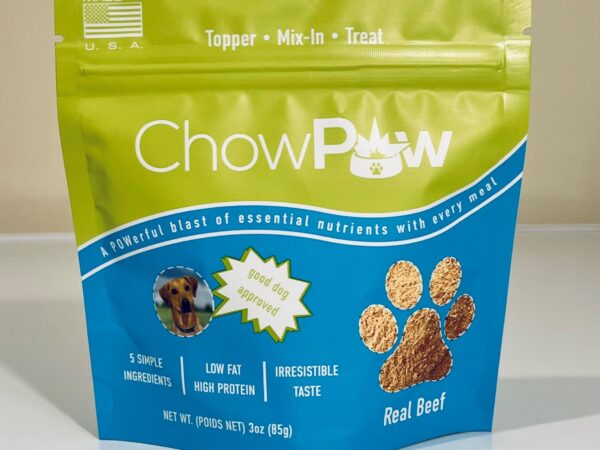 Dog Food Topper - Beef HeartOriginal price was: $14.99.$10.95Current price is: $10.95. - or subscribe and save up to 20%