
Best Dog Tear Stain Remover Guide for Health and Beauty
Your dog walks over, sits at your feet, and looks up with a bright, happy face. Then you notice the reddish-brown streaks under the eyes again. You wipe them off. They come back. You change treats, try a new wipe, and search for the best dog tear stain remover, but the advice online starts to blur together.
That frustration is common, especially with light-coated dogs where every mark seems to show up overnight. The tricky part is that tear stains sit in the space between grooming and health. Sometimes they're mostly cosmetic. Sometimes they're your first clue that the eye area is getting irritated and needs closer attention.
A good plan starts with two questions. What's causing the stain, and what's safe to use near such a sensitive area? Once you answer those, tear stain care gets much simpler. It becomes less about miracle products and more about a steady routine, smart product choices, and a few practical changes around food, water, and grooming.
Introduction to Dog Tear Stains
Sophie, a little white dog I once advised on diet and grooming habits, had the classic tear stain problem. Her owner kept saying the same thing many pet parents say: “I clean her face, but by the next day the stains look just as dark.” That sentence tells me two things right away. First, the owner is paying attention. Second, the issue probably needs more than occasional wiping.
Tear stains can look like a beauty problem, but they often behave like a maintenance problem. Think of them like water marks on a bathroom faucet. If moisture sits there long enough, it leaves a visible trace. Under a dog's eyes, that trace becomes red-brown discoloration that can cling to the fur and get harder to remove over time.
The good news is that most owners don't need a harsh fix. They need a safer one. The best dog tear stain remover usually works as part of a bigger system: gentle cleaning, less irritation, cleaner feeding tools, and closer attention to what may be triggering extra tearing.
Practical rule: If a product promises dramatic cosmetic results but says very little about eye safety, skip it.
That's why the smartest approach is step-by-step. Start with the cause. Then choose a remover that makes sense for your dog's skin, coat, and daily routine. After that, make prevention easier than cleanup.
Understanding Causes and Concerns of Dog Tear Stains
Tear stains don't appear out of nowhere. They form when tear moisture sits on the fur long enough to leave pigment behind.
According to a veterinary guide on stubborn tear stains in dogs, tear stains are caused by porphyrins, iron-rich molecules in tear moisture that oxidize and bond with keratin in facial fur, creating red-brown discoloration; acids like boric acid (pH ~5.0) and citric acid oxidize these porphyrin-iron compounds to lighten existing stains, whereas UV exposure accelerates darkening by further oxidizing the iron-porphyrin complex.
That sounds technical, so here's the plain-English version. Porphyrins act a bit like a metal-based pigment carried in your dog's tears. When those tears stay on the coat, air and light help darken the stain. The fur then holds onto that color.

Why some dogs stain faster
Some dogs seem to stain if you miss one cleaning. Others barely show anything. A few everyday factors can make stains more noticeable or more stubborn:
- Fur texture matters. Fine facial hair can hold moisture like the edge of a paper towel.
- Sun exposure can deepen color. Once porphyrin-rich moisture has soaked the coat, light can make the discoloration look darker.
- Minor irritation can increase tearing. If the eye area is bothered, more moisture reaches the face and gives stains more chance to set.
That's one reason stain removers often disappoint owners. They may lighten what's already there, but they don't stop fresh moisture from feeding the cycle.
Cosmetic issue or health signal
Not every tear stain means something is wrong. Many dogs have visible staining because of how tears contact the fur. But owners get confused because the color itself can distract from the skin and eye underneath.
Use this simple distinction:
| Situation | More likely cosmetic | More likely needs a vet |
|---|---|---|
| Mild discoloration with no discomfort | Yes | Less likely |
| Frequent pawing at the face | Less likely | Yes |
| Redness or swelling around the eye | Less likely | Yes |
| Thick discharge, not just watery tears | Less likely | Yes |
A stain is one thing. A dog that seems bothered by the eye area is another.
If your dog suddenly develops tear staining after previously having a clean face, or the area looks inflamed rather than just discolored, treat that as a reason to get veterinary guidance before trying stronger products.
How to Choose a Safe Tear Stain Remover
The best dog tear stain remover isn't the one with the flashiest label. It's the one that matches the reality of the job. You're cleaning a stain that sits beside one of the most sensitive parts of your dog's body. Safety comes first. Whitening claims come second.
Start with ingredient categories, not branding. That keeps you focused when shelves are full of wipes, gels, powders, and homemade mixtures that all promise the same thing.
What to look for
A safe remover usually fits into one or more of these categories:
- Mild acids like boric acid or citric-acid-based ingredients. These are used to help lighten existing discoloration on the fur.
- Soothing botanicals such as chamomile or aloe vera. These can make a formula feel gentler on the surrounding skin.
- Gentle cleansing agents that help lift residue from the coat without acting like a harsh household cleaner.
Here's a quick comparison:
| Ingredient type | What it does | What to watch for |
|---|---|---|
| Mild acids | Helps lighten stain on fur | Keep away from direct eye contact |
| Soothing botanicals | Calms the skin around the area | Watch for individual sensitivity |
| Gentle cleansers | Removes buildup and residue | Avoid overuse if skin looks dry |
To make the cleaning sequence easier to picture, this routine graphic helps: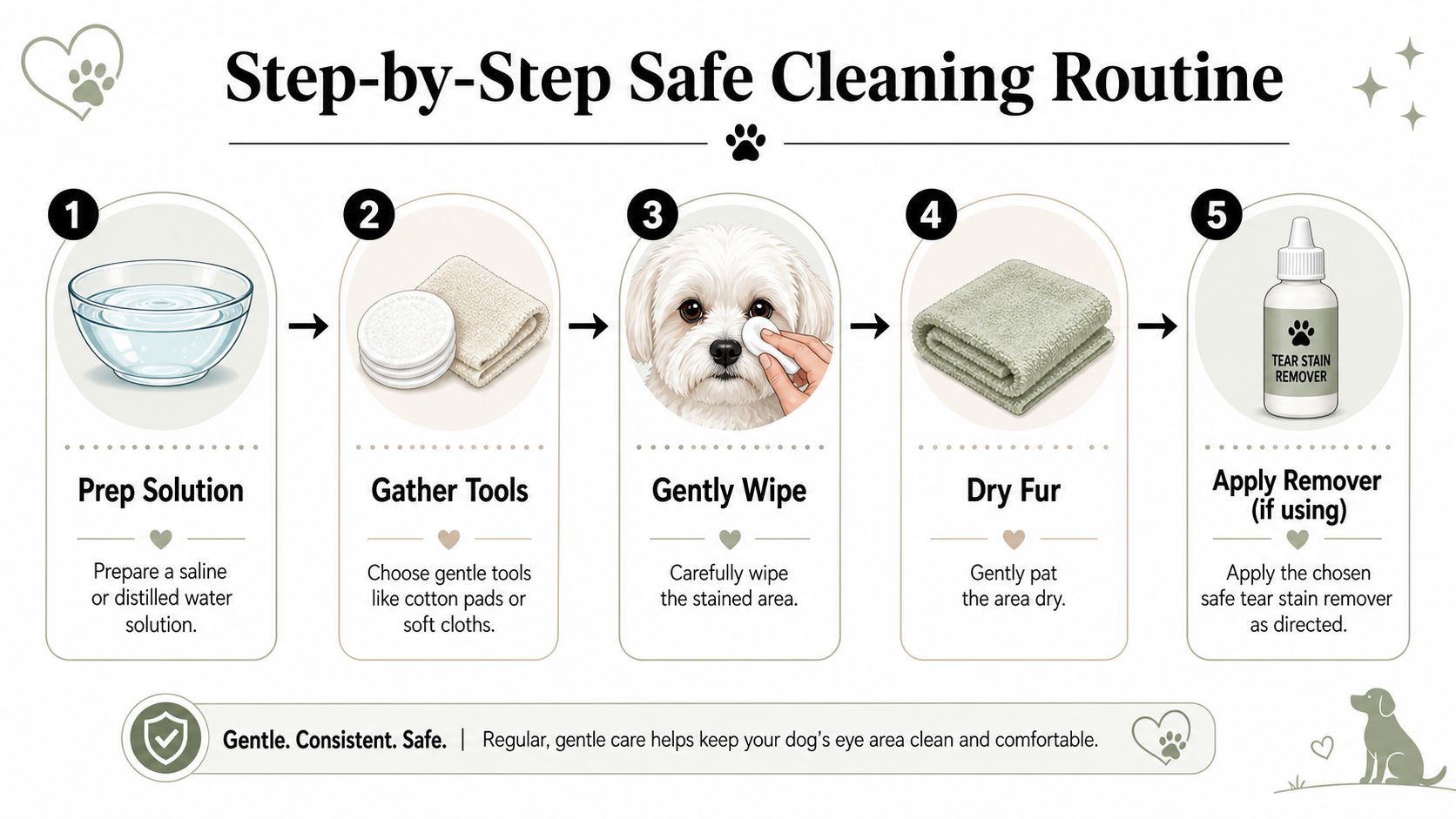
What to avoid
Some formulas try to look powerful by including ingredients that don't belong near the eye area.
- Alcohol-heavy formulas can dry and sting.
- Bleach-like whitening agents may irritate delicate skin.
- Strong fragrance adds scent, not usefulness.
- Parabens or overly busy ingredient lists can make it harder to tell what your dog is reacting to.
Homemade options can be fine, but they're not automatically safer. A kitchen ingredient can still irritate skin if the mixture is too strong or applied carelessly.
A lot of owners also ask about oral products or antibiotics for stubborn staining. That topic needs caution. Canine Journal's discussion of tear staining notes that questions about whether antibiotics like tylosin are necessary for stubborn stains often miss a balanced discussion, because some sources mention them as effective without emphasizing the controversy of using them for cosmetic reasons or the fact that dietary changes and antioxidant supplements often resolve the issue without drug intervention.
That matters because “effective” and “appropriate” aren't always the same thing.
If the main goal is cosmetic improvement, many owners are better served by grooming changes, diet review, and a gentler routine before asking for medication.
If you're unsure whether the eye itself needs treatment, read this practical guide on using eye drops on dogs. It helps separate actual eye care from stain care, which many owners understandably mix up.
A short visual walkthrough can also help you spot what safe handling looks like in real time:
Step-by-Step Safe Cleaning Routine
A remover only works well when the routine around it is solid. If you clean inconsistently, let the fur stay damp, or leave long hair touching the eye area, even a good product won't do much.
The basic rule is clear. A Chewy educational guide on treating dog tear stains says the periocular area must be cleansed at least twice daily using a slightly damp washcloth or cotton ball to dilute and wash away tears before they oxidize and stain the fur.
Morning routine
Start when your dog is calm. After a walk or before breakfast often works well.
- Prep a gentle wipe. Use a slightly damp washcloth or cotton ball.
- Wipe from the eye area outward. Don't scrub back and forth.
- Use a fresh section of cloth for each pass. That keeps you from dragging residue around.
- Pat the fur dry. Damp fur is part of the problem, so don't leave moisture behind.
The goal isn't to strip the face clean. The goal is to remove fresh tear moisture before it settles into the coat.
Evening reset
The second cleaning matters just as much because tears, dust, food crumbs, and outdoor debris all build up through the day. This session can be a little slower.
- Check for crusting. If residue is stuck, soften it first with the damp cloth.
- Dry thoroughly. A soft towel works well for this.
- Look at the hair path. If the fur beneath the eye pulls moisture downward, it may need trimming.
Here's a simple prevention checklist to keep in mind during care:
Small habits that make a big difference
Many owners focus only on the eye area and forget the surroundings. Bedding, damp fur, and general face hygiene all affect how clean the dog stays between wipes. If your dog also has accidents indoors or lingering smell issues in sleeping spots, The Mobile Buff's professional odor removal offers a useful cleanup perspective that pairs well with a cleaner overall care environment.
You'll also have an easier time managing facial staining when the whole coat stays clean and well maintained. This guide on how to bathe a dog is helpful if your dog's face care routine tends to turn into a wrestling match by bath day.
Clean first, dry second, trim when needed. That order prevents a lot of frustration.
DIY Home Remedies for Tear Stains
Some owners prefer a simple home setup instead of a branded remover. That can work, but only if you stay conservative. The skin under the eyes is thin, and the eye itself won't tolerate trial-and-error chemistry.
The safest DIY approach is to think “supportive wipe,” not “strong stain eraser.” You're trying to freshen the fur and reduce buildup, not force a dramatic whitening result overnight.
Gentler home options
A few low-key ideas are commonly used by careful pet owners:
- Diluted chamomile tea rinse can be used on the fur around the stain after it has cooled fully. Apply with a soft cotton pad and keep it out of the eye.
- Very diluted apple cider vinegar mix is sometimes used on stained fur only, never dropped into the eye. Because dogs vary, this is one to patch-test on a tiny area of coat first.
- Vitamin C based wipe mixtures are sometimes chosen because citric acid is associated with lightening stained fur. Keep the solution mild and use it sparingly.
- Plain damp cloth care remains the safest “DIY” option of all, especially for dogs with sensitive skin.
What owners often get wrong
The biggest mistake is making a mixture too strong because the stain looks stubborn. That's how a home remedy becomes an irritant.
Avoid these common missteps:
- Baking soda pastes that sit on the fur too long
- Undiluted vinegar
- Hydrogen peroxide
- Anything heavily scented or intended for human cosmetics
One reason DIY care fails is inconsistency. Owners try a home mix twice, don't see much change, then switch to something harsher. It's better to choose one gentle method and use it regularly than to bounce between remedies.
Another reason is misplaced expectations. Home care can help lift residue and improve the look of staining over time. It usually won't erase ingrained discoloration all at once. If the fur is heavily stained, trimming out the darkest ends as clean hair grows in is often part of the process.
Prevention Through Diet and Hygiene
If you only chase the stain after it appears, you'll stay stuck in cleanup mode. Prevention gives you more control. The most practical tear stain plans reduce the amount of irritating moisture reaching the coat and make the environment around the eyes cleaner and less likely to feed the cycle.
A Whole Dog Journal article on tear stain removers explains that effective management requires daily mechanical cleansing twice daily with a damp cloth or saline wipe to remove porphyrin-containing moisture before oxidation occurs, combined with trimming periocular hair to prevent wicking; switching from plastic to stainless steel or porcelain bowls eliminates bacterial harborage that irritates eyes and increases tearing, while filtered or reverse-osmosis water reduces mineral intake that may exacerbate porphyrin production.
That's a strong reminder that the best dog tear stain remover may not be a remover alone. It may be a whole set of quiet fixes.
Hygiene changes that pull their weight
These are the adjustments I tell owners to prioritize first:
- Switch the bowls. Plastic develops tiny wear patterns that are harder to keep pristine. Stainless steel or porcelain is a cleaner choice for dogs with irritated faces.
- Improve the water. Filtered water is a sensible option when you're trying to reduce one more possible contributor.
- Trim the facial fur. Not too short. Just neat enough that tears don't travel down the hair shaft.
- Keep the area dry after meals and drinks. Damp muzzle fur can add to the mess around the face.
For households dealing with fur, drool, and washable pet layers everywhere, this guide on pet-friendly fabrics for blankets is useful. Easy-to-clean bedding helps you keep your dog's rest area fresher, which supports overall grooming hygiene.

Diet support without overpromising
Food matters because the body that produces the tears is the same body supported by daily nutrition. Better diet choices won't act like a bleach pen for stains, but they can support overall wellness, which may help dogs that tear more when they're inflamed, sensitive, or not thriving on their current routine.
Focus on these practical ideas:
- Balanced meals first. Don't use supplements to patch over a poor base diet.
- Watch for possible food sensitivities. Some owners find tear issues calm down when a trigger ingredient is removed.
- Consider antioxidant and fatty-acid support with veterinary guidance. These are often discussed as part of a non-pharmaceutical plan.
- Hydration counts. Some dogs do better when meals encourage steadier water intake.
If you want to understand the grooming payoff of better nutrition, this article on how nutrition impacts your dog's coat connects feeding choices to what you see in the fur.
Cleaner bowls, cleaner water, cleaner face. Those simple inputs often matter more than owners expect.
When to Seek Professional Help
A lot of tear staining can be managed at home, but not all of it should be. If your dog's eyes look uncomfortable, don't keep escalating cleaners and hoping for the best.
Call your veterinarian if you notice any of these signs:
- Redness or swelling
- Squinting or frequent blinking
- Pawing at the eyes
- Thick discharge
- A sudden change in tearing or staining
- A sour smell or irritated skin under the eyes
The common mistake is assuming every stain is cosmetic. It isn't. Some dogs need evaluation for irritation, drainage problems, infection, or other eye issues that a wipe or stain remover won't fix.
A vet may recommend eye-specific testing or a closer exam of the lids, lashes, and tear flow. That can feel like a bigger step than buying another bottle, but it's often the faster path when home care keeps failing.
If your dog seems bothered by the eye area, stop thinking in terms of stain removal and start thinking in terms of eye comfort. That shift protects your dog and saves you from using products that were never meant to solve the underlying problem.
Conclusion and Next Steps
Tear stains make more sense once you stop treating them like a mystery mark on the fur. They're usually the result of moisture, pigment, time, and a few daily habits that either help or hurt. The best dog tear stain remover is one part of the solution. Safe ingredients, twice-daily cleaning, dry facial fur, trimmed hair, better bowls, and smarter water choices all work together.
Start simple. Pick one gentle remover, build a steady cleaning routine, and look closely at your dog's environment and diet. If the area looks irritated or your dog seems uncomfortable, bring your veterinarian in early instead of trying harsher fixes at home.
If you want to support your dog's daily nutrition while keeping their regular kibble, ChowPow is designed as a meal enhancer, not a replacement food. It's a dehydrated beef heart topper that boosts ordinary meals with simple, nutrient-dense ingredients, making it especially useful for picky eaters, seniors, and dogs who need extra support. For owners focused on visible wellness from the inside out, it's a practical way to upgrade what's already in the bowl.
-
Product on sale
 Dog Food Topper - Beef HeartOriginal price was: $14.99.$10.95Current price is: $10.95. - or subscribe and save up to 20%