

Best Food for Puppies: A New Owner’s Complete Guide
Bringing home a puppy is equal parts delight and confusion. One minute you’re laughing at tiny zoomies across the kitchen floor, and the next you’re standing in the pet store staring at a wall of bags that all promise healthy growth, shiny coats, and happy digestion.
Most new owners worry about the same things. Am I feeding enough? Is this brand good? What if my puppy turns out to be picky? Those questions are normal, and they don’t mean you’re behind. They mean you care.
The best food for puppies isn’t the bag with the loudest marketing. It’s the one that matches how puppies grow, supports steady development, and works in real life for your dog, your routine, and your budget.
Welcome Home Puppy Your Journey into Canine Nutrition Starts Here
A lot of puppy owners have the same first shopping trip. They walk in planning to grab “some puppy food” and walk out with a spinning head. Small breed. Large breed. Grain-inclusive. Wet. Dry. Raw. Chicken recipe. Lamb recipe. Sensitive stomach. Performance formula. It’s a lot.
I’ve seen this many times in clinic conversations. A family has done the responsible thing. They bought bowls, a crate, a leash, and a few toys. Then they get stuck on food because the choice feels permanent, almost like one wrong bag could ruin everything. It won’t.
Puppy nutrition matters a great deal, but you don’t have to become a veterinary nutritionist overnight. You just need a simple way to separate useful information from packaging noise. That’s what helps most anxious new owners finally relax.
If you like keeping your puppy’s information organized, a platform for managing dog records can also help you track weight, growth, feeding notes, and health details in one place. That makes it easier to spot patterns, especially during the first months when things change fast.
New puppies don’t need perfection. They need consistency, a balanced diet, and an owner who pays attention.
That last part matters more than people think. Puppies tell you a lot with their appetite, stool quality, energy, coat condition, and body shape. Once you know what to watch for, choosing food gets much less intimidating.
The Building Blocks of a Healthy Puppy Nutritional Needs Explained
Puppies aren’t just smaller adult dogs. Their bodies are building bone, muscle, organs, skin, and brain tissue at the same time, which means their food has to do more work.
According to veterinary guidance on puppy nutrition and AAFCO growth standards, puppy foods formulated for growth need at least 22% crude protein and 8% crude fat on a dry matter basis. That same guidance notes that large-breed puppies need controlled calcium levels under 1.5%, ideally around 1.2%, to support steady bone development.

Protein builds the body
Think of protein as the framing lumber in a house. It helps build muscle, supports normal growth, and provides essential amino acids your puppy can’t make on their own.
That’s why puppy diets should use quality protein sources, not vague mystery ingredients. When you read a label, seeing named animal proteins such as chicken, beef, lamb, or fish is generally a good sign that the food was built with growth in mind.
Fat fuels growth and play
Fat is your puppy’s concentrated energy source. It helps active pups keep up with the demands of growing and playing, and it supports healthy skin and coat.
Owners sometimes get nervous when they see fat percentages on a puppy bag. In puppies, that’s usually not something to fear. A growing body needs energy, and a properly formulated puppy food accounts for that.
Minerals need balance, not excess
Calcium and phosphorus confuse many people because more doesn’t always mean better. With growing puppies, especially large-breed puppies, mineral balance has to be precise.
Practical rule: If you have a large-breed puppy, don’t assume “extra calcium” is helpful. It can work against healthy skeletal development when the balance isn’t right.
This is one reason puppy formulas are safer than trying to “upgrade” an adult food with random supplements. Bone growth is a technical process, and the food should already be designed to support it.
Why AAFCO matters
The AAFCO statement is one of the most useful things on the bag. It tells you whether the food is formulated to meet nutrient profiles for growth.
That line is your baseline reassurance. It doesn’t mean every food is identical, but it does mean the manufacturer is meeting the established nutritional framework for puppies rather than just using puppy-friendly marketing language.
How to Read a Puppy Food Label Like a Pro
Once you know what a puppy needs, the bag starts making more sense. You don’t have to decode every line. You only need to focus on a few parts that tell you whether the food is built for real growth or just sold with cute packaging.

Start with the AAFCO statement
This is the first thing I’d check. Look for language that says the food is formulated to meet AAFCO nutrient profiles for growth or for all life stages.
If a bag doesn’t clearly say that, put it back. For puppies, that statement matters more than front-of-bag claims like “premium,” “natural,” or “wholesome.”
Then scan the first ingredients
Ingredient lists are ordered by weight. You want to see a named protein source near the top, such as chicken or beef, not something vague.
A quick store-aisle routine helps:
- Check the first ingredient: Named animal proteins are usually a better sign than generic terms.
- Look for puppy-specific wording: Breed size or growth-stage formulas can be helpful, especially for tiny or large pups.
- Ignore flashy extras at first: Blueberries on the front panel don’t matter if the core nutrition isn’t right.
Use the guaranteed analysis and calories together
The guaranteed analysis tells you the minimum protein and fat, plus other values like fiber and moisture. It’s useful, but it only tells part of the story.
More practical is looking at the food as a whole. Based on reviewed puppy kibble profiles and veterinary brand recommendations, well-known puppy foods such as Purina Pro Plan, Hill’s Science Diet, and Eukanuba commonly provide 27% to 29% protein, 14% to 20% fat, and about 349 to 482 kcal per cup, with formulas specific to breed size. That same source notes 81% of dog owners rely on kibble as a primary diet.
If two bags both meet growth standards, calorie density can help explain why one food needs a smaller scoop and another needs a fuller bowl.
If you want extra help practicing this skill, this guide on how to read dog food labels walks through label sections in a practical way.
A simple aisle checklist
Use this whenever you compare bags:
- AAFCO for growth: Non-negotiable.
- Named protein high on the list: Better than vague language.
- Calories that fit your puppy’s size: Especially important for toy and large breeds.
- Feeding directions you can realistically follow: Complicated feeding often leads to inconsistency.
That’s enough to make a strong first decision without overthinking every ingredient.
Comparing Puppy Diet Types Kibble Wet Raw and Homemade
Not every puppy eats the same style of diet, and not every owner wants the same feeding routine. The best food for puppies can come in different formats, but each one asks something different from you in terms of safety, convenience, and consistency.
Some owners want the ease of scooping and serving. Others are dealing with a puppy who prefers soft textures. Some are curious about raw or homemade feeding but aren’t sure what those options involve day to day.
Puppy diet types at a glance
| Diet Type | Pros | Cons | Best For |
|---|---|---|---|
| Kibble | Convenient, easy to store, easy to measure, widely available in complete puppy formulas | Some puppies find it less exciting, texture can be hard for very young or fussy eaters | Owners who want consistency and simplicity |
| Wet food | Strong smell and softer texture can help with appetite and hydration | Messier, often less convenient, can cost more over time | Puppies who prefer softer meals or need extra encouragement |
| Raw | Some owners like the ingredient simplicity and fresh-food feel | Harder to balance correctly, more handling and food safety concerns | Owners working closely with a veterinarian and comfortable with strict food handling |
| Homemade | Full control over ingredients and texture | Very easy to make nutritionally incomplete without expert formulation | Owners following a veterinary-designed recipe |
Kibble is common for a reason
Kibble is the default choice in many homes because it’s practical. It stores well, travels well, and makes portion control easier. For busy families, that matters.
You can also build variety around kibble without replacing it entirely. That’s often a better approach than jumping between completely different diets every few weeks.
Wet and raw appeal for different reasons
Wet food often wins on aroma and texture. If a puppy is hesitant, a softer meal can feel more inviting.
Raw feeding attracts owners who want less processing, but it requires more than enthusiasm. It takes careful planning to avoid nutritional gaps, and hygiene matters at every step.
A puppy needs a complete, balanced diet more than it needs a trendy feeding philosophy.
Homemade needs expert guidance
Homemade diets sound wholesome, and they can be, but only when they’re properly formulated. Tossing together meat, rice, and vegetables may look healthy to us while still missing critical nutrients for growth.
If you like learning about individual whole-food ingredients before adding them to meals, you can explore real egg benefits as part of your broader nutrition education. Just remember that ingredient knowledge isn’t the same as building a complete puppy diet.
For most new owners, a high-quality complete puppy food is the safest foundation. Then, if needed, you can make the meal more appealing in controlled ways rather than rebuilding the entire diet from scratch.
Your Puppy's Feeding Schedule by Age and Weight
A good food still needs a good routine. Puppies do best when meals happen on a predictable schedule, with portions adjusted based on growth, body condition, and the specific bag you’re feeding.

Use the bag as your starting point
The feeding chart on your puppy food is a starting estimate, not a law. Different foods have different calorie densities, so one cup of one formula may not equal one cup of another.
That’s why switching foods without adjusting the amount can lead to overfeeding or underfeeding. Keep your measuring cup consistent and your observations even more consistent.
If you’re caring for a young pup and want age-specific basics, this guide for a 12 week old puppy is a helpful companion.
A practical rhythm by age
Here’s an easy way to think about feeding frequency:
- Very young puppies: Offer smaller, more frequent meals because their stomachs are small and their energy needs are high.
- Middle puppy stage: You can usually begin spacing meals a bit more as your puppy grows and settles into a routine.
- Older puppies: Many transition smoothly toward fewer daily meals as they approach maturity.
The exact amount depends on your puppy’s size, food, and energy level. A quiet bulldog puppy and a nonstop terrier puppy won’t always need the same approach, even at the same age.
Watch the puppy, not just the bowl
Your puppy’s body tells you whether the schedule is working. You should be able to feel the ribs without pressing hard, but they shouldn’t look sharply prominent.
Signs you may need to adjust include:
- Too much food: Your puppy is getting round through the waist or losing their tuck.
- Too little food: Your puppy seems overly hungry all the time, looks thin, or isn’t growing as expected.
- Too many treats: Meals get ignored because snacks are more exciting.
This short video gives a useful visual overview for new owners:
Consistent meal times do more than support digestion. They also help with house training, routine, and knowing what “normal” looks like for your puppy.
Fresh water should always be available unless your veterinarian has told you otherwise.
Solving Picky Eating with Smart Meal Enhancements
Some puppies inhale every meal. Others sniff the bowl, walk away, and leave you wondering whether the food is bad, the routine is off, or your dog is determined to make feeding stressful.
If that’s your puppy, you’re not imagining it. According to a 2025 veterinary survey on puppy food challenges and topper use, 42% of puppy owners struggle with kibble refusal. The same source notes that instead of fully switching diets, toppers made with organ meats such as beef heart can improve palatability because puppies find those amino-acid-rich foods highly appealing.

Why toppers can help
A meal enhancement can make a balanced kibble more interesting without throwing out the nutritional structure of the main diet. That’s the key distinction.
Table scraps often create new problems. They can teach a puppy to hold out for “better” options, and they may upset the balance of the meal. A thoughtful topper is different when it’s used as support, not as a replacement for the complete food.
What to look for in a topper
Good toppers for puppies should be simple and easy to use. They should complement the meal rather than overwhelm it.
A sensible checklist looks like this:
- Use it to enhance, not replace: Your puppy’s primary food should still be a complete puppy formula.
- Favor straightforward ingredients: Simple formulations are easier to assess and tolerate.
- Choose something easy to portion: A light sprinkle is often enough.
- Think about texture and smell: For many picky puppies, aroma matters as much as taste.
If you want examples of how toppers fit into a puppy routine, this article on best dog food toppers for puppies boosting nutrition and thriving pups offers practical ideas.
Smart use keeps the meal balanced
The goal isn’t to build a completely new dinner in the bowl. The goal is to help your puppy eat the balanced food you already chose.
Some of the best feeding fixes are small. A little more aroma, a little more excitement, and a lot more consistency.
This approach can be especially useful for recovering puppies, stressed puppies in a new home, or fosters who need gentle encouragement at mealtime. It supports appetite without requiring a full switch to a more complicated feeding plan.
Transitioning Foods and Your Puppy Nutrition Checklist
Even the best food for puppies can cause stomach upset if you change it too fast. A slow transition gives your puppy’s digestive system time to adapt to the new ingredients and texture.
A simple method works well:
- Days 1 and 2: Mostly old food, with a smaller portion of the new food mixed in
- Days 3 and 4: Half old food, half new food
- Days 5 and 6: Mostly new food, with a smaller portion of the old food
- Day 7 and after: Fully new food, if stools and appetite look normal
If your puppy gets loose stool, slows down on eating, or seems uncomfortable, pause and stay at the current mix a bit longer. For puppies with sensitive digestion, slower is often better.
Your take-home checklist
Keep this short list in mind when you shop and feed:
- Choose a complete puppy food: Look for the AAFCO growth statement.
- Match the formula to your puppy: Breed size and growth pattern matter.
- Read the first ingredients: Named animal proteins are a strong starting sign.
- Follow the bag, then adjust thoughtfully: Use body condition and appetite as your guide.
- Keep a regular meal routine: Predictability helps puppies thrive.
- Use meal enhancers carefully: Support the main diet instead of replacing it.
- Transition gradually: Fast switches cause unnecessary digestive trouble.
You do not need a perfect feeding plan on day one. You need a balanced foundation, a steady routine, and the willingness to make small adjustments based on how your puppy responds.
If your puppy needs a little encouragement at mealtime, ChowPow is a simple way to boost the appeal of their regular kibble without replacing it. This dehydrated beef heart meal topper is designed to enhance your dog’s current food with nutrient-dense, small-batch ingredients, making it a practical option for picky eaters, recovering pups, and owners who want to add value to a complete puppy diet.
-
Product on sale
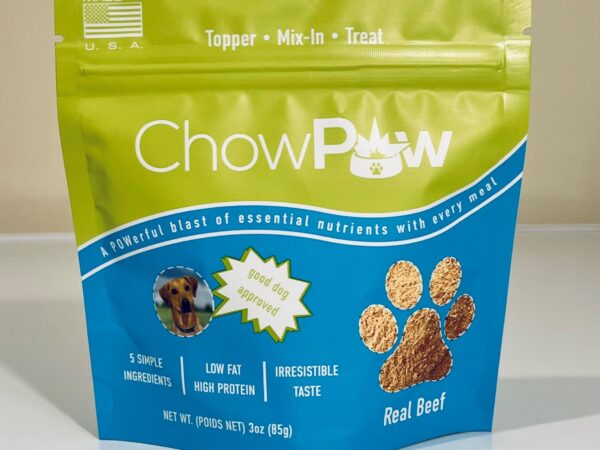 Dog Food Topper - Beef HeartOriginal price was: $14.99.$10.95Current price is: $10.95. - or subscribe and save up to 20%