
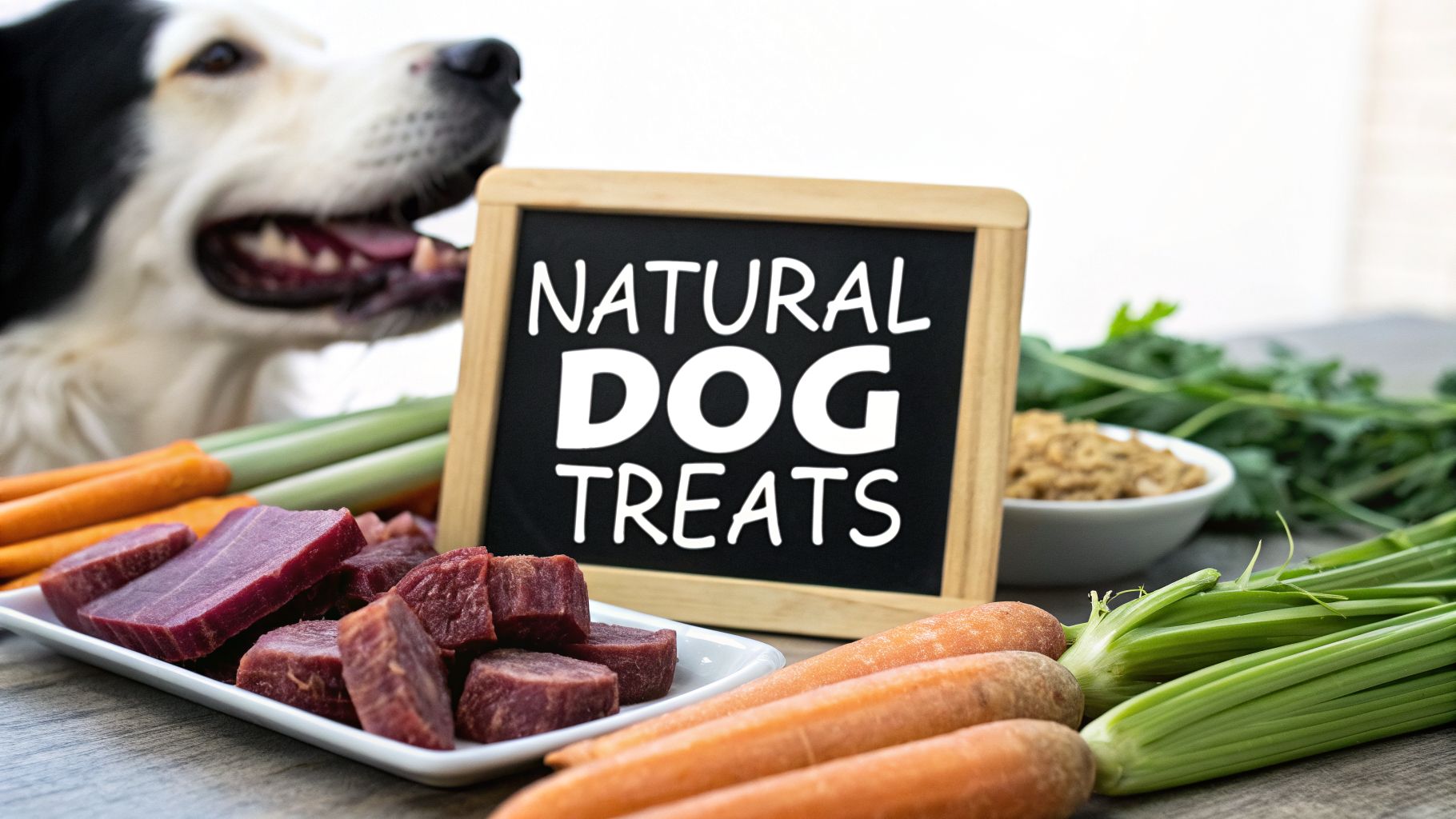
Finding the Best Natural Dog Treats Your Pup Will Love in 2026
When you're on the hunt for the best natural dog treats, you'll find the best options are usually the simplest ones. We're talking about single-ingredient or limited-ingredient goodies made from whole foods you can actually recognize, like dehydrated beef heart or freeze-dried carrots. These treats pack a nutritional punch without the junk—no artificial additives, cheap fillers, or mystery meat by-products.
What Makes a Dog Treat Natural?
Think about the difference between a crisp, fresh apple and a sugary, neon-colored cereal bar. That’s the easiest way to understand what separates a genuinely natural dog treat from a highly-processed one. "Natural" isn't just a trendy label; it’s a whole approach to feeding our dogs that puts their health first.

A truly natural dog treat stands out because of its simplicity and quality. It’s made from real ingredients you can name—beef, carrots, apples. The processing is kept to a minimum, often just gentle dehydration or freeze-drying, which locks in nutrients without needing a bunch of artificial preservatives.
The core idea behind natural treats is simple: feed your dog real food. If an ingredient sounds like it belongs in a science lab instead of a kitchen, it probably doesn't belong in your dog's treat jar.
This move toward natural options is no fad. As dog parents, we’re more informed than ever. We’re demanding transparency and turning our backs on treats loaded with cheap fillers, artificial colors, and vague ingredients because we know what we feed our dogs directly impacts their energy, digestion, and long-term health.
To get a quick snapshot of the differences, check out this simple breakdown.
Decoding Natural vs Processed Treats
| Attribute | Natural Treats (e.g., Dehydrated Beef) | Processed Treats |
|---|---|---|
| Ingredients | Single or limited, recognizable whole foods. | Long list of fillers, by-products, and chemicals. |
| Processing | Minimal (dehydration, freeze-drying). | High-heat extrusion, baking with preservatives. |
| Nutritional Value | Nutrient-dense, offering functional benefits. | Often high in "empty calories" and low in nutrients. |
| Additives | None. Color and flavor come from the real food. | Contains artificial colors, flavors, and preservatives. |
| Digestibility | Highly digestible and easy on the stomach. | Can cause digestive upset due to fillers and artificials. |
This table makes it pretty clear: choosing natural is about choosing real, identifiable nutrition over manufactured filler.
Moving Beyond Empty Calories
Unlike so many conventional biscuits and chews that are little more than junk food, the best natural dog treats actually serve a purpose. They aren’t just a reward; they’re a small but mighty part of your dog's daily nutrition. These treats deliver real benefits:
- High-Quality Protein: Crucial for strong muscles and sustained energy.
- Vitamins and Minerals: Sourced directly from real fruits and vegetables.
- Essential Fatty Acids: Key for a shiny coat and healthy skin.
This preference for meat-first nutrition is taking over the pet food world. The natural dog treats market, valued at USD 6.20 billion in 2025, is expected to explode to USD 10.10 billion by 2030. What's driving this? Animal-based recipes, which hold a massive 68.1% market share. It’s a clear sign that owners are doubling down on the belief that our dogs thrive on high-quality, meat-centered diets. You can explore more data on this trend and see just how big this shift is.
This is the exact philosophy behind a premium meal enhancement like ChowPow. It’s crafted from just four simple, human-grade ingredients—beef heart, carrots, celery, and apple cider vinegar—embodying everything we love about natural, functional nutrition.
It's important to remember that ChowPow is a powerful meal enhancement designed to supercharge your dog's current food, not replace it. By sprinkling this dehydrated powder over their regular kibble, you can turn an ordinary meal into something incredibly flavorful and nutrient-dense. It’s the perfect way to introduce the benefits of whole foods into your dog’s diet without a complete and costly overhaul.
Spotting Harmful Ingredients in Common Treats
Walking down the dog food aisle can feel like a pop quiz you didn't study for. Packages scream "gourmet," "premium," and "savory," but what does any of that actually mean?
Once you learn to flip the bag over and look past the flashy marketing, the ingredient label tells the real story. The truth is, many of the most popular dog treats are hiding ingredients that do more harm than good, offering zero nutritional value while potentially causing health issues down the road.
Learning to spot these red flags is the single most powerful thing you can do for your dog's health. You don't need to become a canine nutritionist overnight. It's about recognizing the worst offenders so you can confidently say "no, thank you" and choose something better.
Fillers That Add Bulk, Not Benefits
So many treats are pumped full of cheap fillers to keep production costs down. These ingredients add calories and bulk, but that's about it. They often lead to weight gain and can wreak havoc on a dog's digestive system.
- Corn and Wheat: These are notorious allergens for dogs. If your pup suffers from itchy skin, chronic ear infections, or an upset stomach, these grains could be the culprits.
- Soy: Often thrown in as a cheap protein substitute, soy can mess with thyroid function and is a well-known cause of gas and bloating.
When you see these ingredients near the top of the list, it's a major red flag. The best treats put nutrient-rich foods first, not empty calories.
The Problem with Artificial Additives
Beyond fillers, you've got to watch out for the cocktail of artificial chemicals used to make treats last longer or look more appealing—to us, not our dogs. Your dog genuinely doesn't care if their biscuit is bright red or shaped like a tiny bone.
The very presence of artificial colors, flavors, and preservatives tells you the core ingredients probably weren't very good to begin with. Real food doesn't need a disguise; its natural taste and smell are exactly what dogs want.
Take dog biscuits, for example. They're the most common treat on the market, making up a whopping 77% of all treats sold in the US. But many are absolute sugar bombs, with some containing over 51.7g of sugar per 1000 kcal.
It’s no wonder savvy owners are switching to natural meat snacks. As it turns out, dogs instinctively prefer the umami and sweet notes found in real meat. You can read the full research on dog treat preferences and see for yourself what actually drives their cravings.
Preservatives and Sweeteners to Avoid
Certain chemicals are added to extend shelf life or make a bland product taste better, but they carry health risks that just aren't worth it. Knowing their names is a game-changer when you're reading a label.
Chemical Preservatives to Watch For:
- BHA (Butylated Hydroxyanisole): A potential carcinogen that is banned from human food in many countries.
- BHT (Butylated Hydroxytoluene): Has been linked to organ damage and even cancer in animal studies.
- Ethoxyquin: A preservative that doubles as a pesticide, it has been associated with liver and kidney problems.
Unnecessary Sweeteners:
- Corn Syrup: A cheap, high-fructose sugar that directly contributes to weight gain, dental issues, and the risk of diabetes.
- Sucrose and Fructose: Just more added sugars. They offer zero nutritional value and can fuel inflammation and metabolic problems.
These ingredients are nothing but shortcuts. Natural preservation methods, like the dehydration used for products like ChowPow, lock in nutrients without any chemical help. This is why a short, simple ingredient list is almost always a sign of a higher-quality product.
When a treat is made from just a few whole foods, there's simply no room for fillers, dyes, or synthetic junk. It's a transparent approach that lets you know exactly what you're feeding your best friend—and feel good about it.
Alright, we’ve covered the nasty stuff to avoid. Now, let's get to the good part—the powerhouse ingredients you should actively seek out when choosing treats for your dog.
Think of yourself as your dog's personal chef. It’s all about picking high-quality, recognizable foods that do more than just taste good; they deliver real health benefits. When you flip over a package, you want to see a short, simple list of things you can actually picture. If you can't imagine it growing on a farm or coming from an animal, it’s probably worth a second thought. This is where you become your dog's number one health advocate.
The Power of High-Quality Animal Protein
A named animal protein should always be at the top of the list. It's no secret that dogs are built to thrive on meat. High-quality protein is the absolute foundation for strong muscles, a rock-solid immune system, and the energy they need for a good game of fetch.
But here’s the thing: not all protein is created equal. Vague terms like "meat meal" or "animal by-products" are major red flags. What you want to see are specific, quality sources:
- Grass-Fed Beef: This isn't just a fancy label. It means the protein comes from cattle raised on their natural diet, which results in leaner meat that's higher in those good-for-them omega-3 fatty acids.
- Beef Heart: This organ meat is a true nutritional superstar. It’s packed with a concentrated dose of taurine for heart health, iron for energy, and all the essential amino acids for muscle repair.
This is exactly why we use dehydrated beef heart as the number one ingredient in ChowPow. It delivers an incredibly dense source of the protein and nutrients dogs are biologically designed to crave. Just remember, ChowPow is a powerful supplement meant to boost the nutritional value of your dog's current food, not replace it entirely.
Nutrient-Dense Vegetables and Fruits
After a solid protein source, the best natural treats are often rounded out with whole vegetables and fruits. These ingredients bring essential vitamins, minerals, and fiber to the table without the empty calories you get from cheap grain fillers. They also provide fantastic natural flavor and color, proving you don’t need artificial junk when you use real food.
A simple ingredient list is a sign of confidence. It means the manufacturer trusts the quality of its core ingredients to deliver all the flavor and nutrition needed, without hiding behind chemicals and fillers.
Take our ChowPow formula, for example. We include carrots and celery for a reason. Carrots are a fantastic source of Vitamin A, which is great for your dog's vision and immune system. Celery adds its own vitamin punch and even helps freshen their breath. You might also see other great additions like natural carob, which is a safe, dog-friendly substitute for chocolate often used in homemade treats.
Functional Additions for Extra Support
Finally, the truly great natural treats sometimes include "functional" ingredients. These are simple, natural additions that are there for a specific purpose—to give your dog's health an extra little boost.
A perfect example is apple cider vinegar, the final ingredient in ChowPow. Even a tiny amount can help improve digestion and support a healthy gut microbiome. It's a simple, effective ingredient that works beautifully with the other whole foods in the mix. If you're looking for more ideas along these lines, check out our guide on the best single-ingredient dog treats.
By keeping an eye out for these three things—quality protein, nutrient-packed produce, and functional extras—you can cut through the noise and easily find the best treats for your pup. It’s a straightforward approach that puts their health and happiness first, one delicious bite at a time.
How to Read Dog Treat Labels Like an Expert
Walking down the pet food aisle can feel a bit like navigating a maze. Every bag shouts about being "gourmet," "premium," or "healthy," but flashy packaging often hides some not-so-great ingredients. The good news? Once you learn how to read a dog treat label, you have all the power.
It’s way simpler than it looks. You just need to know where to focus your attention. By mastering three key areas—the ingredient list, the guaranteed analysis, and those often-ignored feeding guidelines—you can see right past the marketing fluff and choose what’s genuinely best for your dog.
The Five-Ingredient Rule
First things first: when you pick up a bag of treats, flip it over and find the ingredient list. This is your window into the product's true quality. Ingredients are always listed by weight, meaning the first few items make up most of what's inside.
A fantastic rule of thumb is to focus on the first five ingredients. If these don't look like real, recognizable foods, put the bag back on the shelf.
You want to see a specific, named protein source right at the top of the list. Think "beef heart," "chicken," or "salmon." Be wary of vague, generic terms like "meat meal" or "animal by-products." Seeing a real, whole-food protein listed first is a massive green flag.
This handy flowchart is a great way to make a quick call on whether a treat is a solid choice or one you should skip.
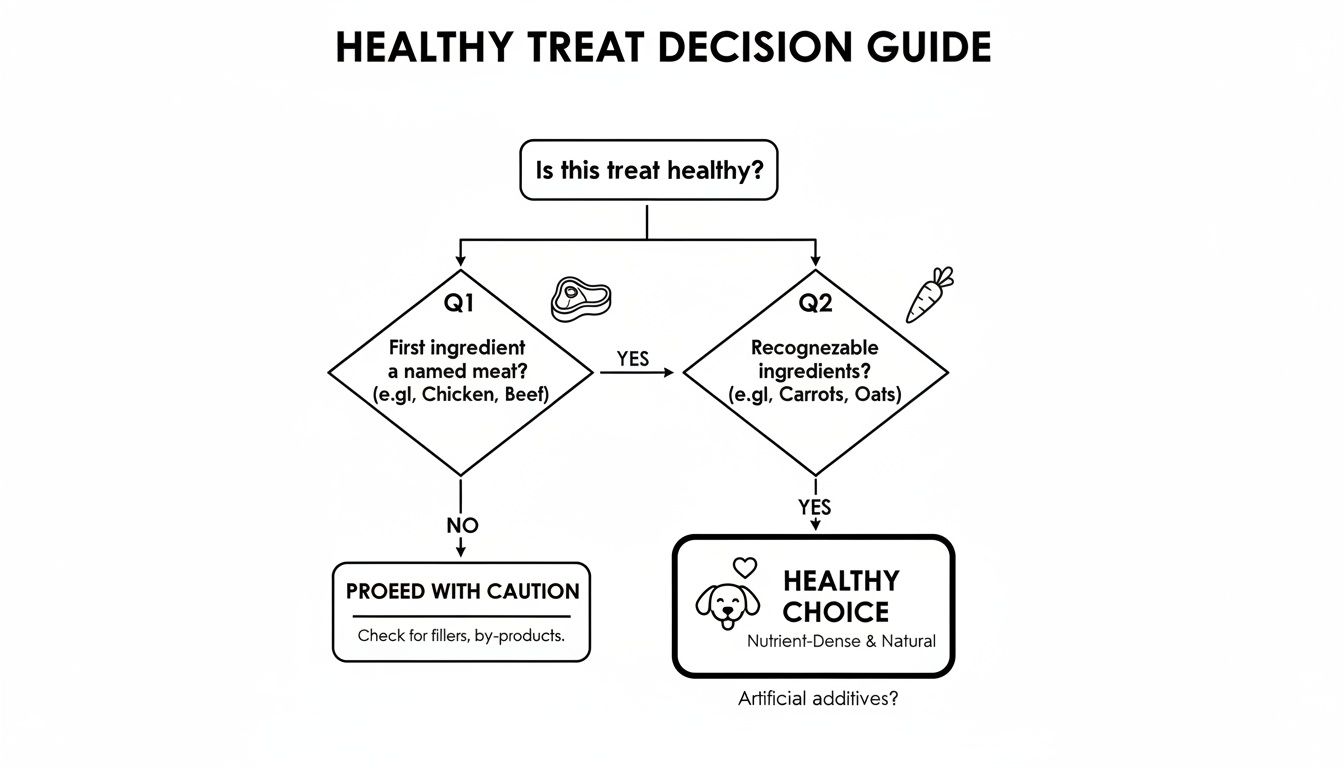
As you can see, if the treat kicks off with a named meat and is followed by other ingredients you actually recognize, you're on the right track.
Guaranteed Analysis and Feeding Guidelines
Next up is the guaranteed analysis. This box gives you the nutritional breakdown, showing the minimum percentages of crude protein and fat, plus the maximums for fiber and moisture. For a high-value, nutrient-dense treat, you want to see a nice high protein percentage.
Don't overlook the feeding guidelines! This is your starting point for portion control, which is so important for keeping your dog at a healthy weight. Just remember the golden rule: treats should only make up about 10% of your dog’s total daily calories.
Interpreting Common Label Claims
Marketers have a whole dictionary of appealing words they love to slap on packaging, but many of them have very loose—or no—legal definitions. It pays to know what these buzzwords actually mean.
Here's a quick guide to what some common claims really mean for your dog.
| Label Claim | What It Really Means | Red Flag to Watch For |
|---|---|---|
| Gourmet | This term is completely unregulated. It has no official definition and is purely for marketing pizzazz. | A long list of artificial flavors or cheap fillers hiding behind the fancy "gourmet" claim. |
| Premium | Just like "gourmet," this word has no legal weight. It’s meant to suggest higher quality but doesn’t guarantee it. | The price tag is "premium," but the first ingredient is something like corn or a vague meat by-product. |
| Human-Grade | This is one of the few regulated terms. It means every single ingredient and the final product are stored, handled, and processed to be legally suitable for human consumption. | If the label doesn't explicitly state "human-grade," you should assume it isn't. |
When it comes down to it, a short, simple, and understandable ingredient list is your most trustworthy tool.
For example, ChowPow contains just four human-grade ingredients: beef heart, carrots, celery, and apple cider vinegar. That kind of transparency means you know exactly what you’re giving your dog—a truly natural, nutrient-packed boost.
Making Meals Magical for Picky Pups and Golden Oldies
Sometimes the real challenge isn’t just finding a great natural treat—it’s convincing your dog to eat their actual dinner. We’ve all been there. You might have a picky eater who gives their top-notch kibble a disdainful sniff, a senior dog whose appetite is fading, or a pup who’s recovering from an illness. Mealtimes can quickly become a battle of wills, and frankly, it's stressful for everyone involved.
This is where a small change in perspective can work wonders. Instead of thinking "treat," start thinking "meal enhancement."
You've probably seen it happen. The food your dog once devoured with gusto now sits untouched. Vets and trainers often call this flavor fatigue. For older dogs, it might be something else entirely—dental pain can turn chewing hard kibble into a miserable chore. These situations call for more than just a reward; they need something to bring the joy back to their food bowl.
Turning Boring Kibble into a Five-Star Meal
For a picky eater, a bowl of the same dry kibble day after day gets old. Fast. They’re not trying to be difficult; they’re just bored and craving a little excitement on their palate. This is where a high-quality meal enhancer acts like a secret seasoning, transforming their entire dining experience.
A product like ChowPow is a game-changer here. It’s a simple, dehydrated powder made from real, human-grade beef heart, and it has a rich, meaty aroma that dogs just can't resist. A quick sprinkle over their food takes a bland meal and turns it into something special, tempting even the most finicky eaters to lick their bowl clean.
Your goal isn't to swap out their main food, but to supercharge it. Think of it like adding a shot of rich, flavorful espresso to your morning coffee. You aren't replacing the coffee; you're just making it better.
This trick is so effective because it taps directly into a dog's most powerful sense: their smell. That concentrated, real-meat scent sends a powerful signal to their brain that something delicious is on the menu, flipping their natural "eat now!" switch.
Gentle Nutrition for Seniors and Recovering Dogs
As our dogs enter their golden years, their dietary needs shift. Senior dogs often face a tricky combination of a declining appetite and a greater need for easy-to-digest nutrients to maintain muscle and energy. Hard treats and crunchy kibble can be tough, or even painful, for them to handle if they have sensitive teeth or sore gums.
A soft, powdered meal enhancer is the perfect answer. It packs a serious nutritional punch without requiring any tough chewing. Because ChowPow is ground into a fine powder, it mixes effortlessly into any food, delivering a potent boost of protein and essential amino acids that are so important for older dogs.
This same logic applies to dogs on the mend from surgery or illness. Their appetite is often at an all-time low right when their body is screaming for high-quality calories to heal. A meal enhancement can help them get that critical fuel. It provides:
- High-Quality Protein: To help rebuild and maintain muscle.
- Essential Vitamins & Minerals: From whole-food ingredients like carrots and celery that support their immune system.
- Easy Digestion: The simple, all-natural formula is incredibly gentle on a sensitive stomach.
This is a world away from trying to coax a sick dog into eating a dry biscuit. Instead, you're making their main source of nutrition more appealing and much easier for their body to process. If you want to take a deeper dive, you can learn more about how to use natural dog food toppers to support your dog's health.
Remember, the goal is always to enhance, not replace. By adding a scoop of a nutrient-dense topper like ChowPow to their food, you’re not just adding flavor—you’re adding real, functional nutrition. It's a simple and powerful way to make sure your picky, senior, or recovering dog gets the delicious support they need, one meal at a time.
Simple DIY Natural Dog Treat Ideas
There's something special about making treats for your dog right in your own kitchen. It's a way to show your love that a store-bought biscuit just can't match, and you get complete control over every single ingredient. The best part? You don't need to be a master baker to whip up something both healthy and delicious.
In fact, some of the best and easiest natural dog treats don't even require you to turn on the oven.

Let's dive into a few simple recipes to get you started. These use minimal ingredients and are perfect for sticking to that natural-first philosophy while giving your dog a special reward.
Frozen Pumpkin Yogurt Pupsicles
When the weather heats up, there's nothing better than a cool, refreshing treat. These frozen pupsicles are ridiculously easy to make, loaded with nutrients, and super gentle on your dog's tummy.
What You'll Need:
- 1 cup plain, unsweetened yogurt (double-check it contains no xylitol)
- 1 cup pure pumpkin purée (not the sugary pumpkin pie filling)
- 1 tablespoon of ChowPow
Instructions:
- Grab a medium bowl and combine the yogurt, pumpkin purée, and ChowPow.
- Stir everything together until it's smooth and well-blended. The ChowPow gives it a meaty flavor boost that dogs find irresistible.
- Spoon your mixture into a silicone ice cube tray or other small molds.
- Freeze for at least 3-4 hours until solid. Then, just pop one out whenever your pup needs a cool-down!
These aren't just tasty; pumpkin is a champ for digestive health, and the yogurt offers great probiotics. It’s a true win-win snack.
Quick Dehydrated Veggie Crisps
If you happen to have a food dehydrator, making your own veggie crisps is almost effortless. Your dog gets a satisfying crunch without any of the salt, oil, or preservatives found in chips made for us. Sweet potatoes and carrots are fantastic for this.
All you have to do is slice the vegetables very thin (about 1/8 inch thick), arrange them in a single layer on your dehydrator trays, and dry them at a low temperature (around 125°F) for 6-10 hours. What you get is a crunchy, nutrient-dense, single-ingredient treat that dogs go wild for.
The Ultimate Meal-Boosting Treat Hack
Homemade treats are fantastic, but let's be real—sometimes you need an even faster solution that still packs a nutritional punch. This is where a versatile meal enhancement like ChowPow really shines, bridging the gap between homemade love and everyday convenience.
A great meal enhancement isn't just for meals. You can use it to create quick, high-value rewards that keep your dog engaged, turning any toy or simple snack into a brain-boosting game.
Here are a couple of my favorite ways to use it:
- Supercharged Stuffed Kong: Ditch the sticky, sugary fillings. Instead, mix a spoonful of ChowPow with a little bit of water to create a thick, meaty paste. Smear it inside a Kong or another puzzle toy. For a longer-lasting challenge, pop it in the freezer for a few hours. This makes for a mentally stimulating treat that satisfies that natural urge to chew and lick.
- Flavor-Boost Your Homemade Recipes: The next time you're baking your go-to dog biscuits, just add a tablespoon or two of ChowPow to the dry ingredients. It will infuse the entire batch with a rich, beefy flavor that seriously amps up their appeal, making your healthy creations even more high-value in your dog’s eyes.
By keeping a quality meal enhancement in your pantry, you always have a secret weapon on hand to make any treat—homemade or not—more exciting and nutritious. It shows how ChowPow isn’t just a meal supplement; it’s a true staple for any dog owner committed to giving their pup the very best.
Common Questions About Natural Dog Treats
Deciding to switch to natural treats is a fantastic first step, but it’s totally normal for a few practical questions to pop up. Let's clear the air on some common concerns so you can feel 100% confident in the goodies you’re giving your pup.
How Many Natural Treats Can I Give My Dog Each Day?
This is a great question, and the answer is all about balance. The golden rule is that treats should never make up more than 10% of your dog’s total daily calories. Sticking to this simple guideline helps prevent unwanted weight gain and ensures their main meals are still doing the heavy lifting for their core nutrition.
For a super nutrient-dense meal enhancement like ChowPow, a little truly goes a long way. Since its goal is to pack a nutritional punch, you’ll want to follow the directions on the package. This way, you're adding incredible flavor and essential nutrients without tipping the calorie scale.
Are Grain-Free Treats Always the Best Natural Choice?
Not always. While "grain-free" is a lifesaver for dogs with genuine grain allergies, the term itself isn't a guaranteed stamp of health. Some brands just swap grains for other high-starch fillers like potatoes or peas, which can still contribute to weight gain if you're not careful.
The real sign of a quality treat isn't what it leaves out, but what it puts in. The secret is a short, simple ingredient list with a real, named animal protein right at the top.
The best natural dog treats will always put real, whole-food ingredients first, long before any marketing buzzwords. A treat that starts with real meat and veggies you can actually recognize is almost always the better pick, whether it contains grains or not.
My Dog Is a Picky Eater. How Can I Switch to Natural Treats?
Ah, the picky eater. We've all been there! Switching a fussy dog to healthier options just takes a little patience and a dash of strategy. You can start by offering the new treat alongside their old favorite, giving them time to warm up to it. But an even better trick is to make the new treat simply irresistible.
This is where a meal enhancement like ChowPow becomes your secret weapon. Sprinkling just a tiny bit of its real beef heart powder onto a new treat—or even directly onto their food—unleashes a powerful, meaty aroma that even the most stubborn critics find hard to turn down.
Is a Food Topper a Treat or Part of a Meal?
Think of a food topper as a meal supplement or an enhancement. While it definitely adds a special, treat-like flavor that your dog will go wild for, its main job is to boost the nutritional value of their regular food—especially if you feed kibble.
It’s the easiest way to add concentrated protein, vitamins, and minerals right into their bowl, making their everyday food healthier and a whole lot more exciting.
Ready to turn every meal into a five-star dining experience? Sprinkle on some ChowPow and watch your dog's excitement for their food bowl return. Click here to give your dog the nutrient boost they deserve!
-
Product on sale
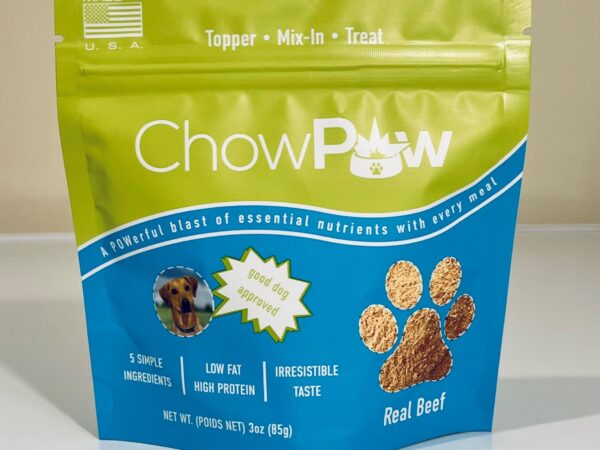 Dog Food Topper - Beef HeartOriginal price was: $14.99.$10.95Current price is: $10.95. - or subscribe and save up to 20%