
Finding the Best Soft Food for Dogs Your Pup Will Love
Watching your old friend struggle with hard kibble, or seeing your picky eater turn their nose up at yet another meal, is something no dog owner wants to see. The search for a better food often starts right there, but it’s about so much more than just finding a softer texture. It's about giving them comfort, boosting their hydration, and making sure their golden years are as happy as their puppy years.
Why Soft Food Can Be a Game Changer
When a dog has a hard time eating, it affects their whole world. That standard crunchy kibble can suddenly become a real obstacle for some pups. For them, a softer meal isn't a special treat—it’s a necessity that makes a world of difference.
This isn't just a niche issue, either. It reflects a huge shift happening in the pet food world. The global dog food market is expected to jump from USD 51.27 billion in 2025 to a whopping USD 91.82 billion by 2035. A big part of that growth is driven by the demand for premium, nutrient-rich soft foods for dogs who just can't handle the hard stuff anymore.
Who Benefits Most From Soft Dog Food?
Some dogs just do better when their food is easier to chew and digest. Take a look at this quick breakdown to see if a softer diet might be the right move for your furry friend.
| Dog Type | Primary Reason for Needing Soft Food | Key Benefit |
|---|---|---|
| Senior Dogs | Age-related dental issues (decay, gum disease, tooth loss) | Reduces pain, making it comfortable to eat and get nutrients. |
| Dogs with Dental Problems | Recovery from surgery, sensitive gums, or mouth injuries | Gentle on the mouth, preventing further irritation. |
| Picky Eaters | Strong preference for certain textures and aromas | The enhanced smell and palatable texture can entice a fussy dog to eat. |
| Small Breeds | Smaller mouths and jaws can make large, hard kibble difficult | Easier to chew, reducing the risk of choking and discomfort. |
| Dogs with Missing Teeth | Unable to properly grind and break down hard food | Allows them to eat a full meal without the struggle of chewing. |
Recognizing these situations is the first step in finding a solution that brings the joy back to mealtime for your companion.
A Simple Way to Boost and Soften Kibble
Let's be real—switching your dog's food completely can be expensive, and it doesn't always go over well with their digestive system. But there's a powerful alternative: just make their current kibble better. This is where a high-quality meal enhancement like ChowPow really shines.
Think of ChowPow as a nutritional supplement, not a total diet replacement. It’s a simple way to supercharge your dog’s current food. All you do is sprinkle this dehydrated beef heart powder over their regular kibble, add a splash of warm water, and you've instantly created a savory, soft meal.
This simple step not only makes the texture perfect for sensitive mouths but also boosts the nutritional value of their existing kibble with high-quality protein. It's the perfect way to blend the familiar with the fantastic, giving them the soft food they need without the hassle of a full diet switch. For more ideas, especially for dogs with serious dental issues, check out our guide on the best food for dogs with no teeth.
Navigating the Different Types of Soft Dog Food
When you start looking for soft food for your dog, the options can feel overwhelming. A stroll down the pet food aisle throws a ton of different textures, formulas, and formats your way, and each one has its own list of pros and cons. Getting a handle on these categories is the first step to feeling confident about the choice you make for your furry best friend.
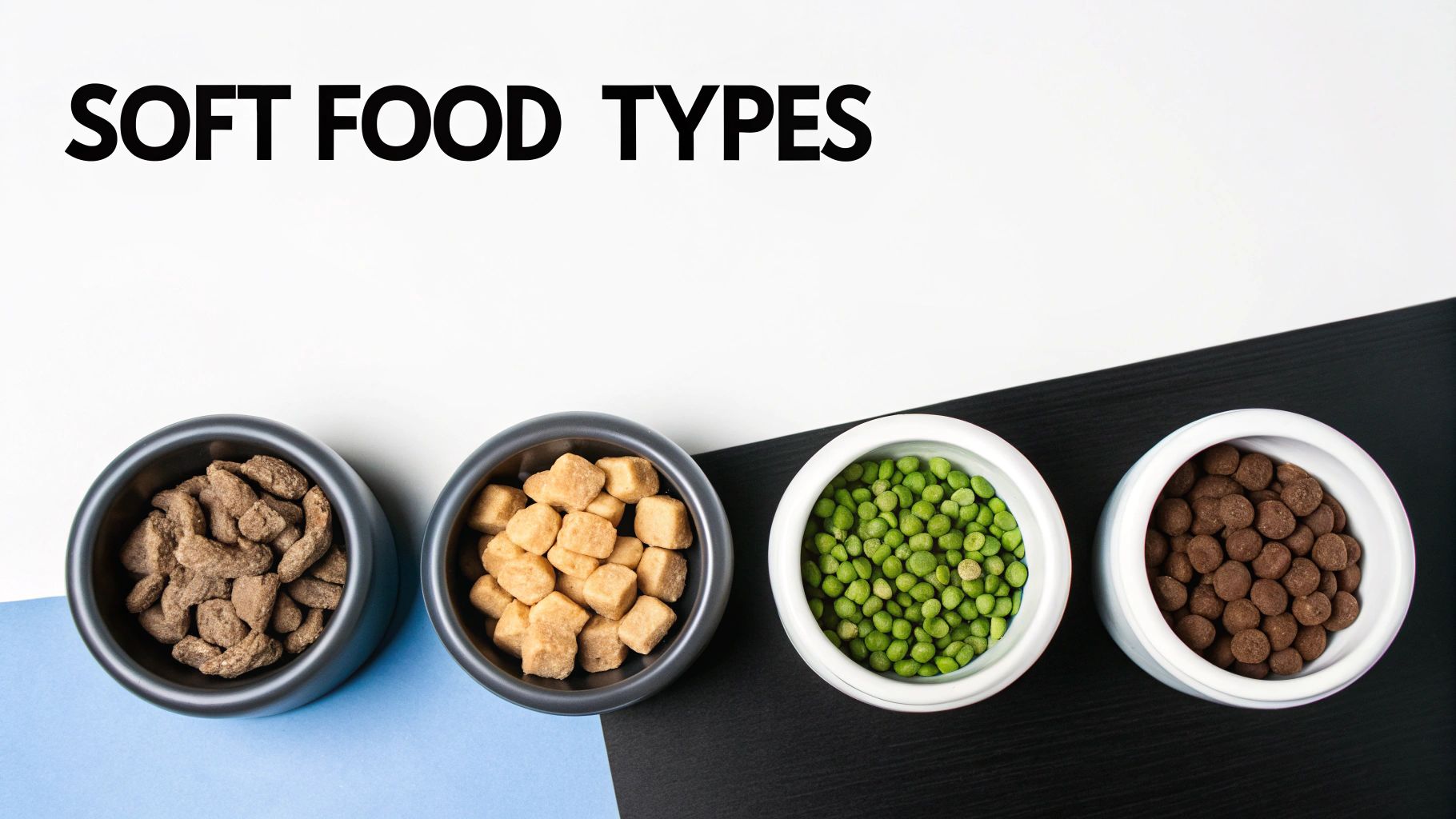
This knowledge also helps you understand where a flexible meal enhancement like ChowPow fits in. It’s not about ditching their current food entirely. Instead, it’s about boosting their kibble with targeted nutrition and a much more appealing, softer texture. Let’s break down the main types of soft food you’ll come across.
Canned or Wet Dog Food
This is what most people immediately picture when they hear "soft dog food." Canned food is cooked right in its airtight container, which gives it a super long shelf life before you open it. A huge plus is its high moisture content, which is fantastic for keeping dogs hydrated—especially seniors or those pups who just don't drink enough water. Its rich, savory aroma is also a secret weapon for tempting even the fussiest eaters.
But it’s not all perfect. Once you crack open a can, its life in the fridge is pretty short. On a per-meal basis, it can also be quite a bit more expensive than dry kibble. And since it’s a complete meal replacement, you have to transition your dog over to it slowly to avoid any tummy troubles.
Fresh and Refrigerated Meals
This is a fast-growing corner of the pet nutrition world. Fresh dog food is made from gently cooked, whole-food ingredients and usually lives in the refrigerated section at the pet store. These meals often look like something you’d eat yourself and are minimally processed to hang on to as many nutrients as possible. Pet parents who prioritize quality ingredients absolutely love them for their high palatability.
The biggest hurdles here are cost and convenience. Fresh food is often the priciest option out there and has to be kept refrigerated, which isn't ideal for travel or long-term storage. Just like canned food, it's a full dietary overhaul, not just a supplement.
Key Takeaway: While complete soft food diets like canned or fresh meals offer great benefits, they require a total commitment. A meal enhancer provides a middle ground, allowing you to add softness and nutrition on your own terms without overhauling your dog's entire diet.
Semi-Moist and Dehydrated Foods
These options land somewhere between crunchy kibble and fully wet food, offering a nice compromise.
- Semi-Moist Food: You'll see these as soft, chewy pieces that often look like regular kibble or little meaty chunks. They’re convenient and tasty, but you have to be a bit of a detective with the ingredient label. Some brands use artificial preservatives, colors, and a lot of sugar or salt to keep that soft texture.
- Dehydrated or Freeze-Dried Food: This starts as raw ingredients that have had all the moisture removed. All you have to do is add water to rehydrate it into a soft, mushy meal. This process is great for preserving the original nutrients and gives the food a long shelf life, but it can be pricey and adds a prep step to every meal.
This is exactly where a meal supplement like ChowPow really shines. As a dehydrated beef heart powder, it uses that same rehydration idea but in a much more flexible way. You’re not replacing the kibble; you're improving it. You add moisture, a savory gravy, and a powerful protein boost, giving you total control over the texture and nutrition without the cost or commitment of switching foods completely.
What to Look for in a Nutritious Soft Diet
Choosing a softer food is a great start, but texture is only one piece of the puzzle. The real mission is finding a meal that’s both easy to eat and loaded with the high-quality nutrition your dog needs to truly thrive. A soft diet still needs a rock-solid nutritional foundation.
Think of it like building a house. The soft texture is the comfortable, open-concept floor plan. But the protein, healthy fats, and essential nutrients? That’s the sturdy frame holding everything up. Without it, the house—and your dog's health—starts to crumble.
Decoding the Dog Food Label
That dog food label is your roadmap. At first glance, it can look like a foreign language, but once you know the landmarks, you can easily spot the good stuff.
Your first checkpoint should always be the AAFCO statement. The Association of American Feed Control Officials (AAFCO) sets the nutritional standards for pet foods. When you see a phrase like, "formulated to meet the nutritional levels established by the AAFCO Dog Food Nutrient Profiles," you can breathe a sigh of relief. It's their stamp of approval that the food is complete and balanced.
Next up, give the ingredients list a good scan. You want to see high-quality, whole-food ingredients right at the top.
- High-Quality Protein: The list should kick off with a clearly named meat like "beef," "chicken," or "salmon"—not a vague term like "meat by-products." Protein is non-negotiable for maintaining muscle and overall health.
- Healthy Fats: Look for ingredients like chicken fat or salmon oil. These provide essential fatty acids that are vital for a healthy brain, skin, and coat.
- Vital Nutrients: Whole veggies and fruits are a great sign, as they provide a natural source of vitamins and minerals.
This focus on nutrition is especially critical for our most vulnerable pups. With senior dogs projected to be in over 40% of U.S. pet households by 2025, their need for easy-to-eat, nutritious meals is soaring. A shocking 85% of dogs have some form of dental disease by age three, making chewing hard food a painful ordeal.
Similarly, after surgery, up to 70% of dogs might turn their nose up at hard kibble. Studies show that adding a nutrient-dense soft topper can boost their food intake by 60%, giving them the fuel they need to recover faster. You can dig into more insights on the growing demand for specialized dog food on Mordor Intelligence.
The Hidden Pitfall of Water Content
Here’s a common issue with some commercial soft foods: they're packed with water. While moisture is great for hydration, some brands use excess water as a cheap filler to create that mushy texture. This dilutes the nutrition, meaning your dog has to eat a much bigger portion just to get the same protein and calories they’d get from a more nutrient-dense option.
It’s like comparing a hearty, thick stew to a thin, watery soup. They’re both soft, but only one is a truly satisfying and nourishing meal. You want the stew, not the soup.
A Smarter Way to Add Softness: Instead of buying food that might be watered down, you can add concentrated nutrition directly to your dog's favorite kibble. This approach puts you in complete control of both the texture and the nutritional boost.
This is where a meal supplement like ChowPow really shines. It's made from dehydrated, nutrient-dense beef heart, so you can add incredible softness and powerful nutrition without any fillers.
Just rehydrate it with a bit of warm water and mix it in. You’re not just softening the kibble—you're adding a concentrated blast of high-quality protein and essential amino acids right into their bowl. This method completely solves the dilution problem, giving you the perfect soft texture your dog needs while supercharging their meal.
How to Turn Any Kibble into a Soft Superfood Meal
Let's be honest, you don't need to completely ditch your dog's favorite kibble just to give them a softer, tastier meal. In fact, one of the smartest things you can do is simply make their current food better. This approach gives you the best of both worlds: the convenience and balanced nutrition of their kibble, plus the perks of a soft, supercharged meal they'll go crazy for.
This strategy puts you in total control. You get to decide the texture, the nutritional kick, and the cost, all while avoiding the tummy troubles that often come with a sudden diet change. It's all about upgrading their bowl, not completely overhauling it.
The Magic of a Meal Enhancer
Picture this: you sprinkle a simple, nutrient-packed powder over your dog's regular kibble. Add a little warm water, give it a stir, and watch as those dry, crunchy bits transform into a savory, gravy-coated feast. That’s the magic of a high-quality meal enhancement like ChowPow.
This one little step does two fantastic things at once. First, it creates that perfect soft texture that's so much easier on sensitive mouths, making mealtime exciting again for older dogs or pups with dental issues. Second, it infuses their existing food with concentrated, high-quality protein and essential nutrients from its main ingredient: dehydrated beef heart.
You’re not just adding water; you’re adding a superfood boost.
Your Step-by-Step Guide to a Better Bowl
Whipping up this soft superfood meal is ridiculously easy and takes less than a minute. Here’s how to do it with ChowPow:
- Start with Their Kibble: Scoop your dog's usual portion of dry food into their bowl. This keeps their core nutrition consistent and their digestion happy.
- Sprinkle on the Goodness: Add a serving of ChowPow right on top. A good rule of thumb is one tablespoon per cup of food, but feel free to adjust based on what your dog likes.
- Add Warm Water and Mix: Pour a small amount of warm (not hot!) water over the food and give it a good stir. You'll see the powder instantly dissolve into a rich gravy that coats every single piece of kibble, softening it right up.
- Let It Sit (Optional): If your dog prefers an even softer, mushier texture, just let the mixture sit for a minute or two. This gives the kibble more time to soak up all that moisture and flavor.
- Serve and Watch Them Enjoy: Put the bowl down and get ready for a happy dance. The rich, meaty smell alone is usually enough to win over even the fussiest eaters.
For an even deeper dive, you can check out our complete guide on how to soften dry dog food for more tips and tricks.
Topper vs. Full Diet Switch: What’s the Difference?
Choosing between adding a topper to kibble and switching entirely to a new soft food can feel like a big decision. Let's break down the key differences to see why a topper is often the perfect solution.
Kibble Topper vs. Full Diet Switch Comparison
| Factor | Using a Kibble Supplement like ChowPow | Switching to Canned or Wet Food |
|---|---|---|
| Cost | Much more budget-friendly. You're simply enhancing their main food, not replacing it. | Generally more expensive per meal compared to dry kibble. The costs add up quickly. |
| Convenience | Super easy to store (it's a dry powder) and takes seconds to prepare at mealtime. | Cans can be bulky. Once opened, they need refrigeration and have a short shelf life. |
| Digestive Risk | Very low risk of an upset stomach since you're sticking with their core diet. | Higher risk of digestive issues. A slow, careful transition period is essential. |
| Nutritional Control | You're in charge of the boost, adding concentrated protein without fillers or excess water. | Nutritional value can sometimes be diluted by high water content, depending on the brand. |
| Flexibility | You can easily adjust the amount of supplement and water to create the perfect texture for your dog. | The texture and formula are set in stone. There's not much room for customization. |
Ultimately, using a meal supplement like ChowPow gives you a powerful, practical middle ground. It lets you serve up the best soft food for your dog without the expense, hassle, and digestive risks of a complete diet overhaul. You get to ensure they receive targeted, high-quality nutrition in every single bite.
When you're looking to enrich your dog's kibble, you can also add other high-value, whole-food ingredients like properly cooked grass-fed beef to boost nutrition and flavor. A great topper just simplifies this process by giving you that premium protein in an easy-to-serve form.
Making the Switch Without the Upset Tummy
Ask any seasoned dog owner—sudden food changes are a recipe for digestive disaster. A dog's gut thrives on routine, so whether you're switching to a new kibble or adding a nutritious supplement, the secret is to take it slow. A gradual transition is the only way to go.
This gentle approach gives the good bacteria in your dog's digestive system a chance to adapt to the new ingredients. Rushing the process can lead to gas, diarrhea, and an unhappy pup. By taking your time, you're ensuring the only new thing they experience is a delicious meal, not an upset stomach.
The 7-Day Transition Plan
The gold standard for introducing any new food is a 7 to 10-day timeline. The idea is simple but incredibly effective: you slowly mix in more of the new food while phasing out the old. This gives their system all the time it needs to adjust.
Here’s what that looks like in practice:
- Days 1-2: Mix 75% old food with 25% new food.
- Days 3-4: Go for a 50/50 split of old and new.
- Days 5-6: Tip the scales to 25% old food and 75% new.
- Day 7: You’re on 100% new food!
This exact same logic applies when you’re introducing a food supplement like ChowPow. Don't just dump a full scoop on their first meal. Start with a tiny sprinkle, mixing it into their food, and gradually increase it to the full recommended amount over the course of a week.
Why ChowPow Is So Gut-Friendly
We get it—nobody wants to cause their dog digestive distress. That's exactly why we created ChowPow with a super simple, whole-food recipe. It has just four ingredients: beef heart, carrots, celery, and apple cider vinegar. That’s it.
Because there are no funky fillers, artificial junk, or mysterious additives, it’s exceptionally easy for your dog’s system to process. It’s designed to be a gentle nutritional boost, not a gut-wrenching challenge.
Pro Tip: Pay close attention to your dog during any food transition. Keep an eye on their poop, energy levels, and overall appetite. If you notice any signs of an upset stomach that last more than a day, just pump the brakes. Go back to the previous ratio for another day or two before trying to increase the new food again.
Making kibble softer with a topper is a breeze. Just sprinkle, add a little water to hydrate, and serve.
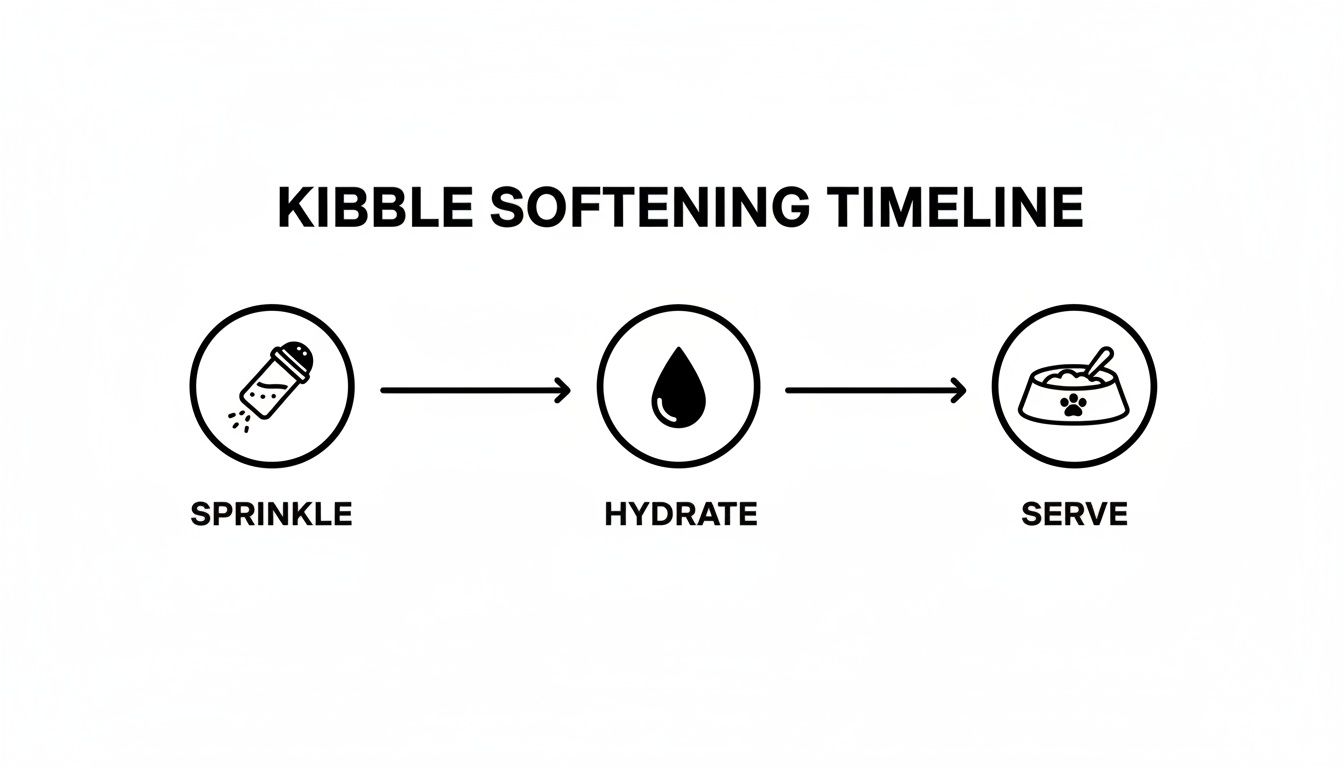
This simple process makes mealtime way more appealing for dogs with sensitive mouths. A slow introduction is even more critical for dogs recovering from things like dental work, which is a big reason owners start looking for softer food options in the first place. You can read more about that in our guide on the best soft food for dogs after dental surgery.
It’s no surprise that pet parents are looking for better options. The market for premium and personalized dog food is booming, growing at 10.3%. This trend is largely driven by owners of senior dogs (who make up 25% of pets in the U.S.) and those helping dogs recover from procedures. Considering that a staggering 80% of senior dogs deal with dental problems, a moister food that can improve their chewing efficiency by up to 40% is a game-changer. You can dig into the trends in personalized dog food to see just why these tailored nutritional solutions are becoming so essential.
When It’s Time to Call Your Veterinarian
Think of this guide as your trusted co-pilot on your dog's food journey. It’s packed with information to help you make informed choices. But when it comes to your dog’s health, your veterinarian is—and always will be—the lead pilot. They have the training, the experience, and most importantly, the firsthand knowledge of your dog to make the right call.
Before you make any big changes to your dog’s diet, especially if it’s in response to a new health issue, a quick chat with your vet is a non-negotiable first step. They can help you figure out what’s really going on and confirm if a diet change is the best move forward.
Red Flags That Mean "Vet, Now"
Sometimes a dog turning their nose up at dinner is just a bout of pickiness. Other times, it’s their way of telling you something more serious is happening. If you spot any of the following signs, it's time to book an appointment before you even think about changing their food.
- Sudden Hunger Strike: If your chowhound suddenly refuses to eat anything, it's a huge red flag that something is wrong.
- Mysterious Weight Changes: Whether they're suddenly dropping pounds or gaining weight without a change in diet, both can point to an underlying medical problem.
- Signs of a Sore Mouth: Watch for them dropping food, chewing on just one side of their mouth, or drooling more than usual. A staggering 80% of dogs show signs of dental disease by age three, and it only gets worse from there.
- Ongoing Tummy Troubles: If your dog is dealing with chronic diarrhea, vomiting, or gas that just won't quit, you need a professional to get to the bottom of it.
Your vet is your number one partner in your dog's health. They can run tests to rule out serious conditions and make sure a switch to soft food is a safe and smart solution for your pup’s specific situation.
Building a Nutrition Plan with Your Vet
Once you've ruled out any serious health concerns, your vet can become your go-to resource for building a tailored nutrition plan. They can recommend specific ingredients or supplements that would be most beneficial and give you the peace of mind that you're making the best choices for your best friend.
This partnership approach gives your dog the best of both worlds: your loving care at home and the expert guidance of a medical pro. That’s how we lay the foundation for a long, happy, and healthy life with our furry family members.
Your Questions About Soft Dog Food, Answered
Switching up your dog's food can feel like a big decision, and it’s natural to have questions. Whether you're thinking about a fully soft diet or just looking to soften their kibble with a supplement like ChowPow, you want to do what’s best for your pup. Let's tackle some of the most common questions we hear from dog parents.
Will Soft Food Ruin My Dog's Teeth?
This is probably the number one concern we hear, and it’s a fair question! While it’s true that crunchy kibble provides a little bit of scraping action, it’s no substitute for a real dental routine—think regular brushing and professional cleanings.
For many dogs, especially older pups or those with sensitive gums, the comfort of being able to eat a full meal easily is far more important than the tiny dental benefit from hard food. Using a supplement like ChowPow to soften kibble is a great middle-ground. It still encourages some chewing but makes mealtime gentle on a sore mouth.
Ultimately, your dog's dental health comes down to consistent hygiene, not the texture of their food.
How Much ChowPow Should I Add to My Dog's Kibble?
We designed ChowPow to be super flexible, so you can tailor it to your dog. It's a supplement, not a meal replacement.
A good place to start is with one tablespoon per cup of kibble. Just sprinkle it on, add a little warm water to create a savory gravy, and watch the kibble soften up.
Because it’s made from simple, whole-food ingredients like beef heart, you can feel good about adding a little extra to tempt a picky eater or using a bit less for a daily nutrient boost. Just make sure a fresh bowl of water is always nearby.
One Quick Thing: Remember, ChowPow is a supplement designed to make your dog's current kibble better. It's not a complete and balanced meal by itself, so it should always be added to their regular food.
Can I Give a Food Topper to My Puppy?
Yes, but with a little extra thought. Puppies have very specific nutritional needs to fuel all that growing they do, so their main diet absolutely must be a complete and balanced puppy formula.
That said, soft food and toppers can be a lifesaver for weaning puppies or encouraging a fussy one to eat. A high-quality, natural supplement like ChowPow adds a fantastic boost of protein without a bunch of fillers.
The key is to make sure the supplement doesn't throw their core diet out of whack. We always suggest chatting with your vet before changing up a puppy's feeding routine. They can help ensure your little one gets everything they need to grow up happy and healthy.
Ready to turn that boring bowl of kibble into something your dog gets excited about? Give ChowPow a try and see what a sprinkle of real, whole-food goodness can do. Head over to https://chowpownow.com to give your pup the soft, superfood meal they've been waiting for.
-
Product on sale
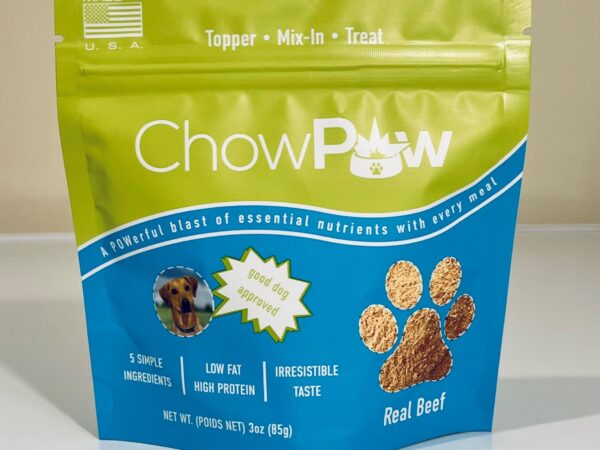 Dog Food Topper - Beef HeartOriginal price was: $14.99.$10.95Current price is: $10.95. - or subscribe and save up to 20%