
Can Dogs Be Allergic to Eggs? Signs & Safe Alternatives
Yes, dogs can be allergic to eggs, but it's relatively uncommon. In one evidence review of dogs with food-related skin reactions, egg was linked to 4% of reported offending allergens, far behind beef, dairy, and chicken.
If you're here because you shared a little scrambled egg, or you've been using egg as a topper and now your dog is itchy, gassy, or just “off,” take a breath. An egg allergy is possible, but it's also manageable. The key is not guessing from one symptom or one bad day. The key is figuring out whether eggs are the problem, whether you're dealing with a broader food allergy, or whether your dog didn't digest that meal well.
That's where many pet parents get stuck. “Can dogs be allergic to eggs” sounds like a simple yes-or-no question, but the actual question is more practical: What should you watch for, what should you stop feeding, and how do you keep meals nutritious and appealing if eggs are out?
The Breakfast Dilemma Answering the Egg Question
Breakfast is a common place for this worry to start. You make eggs for yourself, your dog gives you that very serious look from the floor, and a few bites later you notice paw licking, face rubbing, loose stool, or an ear flare a day or two after. It's easy to assume you've found the culprit. Sometimes you have. Sometimes you haven't.
Egg allergy in dogs is real, but it's not one of the first food triggers veterinarians usually suspect. That matters because many owners remove eggs, feel unsure, then start cutting out more and more ingredients without ever getting a clear answer. The result is often more stress, a more limited diet, and no real improvement.
A better approach is to think like a detective. One ingredient. One timeline. One clear plan.
What makes eggs confusing
Eggs are often viewed as a simple, wholesome add-on. They're also a protein source, and proteins are exactly what can trigger a true food allergy. That doesn't mean every dog who vomits once after egg has an allergy. It means eggs belong on the list of possibilities when symptoms repeat.
For pet parents comparing protein options for themselves, this overview of protein for performance and recovery also helps illustrate an important point: different protein sources behave differently. In dogs, that same idea matters even more when you're trying to identify a specific food trigger.
If your dog has tolerated eggs before and you're wondering whether everyday feeding changes the picture, ChowPow's guide on can dogs eat eggs everyday adds useful context.
The practical question isn't “Are eggs good or bad?” It's “Does this specific dog react to this specific ingredient?”
What to do first
Before you overhaul your dog's bowl, focus on three things:
- Notice patterns: Did symptoms show up only once, or do they return whenever egg is fed?
- Look beyond the stomach: Food allergies in dogs often affect the skin and ears, not just digestion.
- Avoid self-diagnosing too fast: Many signs overlap with other food triggers and environmental allergies.
That's why a calm, structured plan works better than a quick assumption.
Understanding Why Canine Food Allergies Happen
Food allergies start with the immune system getting the wrong message. Your dog eats a protein that should be harmless, but the body treats it like an intruder and mounts a defense. With eggs, that reaction is aimed at egg proteins, not at the fact that the food is cooked, rich, or homemade.
A food intolerance works differently. It is more like a digestion problem than an immune problem. A dog may get gas, loose stool, or vomit after a food because that ingredient did not sit well, even though the immune system was never involved.
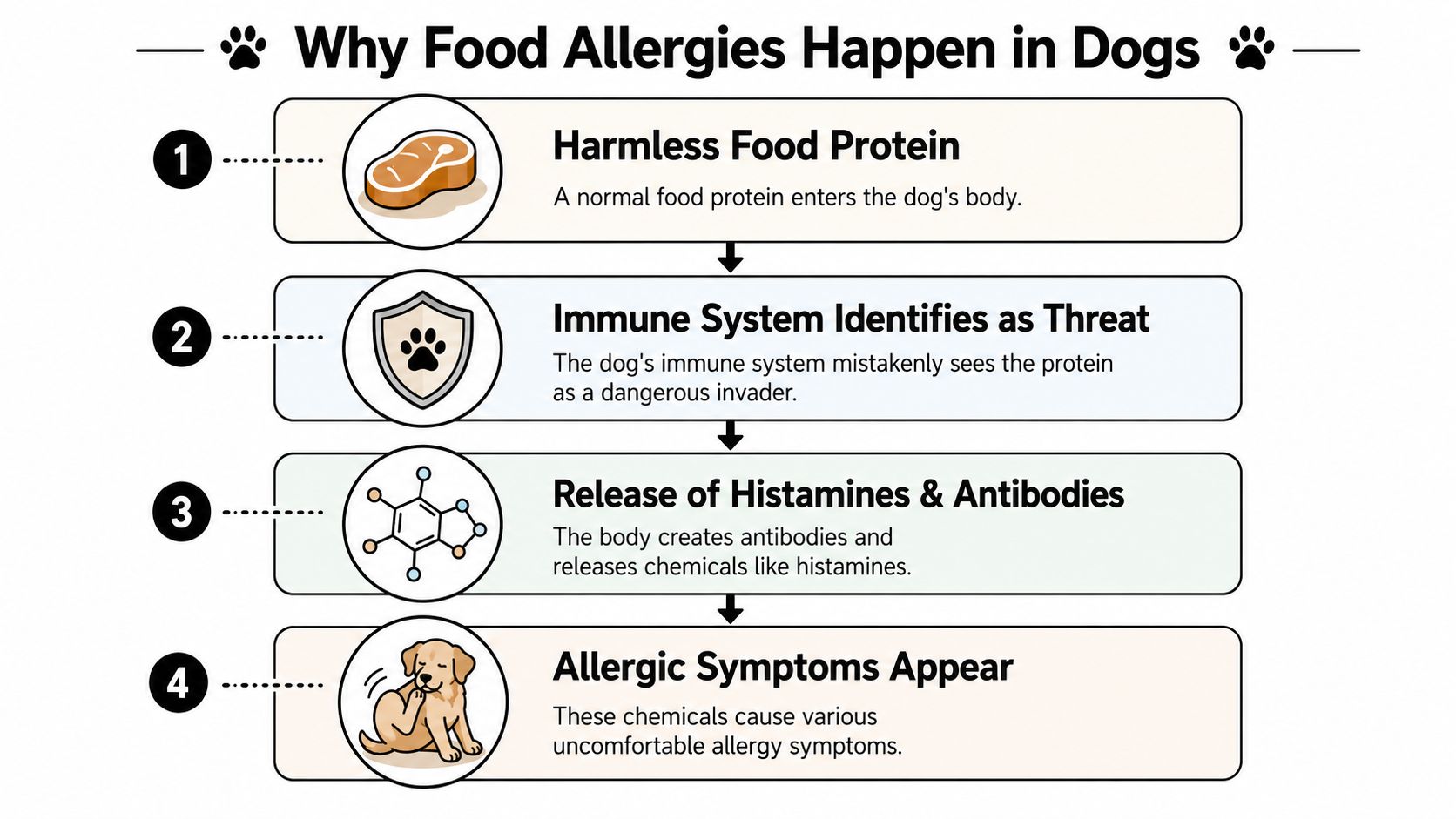
Allergy versus intolerance
That distinction matters because the next step is different for each one. If the problem is an allergy, even a small amount of the trigger can keep the reaction going. If the problem is intolerance, the issue may be dose, preparation, fat content, or simple digestive sensitivity.
Here is a practical side-by-side comparison:
| Issue | What it means | Common pattern |
|---|---|---|
| Food allergy | The immune system reacts to a food protein | Itching, skin flare-ups, ear issues, sometimes digestive signs |
| Food intolerance | The digestive system struggles with a food | Loose stool, vomiting, gas, stomach upset, no immune trigger |
Eggs fit into the allergy category because they contain proteins the immune system can recognize and react to in some dogs. Researchers have identified egg white proteins, including ovomucoid and ovalbumin, as allergens in dogs with egg-related reactions, which supports that an egg allergy is a real immune response and not just a sensitive stomach.
Where eggs fit among dog food allergens
Eggs are possible triggers, but they are not the most common food problem in dogs. As noted earlier in the article, research reviews place egg below ingredients like beef, dairy, and chicken among reported food allergens in dogs with skin-related reactions.
That is useful because it keeps the decision-making grounded. If your dog reacts after eating egg, egg stays on the suspect list. If your dog has ongoing itchiness or ear problems and egg is only one of several recent diet changes, you should keep a wider view instead of assuming you have found the answer on day one.
A good way to frame it is this: food allergies are ingredient-specific. The immune system reacts to a particular protein, the way a smoke detector reacts to one source of smoke, not to the whole kitchen. That is why random food swapping can get so frustrating. You may remove scrambled egg but still offer treats, toppers, or baked products that contain egg protein in another form.
Why this matters at mealtime
For a worried pet parent, the practical question is, what should I do with the bowl tonight? Start simple. Do not keep testing egg at home to see if the reaction repeats. Do not jump to a mail-in allergy test either. The most reliable path is a vet-supervised elimination diet, where you remove likely triggers in a structured way and use a tightly controlled food plan long enough to get a clear answer.
While you work through that process, meal additions need the same level of care as the main diet. Any topper, treat, chew, or supplement should be free of the suspected trigger. If egg is on your concern list, use an egg-free nutritional booster rather than adding extras that could muddy the picture. An egg-free topper such as ChowPow can help support the meal without adding another likely allergen to the investigation.
That approach keeps things clear, safe, and much easier to interpret.
Common Signs of an Egg Allergy in Dogs
Food allergies in dogs often show up on the skin first. Veterinary dermatology guidance notes that they most often appear as non-seasonal itching, especially on the paws, face, ears, and belly, while digestive signs can happen too, as explained by Veterinary Skin & Ear.
That means the dog with an egg allergy may not look “sick” in the way owners expect. They may just seem itchy, restless, or uncomfortable.
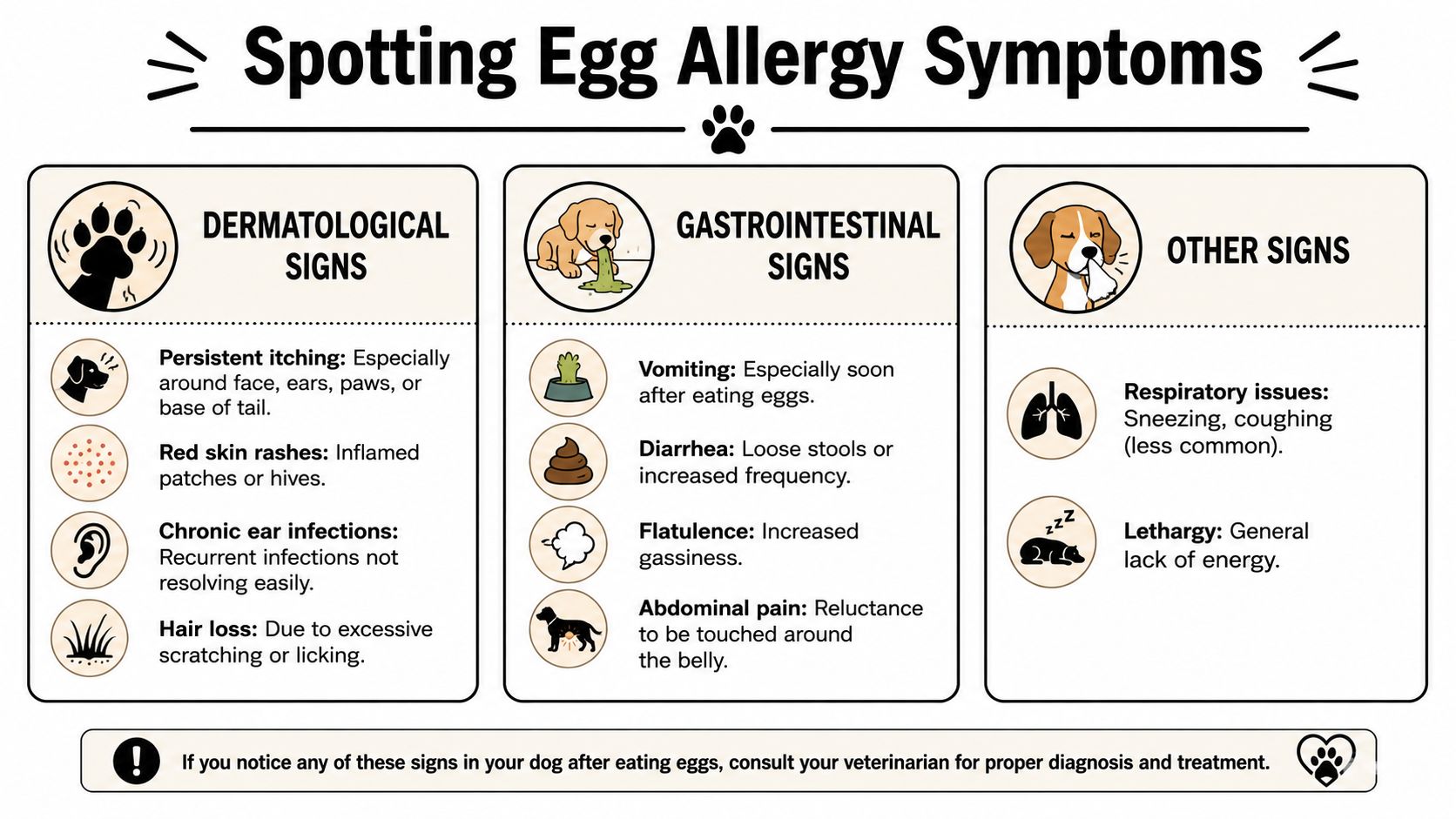
Skin and ear signs
Watch for these patterns:
- Persistent itching: especially paws, face, ears, belly, or under the tail
- Repeated licking or chewing: often focused on feet or legs
- Ear flare-ups: redness, wax, odor, or recurring infections
- Skin irritation: red patches, rash-like areas, or general inflammation
- Hair loss: caused by repeated scratching, licking, or rubbing
Stomach and stool changes
Some dogs also show digestive signs, including:
- Vomiting: especially if it happens more than once after egg exposure
- Diarrhea or loose stool: either soon after eating or as a recurring issue
- Gas or noisy digestion: less dramatic, but still worth noting
- Belly discomfort: a tucked posture, restlessness, or sensitivity
A helpful visual walkthrough can make these patterns easier to recognize in daily life:
What owners often miss
The biggest source of confusion is timing. Food-allergic dogs don't always react instantly after a bite the way people expect. A dog may eat egg on Monday and seem itchier over the next day or two. That's one reason symptom-tracking matters.
If your dog's signs keep coming back, write down the food, the amount, and when the flare started. That note is often more useful to your vet than a vague memory.
Also remember that these signs are not unique to eggs. They overlap with reactions to other proteins and with non-food issues, which is why symptom lists are a starting point, not a diagnosis.
How to Get a Reliable Diagnosis from Your Vet
A reliable diagnosis starts with one question: did your dog react to egg, or did your dog have a bad stomach day?
That distinction matters because the next steps are different. A true food allergy involves the immune system. A food intolerance does not. From a pet parent's point of view, both can look messy and confusing, which is why guessing at home often leads to food changes that create more noise than answers.
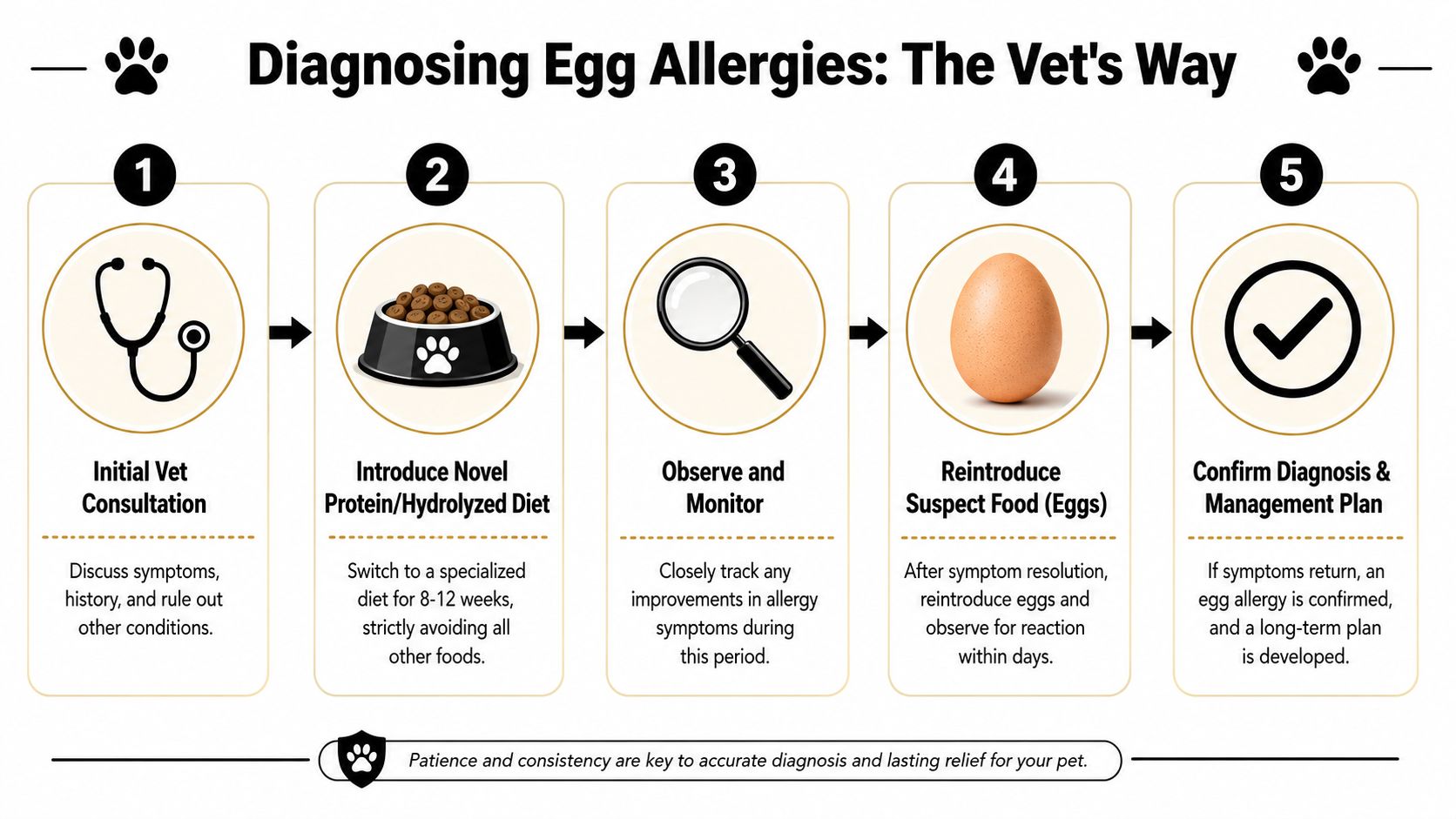
What a dependable diagnosis usually involves
Veterinarians usually confirm a food allergy with an elimination diet trial, then a controlled food challenge. It works like clearing a whiteboard before testing one marker. First, you remove possible triggers with a carefully selected diet. Then, once symptoms settle, you reintroduce the suspected ingredient to see whether the problem returns.
Your vet may choose a novel-protein diet or a hydrolyzed diet for this process. The exact food matters less than the consistency. Every bite has to fit the plan for the trial to mean anything.
If you want a plain-English walkthrough before your appointment, this guide to a dog food allergy elimination diet explains how the routine works day to day.
Why your vet may caution you against quick allergy tests
Blood, hair, and saliva tests can sound appealing because they promise fast answers. The problem is that they do not reliably confirm food allergies in dogs. A result sheet may look precise, but a nice-looking report is not the same thing as a diagnosis you can trust.
That is why veterinarians still rely on the slower process. It answers the question that is most important. Does your dog improve when egg is removed, and do signs return when egg comes back?
What can throw off the trial
An elimination diet is a bit like checking whether a smoke alarm stops beeping after you remove the right battery. If someone slips in another battery halfway through, you cannot tell what fixed the problem.
The same issue happens with food trials. Common spoilers include:
- flavored medications or supplements
- training treats given out of habit
- table scraps from family members
- chews, dental treats, or toppers with hidden proteins
- food sharing in multi-pet homes
Even well-meant extras can blur the picture. If your dog needs rewards during the trial, ask your vet exactly which options fit the plan. If you normally use healthy pet snacks, bring the ingredient list to your appointment so your vet can tell you whether they are appropriate during testing.
A simple way to decide what to do next
Use this framework if you are unsure whether it is time to call your vet.
Single episode after eating egg:
A one-off vomit or loose stool may fit intolerance, richness, or simple stomach upset. Watch closely and avoid repeating the food until you have more clarity.
Repeated flares linked to meals:
If itching, ear trouble, skin problems, or digestive issues keep cycling back after foods, a food reaction moves higher on the list.
Symptoms continue even without egg:
Egg may not be the trigger, or your dog may have more than one issue going on at once. Environmental allergies, parasites, skin infections, and other food proteins can overlap.
You want a clear answer:
Ask your vet for a supervised elimination diet instead of spending money on quick tests that may not help you make feeding decisions.
The practical goal
You are not just trying to label the problem. You are trying to build a food plan that is safe, nourishing, and realistic for daily life.
Once your vet confirms whether egg is the issue, meal planning gets much easier. You can stop second-guessing every ingredient and start choosing foods, treats, and egg-free toppers with confidence.
Managing Egg Allergies and Boosting Nutrition Safely
Once your vet confirms egg is a problem, daily feeding usually gets simpler. The goal is clear. Keep egg out of the bowl, then rebuild interest and nutrition with ingredients your dog already handles well.
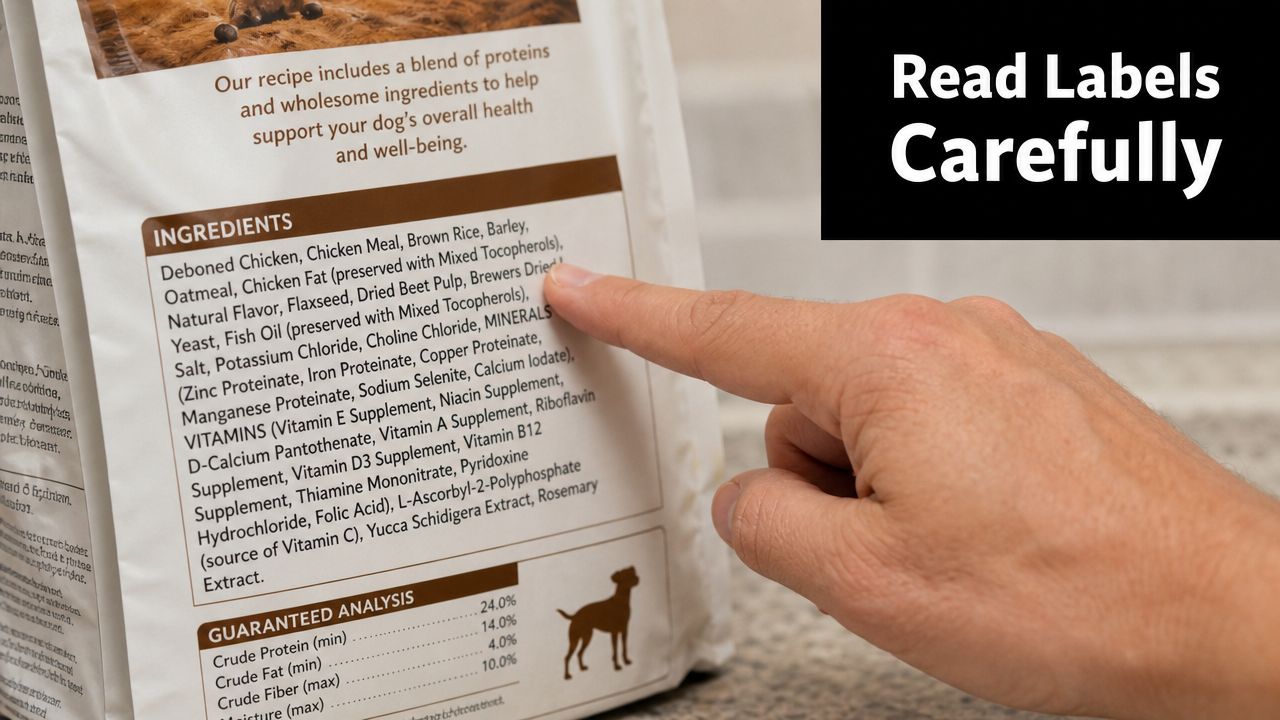
Read labels with a detective's eye
For a dog with a confirmed egg allergy, the question is not whether the egg is scrambled, baked, or dried. The issue is the egg protein itself. As noted earlier, some egg proteins can still trigger reactions after cooking, so your safest plan is full avoidance.
That means checking more than the main food bag. Egg can show up in treats, toppers, supplements, dental chews, and even flavored products you might not think of as food.
A simple label check helps:
- Scan the ingredient list: look for egg, dried egg, egg product, or egg white
- Review toppers and mixers: these often add extra proteins that complicate the plan
- Check treats one by one: a safe dinner does not help much if the bedtime chew contains egg
- Ask your vet or pharmacist about flavored medications: hidden ingredients can confuse the picture
If you are choosing new foods during this stage, this guide to foods for dogs with allergies can help you compare options with fewer likely triggers.
Add nutrition and appeal without adding uncertainty
Many pet parents worry that removing egg will make meals feel plain or less nourishing. In practice, this is usually very manageable. You are not trying to make the bowl exciting with lots of extras. You are trying to make it safe, consistent, and still enjoyable.
Start with what your dog already does well on. Then add only one low-risk boost at a time, such as extra moisture, a vet-approved treat, or an egg-free topper. That approach works like keeping the ingredient list readable. If your dog flares, you can quickly tell what changed.
If you like to offer rewards outside mealtimes, these healthy pet snacks reflect the kind of simple ingredient approach that is easier to fit into an allergy plan.
For dogs who need a meal enhancer rather than a full diet change, ChowPow is one egg-free option to discuss with your vet. It is a dehydrated beef heart topper designed to sprinkle over existing kibble, which can help with flavor and add nutrient density for picky eaters, seniors, or dogs recovering from illness.
A good topper should make the meal clearer, not more confusing. If it fits the elimination plan, uses tolerated ingredients, and serves a specific purpose, it is much more likely to help than a grab bag of add-ins.
Frequently Asked Questions About Dog Egg Allergies
If my dog is allergic to chicken, are eggs automatically off-limits
Not always. Some dogs with chicken allergy can still eat eggs because the proteins in chicken meat and eggs are different. At the same time, cross-reactivity can happen in some individuals, so this is something to discuss with your veterinarian rather than testing casually at home, as noted by American Natural Premium's discussion of chicken allergies and eggs.
Does it matter whether the egg is raw or cooked
For an allergic dog, the important issue is the protein, not the recipe. Cooking may change some proteins, but it doesn't make egg reliably safe for a dog with a confirmed egg allergy. If egg is the trigger, avoidance needs to be complete.
Can a dog develop an egg allergy later in life
Yes, that can happen. A dog doesn't have to react the first time they eat a food for it to become a problem later. What matters more than age is the pattern. If a food that used to seem fine now lines up with repeated itching, ear trouble, or digestive flare-ups, it's worth discussing with your vet.
What if I'm not sure whether it's allergy or intolerance
That uncertainty is common. Intolerance tends to stay in the digestive lane. Allergy more often involves skin, ears, and recurring itch. But because there's overlap, the cleanest answer usually comes from a vet-guided diet trial, not from trying to read the symptoms in isolation.
If eggs are off the menu, your dog's meals don't have to become bland or stressful. ChowPow is an egg-free meal topper, not a replacement for your dog's current food, designed to boost kibble with simple ingredients and added flavor so you can support appetite and nutrition while staying within your dog's allergy plan.
-
Product on sale
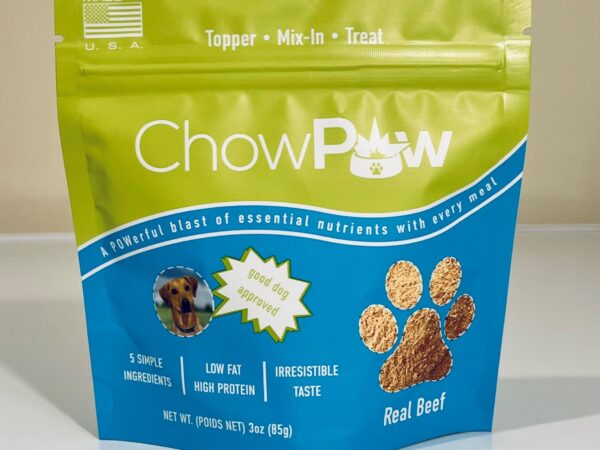 Dog Food Topper - Beef HeartOriginal price was: $14.99.$10.95Current price is: $10.95. - or subscribe and save up to 20%