

Cipro Dosage for Dogs: A Complete Reference Guide
Your dog is sick, you've just picked up a prescription, and now you're staring at the label wondering if the dose looks high, low, or just confusing. That's a normal reaction. Ciprofloxacin, often called Cipro, is one of those medications that sounds straightforward until you realize the dose can vary quite a bit from one dog to another.
This guide is for information only. It is not a substitute for your veterinarian's advice, diagnosis, or prescribing instructions. Never start, change, split, or stop ciprofloxacin for your dog without veterinary direction.
What helps most is understanding why the prescription looks the way it does. Once you know how vets think about Cipro dosing, pill timing, safety issues, and practical administration, the label makes a lot more sense. If your dog's ear treatment plan also involves topical medication and you're trying to help locating generic ear infection medicine, that can be useful context too, especially when infections involve more than one medication.
A Vet-Prescribed Antibiotic Your Guide to Cipro
Ciprofloxacin is a prescription antibiotic used by veterinarians for certain bacterial infections. It isn't a casual medication and it isn't a good choice for guessing at home. The right dose depends on the dog, the infection, the formulation, and how well that individual dog absorbs the drug.
A lot of owner anxiety comes from seeing different dosage numbers online. That confusion is real. Older references, newer pharmacology work, and clinic habits don't always line up neatly. That doesn't mean your veterinarian is being inconsistent. It usually means they're making a judgment call based on your dog's specific case.
Practical rule: Your dog's prescription label matters more than a generic online dose chart.
That's especially important with ciprofloxacin because “standard” doesn't always mean “effective.” Some dogs absorb it poorly. Some infections need stronger exposure. Some dogs need a schedule that's easier for the household to follow so doses don't get missed.
Use this article the way I'd want a client to use it. Read it to understand the prescription better, to catch administration mistakes before they happen, and to know when to call the clinic. Don't use it to self-prescribe from leftover human tablets or to borrow medication from another pet.
Understanding Ciprofloxacin Dosage Principles
A common clinic scenario goes like this. An owner looks up cipro online after the appointment and finds two or three different dose ranges for what sounds like the same drug. That mismatch is real, and ciprofloxacin is one of the antibiotics that creates this confusion more often than owners expect.

The starting point is simple. Ciprofloxacin is dosed in mg per kg, so body weight matters. Body weight is only the start. The prescribed amount also depends on whether the target bacteria are likely to respond, how reliably your dog absorbs the medication, and whether the schedule is realistic for the home giving it.
Why dose recommendations do not always match
Published dosing ranges have varied over time. One pharmacokinetic study in dogs noted oral dosage recommendations ranging from 5 to 15 mg/kg every 12 hours to 20 to 25 mg/kg once daily (study on ciprofloxacin pharmacokinetics in dogs). That helps explain why owners see different numbers in drug handouts, online charts, and older forum posts.
The more practical point is what sits behind those numbers. Ciprofloxacin does not behave identically in every dog. Some dogs absorb it less predictably than owners assume. A lower historical dose may look tidy on paper but still fail to produce drug levels that give a good chance of clearing the infection. That is why two dogs with the same weight can leave with different instructions, or why a veterinarian may choose another antibiotic entirely.
What the veterinarian is actually balancing
Dose selection is a medical judgment, not a calculator exercise by itself. In practice, I weigh several factors at once:
- Site of infection. A superficial skin problem is different from a urinary infection or a deeper infection where penetration matters.
- Likely bacteria and expected susceptibility. Some cases are reasonable for empiric treatment. Others need culture results before the plan is trustworthy.
- Patient variables. Age, hydration, appetite, GI history, and concurrent disease can change how well a dog tolerates or absorbs the drug.
- Formulation and schedule. The best dose is the one that can be given correctly for the full course.
- Risk of underdosing. Too little antibiotic can leave you with a dog that seems better for a day or two, then slides backward.
That last point matters. Owners often focus on side effects, which is reasonable, but underdosing has its own cost. It can delay recovery, muddy the clinical picture, and make the next treatment decision harder.
Some owners find it helpful to compare cipro with another drug class. This guide to amoxicillin dosing in dogs shows the same broader principle from a different angle. The label reflects the patient in front of the veterinarian, not a universal rule.
The prescription bottle gives you the final plan. The reasoning behind it includes body weight, infection type, bacterial targets, absorption, and what your household can give consistently.
How to Calculate Your Dogs Cipro Dose Step by Step
If your vet has already prescribed ciprofloxacin, checking the math can help you give it confidently. You're not overriding the prescription. You're making sure you understand it.
Step 1 Convert pounds to kilograms
Veterinary dosing uses kilograms. To convert pounds to kilograms, divide your dog's weight in pounds by 2.2.
Examples:
- 11 lb dog = 5 kg
- 22 lb dog = 10 kg
- 55 lb dog = 25 kg
Step 2 Use the prescribed mg per kg rate
Your veterinarian may prescribe a daily amount such as 20 mg/kg or 25 mg/kg, depending on the case. Use the exact number from your dog's label, not a general chart.
The formula is simple:
Dog's weight in kg × prescribed mg/kg = total daily mg
Step 3 Match that total to the tablet strength
Once you know the daily milligrams, compare it to the tablet strength you were dispensed. If your dog received 250 mg tablets, you can estimate how much of a tablet equals the prescribed daily amount.
Here's a simple example table using 20 mg/kg as a worked example.
Example Cipro Dose Calculation Table 20 mg/kg
| Dog Weight (lbs) | Dog Weight (kg) | Total Daily Dose (mg) | Example Pill Count (Using 250mg tablets) |
|---|---|---|---|
| 11 | 5 | 100 | 0.4 tablet |
| 22 | 10 | 200 | 0.8 tablet |
| 55 | 25 | 500 | 2 tablets |
Worked examples
Small dog example
Your dog weighs 11 lb. That converts to 5 kg.
If the prescription is 20 mg/kg, the total daily dose is 100 mg.Medium dog example
Your dog weighs 22 lb. That converts to 10 kg.
At 20 mg/kg, the daily dose is 200 mg.Large dog example
Your dog weighs 55 lb. That converts to 25 kg.
At 20 mg/kg, the daily dose is 500 mg.
What owners often get wrong
- Using pounds instead of kilograms. That mistake can throw the dose way off.
- Forgetting whether the label is per dose or per day. Read that line carefully.
- Splitting tablets without checking first. Some tablets aren't practical to divide accurately for tiny dogs.
- Assuming half a tablet is always fine. Sometimes your vet chooses a different tablet size to make dosing safer.
If the math on your label doesn't seem to match what you expected, call the clinic before giving the medication. That's the safest move.
Safe and Stress-Free Administration Tips
Getting ciprofloxacin into a willing dog is easy. Getting it into a suspicious dog is a different job.
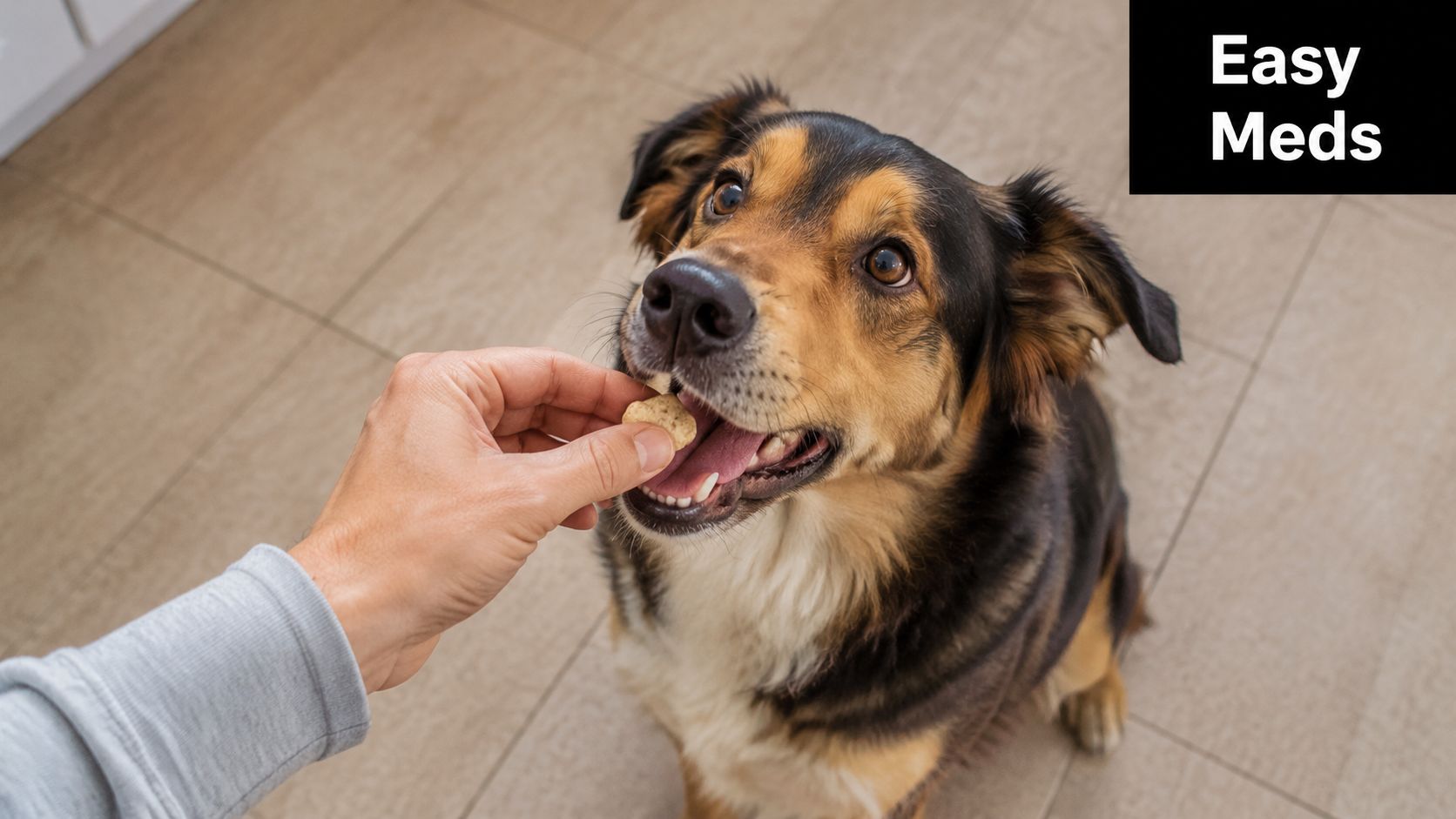
Keep the routine simple
Most dogs do better when medication happens the same way every day. Use the same location, the same calm tone, and the same follow-up reward. If you turn every dose into a wrestling match, many dogs learn to resist before the pill even appears.
A few practical methods work better than others:
- Hide it in a small food pocket if your vet says giving with food is appropriate for your dog.
- Give a tiny “empty” treat first, then the pill treat, then another empty treat. That sequence keeps the dog swallowing instead of chewing suspiciously.
- Follow with a bit of water or a small bite of food if your veterinarian recommends it, especially for dogs that tend to hold pills in the cheek.
Don't crush or improvise without asking
Ciprofloxacin can be unpleasant tasting. Crushing it into a full meal often backfires because the dog then refuses the entire bowl. If your dog is difficult to medicate, use a small amount of highly appealing food first and make sure the full dose is swallowed before offering the rest of the meal.
For a more detailed walkthrough, this guide on how to give a dog a pill with ease covers practical handling techniques that reduce stress for both dog and owner.
If your dog spits out even part of a dose, don't guess how much stayed down. Call your veterinary team and ask how they want you to handle it.
This short video can also help if pill time has become a battle:
What actually works in real homes
The best administration method is the one your dog reliably accepts. Fancy pill gadgets don't matter if your dog hates them. A plain, repeatable routine usually beats a complicated one.
Watch your dog for a minute after dosing. Some dogs are experts at pretending to swallow, then dropping the tablet under the couch once you turn away.
Potential Side Effects and What to Watch For
Most dogs take prescribed antibiotics without major problems, but owners should still monitor closely. What matters isn't just whether a side effect happens. It's whether it's mild and brief, or whether it signals that your vet needs to hear from you.

Common problems you may be able to monitor
Mild digestive upset is the complaint owners report most often with many oral antibiotics.
- Vomiting after a dose. Call your vet if it happens more than once or if your dog can't keep the medication down.
- Loose stool or diarrhea. Monitor hydration, appetite, and energy.
- Reduced appetite. Some dogs eat less when they feel sick, and some become pickier during antibiotic treatment.
If your dog has one mild episode and then acts normal, your clinic may advise monitoring. If symptoms repeat or worsen, don't wait it out on your own.
Concerning changes that need a call sooner
Some reactions deserve prompt veterinary guidance, especially if they appear suddenly.
- Marked lethargy that's out of proportion to the original illness
- Persistent vomiting
- Refusal to eat
- Difficulty walking or obvious discomfort
- Behavior changes that seem unusual for your dog
A dog that looks mildly off at breakfast but clearly worse by evening shouldn't wait for the next scheduled dose before you call.
A simple action plan
Use this framework at home:
- Mild and brief: monitor, note the timing, and keep the clinic updated if needed.
- Repeated or worsening: call your veterinarian the same day.
- Severe or alarming: seek immediate veterinary advice.
Owners sometimes feel pressure to “finish the antibiotics no matter what.” Finishing the prescribed course matters, but not at the cost of ignoring a meaningful adverse reaction. If your dog seems unwell on the medication, your veterinarian needs that information.
Contraindications and Important Drug Interactions
A prescription can be correct on paper and still be the wrong choice for a particular dog. Before the first dose, I want to know your dog's age, orthopedic history, seizure history, kidney status, and every product going into the bowl or mouth.
Dogs that may not be good candidates
Ciprofloxacin needs extra caution in growing dogs, especially large and giant breeds, because fluoroquinolone antibiotics can affect developing joints and cartilage. In practice, that means age matters, but so does the reason we are treating. A veterinarian may still choose it if the infection, culture results, or lack of safer options justify that risk.
Dogs with a history of seizures, significant joint disease, or reduced kidney function also deserve a closer review before starting treatment. These cases are not always automatic “no” decisions. They are situations where dose, drug choice, and monitoring need more thought.
If your dog is recovering from an orthopedic procedure or another major surgery, medication planning should fit the whole recovery plan. This guide to post-surgery care for dogs can help you organize the rest of home care around the prescription schedule.
Interactions that change absorption
The biggest real-world problem I see is poor absorption. Ciprofloxacin can bind to certain products in the stomach and intestines, which means your dog may swallow the tablet but absorb much less of the drug.
The interaction owners miss most often is sucralfate. The Merck Veterinary Manual quinolone dosing table notes that ciprofloxacin should be separated from sucralfate by at least 2 hours.
Other products can cause the same kind of problem, including:
- Antacids
- Iron
- Calcium
- Zinc
- Mineral supplements
- Some powdered gut or wellness products mixed with food
That trade-off matters. Support products may help comfort, but poor antibiotic absorption can slow recovery or make treatment look like it failed when timing was the problem.
What to tell your veterinarian before starting
Send a full medication and supplement list, including items that seem minor:
- Prescription medications
- Over-the-counter remedies
- Joint supplements
- Probiotics or digestive powders
- Meal toppers with added minerals
- Occasional stomach medications
Photos of labels help.
If your dog needs extra comfort during recovery, owners sometimes pair the treatment plan with supportive home changes such as calming orthopedic beds. Comfort matters, but it should not distract from the main safety step here, which is checking every product for timing conflicts with the antibiotic.
A simple rule is this: never guess about spacing cipro around supplements or stomach medications. Ask your vet or pharmacist to map out the schedule so the dose your dog gets is the dose your dog can use.
Monitoring Recovery and Supporting Your Dog
When ciprofloxacin is working, owners usually notice changes in comfort, energy, appetite, or the specific problem being treated. Improvement may be gradual. Don't expect every symptom to vanish immediately after the first dose.
Signs to watch during recovery
Keep a short daily log. It doesn't need to be fancy.
- Appetite. Is your dog finishing meals or picking at food?
- Energy. More interested in walks, toys, or interaction?
- Bathroom habits. Any changes from the infection or from the medication?
- Site-specific progress. Less discharge, less licking, less discomfort, easier movement, or fewer signs tied to the original problem
This is also a good time to make recovery physically easier. If your dog is resting more than usual, supportive bedding can help, and some owners like calming orthopedic beds for dogs that need a quieter, more comfortable recovery setup.
Don't stop early because your dog seems better
Dogs often look improved before the infection is fully controlled. Stopping early is one of the most common ways treatment gets derailed. Follow the exact duration your veterinarian prescribed, even if your dog looks normal again.
If your dog is recovering from a more complex condition or procedure, this article on post-surgery care for dogs is also useful because medication success depends on the whole recovery plan, not just the antibiotic.
This visual gives a quick sense of how some owners support eating during recovery:

Dogs heal better when owners track small changes early instead of waiting for a dramatic setback.
If your dog stalls, loses appetite, or seems worse after initial improvement, call your clinic. That's useful information, not overreacting.
Frequently Asked Questions About Cipro for Dogs
A common scenario in practice is a dog that finally seems brighter on day three, then the owner wonders whether the medication is still needed or whether one late dose matters. These are reasonable questions. The safest answer depends on the prescription your veterinarian wrote, the infection being treated, and how your dog is responding at home.
What if I miss a dose
Call your veterinarian or follow the written directions your clinic sent home. If you cannot reach them right away, give the missed dose as soon as you remember unless it is close to the next scheduled dose. In that case, skip the missed dose and return to the regular schedule.
Do not double the next dose unless your veterinarian tells you to. That can increase the risk of side effects without improving treatment.
Can I use human ciprofloxacin for my dog
Only if your veterinarian prescribed that exact product for your dog.
The problem is not just the drug name. Human tablets may be the wrong strength, may be difficult to split accurately, and may not match the dose or schedule your dog needs. Beyond these concerns, ciprofloxacin is not the right antibiotic for every infection, even when symptoms look similar at home.
How long will my dog need to take it
Treatment length varies with the site of infection, severity, lab results, and your dog's response over the first several days. A simple infection may need a shorter course. A deeper, more stubborn, or recurrent infection may need longer treatment and rechecks.
This is one reason I tell owners to focus on the plan, not just the calendar.
Why does my dog's dose look different from another dog's dose
Dogs do not all absorb ciprofloxacin the same way, and the target tissue matters. A dose chosen for one dog may be inappropriate for another, even at a similar weight.
Your veterinarian may adjust the dose based on body size, age, hydration, kidney function, the suspected bacteria, and whether your dog is taking other medications. That is why this guide focuses on why doses vary, not just the number printed on the label.
Is ciprofloxacin safe for puppies
Puppies and still-growing dogs need extra caution. Fluoroquinolone antibiotics, the drug class that includes ciprofloxacin, can raise concerns about joint and cartilage development in young animals, especially larger breeds.
If your dog is still growing, ask your veterinarian before giving any dose. Do not use leftover tablets from another pet.
Should I stop if my dog seems better after a few days
No. Improvement means the medication may be working. It does not mean the infection is fully cleared.
Stopping early can allow the infection to return and may make follow-up treatment harder. Finish the course exactly as prescribed unless your veterinarian changes the plan.
If your dog's appetite drops during recovery or medication time becomes a struggle, ChowPow can help make meals more appealing without replacing your dog's regular kibble. It's a meal topper and supplement, not a substitute for the diet you already feed, and many owners use it to boost flavor, support eating, and make it easier to get dogs interested in food again during recovery.
-
Product on sale
 Dog Food Topper - Beef HeartOriginal price was: $14.99.$10.95Current price is: $10.95. - or subscribe and save up to 20%