Coccidioidomycosis in Dogs: 2026 Vet Guide
A cough that hangs on for days. A dog who usually races to the food bowl but now sniffs and walks away. A strange limp that seems to come and go. If you live in the desert Southwest, those vague signs can leave you wondering whether this is “just a bug” or something more serious.
One possibility is coccidioidomycosis in dogs, often called Valley Fever. The name sounds alarming, and for good reason. It can be a serious fungal disease. But serious doesn't mean hopeless. Many dogs recover, and owners usually feel less overwhelmed once they understand what the disease is, how vets sort out confusing test results, and what day-to-day care looks like at home.
Dogs are complex, resilient animals with huge variation in breed, body type, energy level, and health history. If you want a broader refresher on normal canine traits and behavior, these details on the canine species from Creatures can be helpful background while you think through what's changed in your own dog.
A Worried Owner's Guide to Valley Fever in Dogs
Valley Fever starts with the environment, not with another sick pet. Dogs get it by breathing in fungal spores from soil in certain dry regions. That matters because many owners first worry about contagion. In most household situations, the key question isn't “Did my dog catch this from another dog?” but “Was my dog exposed outdoors?”
The frustrating part is that the early signs often overlap with many other problems. A dog may cough, seem tired, eat less, or act sore. Some dogs look mildly ill at first. Others seem fine one week and clearly unwell the next.
Practical rule: If your dog has a lingering cough, unexplained tiredness, poor appetite, or limping, and you live in or recently visited an endemic area, bring up Valley Fever early with your veterinarian.
A good vet visit for suspected Valley Fever usually involves putting several clues together:
- History. Where your dog lives, travels, digs, hikes, or plays.
- Symptoms. Lung signs, fever, appetite changes, pain, or lameness.
- Testing. Blood work, imaging, and fungal testing when appropriate.
- Follow-up. Repeat assessment if the first answer isn't clear.
That last point matters more than many owners realize. Valley Fever can be confusing to diagnose, especially in mild or early disease. A test result isn't always a simple yes-or-no answer to “Is this active infection right now?” That uncertainty is scary, but it's also common, and it's something your vet works through with pattern recognition, timing, and repeat checks.
What Is Coccidioidomycosis and How Do Dogs Get It
A common Valley Fever story starts with an ordinary day. A dog runs through a dusty yard, noses into a hole, or trots along a dry trail. Nothing about that moment looks dangerous, but that is often how exposure happens.
Coccidioidomycosis is a fungal infection caused by Coccidioides species. These fungi live in the soil of certain dry areas. When the ground is disturbed by wind, digging, construction, yard work, or play, tiny fungal spores can lift into the air. A dog can then breathe them in.

How the infection starts
These spores are so small that dogs do not need a dramatic exposure. They do not have to eat something spoiled or swallow a mouthful of dirt. Breathing dusty air can be enough.
Once inhaled, the spores settle in the lungs and trigger inflammation. For some dogs, the infection stays there. In others, it spreads beyond the lungs to places like the bones, skin, eyes, or nervous system. That difference helps explain why one dog may have a mild cough while another develops lameness, pain, or more serious illness.
Dogs that love to sniff, dig, or keep their noses close to the ground may have more chances to inhale spores, but even calm dogs can be exposed during a routine walk or time in the backyard.
What this means for worried owners
Owners often ask whether their dog caught Valley Fever from another pet. In typical household situations, the concern is outdoor exposure, not spread between dogs. If you have more than one pet, that usually means the question is whether they shared the same environment, not whether one infected the other.
Another point causes confusion. “Fungus” often sounds like a skin problem. With Valley Fever, the lungs are usually the first stop because the spores enter through breathing. If your dog later develops signs in other parts of the body, that can reflect spread from the original infection rather than a separate new problem.
The next steps are often less straightforward than owners expect. A dog may have possible exposure, vague early signs, and tests that are not fully clear on the first visit. That can feel unsettling, but it is common with this disease. Your job is to share outdoor history, travel, digging habits, and changes in appetite, energy, cough, or soreness. Your veterinarian uses those details to decide whether Valley Fever belongs high on the list and whether repeat testing or follow-up is needed.
Geographic Risk and Key Symptoms to Watch For
Location shapes risk. A large U.S. dog-serology study published in 2025 analyzed 834,899 canine coccidioidomycosis tests and found 313,829 positive results, for an overall seropositivity rate of 37.6%. That same study showed a sharp geographic concentration. Arizona had a mean annual incidence of 86.8 per 10,000 households, while California, Nevada, and New Mexico were roughly 100-fold lower than Arizona. The researchers also reported 21,085 seropositive dogs in 2012, 38,079 in 2021, and 33,428 in 2022, reinforcing how heavily this disease clusters in endemic southwestern markets rather than being evenly spread across the country (Journal of Infectious Diseases study on canine coccidioidomycosis).
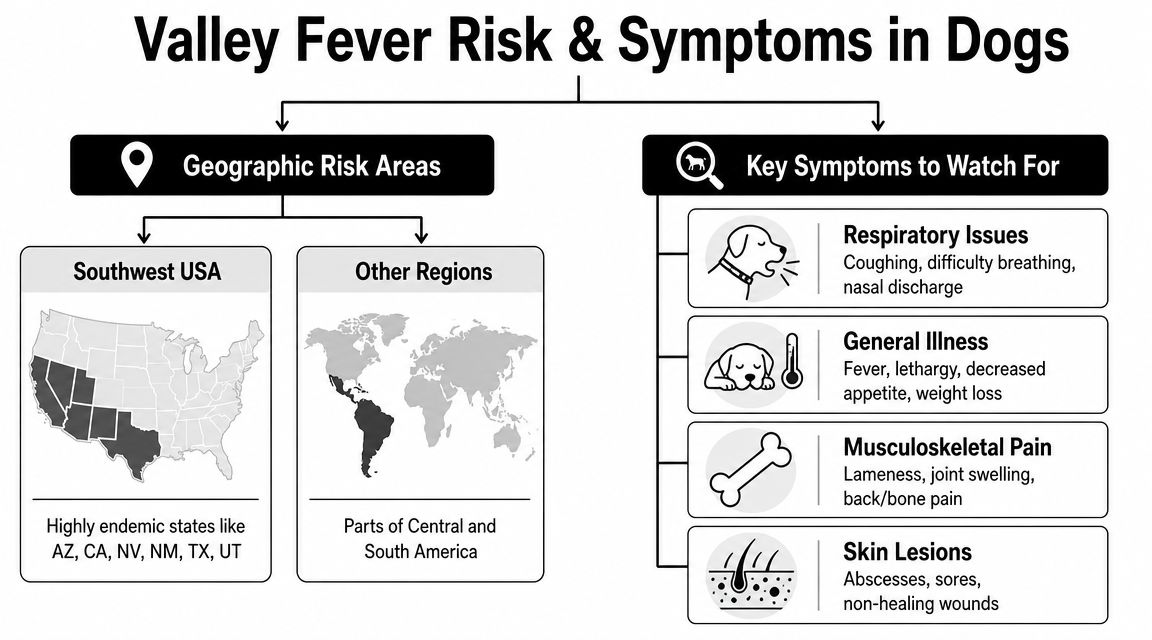
Risk depends on where your dog lives and plays
This doesn't mean dogs outside Arizona are safe, or that every coughing Arizona dog has Valley Fever. It means geography should change how quickly you and your vet put this disease on the list of possibilities.
Owners also get tripped up because Valley Fever can look a lot like other respiratory illness at first. If you've ever wondered whether your dog might have an upper respiratory infection, this article on whether dogs can get a cold can help you compare the everyday possibilities with conditions that deserve a deeper workup.
Common signs when the lungs are involved
In many dogs, the first signs come from the chest and from the body's general inflammatory response.
- Persistent cough. Often the symptom that gets owners to book the appointment.
- Low energy. A dog who tires faster, sleeps more, or seems less interested in play.
- Reduced appetite. Some dogs become picky. Others lose interest in food altogether.
- Fever and “just not right” behavior. Owners often describe their dog as quiet, flat, or off.
- Weight loss over time. Especially if appetite has been poor for a while.
Signs that raise concern for spread beyond the lungs
When Valley Fever spreads outside the chest, symptoms can look completely different.
| Body area | What an owner may notice |
|---|---|
| Bones or joints | Limping, stiffness, swelling, pain, reluctance to jump |
| Skin | Draining sores, lumps, wounds that don't heal normally |
| Eyes | Squinting, redness, cloudiness, vision changes |
| Nervous system | Unsteady walking, behavior changes, seizures, neck or back pain |
These signs matter because disseminated disease is generally more serious than the lung-only form. The pattern of symptoms often tells your vet how urgent the next steps are.
A cough can be the beginning of Valley Fever, but a limp, eye change, or neurologic sign can be the clue that the infection isn't staying in one place.
How Vets Diagnose Valley Fever in Dogs
Diagnosis usually isn't one single test that settles everything on the spot. Your vet acts more like a detective, combining exam findings, your dog's history, and test results to decide whether Valley Fever is likely, unlikely, or still uncertain.

The first layer of the workup
Most appointments start with basics that are more useful than they sound:
- Physical exam to look for fever, lung changes, enlarged lymph nodes, pain, skin lesions, or eye abnormalities
- Chest X-rays if coughing or breathing signs are present
- Blood work to look at overall health and help rule in or rule out other illnesses
- Exposure history including where your dog lives, travels, hikes, digs, and plays
Context matters. A mild cough in a non-endemic area may point your vet one way. A mild cough plus lameness plus desert exposure points in a different direction.
Why a positive test can be confusing
The fungal blood test many owners hear about is often called a serology or titer test. It helps detect an immune response to the organism. The problem is that immune tests don't always answer the question owners are really asking, which is: “Is my dog actively sick from this right now?”
Several veterinary sources note that many infections are pulmonary and self-limited, while serology can remain positive after prior exposure. The same references also note that antigen testing has been reported as relatively insensitive in dogs. That creates real diagnostic uncertainty, especially in mild or early cases, because vets may need to distinguish active disease from previous exposure. That judgment matters because dissemination is estimated to occur in about 20% of canine infections (Iowa State CFSPH coccidioidomycosis factsheet).
A positive titer doesn't always mean “severe active disease today.” It has to be interpreted alongside symptoms, imaging, exam findings, and time.
This is also why your vet may recommend repeat testing instead of making a snap decision. If your dog feels mildly ill, has an unclear X-ray, or has test results that don't match the symptoms, the safest plan may be to recheck rather than overreact or underreact.
For a visual overview of how vets think through fungal disease, this short video may help.
Questions worth asking your veterinarian
- What findings make you think this is active Valley Fever versus past exposure?
- Do the chest X-rays fit the blood test result?
- Should we repeat testing if signs continue or change?
- Are there clues that suggest spread beyond the lungs?
Those questions don't challenge your vet. They help you understand the reasoning behind the plan.
Understanding Treatment Options and What to Expect
You may leave the appointment with relief that your dog finally has an answer, then feel your stomach drop when you hear that treatment may take months. That reaction is normal. Valley Fever usually improves in stages, not all at once.
For many dogs, the main treatment is an oral antifungal medication taken for a long time. The goal is to slow the fungus down enough for the body to recover, much like putting steady pressure on weeds in a yard instead of expecting one spray to fix everything overnight. Your veterinarian chooses the medication and dose based on where the infection is causing trouble, how sick your dog feels, and how your dog handles the drug over time.
Patience matters here.
A dog may seem brighter after a few weeks but still need ongoing treatment. Stopping too soon can give the infection a chance to flare up again. That is why your veterinarian usually bases decisions on the full picture, including symptoms, exam findings, and follow-up testing, rather than on one good week at home.
Recovery time can vary widely. Some dogs respond smoothly. Others need a slower, more cautious plan, especially if the infection has spread beyond the lungs. Cases involving the brain, spinal cord, or bones often take longer and can carry a more guarded outlook, as noted earlier.
It helps to set the right expectation from the start. A better early goal is steady progress: less coughing, better energy, improved appetite, easier walking, and fewer painful days. Those small wins matter because they show the treatment is pushing in the right direction.
What follow-up usually looks like
Follow-up visits are part of treatment, not an extra add-on. They help your vet answer practical questions that worried owners often have after diagnosis: Is the medicine helping? Is my dog tolerating it well? Are we staying the course, or do we need to adjust?
At recheck appointments, your veterinarian may look at:
- Daily function at home. Is your dog eating better, resting more comfortably, and showing more normal interest in walks or play?
- Side effects from medication. Has there been vomiting, diarrhea, poor appetite, unusual tiredness, or other changes after starting treatment?
- Signs of ongoing infection. Does your dog still have coughing, fever, limping, back pain, swollen limbs, or new neurologic changes?
- Whether more testing is needed. Some dogs need repeat bloodwork, imaging, or other monitoring based on their signs and the medication being used.
This is often the part owners find hardest: progress may be uneven. Your dog can have a good stretch, then a few rough days, without that meaning the whole plan has failed. Recovery often works like climbing a hill with pauses rather than riding an elevator straight up.
If your dog is not improving the way your vet expected, ask what the next decision point is. That question can help you get a clearer plan. For example, your vet may want more time on the current medication, a dosage change, extra tests, or a closer look for spread to other parts of the body.
The most helpful mindset is to treat Valley Fever as a long course of care with regular checkpoints. You do not have to solve the whole problem in one week. You and your veterinarian are watching for the next right sign of improvement, then building from there.
Essential Supportive Care for a Strong Recovery
Medication fights the fungus. Home care helps the dog keep enough strength to benefit from that medication. Both matter.
Food, water, and energy are part of treatment
Dogs recovering from fungal illness often eat poorly. Sometimes that's because they feel sick. Sometimes it's because coughing, fever, pain, or medication side effects make meals less appealing. When intake drops, recovery gets harder. The body still needs calories, protein, and fluids while it's trying to heal.
A simple home checklist helps:
- Monitor appetite closely. “He ate a little” is different from eating enough.
- Track water intake if your dog seems weak, dry-mouthed, or uninterested in drinking.
- Keep meals easy. Smaller, more frequent offerings are often less overwhelming than one big bowl.
- Ask before adding anything new if your dog has vomiting, diarrhea, kidney concerns, or is on several medications.
If your dog is eating poorly, this guide on how to hydrate a sick dog offers practical ways to support fluid intake at home while you stay in touch with your vet.

Keeping home life low-stress
Supportive care also means reducing extra strain. Dogs with coughing or fatigue often do better with quiet routines, fewer exhausting outings, and comfortable rest areas. If your dog has skin lesions or a lowered tolerance for strong scents and irritants, it can also help to review safe cleaning products for pets so the home environment stays gentler during recovery.
One more point that owners often miss: appetite support should add to your dog's normal food plan, not replace it. A meal topper or supplement can make kibble more appealing or easier to eat, and it can help when you need to hide medication, but it shouldn't be treated like a full substitute diet unless your veterinarian specifically says otherwise.
When home care is not enough
Call your vet promptly if your dog:
- Stops eating or drinking
- Seems more painful or suddenly more lethargic
- Starts vomiting after medication
- Has trouble breathing
- Develops new limping, eye changes, or odd behavior
Home care works best when it supports the treatment plan, not when it delays needed re-evaluation.
Prognosis Prevention and Long-Term Wellness
Recovery can be encouraging, but it's rarely a “set it and forget it” disease. Chronic cases can involve more than the lungs. A review of long-term complications notes that chronic disease can include glomerular lesions and protein-losing nephropathy, and that prognosis worsens with central nervous system or multiple bone involvement. Severe cases may require lifelong therapy, and relapses are common, which is why ongoing monitoring matters even after an apparently good response (NIH review on disseminated and chronic complications).
Prevention focuses on exposure reduction
You usually can't remove all risk in endemic areas, but you can lower it.
- Avoid heavy dust exposure during windy days or dusty outdoor activity.
- Discourage digging in dry soil when possible.
- Be careful with high-dust hikes, construction zones, and dirt play areas if your dog is vulnerable or recovering.
- Watch overall resilience with regular wellness care, nutrition, hydration, and rest. This guide on ways to support your dog's immune system can help you think through day-to-day wellness habits.
When to call the vet again
Use this as a practical relapse and complication checklist:
| Sign | Why it matters |
|---|---|
| Cough returns or worsens | May suggest lung disease is active again |
| New limp or bone pain | Can point to spread or relapse |
| Seizures, wobbliness, or unusual behavior | Needs urgent attention |
| Weight loss or appetite drop | Can signal poor control or medication problems |
| Eye changes | Vision can be threatened quickly |
| Swelling, sores, or draining tracts | May indicate disseminated disease |
A Valley Fever diagnosis changes your routine, but it doesn't erase hope. What helps most is steady observation, realistic expectations, and a veterinarian who tracks the whole picture rather than one lab result in isolation.
If your dog is recovering from illness, eating poorly, or needs help taking medication, ChowPow can be a practical way to boost your dog's current kibble, not replace it. Its dehydrated beef heart formula is designed as a meal topper and supplement to make food more appealing, add nutrient density, and support dogs who need extra encouragement to eat and stay hydrated during recovery.
-
Product on sale
 Dog Food Topper - Beef HeartOriginal price was: $14.99.$10.95Current price is: $10.95. - or subscribe and save up to 20%