

Your Guide to Corn Free Dog Food for a Healthier Pup
Walk down the pet food aisle, and you’ll see "corn-free" plastered on more and more bags. It's not just a passing fad. This is a real shift by dog owners who are tired of cheap fillers and want to give their pets higher-quality, more digestible food.
What Is Corn Free Dog Food and Is It Better?
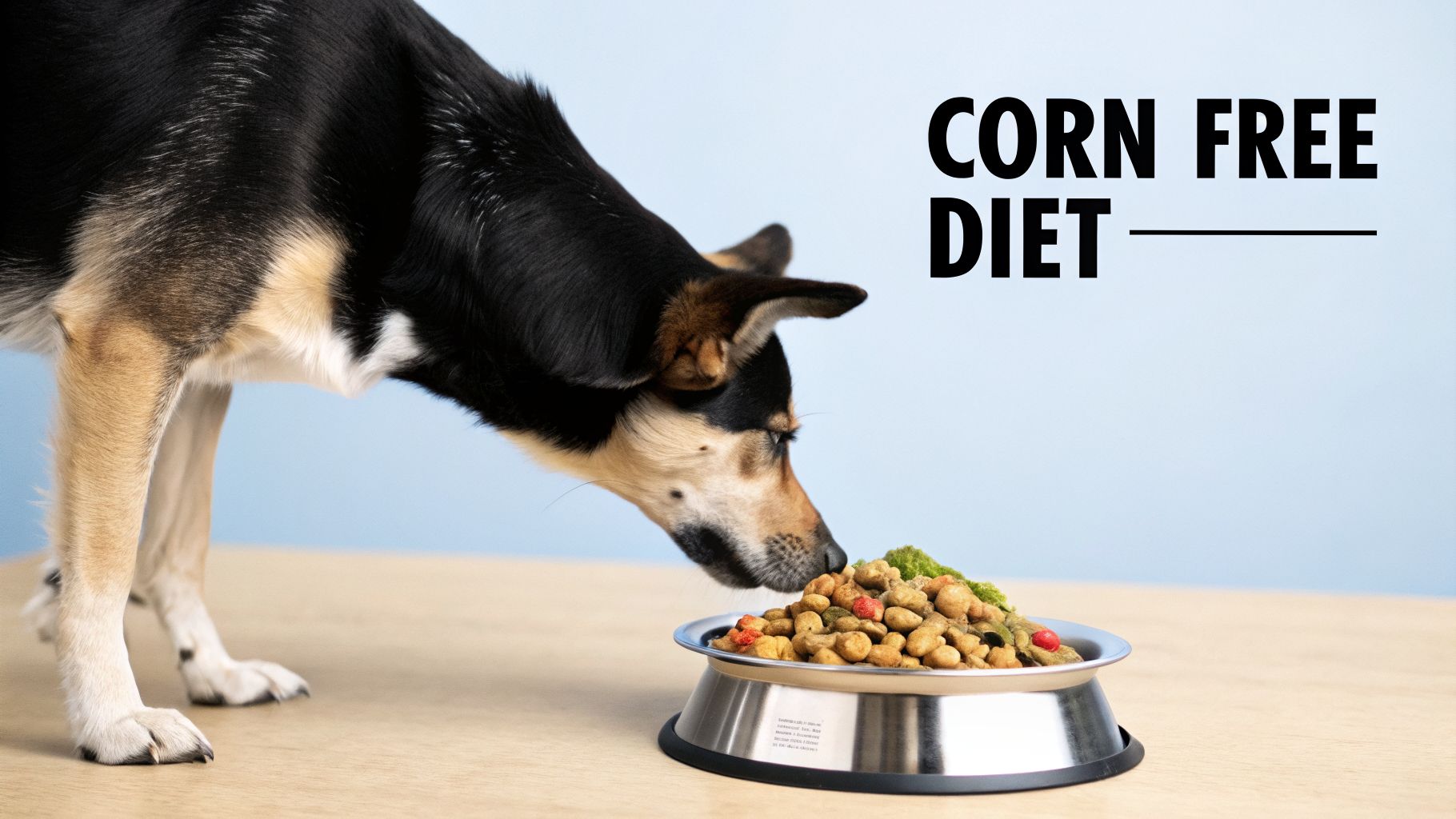
Ever stopped to wonder why corn is in so many dog foods in the first place? For decades, manufacturers have relied on it as a cheap way to add bulk and calories. It’s a lot like the difference between us eating a slice of highly processed white bread versus a nutrient-packed whole-grain loaf. Sure, both have calories, but one clearly offers more nutritional bang for your buck.
Moving to a corn-free diet is about wanting more for our dogs than just empty calories. We’re looking for food that actually contributes to their long-term health, and for many, that starts with cutting out ingredients known to cause problems.
The Problem with Corn Fillers
It might surprise you to learn that corn is one of the most common culprits behind food allergies in dogs, right behind beef. Not every dog will have an issue, of course, but for the ones that do, the symptoms can be frustrating and endless.
If your dog is sensitive to corn, you might notice:
- Chronic itchy skin, especially around the paws, belly, and ears.
- Recurring ear infections that just won't go away.
- Digestive issues like gas, bloating, or loose stools.
- A dull, lackluster coat and more shedding than usual.
Allergies aside, corn just doesn’t bring much to the table nutritionally. As a carbohydrate, it’s tougher for dogs to digest than other sources like sweet potatoes or peas. This can put a strain on their system without delivering the quality protein and healthy fats they need to really thrive.
To help you see the "why" behind this choice at a glance, here’s a quick breakdown of the main concerns pet parents have.
Quick Guide to Common Reasons for a Corn Free Diet
| Concern | Why It Matters for Your Dog |
|---|---|
| Food Allergies | Corn is a frequent trigger for skin issues, ear infections, and digestive upset. |
| Digestibility | It's harder for dogs to break down, which can lead to gas and bloating. |
| Low Nutritional Value | It's mostly a source of "filler" calories, lacking the rich nutrients of other ingredients. |
| Ingredient Quality | Choosing corn-free often means choosing a food with more high-quality, meat-first proteins. |
It's clear that owners are voting with their wallets for better quality.
The growing preference for premium ingredients is clear. The global grain-free pet food market, which largely excludes corn, is projected to hit USD 12.1 billion by 2030. This growth is fueled by owners treating pets like family and seeking natural diets to avoid sensitivities. You can explore the full grain-free market research to learn more.
A Simple Way to Boost Nutrition
Getting why a corn-free diet might be better is one thing. Actually overhauling your dog's entire menu can feel like a huge task, not to mention expensive. It’s also a real headache if you have a picky eater or a dog with a sensitive stomach.
Good news: you don’t have to toss out your dog's current food to make a big nutritional improvement. There’s a much simpler way to upgrade their meals.
This is where a quality meal enhancement like ChowPow really shines. It’s a nutrient-dense supplement, not a replacement for their current food. By just sprinkling a little over their regular kibble, you add a serious boost of corn-free, high-quality protein and essential nutrients. It's an easy and affordable way to elevate their meal, make it tastier, and introduce the benefits of a filler-free diet without the stress of a full food switch.
How to Decode Dog Food Labels for Hidden Corn

Choosing a corn-free dog food sounds simple enough, but you’d be surprised how often corn plays hide-and-seek on the ingredient list. Manufacturers have become masters of disguise, using a whole roster of aliases to make this cheap filler sound more scientific or appealing. To find a truly corn-free food, you have to become an ingredient detective for your dog.
It’s just like the human food aisle. A frozen dinner box might promise a "chef-inspired gourmet meal," but a quick flip to the back reveals it's mostly salt, sugar, and preservatives. The same goes for dog food. The front of the bag is all about marketing; the ingredient panel is where you find the truth.
This skill is more important than ever. The dog food market is exploding and projected to hit USD 42.16 billion by 2026, with corn-free and grain-free options leading the way. Why the shift? Many owners are connecting their dogs' allergy symptoms—which show up in up to 20% of vet visits—to diet. You can explore the dog food market analysis on datamintelligence.com to see the data behind this trend.
The Most Common Aliases for Corn
To confidently pick a food that’s actually corn-free, you need to know exactly what you’re looking for. Corn can be broken down and processed in countless ways, each with a unique name that doesn't immediately scream "corn."
Here are the most frequent offenders to watch for on an ingredient label:
- Maize: This is just the common international name for corn. If you see "maize," "ground maize," or "maize meal," it's corn. Simple as that.
- Corn Gluten Meal: This is the dried, leftover protein from corn after the good stuff (starch and germ) has been removed. It's a cheap way to boost the protein percentage on the label, but it’s not the high-quality, bioavailable protein your dog gets from meat.
- Ground Corn: This is the entire corn kernel ground up. It’s a low-cost filler that adds carbs but offers very little in the way of premium nutrition.
- Corn Germ Meal: This is what’s left after corn oil is extracted from the germ. Like its cousins, it’s a low-quality byproduct.
- Corn Bran: Just the outer layer of the corn kernel, used mostly as a fiber source. While fiber is important, there are far better, more nutritious sources out there.
Recognizing these terms is step one. Step two is understanding where they pop up on the ingredient list, which tells you a lot about the food’s overall quality.
How to Read the Ingredient List Correctly
Dog food ingredients are always listed by weight before cooking, so the heaviest ingredients come first. This means the first few items on the list make up the majority of the recipe. A quality food will always have a named meat source—like "deboned chicken" or "beef"—as the very first ingredient.
Key Takeaway: If you spot any form of corn, especially within the first five ingredients, it's a major component of that food. This is a huge red flag that the manufacturer is prioritizing low costs over high-quality nutrition.
Let’s look at an example. A label might list: "Ground yellow corn, chicken by-product meal, corn gluten meal, whole wheat flour, beef tallow…" Here, two of the top three ingredients are cheap, corn-based fillers. A much better option would start with something like: "Deboned beef, sweet potatoes, peas, chicken meal…"
The goal is to find a food where whole, recognizable ingredients take center stage. For a deeper dive, check out our guide on how to read dog food labels.
Ultimately, becoming a label detective lets you see past the flashy bags and clever marketing. Instead of falling for empty claims, you can make choices based on what truly nourishes your dog. By skipping foods bulked up with corn fillers, you’re investing in higher-quality ingredients that support their health and happiness for years to come.
The Real Benefits of a Corn-Free Diet
Making the switch to a corn-free dog food might seem like a small change, but for a lot of dogs, it can be a total game-changer. Think about your dog who used to be an itchy, restless mess, finally getting a full night's sleep. This is about more than just dodging an allergen; it's about giving your best friend a new lease on life.
When you kick low-quality corn fillers to the curb, you're making space for better, more nutritious ingredients. It’s like swapping out a bag of potato chips for a hearty, protein-packed steak dinner. The results you can see often speak for themselves and can genuinely improve your dog's day-to-day happiness.
More Energy for Playtime
Ever feel like your dog is dragging their paws on walks or just isn't into that favorite game of fetch anymore? A diet loaded with corn can lead to energy spikes and crashes, a lot like the post-lunch slump we feel after a heavy carb meal. The kind of carbs in corn are tough for a dog’s system to process, which means their body is working overtime for very little nutritional payback.
Moving to a corn-free diet means your dog is getting fuel from better sources, like high-quality proteins and more suitable complex carbs. This gives them a steady, reliable stream of energy all day long. The payoff? More consistent energy, more excitement for that walk, and a whole lot more tail-wagging.
A Healthier Skin and Coat
One of the top reasons owners start hunting for a new dog food is skin problems that just won't quit. If you're dealing with constant scratching, hot spots, or a dull, flaky coat, a food sensitivity could be the culprit—and corn is a common one. These aren't just cosmetic issues; they're outward signs of inflammation happening inside your dog's body.
A dog’s coat is often a direct reflection of their internal health. When you eliminate common irritants like corn and replace them with nutrient-dense ingredients, the body can calm its inflammatory response. Many owners report a dramatic reduction in itching and a shinier, softer coat within just a few weeks.
This visible glow-up is a fantastic sign that you’re feeding them something their body can actually put to good use.
Better Digestion and Fewer Upset Stomachs
An upset tummy is another dead giveaway that your dog’s food isn't sitting right. Things like excessive gas, bloating, and messy or unpredictable stools are all pointing toward poor digestibility. Corn's complex makeup is just plain hard for a dog's digestive tract to break down efficiently.
A diet that’s free from corn usually leans on ingredients that are much easier for them to digest. This simple change can lead to some great improvements:
- Firmer, more consistent stools: A clear sign of a happy gut.
- Reduced gas and bloating: Which makes your dog—and everyone else in the living room—a lot more comfortable.
- Improved nutrient absorption: This ensures they’re getting every last bit of goodness from their meals.
For a deeper look into how diet impacts overall wellness, you might be interested in our article on the benefits of grain-free dog food.
A Renewed Appetite for Picky Eaters
Is your senior dog suddenly turning their nose up at their kibble? Or maybe your new rescue seems totally uninterested at mealtime? Sometimes, the problem isn't that they're just being picky—it's the food itself. Dogs have a pretty good instinct for what their bodies need, and a bland food packed with fillers just isn't going to cut it.
Foods made without corn are often packed with more real meat and flavorful, nutrient-rich ingredients, which makes them way more appealing. The better taste and smell can be all it takes to get a picky dog excited about eating again, ensuring they get the nutrition they need to thrive. For an extra tempting boost, a quality supplement like ChowPow can make any meal irresistible, adding a burst of pure, corn-free beef heart that even the fussiest eaters can't resist.
So, you’ve decided to ditch the corn. That’s a great first step! But it immediately brings up the next big question: what should you be looking for instead?
When you move away from cheap fillers, you open up a whole new world of nutrient-packed ingredients that can genuinely boost your dog's health. Think of it like building a house. You wouldn't use flimsy particle board for the frame, right? You'd want solid, sturdy wood. The same goes for your dog’s diet. Corn is the particle board of the dog food world—it gets the job done, but it just can't compare to premium materials.
It All Starts with High-Quality Protein
When you pick up a bag of dog food, the very first thing you should look for is the protein source. Flip it over and read that ingredient list. The top spot should always belong to a named whole meat, like "chicken," "beef," or "salmon."
If you see vague terms like "meat by-products" or "animal meal," that's a major red flag. Those are industry-speak for lower-quality, less identifiable sources. A food that leads with real meat sets a high standard for the entire recipe, ensuring your dog gets the protein they need for:
- Building and maintaining strong muscles.
- Keeping their organs functioning properly.
- Powering a robust immune system.
A meat-first philosophy is the absolute cornerstone of a superior diet. It tells you the manufacturer is prioritizing your dog's natural needs over simply cutting costs.
Smart Swaps for Nutrient-Dense Carbs
Instead of corn, the best foods use complex carbohydrates that do more than just fill the bowl. These ingredients provide sustained energy and a whole host of other nutritional perks.
- Sweet Potatoes: A fantastic source of dietary fiber that keeps your dog’s digestion running smoothly. They're also loaded with Vitamin A for healthy eyes and immune function.
- Peas: These little green gems are powerhouses of vitamins A, K, and B vitamins. They also chip in with iron and potassium to support your dog's overall energy and wellness.
- Chickpeas (Garbanzo Beans): Packed with both protein and fiber, chickpeas help your dog feel full and satisfied. They offer a slow, steady release of energy, avoiding the sugar rush—and crash—that comes with simple carbs like corn.
These aren't just empty calories. They're functional ingredients that deliver real value. This shift toward better nutrition is making waves, with the global dog food industry projected to hit USD 61.4 billion by 2030, largely because owners like you are demanding healthier options. You can read more about this pet food market analysis to see just how big this trend is.
Making the switch from cheap fillers to wholesome alternatives can unlock a whole new level of health for your dog.
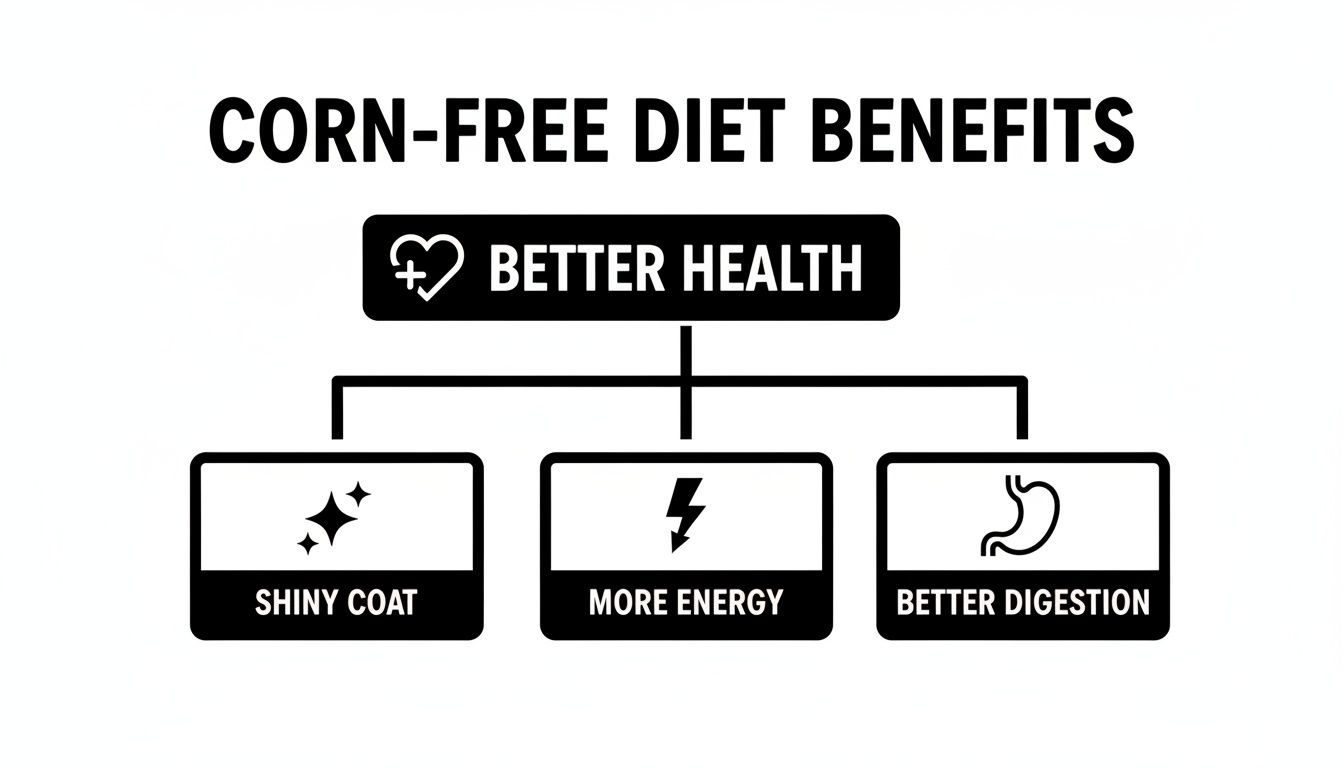
As you can see, it's a chain reaction. Better ingredients lead to better health, which shows up in real-world benefits like a glossier coat, more zoomies in the yard, and a happier digestive system.
Comparing Corn Fillers to Healthy Alternatives
It's one thing to talk about "better" ingredients, but seeing them side-by-side makes the difference crystal clear. Here’s a quick look at why swapping out common corn fillers for whole-food alternatives is such a major upgrade for your dog's bowl.
| Common Corn Filler | Healthy Alternative | Primary Benefit |
|---|---|---|
| Corn Gluten Meal | Whole Meats (Chicken, Beef) | Provides complete, bioavailable protein for muscle health. |
| Ground Corn / Corn Meal | Sweet Potatoes or Peas | Delivers slow-release energy, fiber, and essential vitamins. |
| Corn Syrup / Dextrose | Berries (Blueberries, Cranberries) | Offers natural sweetness with powerful antioxidants. |
The takeaway is simple: moving from corn-based ingredients to these healthier options means every bite is working harder for your dog's well-being.
Upgrading Your Dog's Bowl the Easy Way
Reading labels and finding the perfect corn-free kibble is a fantastic move. But what if you’re not ready for a complete diet overhaul? You don't have to be. There’s an easier way to get these high-quality nutrients into your dog's daily meals.
A meal enhancement allows you to add the benefits of whole-food nutrition without the cost or hassle of switching their entire diet. It's a simple, effective strategy to boost the value of every single meal.
This is exactly where a meal enhancement like ChowPow shines. It’s not meant to replace your dog's kibble, but to elevate it. By just sprinkling a high-quality, single-ingredient supplement over their food, you’re adding a burst of pure, corn-free protein and vital nutrients. It’s a small step that makes a huge difference, turning an ordinary meal into a supercharged one that supports your dog’s very best health.
Easily Boost Nutrition with a Corn-Free Topper
Let's be honest, completely switching your dog's food can feel like a massive undertaking. It’s often expensive, a total gamble if you have a picky eater, and can wreak havoc on a sensitive stomach. But what if you could get the incredible benefits of a premium, corn-free diet without having to overhaul their entire bowl?
Good news: there’s a much, much simpler way to boost your dog's nutrition.
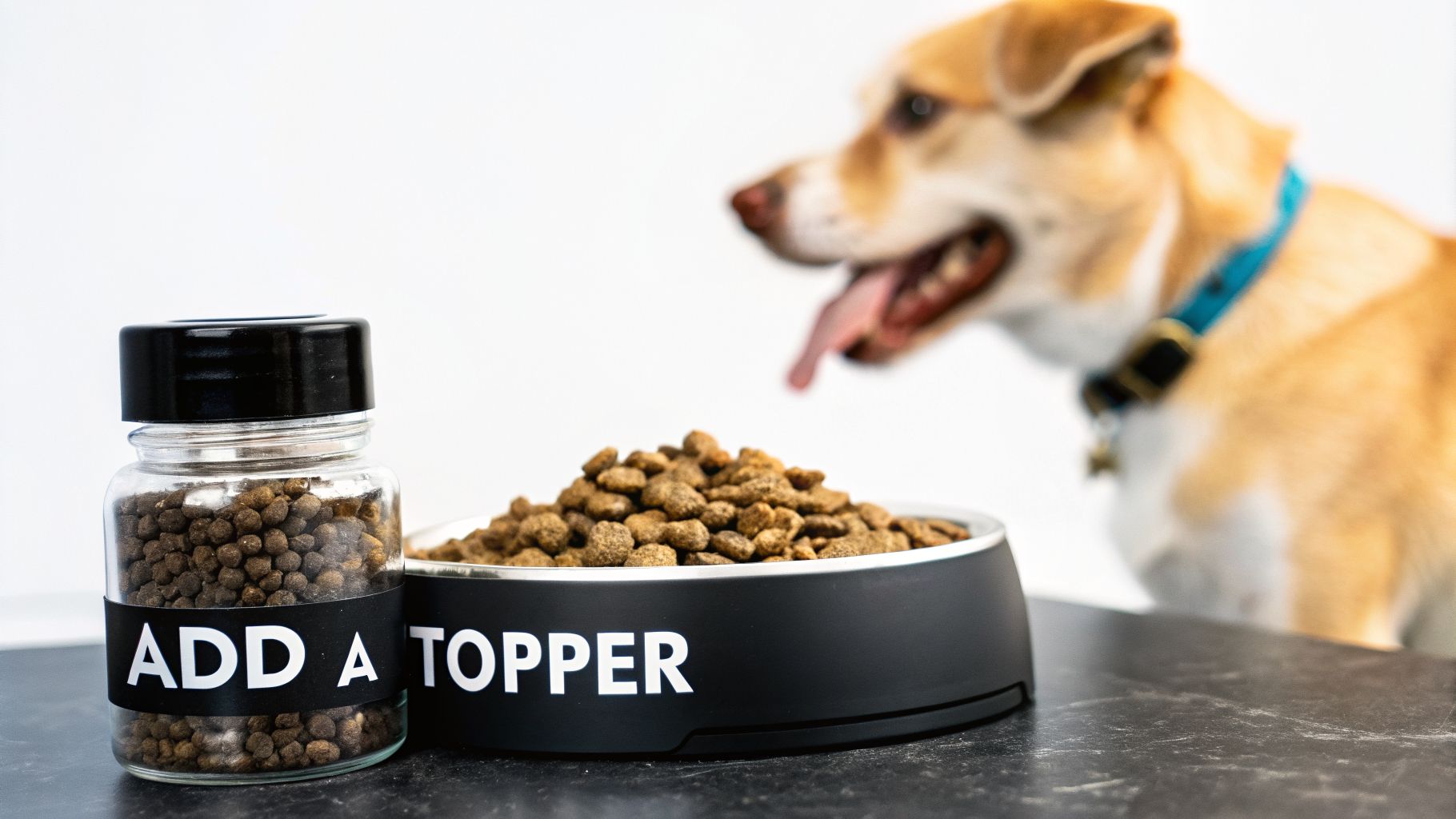
This is where a high-quality food topper, or meal supplement, really shines. Instead of starting from square one, you can supercharge the food your dog already knows and loves. It’s a dead-simple, effective way to add a concentrated punch of whole-food nutrition to their daily routine.
The Power of a Single-Ingredient Supplement
Imagine being able to level-up your dog’s kibble with just one simple sprinkle. That’s the entire idea behind ChowPow. It’s not a replacement for their food; it's a powerful meal enhancement designed to work with their current diet. That’s the key—we want to boost their nutrition, not cause digestive chaos with a sudden change.
ChowPow is made with a single, incredible ingredient: dehydrated beef heart. That’s it. No fillers, no weird grains, and definitely no corn. Beef heart is one of nature’s true superfoods, packed with top-tier protein and essential amino acids that are crucial for strong muscles and all-day energy.
By adding just a little to your dog's bowl, you're supplementing their diet with pure, unadulterated goodness. This approach puts you in complete control, letting you introduce the benefits of premium, corn-free nutrition on your own terms.
Making Every Meal Irresistible and Nutritious
A great supplement does more than just add nutrients; it can completely transform mealtime, especially for dogs who’ve gotten a bit bored with their food. The rich, meaty aroma of dehydrated beef heart can tempt even the most stubborn eaters, turning a plain bowl of kibble into a five-star feast.
This is a game-changer for:
- Picky Eaters: That delicious scent and flavor can finally get their appetite going again.
- Senior Dogs: A softer, more flavorful meal is often easier and more appealing for older pups.
- Dogs Needing Extra Support: The added protein helps with muscle maintenance and keeps their energy levels up.
Think of a meal topper as the ultimate nutritional "hack." It's a simple, direct way to add high-value ingredients to your dog’s diet, ensuring they get the top-tier protein and nutrients they deserve without the stress of a full food transition.
This strategy puts you in the driver's seat. You can easily adjust the amount based on your dog’s needs, giving you a flexible solution that grows with them. For a deeper dive, you can learn more about the benefits of adding food toppers to your dog's diet.
Two Simple Ways to Use a Topper
One of the best things about a meal enhancement like ChowPow is how versatile it is. You can adapt it to your dog's tastes and needs with basically zero effort. There are two fantastic ways to work it into their meals.
Sprinkle It Dry for Flavor: For a quick and easy boost, just sprinkle the powder directly over their regular kibble. It adds a savory, meaty flavor that coats every bite, encouraging them to clean their bowl. This is perfect for adding an enticing layer of corn-free dog food nutrition without changing their meal's texture.
Mix with Water for a Hydrating Gravy: For an extra dose of goodness, mix the powder with a little warm water to create a rich, savory gravy. This not only amps up the flavor but also adds critical hydration to your dog's diet—a huge plus for dogs who don't drink enough on their own. The warm gravy releases an amazing aroma and can soften hard kibble, making it easier for seniors or dogs with dental issues to eat.
Whether you use it dry or as a gravy, you’re giving their meal a significant upgrade. It's the perfect fix for dog owners who want to provide the benefits of a premium, whole-food ingredient without messing with a diet that already works. It’s a small change that can make a big difference in their health and happiness.
How to Introduce Corn Free Foods to Your Dog
So, you're ready to make the switch to a corn-free diet. Whether you're changing kibbles or adding a nutritious supplement like ChowPow, the golden rule is: slow and steady wins the race. A dog’s gut is a finely tuned machine, and a sudden change can throw it for a loop, leading to an upset stomach, loose stools, or even vomiting.
Think of it this way: you wouldn’t go from being a couch potato to running a marathon overnight. You’d ease into it, letting your body adapt. The exact same principle applies to your dog's diet. A gradual transition makes the move to a corn-free dog food a smooth, stress-free experience for both of you.
The 7-Day Transition Plan
The secret is to slowly mix the new food in with their old food, increasing the amount over a week. This gives the good bacteria in their gut a chance to get used to the new ingredients. Here’s a simple plan that we’ve seen work wonders for most dogs.
A Simple Day-by-Day Guide:
- Days 1-2: Start with a mix of 75% old food and 25% new food. This is just a little taste to introduce their system to the new recipe.
- Days 3-4: Move to a 50% old food and 50% new food split. You're at the halfway point!
- Days 5-6: Time to shift the balance to 25% old food and 75% new food. Your dog is now eating mostly the new, corn-free goodness.
- Day 7 and Beyond: Go for it! You can now confidently serve 100% of the new food.
What about a meal supplement like ChowPow? The same rule applies. Since ChowPow is an enhancement, not a replacement, you'll be adding it to their current food. For the first few days, just sprinkle a quarter of the recommended serving over their kibble. From there, you can slowly work your way up to a full scoop as your dog gets used to the rich new flavor.
What to Watch for During the Transition
Keep a close eye on your dog as you make the switch. Their energy and bathroom habits are the best clues you have for how things are going.
You're looking for positive signs, like consistent energy and a happy dance at mealtime. The most important thing to monitor is their stool. It should stay firm and well-formed. A little softness at the beginning can be normal, but if you see ongoing diarrhea or any vomiting, it’s a red flag. Slow the transition way down or check in with your vet.
Taking this careful approach shows you’re a true partner in your dog's health journey. By managing the change with a little patience, you ensure every step you take toward better nutrition is a positive one.
Your Questions About Corn-Free Diets Answered
Diving into the world of dog nutrition can feel overwhelming, with so much conflicting information out there. As we wrap up this guide, let's clear up some of the most common questions pet parents have about corn-free dog food. Think of this as your final cheat sheet to making confident choices for your pup.
Remember, your dog’s health is a puzzle with many pieces. Diet is a huge one, but their environment matters just as much. Simple things, like the products you use around the house, play a role. It's always a good idea to make sure you're using truly pet-friendly pest control to keep their world safe from hidden dangers.
Now, let's get those questions answered.
Is Corn-Free the Same as Grain-Free?
That's a great question, and it's a point of confusion for a lot of people. The simple answer is no, they aren’t the same thing.
A corn-free diet cuts out only corn and its byproducts, like corn gluten meal or maize. These recipes can, and often do, still contain other grains like wholesome rice, barley, or oats.
On the other hand, a grain-free diet takes things a step further by removing all grains—that means no corn, wheat, barley, rice, or anything similar. Many owners find that starting with just corn-free is enough, since corn is one of the most frequent culprits behind grain-related issues.
Is Corn-Free Food Still Better if My Dog Isn’t Allergic?
Even if your dog doesn't have a full-blown allergy, a corn-free diet can be a major upgrade. Why? Corn is often just a cheap filler ingredient that adds calories but not much else in the way of real nutrition. It’s an easy way for manufacturers to bulk up kibble without spending much.
Diets made without corn almost always lean on higher-quality, more digestible ingredients. By swapping corn for things like sweet potatoes or peas, you're getting more vitamins, minerals, and sustained energy for your dog. This often translates to better overall health, a noticeably shinier coat, and smoother digestion.
So, when you choose a corn-free food, you're usually picking a more nutrient-packed meal by default.
How Can I Tell if My Dog Has a Corn Sensitivity?
Figuring out a food sensitivity can feel like detective work, but your dog will often leave you clues. Interestingly, the biggest signs aren't always in their tummy—they're often on their skin.
Keep an eye out for these nagging symptoms:
- Constant itchy skin, especially on their paws, belly, and face.
- Recurring ear infections that just won't seem to go away.
- A dull, dry coat or shedding that seems way more than normal.
- Digestive troubles like chronic gas or loose, inconsistent poop.
If this sounds familiar, taking corn out of their diet is a fantastic first move. And like we've talked about, you don't have to overhaul their entire kibble. An easy way to boost their meal with premium, corn-free nutrition is with a quality meal supplement.
A simple scoop of ChowPow can turn any meal into a high-value one. It adds a delicious boost of pure beef heart protein that picky eaters can't resist, all while supporting their health from the inside out. ChowPow is a meal enhancement, not a replacement for your dog's current food. It's the perfect way to upgrade their nutrition without the hassle of a full transition. Give your dog the nutritional edge they deserve by visiting https://chowpownow.com.
-
Product on sale
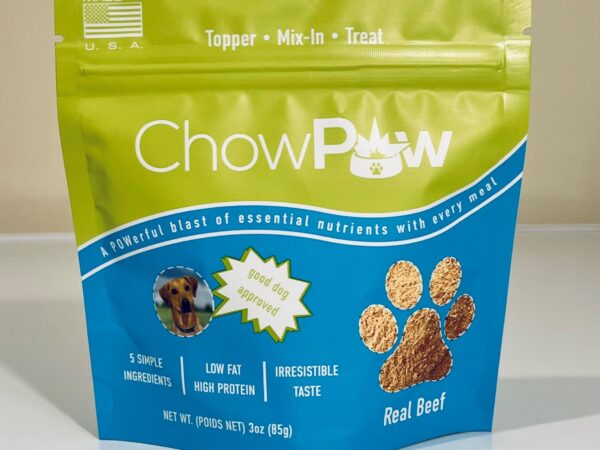 Dog Food Topper - Beef HeartOriginal price was: $14.99.$10.95Current price is: $10.95. - or subscribe and save up to 20%