
A Pet Parent’s Guide to a Dog Losing Weight and Not Eating
It’s a scary moment for any dog owner: you notice your pup, who usually inhales their dinner, is suddenly uninterested in food. Then you realize they’re looking a bit thinner, too. When a dog is losing weight and not eating, it's a definite red flag that something is wrong.
The reasons can be all over the map, from something simple to something more serious. Let's break down the most common culprits in a way that's easy to understand.
Decoding the Reasons for Weight and Appetite Loss
A dog who stops eating is trying to tell you something. The problem usually falls into one of three buckets: medical, behavioral, or something to do with the food itself.
Figuring out which one it is is the first step to getting your best friend back to their happy, hungry self. While we talk a lot about the 56% of dogs in the U.S. who are overweight, the flip side of that coin—unexplained weight loss—is just as critical and often points to a specific health problem.
Common Medical Triggers
More often than not, a sudden refusal to eat is your dog’s way of saying, "I don't feel good." Physical discomfort is a powerful appetite killer.
- Dental Disease: This is a huge one and easy to miss. A cracked tooth, infected gums, or a painful abscess can make chewing agony. You might see your dog go to their bowl, seem interested, but then back away in pain.
- Gastrointestinal (GI) Upset: Tummy troubles like pancreatitis, gastritis, or inflammatory bowel disease are notorious for causing nausea and a total lack of appetite.
- Systemic Illness: More serious underlying conditions affecting the kidneys, liver, or heart can cause a dog to slowly (or suddenly) go off their food as their body struggles to cope.
- Pain or Discomfort: Sometimes the pain has nothing to do with their mouth or stomach. Arthritis, an injury, or even something like an ear infection can make a dog feel too miserable and sore to even think about eating.
Before we dive into behavioral and dietary causes, here’s a quick-glance table to help you sort through the possibilities.
Quick Guide to Potential Causes
This summary can help you quickly pinpoint potential reasons for your dog's appetite and weight loss.
| Category | Common Examples | What to Look For |
|---|---|---|
| Medical Issues | Dental pain, GI upset (pancreatitis, IBD), kidney disease, arthritis | Drooling, bad breath, vomiting, diarrhea, lethargy, limping, changes in thirst |
| Behavioral & Environmental | Stress from moving, new pet/baby, separation anxiety, changes in routine | Pacing, hiding, clinginess, disinterest in play, eating only when you're home |
| Dietary & Food-Related | Stale or rancid food, "food fatigue," new formula they dislike | Sniffing the food and walking away, checking the bag's expiration date |
Seeing the possibilities laid out like this can make the situation feel a little less overwhelming and give you a clearer path forward.
Behavioral and Environmental Factors
Don't underestimate the impact of stress. Dogs are incredibly sensitive to their environment and routine, and sometimes the problem isn't physical at all.
Big changes at home—like a move, a new baby, or another pet joining the family—can create enough anxiety to put a dog completely off their food. Separation anxiety is another frequent trigger. Some dogs get so worked up when left alone that they won't touch their food until their favorite person walks back through the door.
Key Takeaway: A change in your dog's eating habits is more than just picky behavior; it's a vital piece of information about their overall well-being. Paying close attention can help you identify the root cause before it becomes a bigger problem.
Dietary and Food-Related Issues
Finally, it’s worth considering if the problem is simply the food itself. While less common than a medical issue, it definitely happens.
Some dogs get bored eating the same thing every single day—we call it "food fatigue." In other cases, the food might have gone bad. A dog's powerful nose can detect stale or rancid kibble long before ours can. Always check the expiration date and store food in an airtight container to keep it fresh.
It's also essential to know what a healthy weight looks like for your dog. Our guide on how to tell if your dog is underweight can help you establish a baseline so you know when weight loss is truly a concern.
Your Practical At-Home Action Plan
When your dog suddenly stops eating and starts losing weight, it's natural to feel a wave of helplessness. But before you panic, there are a few simple, effective things you can do right at home to get a better handle on the situation and comfort your pup.
Think of this as your starting point. The goal isn't to play vet, but to become a super-observant detective for your dog's health. The details you gather now can be incredibly valuable for your veterinarian, helping them pinpoint the problem much faster if a visit becomes necessary.
Perform a Gentle At-Home Check
First things first, let's do a quick, hands-on check. Pick a time when your dog is feeling mellow and relaxed. Use a soft, soothing voice and slow, gentle movements—the last thing you want is to add more stress to their plate.
Here’s a quick rundown of what to look for:
- Mouth and Gums: Gently lift their lip to peek at their teeth and gums. Are their gums a healthy, bubblegum pink? Or are they looking pale, red, or swollen? Make a note of any obviously broken teeth, nasty breath, or any unusual lumps or bumps.
- Belly and Abdomen: Lightly run your hands over their belly. Does it feel hard, bloated, or tender to the touch? Watch their reaction closely—flinching, yelping, or tensing up can be a sign of discomfort.
- Joints and Mobility: Just watch them move around. How do they look when they walk, get up, or lie down? Any stiffness or hesitation? Limping or favoring one leg is a big clue, as joint pain is a major appetite killer.
Sometimes, this simple once-over can reveal an obvious source of pain that’s making your dog turn up their nose at mealtime.
This decision tree can help you organize your thoughts and see how different issues—medical, behavioral, or dietary—can all lead to appetite loss.
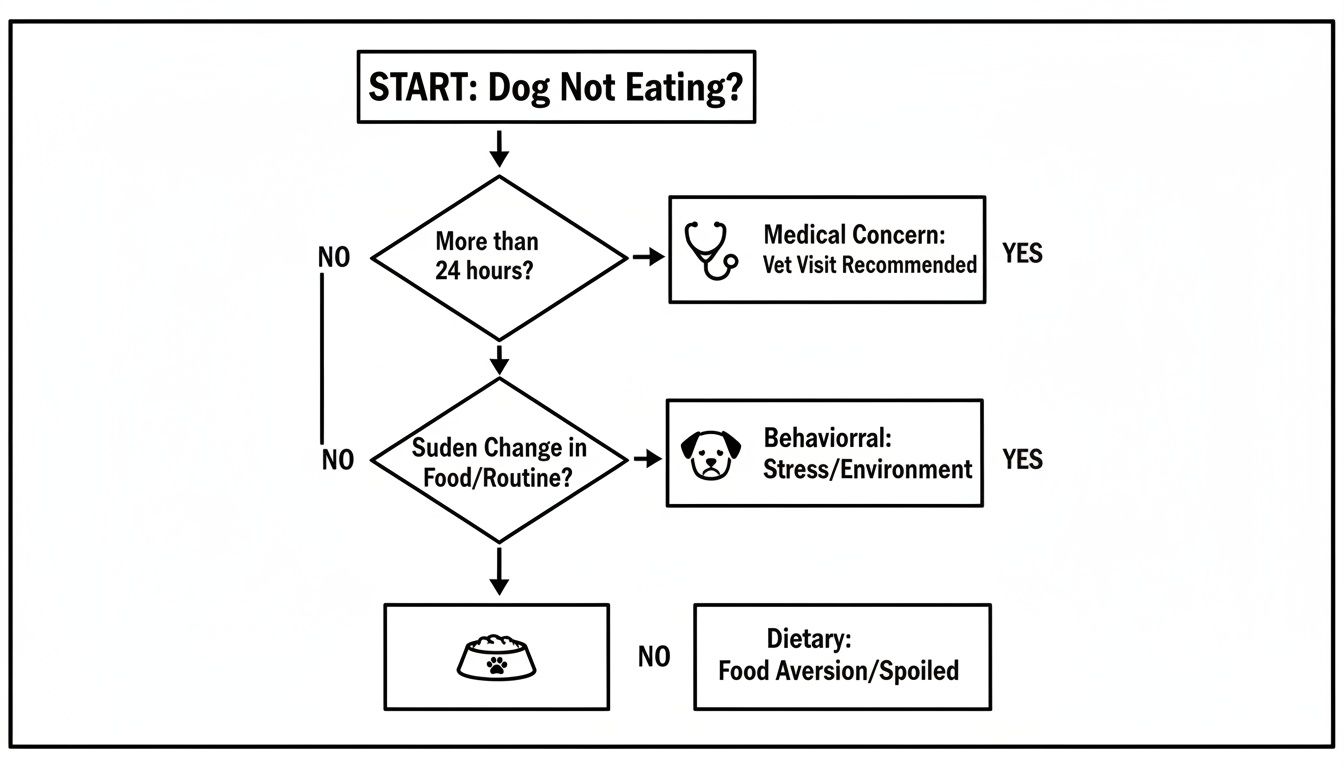
As you can see, a dog not eating isn't a single problem. It's often a symptom with many possible roots, which is why a careful look at the whole picture is so important.
Evaluate Their Environment for Stressors
Dogs are incredibly sensitive creatures. What seems like a minor change to us can feel like a world-altering event to them, and stress is a very common reason for a dog to go off their food.
Take a mental inventory of any recent changes in your home:
- Did you recently move or even just rearrange the living room furniture?
- Is there a new addition to the family, like a baby or another pet?
- Has your work schedule changed, meaning your dog is alone for longer stretches?
- Are there unsettling noises nearby, like a construction crew down the street?
A Note on Routine: Dogs are creatures of habit—they find immense comfort in predictability. Something as simple as changing their feeding spot or time can be enough to throw a sensitive dog for a loop and make them skip a meal. Consistency is everything.
If you pinpoint a potential stressor, do what you can to create a calm, predictable vibe. Make sure they have a quiet, safe spot to retreat to, and try to lock in a solid routine for meals, walks, and playtime.
Make Their Food More Enticing
Sometimes, all it takes is a little culinary magic to tempt a picky eater. If your physical check and environmental scan didn't turn up any red flags, it's time to focus on making their food impossible to ignore. A dog's sense of smell is their primary appetite driver, so let's appeal to that.
Here are a few tried-and-true tricks:
- Add Warmth: Popping their kibble in the microwave for just a few seconds can unlock its aroma, making it way more appealing. Another great option is adding a splash of warm, low-sodium bone broth or water to create a savory gravy.
- Try Hand-Feeding: For a pup who's feeling anxious or under the weather, the simple act of being fed by hand can be incredibly comforting. Offer a few pieces of kibble from your palm to coax them into taking that first bite.
- Incorporate a High-Value Topper: This is where a meal enhancement supplement like ChowPow really shines. You're not replacing their current kibble; you're boosting its nutritional value and making it tastier. Sprinkling a bit of a nutrient-dense topper can turn a boring bowl of kibble into a five-star meal. It adds a blast of flavor and crucial protein without being too rich, making it a perfect fix for a picky or sick dog.
How to Boost Nutrition and Entice Your Dog to Eat
When your dog stops eating, every single bite counts. Your focus has to shift from just filling their bowl to packing as much quality nutrition as you can into small, tempting meals. The real trick is turning their regular kibble from something they ignore into a feast they can't resist.
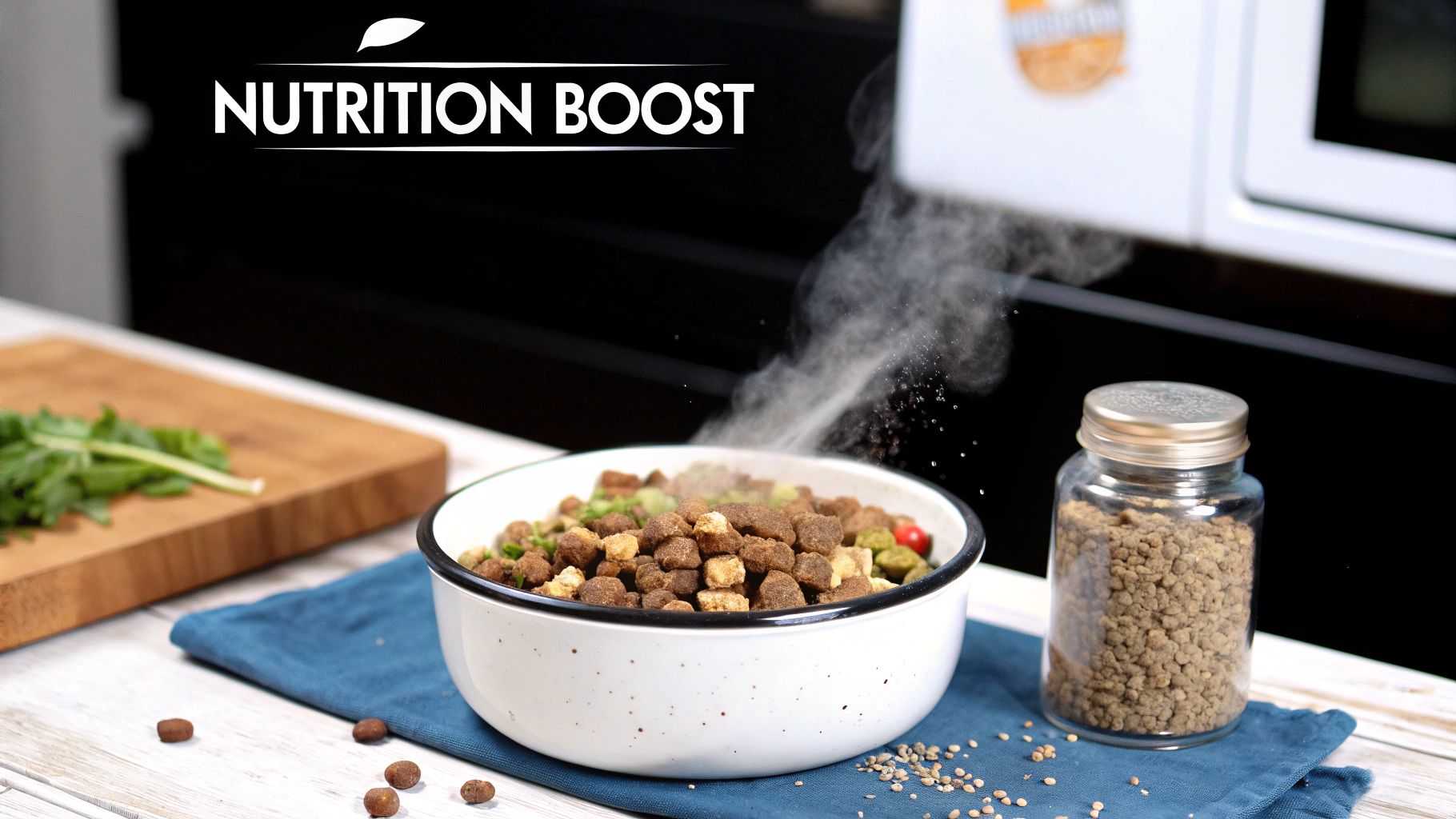
The secret weapon here is your dog's most powerful sense: their nose. A potent, savory aroma can kickstart their natural eating instincts, even when they're feeling off or just being picky. This is exactly where a good meal enhancement supplement can make all the difference.
The Power of Nutrient-Dense Toppers
A meal topper isn't meant to replace your dog's food. Think of it as a powerful booster supplement designed to amp up the nutritional value and appeal of what they're already eating. When a dog is losing weight, you need a way to add critical protein and nutrients for strength without piling on a huge volume of food they can't handle.
This is where a product like ChowPow becomes a game-changer for worried dog owners. Its simple, dehydrated beef heart formula packs an intensely meaty scent that most dogs find impossible to ignore. That delicious smell is your first line of attack against a stubborn loss of appetite.
For senior dogs or pups recovering from surgery, a soft, irresistible topper can be a lifesaver. Ingredients like beef heart, carrots, and celery deliver protein that sparks hunger and boosts energy without being hard on sensitive teeth.
Why ChowPow Works as a Meal Enhancement Supplement
ChowPow was created with the struggling eater in mind. It’s not just about adding flavor; it’s about delivering concentrated, high-quality nutrition to their existing food in a way that’s easy for your dog to eat and digest.
- Irresistible Aroma: Beef heart is an organ meat with a much richer, more appealing scent than standard muscle meat. It's perfect for tempting a dog whose sense of smell or appetite has faded.
- High-Quality Protein: Protein is essential for repairing tissue and muscle. For a dog that's losing weight, easily digestible protein is crucial to stop muscle loss and kickstart the healing process.
- Simple, Clean Ingredients: With just four recognizable ingredients (beef heart, carrots, celery, and apple cider vinegar), you know exactly what’s going into their bowl. No mystery fillers or artificial junk to upset a sensitive stomach.
This isn't about tricking your dog. It's about working with their natural instincts by making their food more aromatic and nutritionally powerful. The goal is simple: make mealtime a positive experience again.
Sometimes, a small change to their setup can also help. Some dogs, especially older ones, might find it more comfortable to eat from specialized dog food and water bowls, such as a 16-degree tilted dish. It’s a simple adjustment that can make a surprising difference.
Simple Ways to Enhance Your Dog's Kibble
Making your dog's food more enticing doesn't have to be complicated. Simple additions can reignite their interest, but a dedicated supplement like ChowPow provides the most concentrated benefits. Here's a quick comparison of common methods.
| Method | Benefit | Best For | ChowPow Advantage |
|---|---|---|---|
| Warm Water | Enhances aroma, softens kibble | Dogs with dental pain or seniors | Hydrating, but adds no extra nutrition. |
| Bone Broth | Adds flavor, moisture, and some nutrients | Picky eaters needing extra hydration | Offers more flavor than water but can be high in sodium. |
| Plain Yogurt | Adds probiotics for gut health | Dogs with minor digestive upset | Good for gut health, but minimal protein/calorie boost. |
| ChowPow Topper | Concentrated protein, intense aroma, clean ingredients | Dogs losing weight, picky eaters, seniors | A meal enhancement that delivers a powerful nutritional punch with an irresistible scent. |
While adding broth or water can help, a high-quality topper like ChowPow is specifically formulated to deliver the protein and enticing aroma needed to encourage a sick or picky dog to eat and regain strength.
Practical Ways to Use ChowPow
One of the best parts about a powdered supplement is how versatile it is. You can easily adapt it to your dog's preferences, which is a huge plus when you're dealing with a fussy or unwell pup.
A fantastic starting point is to make a simple 'ChowPow Gravy.' Just mix a spoonful of the powder with a little warm water to create a gravy-like consistency and pour it over their kibble. The warmth supercharges the beefy aroma, and the moisture softens the food, making it much easier for a dog with a sore mouth to eat.
You can also just sprinkle the powder directly onto their food for a quick flavor boost. If your dog is also reluctant to drink, mixing a tiny bit into their water bowl can encourage them to stay hydrated while getting a few extra nutrients. The key is to be flexible and find what gets your dog excited about their bowl again. For more ideas, check out our guide on dog food toppers for weight gain.
Red Flags That Mean You Should See a Vet Now
While many situations are manageable at home, a dog losing weight and refusing food can sometimes signal a serious problem that needs immediate attention from a pro. Knowing when to stop trying home remedies and call your veterinarian is one of the most important things you can do for your dog's health.
My rule of thumb? Trust your gut. If something feels seriously wrong, it probably is.
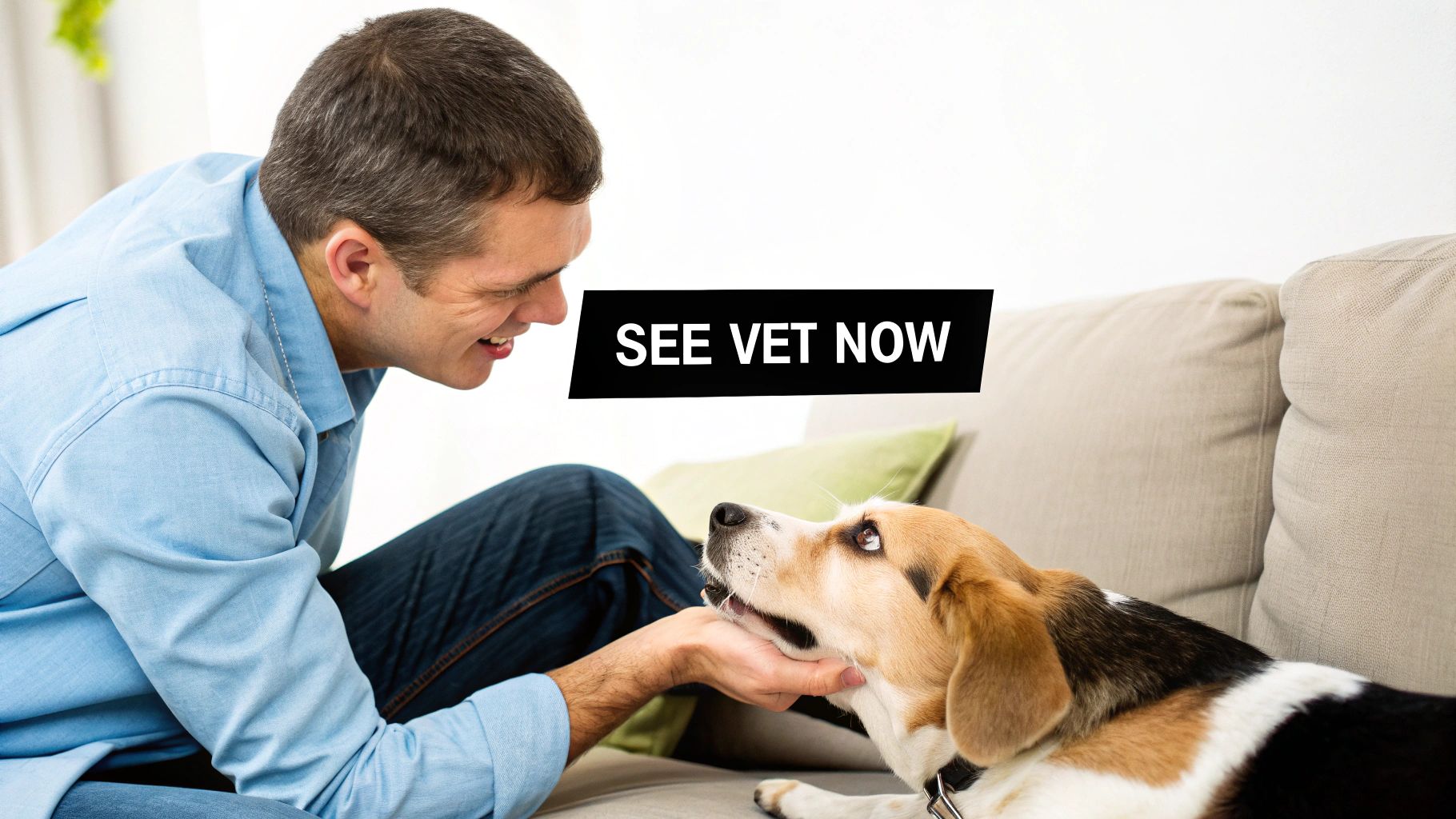
This isn’t about causing panic. It's about empowering you to act quickly and decisively when it matters most. Certain symptoms should never be ignored or left to a "wait-and-see" approach.
Symptoms That Demand an Immediate Vet Call
If your dog has stopped eating and is also showing any of the following signs, do not delay. These are clear indications that your dog needs professional medical help right away.
- Extreme Lethargy or Collapse: We're not just talking about a tired pup. This is a profound lack of energy where your dog can barely lift their head, refuses to move, or collapses.
- Repeated Vomiting or Severe Diarrhea: A single episode might not be an emergency, but if your dog is vomiting multiple times in a few hours or has persistent, watery diarrhea (especially with blood), they're at a high risk for dehydration.
- Difficulty Breathing: Any sign of respiratory distress—like labored breaths, constant coughing, or wheezing—is a critical emergency.
- Visible Signs of Intense Pain: This can look like whimpering, yelping when touched, a rigid or hunched posture, or even acting aggressively when you approach a certain area of their body.
Don't Wait: Dehydration can happen incredibly fast in dogs, especially if they are both refusing food and water while also vomiting or having diarrhea. This can lead to serious complications very quickly.
Other Urgent Warning Signs to Watch For
Beyond the most critical symptoms, there are other serious indicators that something is wrong. While maybe not as immediately life-threatening as a collapse, these signs still warrant a prompt call to your vet. Don’t just wait for your dog’s next annual checkup if you see these issues pop up.
Keep an eye out for these subtler but still very serious red flags:
- Pale Gums: Healthy gums are typically a bubblegum pink. Gums that are pale, white, or bluish can indicate shock, anemia, or other serious circulatory problems.
- Bloated or Hard Abdomen: A swollen, tight belly can be a sign of a life-threatening condition like Gastric Dilatation-Volvulus (bloat), which requires immediate surgery.
- Confusion or Disorientation: If your dog seems lost in your own home, is walking in circles, or pressing their head against a wall, it could signal a neurological issue.
- Inability to Urinate: Straining to urinate with no success is a medical emergency, as it can indicate a blockage in the urinary tract.
Rapid weight loss combined with any of these symptoms can point to underlying conditions that need to be diagnosed and managed by a vet. When you see these signs, it's also important to consider if your pet is getting any nutrients at all. You can learn more about the signs of malnutrition in dogs to better understand the risks.
Ultimately, acting quickly is the most loving and responsible choice you can make for your companion.
What to Expect at The Vet Visit
Walking into the vet's office when your dog is sick can be nerve-wracking. Knowing what's coming can ease a lot of that stress for both of you. When your dog is losing weight and refusing to eat, being prepared helps your vet pinpoint the problem much faster. Think of yourself as your dog's personal historian—the details you share are the most important clues you can provide.
Your vet will kick things off with a thorough chat. They need a complete picture of what's been happening at home, so it's a huge help to come ready with answers about your dog's recent behavior, energy levels, and of course, their diet.
Preparing for Your Vet's Questions
To give your vet the best possible information, it’s a great idea to jot down some notes before you go. The more specific you can be, the better. They'll probably zero in on a few key areas.
- Appetite and Diet: When, exactly, did the appetite loss begin? Is your dog refusing everything, or just their usual kibble? Have you tried tempting them with anything special, like treats or tasty toppers, and did that work?
- Weight Loss Timeline: When did you first notice they were getting thinner? Has it been a slow, gradual change over weeks, or did the weight seem to fall off almost overnight?
- Behavioral Changes: Is your dog acting more tired than usual? Are they hiding away, seeming anxious, or showing any signs of pain like yelping when you pick them up or limping?
- Bathroom Habits: This one isn't glamorous, but it's important. Be ready to talk about any changes in their urine or poop. Note the frequency, color, and consistency, including any diarrhea or constipation.
This level of detail is gold dust for your vet. It helps them narrow down the possibilities and figure out if they’re dealing with a behavioral issue, a simple dietary problem, or something more complex. A well-informed owner is truly a vet's best partner.
Common Diagnostic Tools Explained
After the physical exam and initial conversation, your vet might suggest a few diagnostic tests to see what's going on inside your dog's body. Don't panic if this happens; it's a standard and necessary step to get real answers.
These tests give objective data that can confirm or rule out potential causes. While much of the national focus is on the 56% of U.S. dogs who are overweight, sudden weight loss requires a different kind of investigation to find the root cause. You can discover more insights about the value of professional nutritional guidance from gminsights.com.
Key Insight: Diagnostic tests are like looking under the hood of a car. A physical exam shows you the exterior, but bloodwork and imaging reveal how the internal engine is actually running.
Here are the most common tools your vet might use, broken down in simple terms:
- Blood Tests: A complete blood count (CBC) and chemistry panel are usually the first port of call. These tests give a broad overview of your dog’s health, checking for things like infection, anemia, and how well their organs are functioning.
- X-rays (Radiographs): If your vet suspects something like a blockage in the digestive tract, an object they shouldn't have swallowed, or even issues with the heart or lungs, an x-ray is an invaluable tool. It provides a clear picture of your dog's bones and organs.
- Ultrasound: This is a non-invasive technique that uses sound waves to create a real-time image of the abdominal organs. It’s fantastic for getting a detailed look at the liver, kidneys, and intestines, helping to spot inflammation or tumors that an x-ray might miss.
Understanding these procedures helps demystify the process, making you feel more in control and less anxious. Your preparation and cooperation are key to getting a quick, accurate diagnosis and starting a treatment plan to get your best friend back on the road to recovery.
Common Questions About Your Dog's Appetite and Weight
When your dog suddenly stops eating, your mind can race with questions and worries. It's a stressful situation, and you're not alone. We've tackled some of the most common concerns we hear from pet parents to give you clear, direct answers and help you figure out what to do next.
How Long Can a Dog Go Without Eating Before It's an Emergency?
While a healthy adult dog can technically survive for three to five days without food, you should never wait that long to get help. It’s a sign that something is seriously wrong.
If your otherwise healthy dog has missed more than two full days of meals—that’s 48 hours—it's time to call the vet. For puppies, senior dogs, or any dog with a pre-existing condition like diabetes or kidney disease, that timeline shrinks dramatically. You should be on the phone with your vet if they've gone just 24 hours without a meal. The real emergency isn't just the missed food; it's whatever is causing the appetite loss in the first place.
My Dog Is Drinking Water But Won't Eat. Is That a Good Sign?
It's certainly a positive that your dog is staying hydrated. Dehydration can complicate things very quickly, so drinking water is a good thing. However, refusing food while still drinking is a major red flag that still absolutely requires a call to your vet.
This particular behavior often points to issues like nausea, significant dental pain, or even kidney problems. Your dog might feel too sick or uncomfortable to eat but is still thirsty. While you wait for your vet appointment, you can try some of the tips below to make their food more tempting, but it’s no substitute for a professional diagnosis.
Pro Tip: Whatever you do, don't force-feed your dog. This can create a deep-seated aversion to their food and even risks aspiration (inhaling food into the lungs). Gentle encouragement is the way to go.
Could a New Food Be Why My Dog Stopped Eating?
Yes, a hundred times yes. A sudden diet change is one of the most common reasons a dog will suddenly turn up their nose at the food bowl. Dogs can be surprisingly particular about new flavors, textures, and ingredients.
Sometimes it's just a simple case of dislike. Other times, the new formula might be giving them an upset stomach.
- The Quick Test: The easiest way to check is to offer their old food again. If they eat it, you have your answer—the new food is the culprit.
- If You Have to Switch: Can't go back to the old brand? Transition them slowly over 7-10 days, mixing a little more of the new food in with the old each day. You can also make the new kibble more exciting by mixing in a high-value meal topper to boost its aroma.
- When to Call the Vet: If your dog still refuses to eat after a day or two, even with these adjustments, it's time to call the vet. You'll want to rule out a food allergy or intolerance.
How Can I Help My Senior Dog Eat More and Keep Weight On?
It's incredibly common for older dogs to lose interest in food. Their senses of smell and taste can fade over time, and many seniors struggle with dental pain that makes chewing hard kibble a chore. The goal is to make their meals as easy and irresistible as possible.
Gently warming their food in the microwave for a few seconds can release a powerful aroma, making it much more appealing to a dog with a weaker sniffer. Another game-changing strategy is to use a nutrient-dense meal enhancement supplement. This is where a supplement like ChowPow really shines. It’s not a meal replacement, but a powerful booster for the food they're already eating.
Its dehydrated beef heart formula adds a savory scent they can't resist and provides critical protein to help maintain muscle mass—all without adding a lot of volume that could overwhelm a small appetite. Because it's a fine powder, it's gentle on aging mouths and easy for older digestive systems to process, making it the perfect tool for keeping your senior dog healthy and happy.
Ready to turn mealtime from a struggle back into a joy? ChowPow makes it simple to boost the flavor and nutrition of your dog's current food, tempting even the fussiest eaters. Give your dog the wholesome goodness they deserve by visiting https://chowpownow.com to learn more.
-
Product on sale
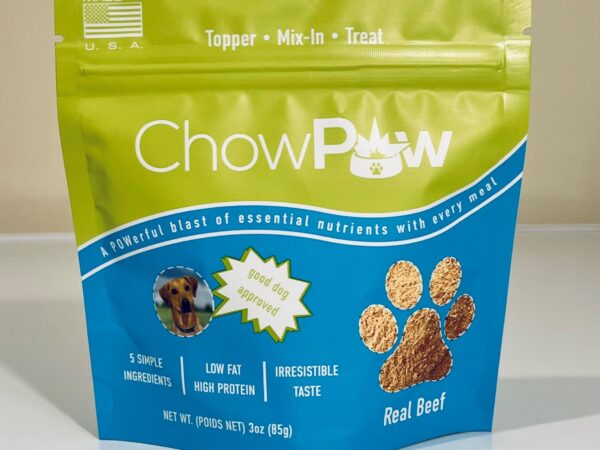 Dog Food Topper - Beef HeartOriginal price was: $14.99.$10.95Current price is: $10.95. - or subscribe and save up to 20%