How to Tell If Dog Is Underweight: A Simple At-Home Check
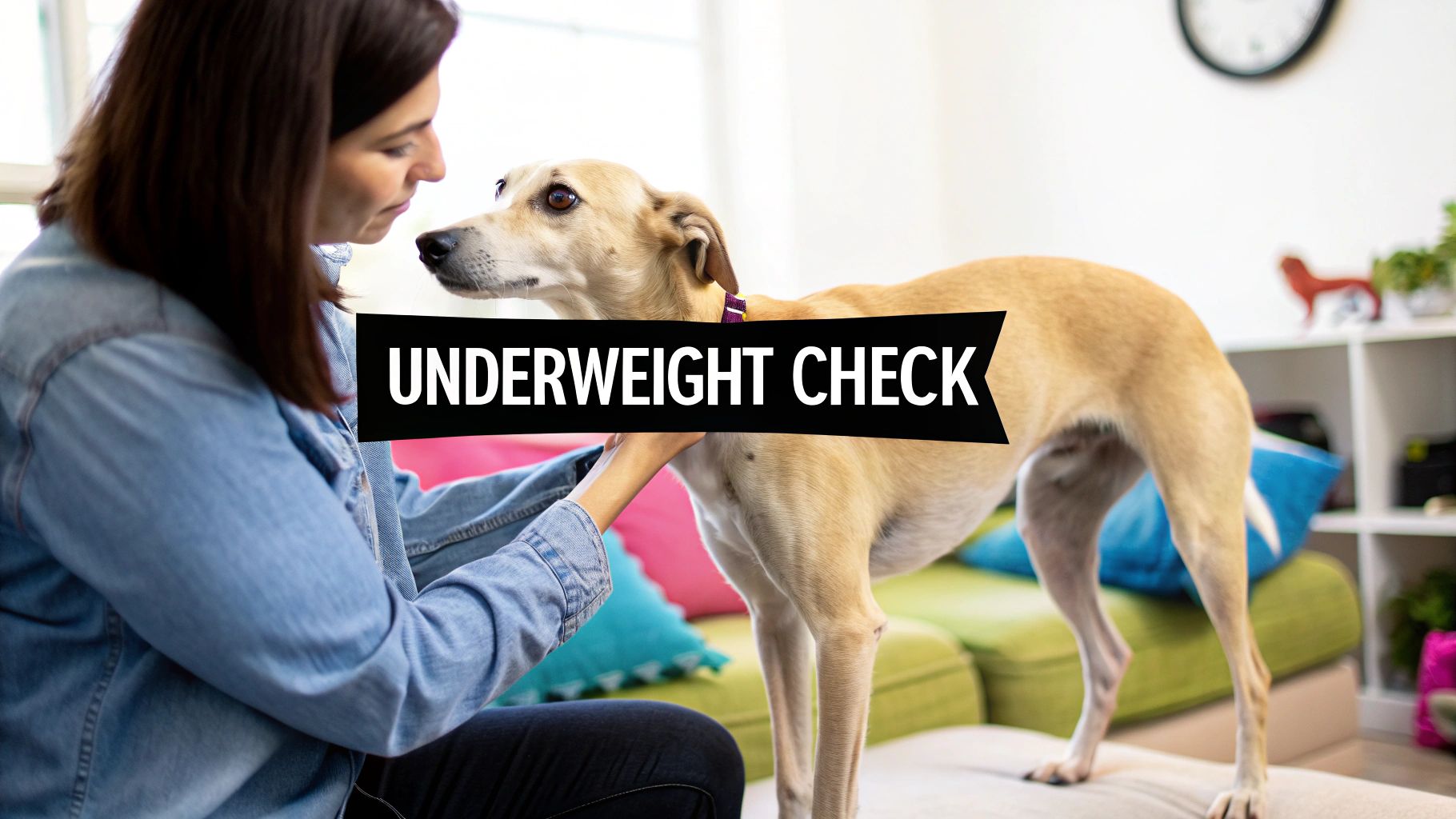
Wondering if your dog is a little on the skinny side? The quickest way to tell is with a simple, hands-on check. You should be able to easily feel your dog’s ribs under a thin layer of fat, but you shouldn’t see them clearly from across the room. A visible waistline and a gentle upward tuck of the belly are also key signs of a healthy weight.
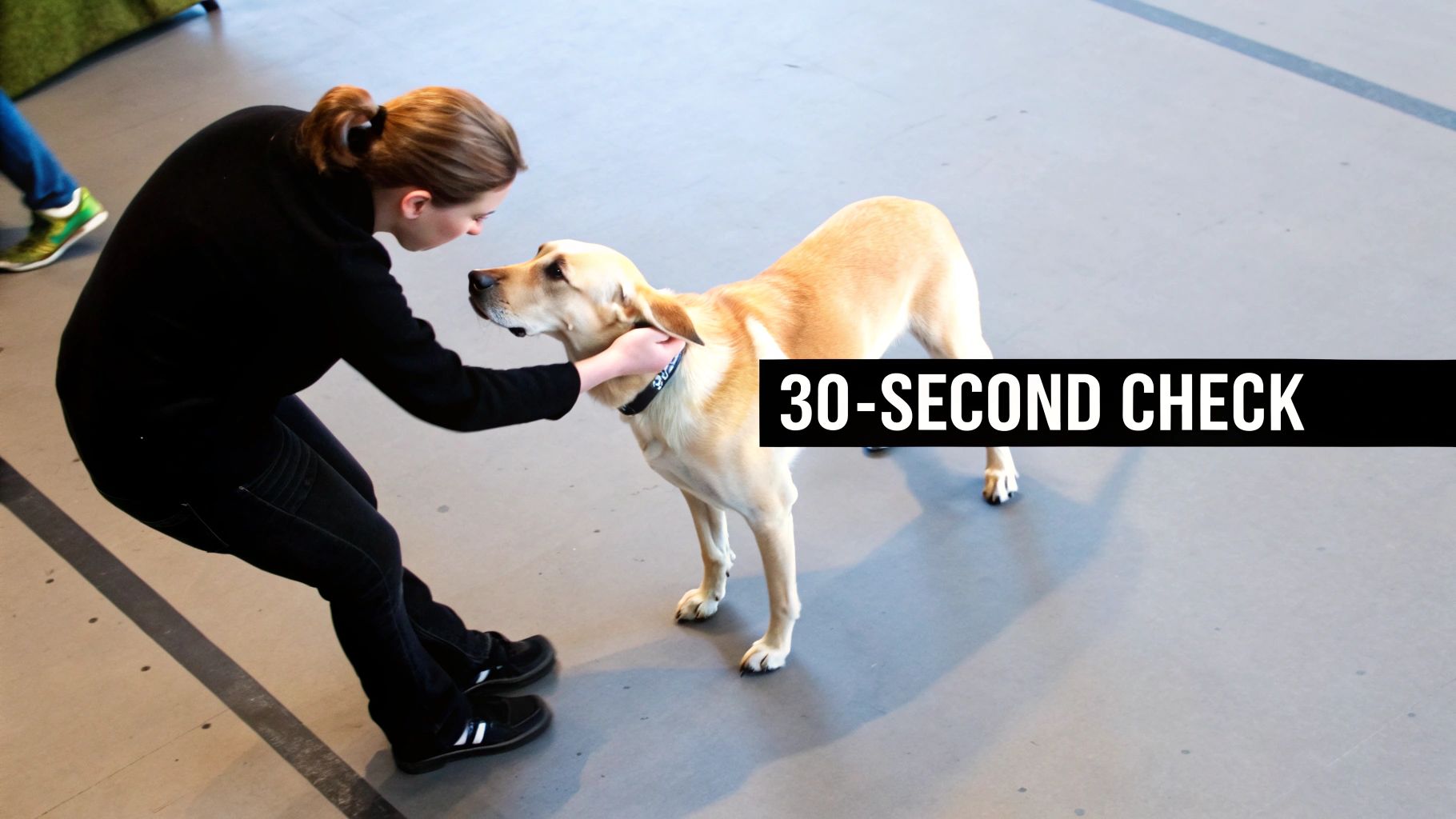
Your 30-Second At-Home Health Check
You don’t need a special scale or an immediate trip to the vet to find out if your dog is at a healthy weight. You can get a surprisingly accurate idea right at home in less than a minute. All it takes are two simple techniques: the visual check and the feel test.
These methods help you get past all that fluff—especially with long-haired breeds—and assess what’s really going on underneath. It’s a common mistake to rely only on what you see. A shaggy dog might look perfectly fine, while a naturally lean breed like a Greyhound could easily be mistaken for being too thin. Combining a good look with a hands-on feel gives you a much more complete and accurate picture.
The Visual and Feel Test Method
First, take a look at your dog from above. Do you see a defined, “hourglass” shape where their waist tucks in behind the rib cage? Next, check them out from the side. Their belly should slope gently upward from the chest toward their hind legs. Vets call this an abdominal tuck.
Now for the hands-on part. Gently run your hands along their sides, right over their rib cage. The ribs should feel similar to the back of your hand—you can feel the bones, but they aren’t sharp and prominent like your knuckles. If the ribs are highly visible and feel sharp with almost no fat covering them, your dog may be underweight. This is an important first check, as being underweight can sometimes be one of the early signs of malnutrition in dogs.
Key Takeaway: An ideal weight isn’t just a number on a scale. It’s all about body proportion and condition. A defined waist, a slight abdominal tuck, and easily felt (but not seen) ribs are the gold standard for most dog breeds.
To make this even easier, here’s a quick comparison of the physical signs you should be looking for.
At-a-Glance Guide to Your Dog’s Body Condition
This table helps you quickly compare the key physical signs of an underweight, ideal, and overweight dog to help you identify where your pet fits.
| Physical Area | Underweight Dog | Ideal Weight Dog | Overweight Dog |
|---|---|---|---|
| Ribs | Easily visible, sharp to the touch, no fat cover | Easily felt with a thin fat cover, not visible | Difficult to feel under a thick layer of fat |
| Waist | Severely tucked, exaggerated hourglass shape | Clearly visible from above, defined tuck | No visible waist, back is broad and flat |
| Belly | Extreme abdominal tuck, belly is sharply raised | Gentle upward slope from chest to hind legs | No abdominal tuck, belly may hang down |
| Spine/Hips | Bony prominences (spine, hips) are visible | Bony areas are smooth, covered in a thin fat layer | Bony areas are buried under fat, hard to feel |
Using this guide, you can get a good feel for whether your dog’s current condition is on track or if you might need to make some adjustments to their nutrition.
The infographic below wraps up these key checks for a quick, handy reference.
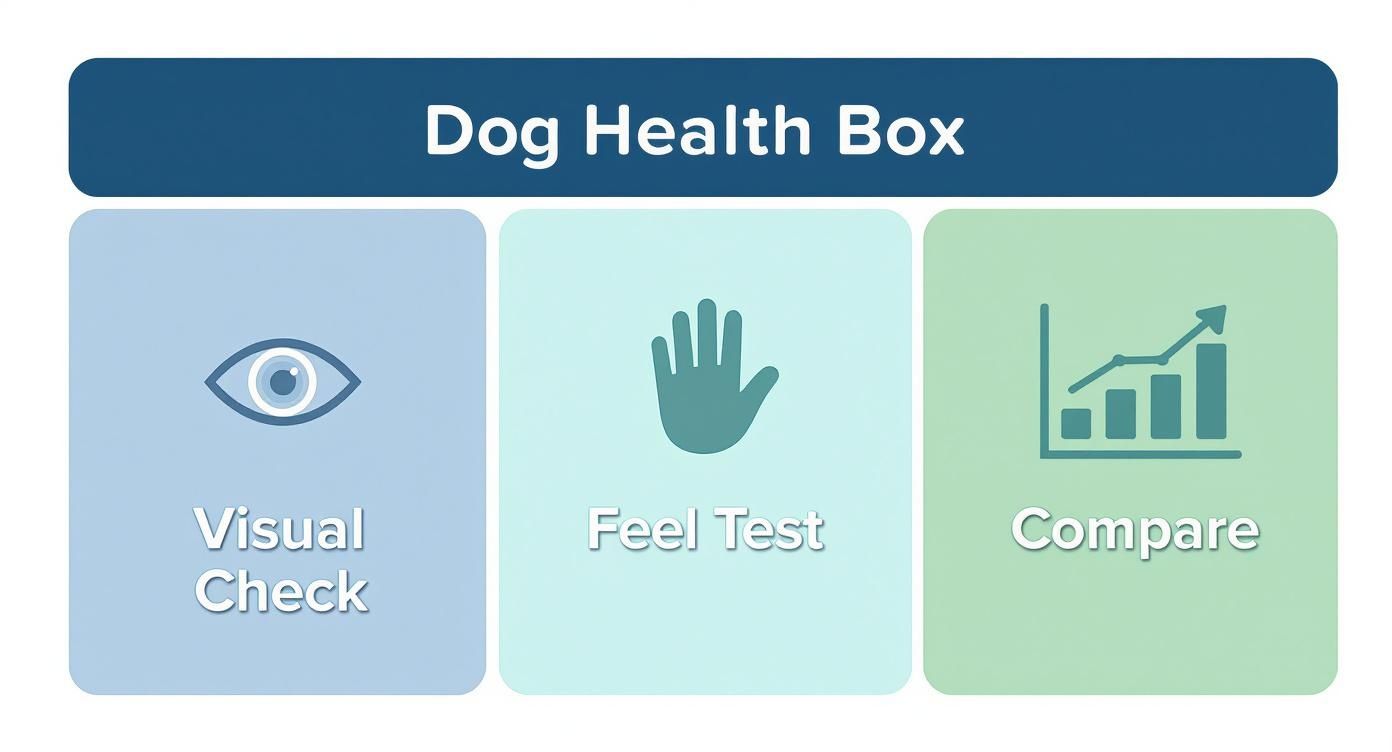
This simple combination of looking and feeling gives you a reliable baseline to determine if your dog’s current diet is meeting their needs. It’s a fast, free, and effective way to stay on top of their health.
Using the Body Condition Score Like a Vet
While a quick look and a pat-down are a great start, veterinarians have a more precise tool: the Body Condition Score (BCS). Think of it as the professional-grade method for checking your dog’s health, moving beyond just what the scale says. It’s the best way to tell if your dog is truly underweight or just has a naturally slender build.
The BCS is a scientifically validated system that combines looking and feeling to get a real sense of your dog’s fat coverage and muscle mass. This gives you a much clearer picture than weight alone, which can be misleading when you factor in all the differences in breed, size, and frame. If you want to dive deeper into the science, you can learn more about the research behind BCS.
Breaking Down the BCS Scale
Most vets use a simple 9-point scale. It might sound technical, but once you know what to look for, it’s actually pretty straightforward. Learning it empowers you to keep a closer eye on your dog’s health right at home.
- Scores 1-3 (Too Thin): This is the underweight zone. You can easily see their ribs, spine, and hip bones from a distance. They’ll have a severe abdominal tuck and a very sharp, dramatic hourglass figure. You’ll also notice a loss of muscle mass and no real body fat to speak of.
- Scores 4-5 (Ideal): This is the target! You should be able to feel the ribs easily, but they’ll have a slight, healthy layer of fat over them. When you look down from above, you’ll see a defined waist, and from the side, a gentle upward tuck of the belly.
- Scores 6-9 (Overweight): In this range, the ribs are hard to feel because they’re buried under a thick layer of fat. There’s little or no visible waist, and their back looks broad and flat.
Pro Tip: Try the “knuckle test.” Make a fist and feel your knuckles—that’s what an underweight dog’s ribs (BCS 1-3) feel like. Now, feel the bones on the back of your flat hand. That’s the goal for an ideal weight (BCS 4-5). You can feel the bones, but they’re not sharp and jutting out.
Getting comfortable with the BCS gives you a reliable tool to track your dog’s condition. It helps you catch changes early and have much more productive conversations with your vet about their diet.
If you find your dog is on the leaner side, boosting the nutritional value of their regular kibble with a meal enhancement like ChowPow is an easy way to help. It adds crucial calories and protein to their existing meals, helping them gently gain weight until they reach that ideal score.
Spotting the Signs: Is Your Dog Too Thin?
While the hands-on “feel test” and Body Condition Scoring are fantastic tools, sometimes your own eyes are the first to tell you something’s off. Learning to recognize the visual red flags of an underweight dog can help you catch potential problems early on.
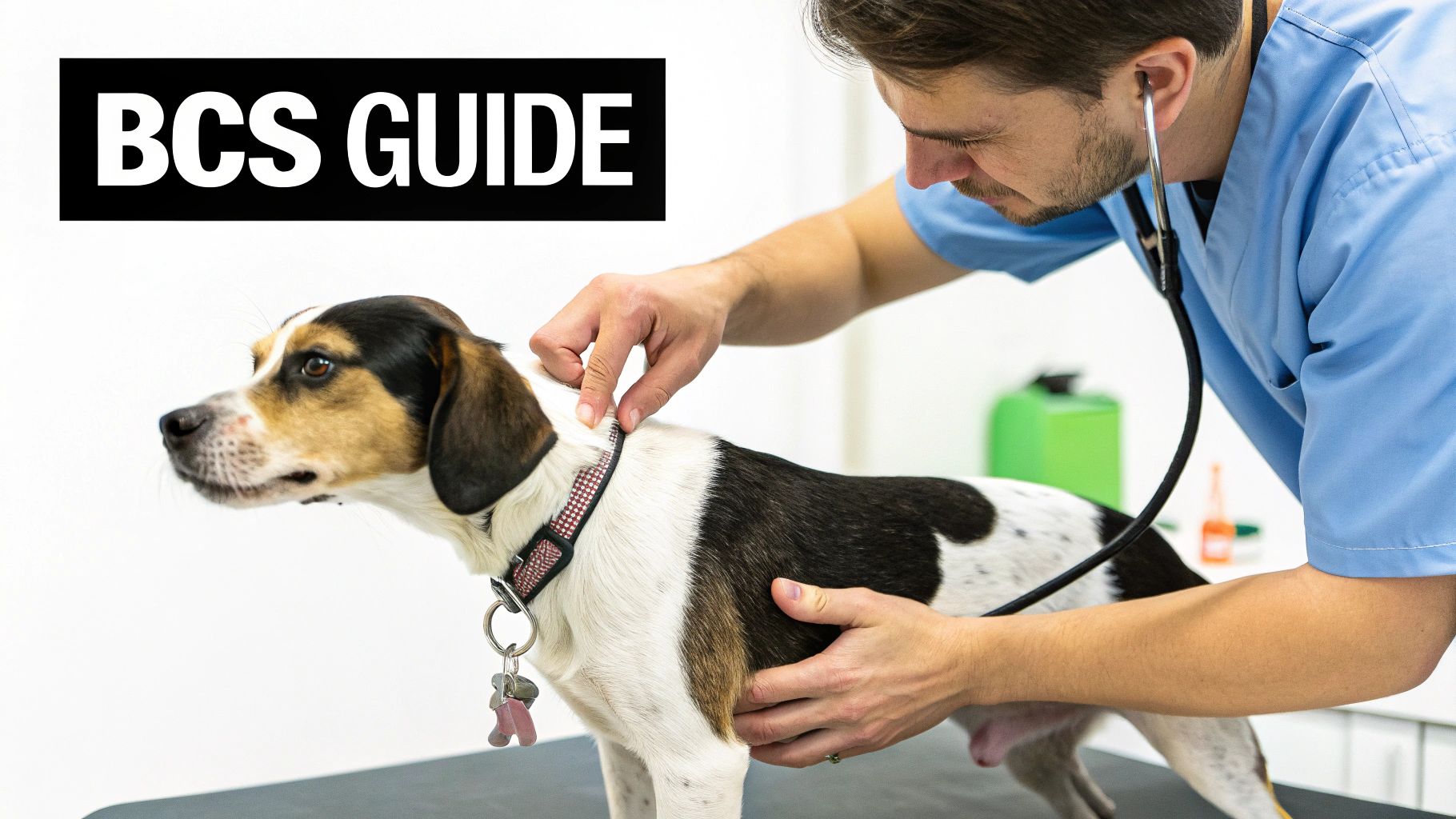
The most glaring sign is seeing your dog’s bones too clearly. This goes way beyond the naturally slender build of a breed like a Greyhound or a Whippet.
If you can easily count individual ribs, see the distinct bumps of their spine, and spot sharp hip bones from across the room, it’s a major warning sign. A healthy dog should have a subtle layer of fat and muscle that softens these bony landmarks.
An Exaggerated Shape
From above, a dog in good shape has a recognizable “hourglass” figure. From the side, you should see their abdomen tuck up neatly from the chest to the hind legs. In a dog that’s too thin, these features become extreme.
- Waistline: Instead of a gentle curve behind the ribs, the waist will look severely cinched in, creating a sharp, almost dramatic indentation.
- Abdominal Tuck: The belly will slope up so steeply from the chest that the dog looks hollowed out and frail.
These exaggerated lines are often a dead giveaway for a lack of both fat reserves and healthy muscle. It’s a clear signal that they aren’t getting enough calories or nutrients from their food.
A healthy dog looks athletic; an underweight dog often looks fragile. The key difference is the presence of smooth, defined muscle versus sharp, prominent bones.
Other Telltale Clues
Beyond their bony frame, other physical signs often pop up when a dog is underweight. When calories are scarce, a dog’s body prioritizes essential functions, meaning their coat and energy levels are often the first things to take a hit.
Be on the lookout for a dull, dry, or brittle coat. A glossy, healthy coat needs plenty of fats and proteins—the very things an underweight dog is often missing. You might also notice a significant drop in their energy. If your once-playful pup now seems sluggish or gets tired after just a few minutes of activity, it could be because their body simply doesn’t have the fuel to burn.
If these visual cues sound familiar, it’s a good time to think about boosting their nutrition. Adding a meal enhancement like ChowPow to their current food can add vital calories and high-quality protein without forcing a complete diet overhaul.
Why Some Dogs Struggle to Keep Weight On
If you’ve noticed your dog looking a little too lean, the natural next question is why? Getting to the bottom of it is the first real step toward getting them back to a healthy weight. And often, the cause is surprisingly straightforward and easy to fix.
Sometimes, the answer is as simple as what’s in their food bowl. You might just have a picky eater on your hands who turns their nose up at mealtime. Or maybe their current food just doesn’t pack enough caloric punch for their energy level. Think about it: a high-octane Border Collie is going to burn way more fuel than a couch-loving Bulldog.
Even anxiety can play a part. A nervous or stressed-out dog might just be too wound up to eat properly. Understanding the common reasons what causes loss of appetite in dogs can offer some valuable clues.
Common Reasons for Weight Loss
Beyond the obvious diet and activity levels, other factors could be at play. While you should always loop in your vet for a proper diagnosis, being aware of common culprits helps you have a much more informed conversation.
A few things to consider:
- Dental Pain: A hidden tooth or gum issue can make chewing painful, causing a dog to avoid eating even when they’re hungry. You might not even notice a problem until their appetite drops.
- Internal Parasites: These sneaky intestinal worms are notorious for stealing vital nutrients from your dog’s food before their body even has a chance to absorb them.
- Digestive Troubles: Some dogs simply have a harder time absorbing nutrients from their food because of underlying digestive sensitivities or other conditions.
While we hear more about overweight dogs, being underweight is a significant health concern. Research shows that things like chronic illness, parasites, and poor nutrition can lead to low body fat and muscle reserves. This makes it much harder for dogs to fight off infections and just maintain their vitality. You can read more about these canine health findings to get the bigger picture.
Our Goal: The aim here isn’t for you to self-diagnose, but to become a better observer. Noticing when your dog eats, how much they consume, and any changes in their behavior provides incredibly valuable information for your veterinarian.
When the issue is simply a picky palate or a need for more calories, boosting their current meal can make all the difference. A nutritional supplement like ChowPow enhances the kibble they already eat, adding a concentrated source of protein and nutrients to help them gain weight safely—without a disruptive, all-out diet change.
Helping Your Dog Gain Weight Safely
Once your vet has ruled out any underlying health problems, you can turn your attention to your dog’s diet. The mission isn’t just about packing on pounds—it’s about rebuilding healthy muscle and fat reserves the right way. That means focusing on nutrient-dense calories, not just bigger scoops of their usual food.
Simply increasing the amount of kibble can easily overwhelm your dog’s digestive system, leading to an upset stomach or diarrhea. Nobody wants that. Instead, the trick is to enhance the food they’re already eating, making every single bite count.
Boosting Their Current Kibble
A sudden diet change can be rough on a dog’s sensitive stomach. A much better approach is to gently supplement their existing meals to boost their nutritional value. This is where a meal enhancement like ChowPow really shines.
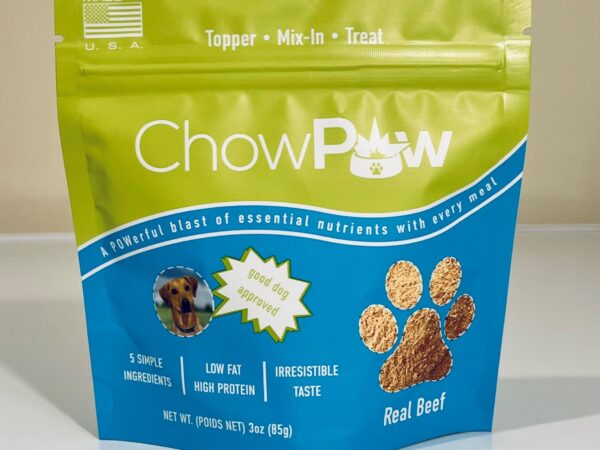
ChowPow is specifically designed as a nutritional supplement, not a full meal replacement. You just sprinkle the dehydrated beef heart powder over their regular kibble. It adds a powerful, concentrated dose of high-quality protein and essential amino acids—exactly what their body needs to build lean muscle mass.
This method works with their current food, supercharging it with the extra horsepower needed for safe, healthy weight gain. Plus, its rich, meaty smell is a fantastic way to tempt picky eaters or dogs who have lost their appetite.
Key Insight: Healthy weight gain is about the quality of calories, not just the quantity. Enhancing their existing diet with a high-protein supplement supports muscle development without causing the digestive distress that an abrupt food switch can bring.
Practical Tips for Healthy Weight Gain
Beyond adding a nutritional booster, a few small tweaks to your feeding routine can make a surprisingly big difference. These strategies help make mealtime a more positive and effective experience for a dog that needs to gain weight.
Here are a few actionable tips to try:
- Offer Smaller, More Frequent Meals: Instead of one or two big meals, try splitting their daily food portion into three or four smaller ones. This is much easier on their digestive system and helps keep their energy levels stable throughout the day.
- Create a Calm Eating Environment: If you have an anxious dog, feeding them in a quiet, low-traffic spot can reduce their stress and encourage them to finish their bowl.
- Warm Their Food Slightly: Adding just a bit of warm water or broth can release the food’s aroma, making it far more appealing to a dog with a weak appetite.
By combining a powerful meal enhancement with these simple feeding strategies, you’re creating a solid, supportive plan for your dog’s recovery. For more great ideas, check out our complete guide to dog food toppers for weight gain and find the perfect solution for your best friend.
Answering Your Canine Weight Questions
It’s completely normal to have a ton of questions when you’re worried about your dog’s weight. Let’s tackle some of the most common concerns we hear from pet parents, giving you the clear answers you need to feel confident in caring for your best friend.
“My Dog Is an Active Breed—Shouldn’t They Be Lean?”
Absolutely! Breeds like Vizslas, Greyhounds, or Border Collies are the athletes of the dog world, and they’re naturally built leaner. But there’s a huge difference between a dog that’s fit and one that’s underweight.
A fit, athletic dog will have a clearly defined waist and visible muscle tone. You might see the outline of their last couple of ribs, but they won’t be sharp or jutting out. When you see individual spinal bones and hip points sticking out, and there’s very little muscle mass to feel, that’s a red flag. The Body Condition Score is your best friend for telling the difference here.
“How Quickly Should My Underweight Dog Gain Weight?”
Think tortoise, not hare. When it comes to putting on weight, slow and steady is the only safe way to do it, and it should always be done with your vet’s guidance. A healthy, sustainable goal is typically around 1-3% of their body weight per week.
Your vet is the one who can set a realistic target weight and timeline. They’ll help make sure your pup is gaining healthy muscle and fat, not just packing on empty calories. Trying to rush the process can backfire, leading to digestive upset and other health problems.
“Can I Just Give My Dog Human Food to Help Them Gain Weight?”
It’s tempting, but feeding your dog table scraps to help them bulk up is a really risky move. A lot of our favorite foods are way too rich or fatty for a dog’s system and can trigger serious issues like pancreatitis. Plus, a diet of leftovers is far from nutritionally balanced.
A much better approach is to stick with their high-quality dog food and find a way to enhance it safely.
A purpose-made supplement like ChowPow adds the right balance of healthy calories, protein, and nutrients without the risks that come with human food. It’s formulated specifically for a dog’s digestive system.
“When Is a Dog’s Weight Loss a Medical Emergency?”
You need to call your vet right away if you notice sudden, unexplained weight loss. If that weight loss comes with any other severe symptoms, it’s definitely an emergency.
Keep an eye out for these critical warning signs:
- Extreme lethargy or weakness
- Repeated vomiting or diarrhea
- Complete refusal to eat or drink anything
- Any signs of difficulty breathing
While gradual thinning is a reason to schedule a vet visit, a sudden drop in weight can point to a serious underlying condition that needs immediate medical attention.
Ready to give your dog the nutritional boost they deserve? Try ChowPow today to enhance their kibble with the high-quality protein and nutrients needed for healthy weight and happy mealtimes. Learn more at ChowPowNow.com
-
Product on sale
 Dog Food Topper - Beef HeartOriginal price was: $14.99.$10.95Current price is: $10.95. - or subscribe and save up to 20%