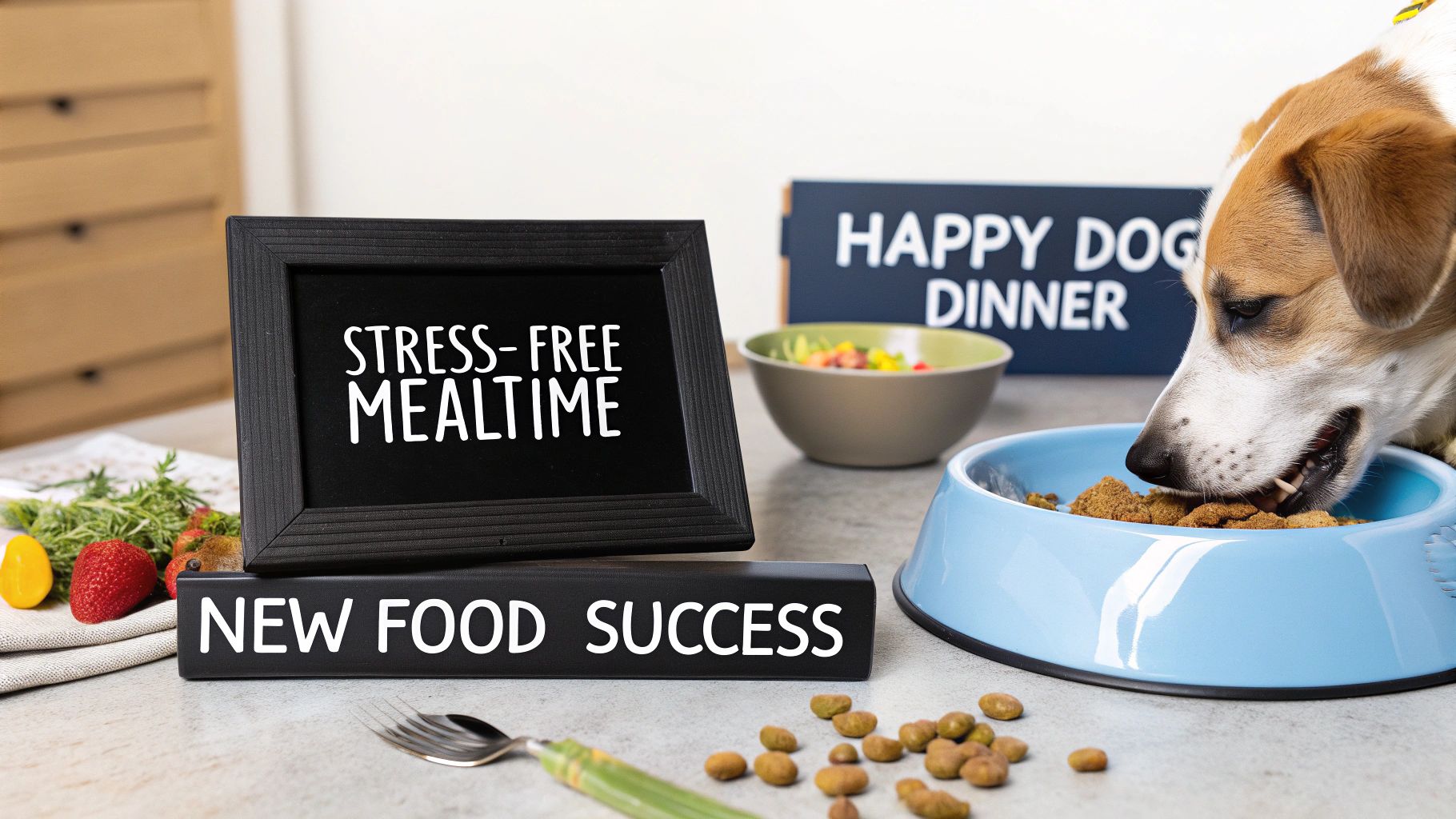
Dog Won’t Eat New Food? A Guide to Stress-Free Mealtime
You've just spent a good chunk of time researching and buying what you believe is the perfect new food for your dog. You serve it up with a flourish, only to watch them sniff, give you a look, and walk away. Sound familiar?
It’s a frustrating moment for any dog owner, but it's important to know this isn't usually a case of pure stubbornness. More often than not, your dog's refusal is rooted in deep-seated instinct, a need for routine, or even a bit of tummy trouble.
Why Your Dog Might Be Turning Up Their Nose
When a dog won't eat new food, it's frequently a classic case of neophobia—a natural, instinctual fear of anything new. That sudden shift in smell, texture, and taste can be genuinely unsettling for them, causing them to reject the meal as a safety precaution. Understanding this instinct is your first step toward a peaceful and successful food switch.
Think about it from their perspective. A dog's world is built on scent and routine. An abrupt change to the most important part of their day (mealtime!) can feel disruptive and honestly, a little alarming. This is especially true if they've been eating the same food for years.
It’s Not Personal, It’s Primal
At its heart, a dog’s suspicion of a new food is a survival mechanism passed down from their wild ancestors. This caution, the neophobia we mentioned, is what kept them from eating something poisonous out in the wild. While your pup's biggest worry is now whether the mailman is a friend or foe, that instinct to be wary of unfamiliar things is still very much alive.
They have no idea you spent hours reading ingredient labels. All they know is that this new stuff in their bowl smells and feels completely different from the meal they've come to trust. This is exactly why a slow, patient introduction works wonders where a sudden swap fails.
"A dog's refusal to eat isn't personal—it's primal. They rely on consistency for safety and security. When we change their food, we're asking them to trust something completely alien to their senses, and that takes time."
This isn't just about kibble, either. It’s a common hurdle for owners trying to switch to raw diets. In fact, a dog's refusal to eat was the third most cited reason owners stopped feeding raw meat-based diets. A notable 15% of these owners made the switch away from raw simply because their dog wouldn't touch it. And when that happened? A whopping 65% went right back to dry food, according to Petfood Industry, showing just how much finding a food their dog will eat matters to pet parents.
To help you figure out what's going on, here's a quick rundown of the most common culprits behind food refusal.
Common Reasons for Food Refusal
| Reason | What It Looks Like | Potential Solution |
|---|---|---|
| Neophobia (Fear of New) | Sniffing and backing away; eating around the new food; showing zero interest. | A slow, gradual transition over 7-10 days is key. Mix a tiny bit of new with the old. |
| Digestive Upset | Eating the new food once, then refusing it later; signs of gas, loose stool, or vomiting. | Slow the transition way down. Add a probiotic or pumpkin puree to soothe their stomach. |
| Stress or Anxiety | A sudden loss of appetite that coincides with a change in routine (new home, new pet, travel). | Address the source of the stress first. Create a calm, quiet feeding environment. |
| Learned Pickiness | Holding out for something better (like table scraps); refusing to eat until you add a tasty topper. | Stop offering human food. Stick to a consistent feeding schedule and remove the bowl after 15-20 minutes. |
| Dental or Health Issues | Dropping food, chewing on one side, or showing pain when eating; sudden lethargy or other symptoms. | This is a big red flag. A vet checkup is essential to rule out any underlying medical problems. |
Seeing the issue in black and white can make it much easier to pinpoint the "why" and move toward a solution that works for both of you.
Beyond Instinct: Tummy Troubles and Emotional Triggers
Sometimes, the issue goes a little deeper than instinct. Other factors can easily put a dog off their food, and figuring them out can save you a lot of grief.
-
Digestive Discomfort: If a new food is introduced too fast, it can wreak havoc on their gut. If your dog eats the new stuff and then feels gassy, bloated, or nauseous, you can bet they'll remember. They'll quickly form a negative association and refuse to touch it again.
-
Stress and Anxiety: Dogs are sponges for our emotions and environment. A new baby in the house, a recent move, loud construction next door, or even just sensing your own stress can be enough to kill their appetite. Their food refusal might have very little to do with the food itself and everything to do with their emotional state.
-
Picky Eating Habits: Let's be real—some dogs are just plain picky. If you've got a seasoned food critic on your hands, you already know that any change can be a battle. For a deeper dive into this behavior, check out our guide on understanding why your dog is a picky eater.
By looking at the situation from all these angles—behavioral, physical, and emotional—you can approach the transition with a lot more empathy and a much smarter strategy. The goal is to make your dog feel safe and comfortable with the change, so you can get back to happy, stress-free mealtimes.
A Practical Plan for a Successful Food Transition
When your dog turns their nose up at new food, it's easy to jump to conclusions. Are they being stubborn? Do they just hate it? Most of the time, the answer is much simpler: the change was just too fast.
A successful switch isn't a battle of wills; it's a strategic retreat. The secret is a slow, gradual transition that gives your dog’s gut—and their brain—time to get on board. Trying to rush the process is the quickest way to cause an upset stomach or, even worse, create a lasting negative association with their new food.
Think of it this way: you wouldn't dive headfirst into a completely foreign cuisine without a little hesitation. You'd probably start with a small taste. Your dog needs the same courtesy. Patience and a good plan are your best friends here.
Building a 10-Day Transition Schedule
There's a reason the 7 to 10-day timeline is the gold standard for switching dog foods. It works. This timeframe is just right for monitoring your dog for any red flags, like loose stool or gas, while their palate slowly adjusts. An abrupt change can shock their system, but this method makes the new food feel like a natural part of their daily routine.
Here’s a simple, field-tested 10-day schedule to get you started. Pay close attention to your dog's potty habits and energy levels, and don't be afraid to slow down if needed. If you see any tummy troubles, just hang out at the current ratio for an extra day or two before moving forward.
- Days 1-3: Start with a mix of 75% old food and 25% new food. This is just the "get to know you" phase. The goal is simply to introduce the new smell and flavor alongside their familiar favorite.
- Days 4-6: Bump it up to a 50/50 split. By now, your dog should be getting used to the new kibble. Keep an eye on their output and overall mood.
- Days 7-9: Now we're at 25% old food and 75% new food. You're on the home stretch. If any major issues were going to pop up, you likely would have seen them by now. This phase confirms their system is handling the change well.
- Day 10: Time for 100% new food. You did it! You've successfully guided your dog through the transition.
A slow food transition isn't just about preventing an upset stomach. It's about building trust. You're showing your dog that this new thing is safe and enjoyable, turning a potentially stressful event into a positive experience.
Simple Tricks That Go Beyond the Bowl
Even with a perfect schedule, some dogs need a little extra convincing. A few small tweaks to your feeding routine can make all the difference, turning a suspicious sniff into an enthusiastic crunch.
The flowchart below shows how quickly a dog's hesitation can spiral. It starts with simple suspicion (neophobia), but if that leads to digestive upset, it can cement a long-term negative association with the food.
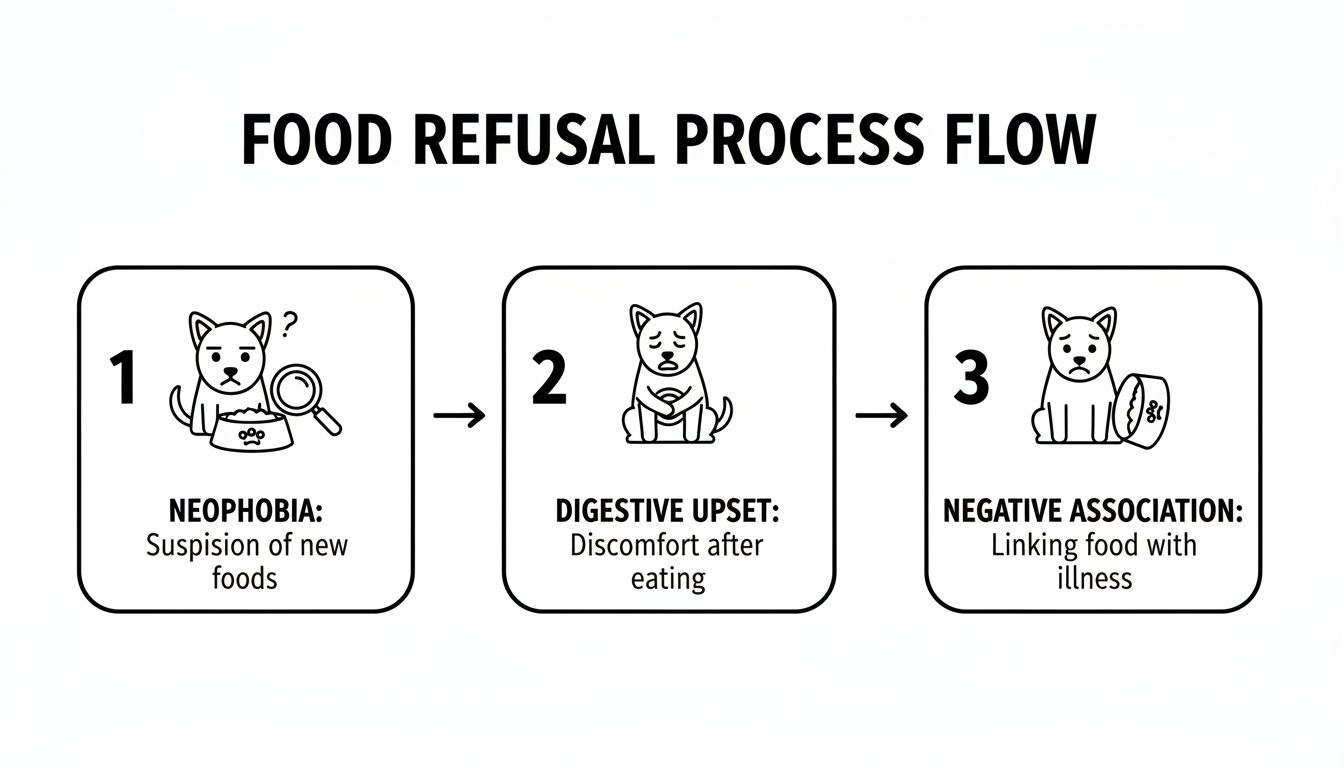
This cycle is exactly why preventing that initial gut trouble is so important.
Make Mealtime an Enticing Experience
If the gradual mix isn't quite winning them over, you can make the new food more appealing without giving in to unhealthy table scraps. It’s all about tapping into their powerful sense of smell and building positive routines.
Warm It Up
One of the easiest and most effective tricks in the book is to add a splash of warm water or low-sodium bone broth. Gently warming the food releases its aroma, making it far more interesting to a dog's sensitive nose. For most picky eaters, a smellier meal is a tastier meal.
Establish a Routine
Dogs are creatures of habit. They thrive on predictability. Feeding them at the same times each day in a quiet, low-stress spot helps build a positive, secure feeling around mealtime. Pick up the bowl after 15-20 minutes, whether they’ve eaten or not. This simple action teaches them that food is offered at a specific time, which can encourage them to eat when it's available.
Hand-Feed a Few Bites
For a really anxious or skeptical dog, hand-feeding the first few kibbles can be a game-changer. It's a personal touch that reinforces your bond and sends a clear signal: "This is safe and good." Often, a few reassuring bites from your hand are all it takes for them to feel comfortable enough to finish the rest from their bowl.
Making New Food Irresistible
So you’ve done everything right. You followed the 10-day transition plan to the letter, but your dog is still outsmarting you, meticulously eating the old kibble and leaving the new stuff behind. Frustrating, right?
When a gradual switch isn't enough, it's not time to throw in the towel. It's time to make that new food absolutely impossible to resist. The secret is to elevate their meal from just "dinner" to an exciting event.
This is where a high-quality meal enhancer like ChowPow can completely change the game. Instead of fighting a battle of wills over a bowl of bland kibble, you can easily transform the food you've chosen into something your dog will genuinely get excited about.
A Powerful Boost, Not a Replacement
Let's get one thing straight: a meal enhancement supplement like ChowPow isn’t meant to replace your dog’s food. Think of it as a powerful nutritional booster designed to work with their kibble. It cranks up the nutritional value and—most importantly—the aroma and flavor of their existing food. It’s the secret ingredient that turns an ordinary dinner into a five-star experience for your pup.
Made from dehydrated beef heart, ChowPow delivers a serious punch of protein and key nutrients without any junk fillers. This approach respects the balanced diet you’ve already picked out while fixing the immediate problem: your dog is turning their nose up at it.
How to Win Over a Picky Eater
Using a meal enhancer couldn't be simpler, and you've got a couple of ways to appeal to your dog's senses and get that appetite going.
-
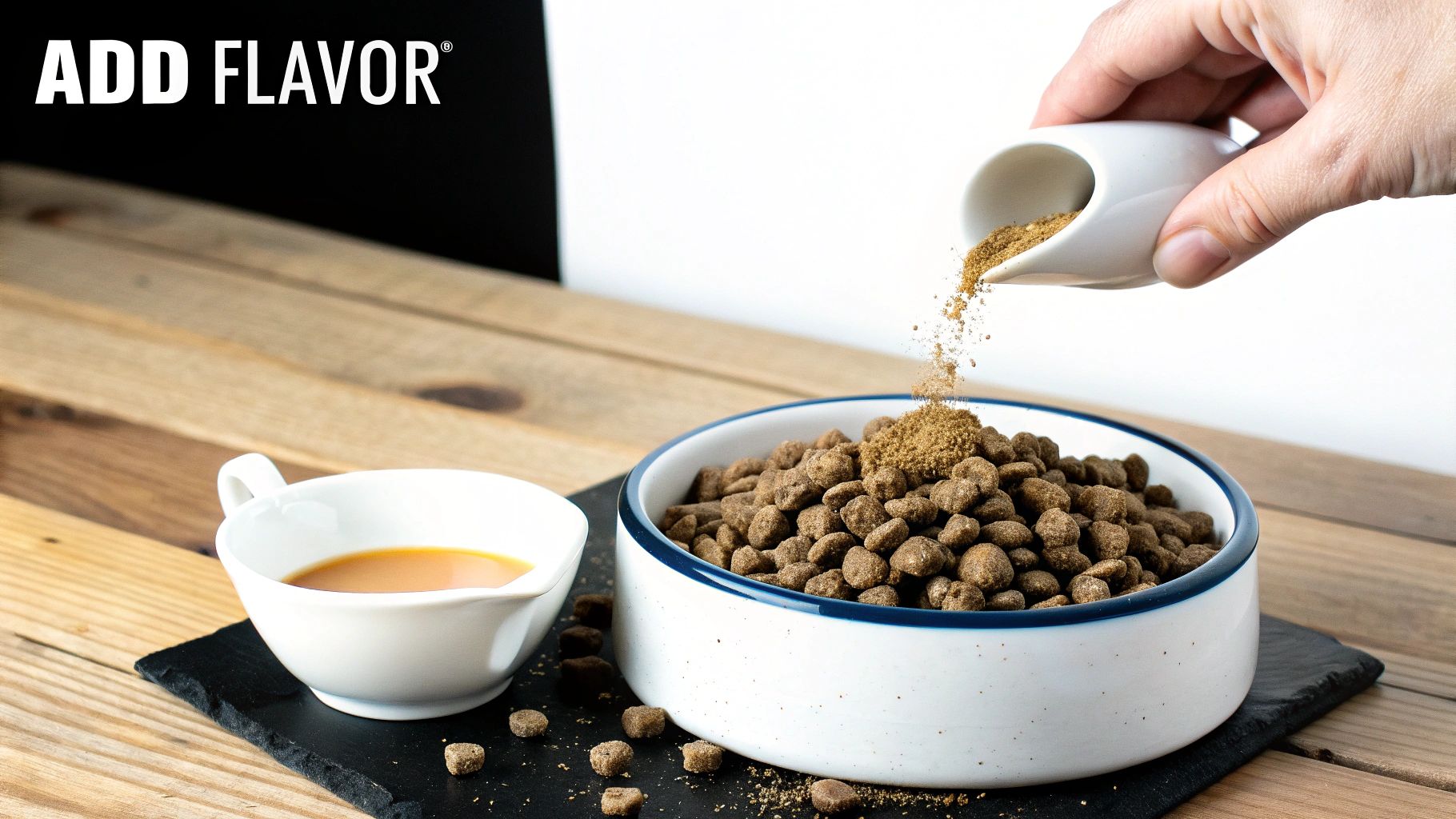
The Dry Sprinkle: This is the easiest trick in the book. Just sprinkle the powder directly over their food. The intense, meaty aroma of the dehydrated beef heart is something most dogs find impossible to ignore. It taps right into their powerful sense of smell, making the whole bowl more appealing before they even take a single bite.
-
The Savory Gravy: For the truly stubborn connoisseur, try mixing the powder with a little warm water to create a rich, savory gravy. When you pour this over their kibble, every single piece gets coated in that delicious flavor. This tactic is a game-changer for dogs who try to sort their food because it makes the old and new kibble practically indistinguishable.
By adding a high-value meal supplement, you're doing more than just adding flavor. You're boosting the nutritional value of their current kibble and turning mealtime into a rewarding experience. That shift in perception is often all it takes to break through that stubborn pickiness.
This move toward premium meal additions reflects a huge shift in how we think about our dogs' nutrition. The U.S. pet industry is expected to hit a staggering $157 billion by 2025, with food and treats alone accounting for $67.8 billion. After the major pet food recalls in 2007, sales of traditional pet food dropped by 20% while premium food sales skyrocketed by 69%. It’s clear that owners are ready and willing to invest in high-quality options to keep their dogs happy and healthy.
More Than Just Taste
This focus on quality isn't just about what’s in the bag; it’s also about how products are presented to us, the pet parents. While the goal is to make food irresistible to our dogs, brands know they have to appeal to the humans making the purchases. That’s why many companies use professional Pet Product Photos to showcase the quality of their ingredients and build trust.
For dogs who are especially particular, the right topper can make all the difference. It provides that extra bit of motivation they need to give something new a try, which is critical during a food transition. If you need more ideas, our guide on the best dog food toppers for picky eaters is packed with suggestions.
Ultimately, transforming your dog's kibble is about making mealtime exciting again. By boosting the flavor and nutritional value of their food, you’re not just solving a temporary problem—you're investing in their long-term health and happiness.
Adapting Your Strategy for Special Needs Dogs
Not every dog fits the same mold. A one-size-fits-all approach to switching foods just doesn't work when you're dealing with a boisterous puppy, a graceful senior, or a dog recovering from surgery. Each one has unique needs, and your strategy has to adapt when a dog won't eat new food because of their specific life stage or health.
For these special cases, the goal isn't just to get them to eat—it's to provide targeted support that makes mealtime easier and more beneficial. Simple tweaks, like changing the food's texture or giving its nutritional profile a boost, can make all the difference.
Helping Senior Dogs Rediscover Mealtime Joy
As dogs get older, their relationship with food can change dramatically. Dental pain can turn chewing hard kibble into a painful chore. At the same time, a diminished sense of smell can make their usual meals seem bland and uninteresting. It's a frustrating combination that often leads to a poor appetite and unhealthy weight loss.
The key for an older dog is to make their food soft, aromatic, and easy to eat. This is where a meal enhancement supplement like ChowPow becomes a fantastic tool. It’s not a substitute for their vet-approved diet, but a simple way to boost its appeal.
Just mix the beef heart powder with a bit of warm water to create a rich, nutrient-dense gravy. Pouring this over their kibble softens it into a mash-like consistency, which takes the pain out of chewing. The meaty aroma also works wonders to entice a senior whose sense of smell isn't what it used to be.
Supporting a Dog Through Recovery
When a dog is recovering from an illness or surgery, their body is working overtime to heal. Unfortunately, this is often when their appetite hits rock bottom. It's a delicate balance trying to get them the calories and nutrients they need without overwhelming a system that's already stressed.
A concentrated source of nutrition is your best friend here. You want to deliver a powerful boost without adding a lot of volume to the bowl, which can be off-putting for a dog who already feels unwell.
A sprinkle of ChowPow adds high-quality protein and essential amino acids right into their meal, supporting muscle repair and energy levels. It turns their regular food into a recovery-focused meal, ensuring every bite is packed with the building blocks their body needs to get back on its feet. If your dog is dealing with specific digestive issues during recovery, it's really important to get their diet right. Consulting an expert guide to the best dog food for intestinal problems can offer some great insights for managing their condition.
Easing Puppies Through Tricky Transitions
Believe it or not, puppies can be surprisingly picky, especially when they're moving from puppy food to an adult formula. The change in kibble size, texture, and flavor can be a shock, causing them to reject the new diet completely. This is a critical developmental stage, so getting them to accept their new, balanced food is vital.
The trick is to make the new food seem like an exciting treat, not a scary change.
A simple sprinkle of a savory topper can be all it takes to spark a puppy's curiosity. It makes the new food smell incredible and adds a layer of flavor that bridges the gap between their old and new meals. This little hack can help prevent them from developing long-term picky habits.
If you find yourself navigating persistent tummy troubles with your pup, getting familiar with what to feed a dog with a sensitive stomach can provide even more helpful strategies. By tailoring your approach, you can turn a stressful transition into a positive step forward, no matter your dog's age or condition.
Knowing When to Call Your Veterinarian
While a slow food transition and a few tasty toppers usually do the trick, sometimes a dog's refusal to eat is more than just being picky. Finicky eating can actually be the first sign that something more serious is going on. Learning to spot the difference between stubbornness and a genuine red flag is one of the most important things you can do for your dog.
Your dog can’t just tell you when something hurts. Their behavior, especially around mealtime, is often their primary way of communicating that they're not feeling well. A sudden and complete lack of appetite is a huge signal that warrants your full attention. One skipped meal isn't a crisis, but a flat-out refusal to eat—especially when combined with other symptoms—means it's time to call in a professional.
Urgent Symptoms That Need a Vet
If your dog is turning their nose up at the new food—and also their old food, their favorite treats, and even water—it's time to get your vet on the phone. This isn’t the time for a "wait and see" approach. Keep a close eye out for these specific warning signs.
- Lethargy or Weakness: Is your normally playful pup suddenly ignoring their leash, toys, or you? A major drop in energy is a big indicator that something is wrong.
- Vomiting or Diarrhea: A single episode might just be an upset tummy, but repeated vomiting or severe diarrhea can lead to dehydration fast. This is especially dangerous for puppies and senior dogs.
- Changes in Drinking Habits: Pay attention to both excessive thirst and a total refusal to drink. Drastic changes in water intake can signal kidney issues, diabetes, or other internal problems.
- Signs of Pain: Are they whining, yelping when you touch them, hunching their back, or struggling to get comfortable? Pain from dental problems, pancreatitis, or an injury will absolutely kill their desire to eat.
If your dog has refused all food for more than 24 hours, that’s a clear sign you need to see a vet. For small breeds, puppies, or senior dogs, that timeline should be even shorter.
Waiting too long can turn a manageable issue into an emergency. When it comes to your dog’s health, it’s always, always better to be overly cautious than to regret not acting sooner.
Your Vet Is Your Partner in Health
Your veterinarian is your most valuable resource. They can perform a physical exam, run blood tests, or take x-rays to find underlying issues that you can't see. Things like dental disease, gastrointestinal blockages, infections, or organ issues are all common culprits for a sudden loss of appetite.
When you go to your appointment, be ready to provide specific info. Tell your vet:
- When the appetite loss started.
- Any other symptoms you’ve noticed.
- Details about their new and old food.
- Any recent changes in your home environment.
This information helps your vet piece together the puzzle and get to a diagnosis much faster. While a picky eater can be frustrating, ruling out a medical cause is the first and most responsible step. Your vet is there to help you navigate these challenges and get your dog back to their happy, hungry self.
Common Questions About Switching Your Dog's Food
Even the most carefully planned food transition can hit a snag. If you're wondering whether your dog’s sudden fussiness is normal or what to do when they’ve figured out how to outsmart you, trust me, you're not alone. This is your troubleshooting guide for the most common hurdles owners face when a dog won't eat new food.
Think of this as your go-to for quick, practical answers. We'll get into the nitty-gritty of those tricky situations, reinforcing the strategies we've already covered and giving you clear solutions you can use right away.
How Long Does It Really Take for a Dog to Get Used to New Food?
While the standard advice is a 7-10 day transition, the honest answer is: it depends entirely on your dog. Some easy-going pups might be fully on board within a week. A more sensitive or notoriously picky dog? They might need two weeks, maybe even a little longer.
The most important thing is to watch your dog, not the calendar. Pay close attention to their excitement (or lack thereof) at mealtime and, of course, their digestive health. Rushing things is one of the fastest ways to create a negative association with the new food, so patience is truly your best friend here.
What if My Dog Just Eats the Old Food and Leaves the New Kibble?
Ah, the classic picky eater move! They become little sorting machines, meticulously picking out their old favorites and leaving behind a sad, rejected pile of the new stuff. It's a common and incredibly frustrating scenario.
The best way to handle this is to make sorting impossible. A simple trick is to add a small amount of warm water and stir everything together, making the kibble pieces stick. Even better, use a meal enhancement supplement like ChowPow mixed with a little water to create a savory gravy.
This coats every single piece of kibble, making the new food just as delicious as the old. Suddenly, there’s nothing to sort—it’s just one big, irresistible meal.
When a dog sorts their food, they're telling you they have a preference. By making the old and new food indistinguishable with a tasty gravy, you're not forcing them to eat—you're simply making the new option too good to pass up.
Can I Use ChowPow With Any Type of Dog Food?
Yes, absolutely. ChowPow is a versatile meal enhancement supplement, not a food replacement. It was designed from the ground up to boost your dog’s current diet, whether that's dry kibble, wet food, a raw diet, or even a home-cooked meal.
Its purpose is to boost the nutritional value and—most importantly for this topic—the palatability of whatever you're already feeding. This makes it a super simple and effective way to encourage a fussy dog to finally embrace their new food. It adds that meaty aroma and rich flavor they crave, turning a boring meal into something they’ll get excited about.
My Dog Still Won't Eat After a Week. Now What?
Okay, if you've done a slow transition, tried adding warm water or a tasty topper, and your dog is still turning up their nose after several days, it's time to shift your focus from behavior to health. A persistent lack of appetite can be a sign of something more than just stubbornness.
Underlying issues like dental pain, a brewing infection, general nausea, or another illness could be the real culprit. This isn't something to wait out. It's time to schedule a visit with your veterinarian to get a professional opinion and make sure everything is okay. When it comes to your dog's health, it is always better to be safe than sorry.
At ChowPow, we believe mealtime should be a highlight of your dog's day, not a source of stress. Our dehydrated beef heart topper is crafted to make any kibble irresistible, delivering the nutritional boost your dog needs with the flavor they can't resist.
Ready to win over your picky eater for good? Visit us at https://chowpownow.com and see how you can transform your dog's next meal.
-
Product on sale
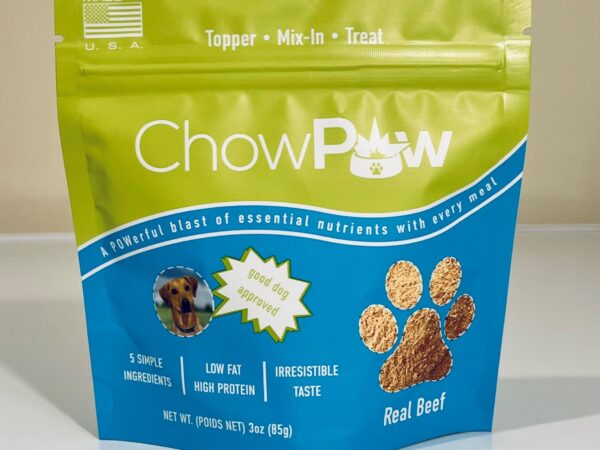 Dog Food Topper - Beef HeartOriginal price was: $14.99.$10.95Current price is: $10.95. - or subscribe and save up to 20%