
What Is Taurine for Dogs? A Guide to Canine Heart Health
Ever heard of taurine? If not, you’re not alone. It might not be the most talked-about nutrient on the dog food aisle, but it's an absolute powerhouse when it comes to your dog's long-term health. Think of it as the unsung hero working behind the scenes to keep your dog's most vital systems running smoothly.
So, What Exactly Is Taurine?
Let's break it down in a simple way. Taurine is an amino acid, but it plays by a different set of rules. Unlike most amino acids that act as building blocks for proteins, taurine operates more like a specialized utility worker. It floats around the body, taking on critical maintenance jobs in the heart, eyes, and immune system.
Its most famous role is in cardiovascular health. Taurine is a key player in regulating the heart's muscle contractions, ensuring every beat is strong and steady. A deficiency here can lead to a weakened heart over time, a scary thought for any dog owner. Keeping our dogs healthy with proper nutrition is one of the best ways we can ensure a long, happy life and avoid the heartbreak that comes with preventable illness and the need for memorial gifts for pet loss.
Here’s a quick look at some of taurine’s most important jobs:
Taurine's Key Jobs in Your Dog's Body
| Area of Health | How Taurine Helps |
|---|---|
| Heart Function | Helps regulate heart muscle contractions for a strong, steady beat. Crucial for preventing certain types of heart disease like DCM. |
| Vision & Eye Health | Highly concentrated in the retina, it protects delicate eye cells from damage and supports lifelong healthy vision. |
| Digestive Health | A key component of bile salts, which are essential for breaking down and absorbing fats from your dog's food. |
| Immune Support | Acts as an antioxidant, fighting off cellular damage and helping to keep the immune system ready to defend against illness. |
| Reproductive Health | Supports normal fetal development and is important for the reproductive health of both male and female dogs. |
As you can see, taurine is doing a lot more than just one thing! It's a true multitasker that your dog’s body relies on every single day.
Is Taurine "Essential" for Dogs?
Here's where it gets a little nuanced, but it's easy to understand. Taurine is what's known as a "conditionally essential" amino acid for our canine friends.
What does that mean? While a dog’s body can make its own taurine from two other amino acids (cysteine and methionine), sometimes they just can't produce enough to meet their daily needs. This production can be impacted by diet, age, breed, or underlying health issues, making dietary sources incredibly important.
You can dive deeper into the world of essential amino acids for dogs in our article.
Because this nutrient is so fundamental, making sure your dog gets enough is one of the simplest yet most effective investments you can make in their health. This is exactly why adding a natural, meat-based meal enhancement to their bowl is such a smart move. A high-quality topper like ChowPow delivers a concentrated dose of taurine directly from beef heart, boosting the nutritional value of their current kibble without a complete diet overhaul.
The Science of Taurine Explained Simply
So, what exactly is taurine, and why does it keep popping up in conversations about dog health? Let's break it down without the complicated science jargon.
Taurine is a special type of amino acid, but it doesn't build big muscles like many others. Think of it less like a construction worker and more like a highly skilled maintenance technician, quietly working on your dog’s most critical systems—their heart, eyes, and even their digestive tract.
Unlike cats, who can't make any taurine on their own, dogs can produce a little bit. They use two other amino acids, methionine and cysteine, as the raw materials. The problem is, this internal production line isn't always super efficient. Things like your dog's diet, breed, or age can slow it down, meaning they might not be making enough to keep everything running smoothly. This is why we call it a conditionally essential amino acid—under certain conditions, getting it from their food becomes absolutely crucial.
The Conductor of the Heart
Imagine your dog’s heart is a tiny orchestra, with every muscle cell being a musician. For the heart to beat properly, all those musicians have to play in perfect time. Taurine acts as the orchestra’s conductor. Its main job is to help regulate the flow of calcium ions in and out of the heart muscle cells, which is the signal that tells them when to contract and when to relax.
When there's a steady supply of taurine, the "music" is strong, rhythmic, and powerful. But if the conductor is missing, the rhythm falters and the heart's contractions can become weak and disorganized. This is exactly why a deficiency is so closely linked to serious heart conditions like Dilated Cardiomyopathy (DCM).
This visual gives you a quick snapshot of taurine's main jobs.
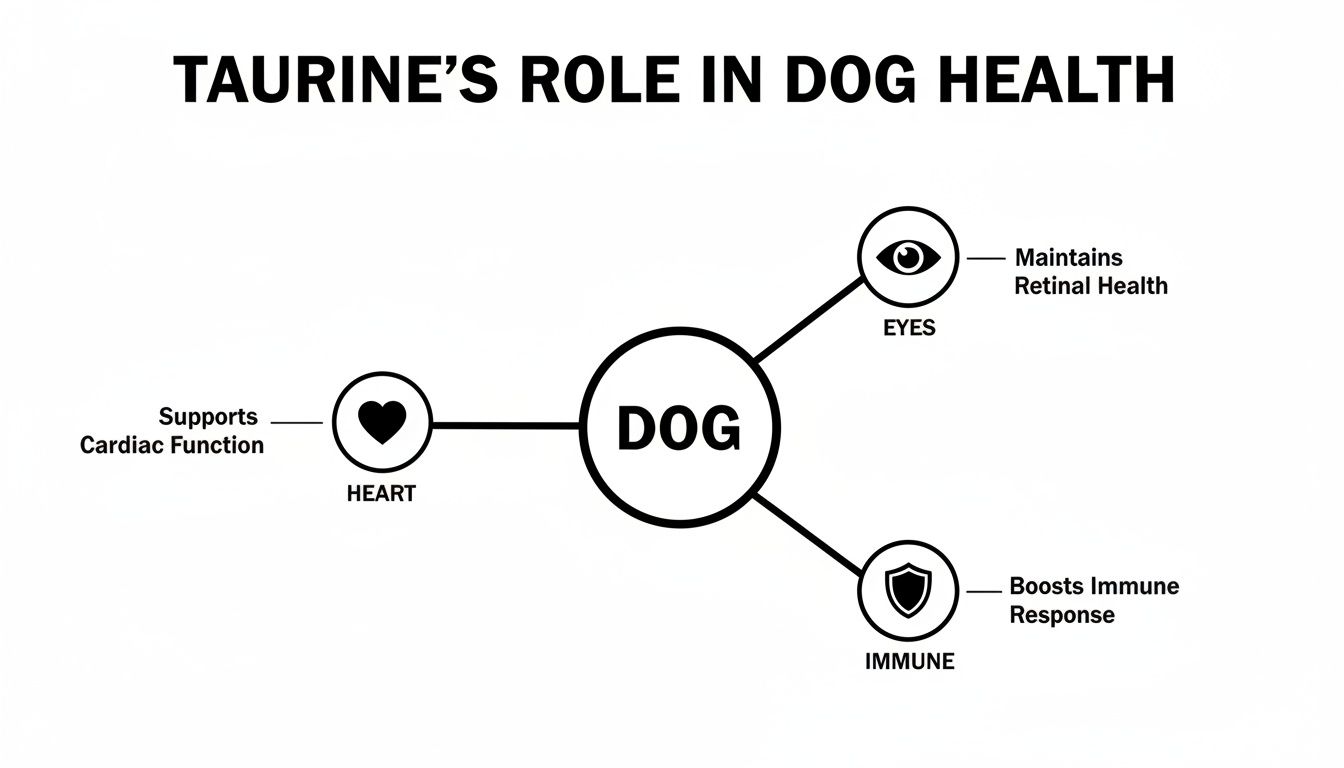
As you can see, this single amino acid branches out to support multiple, equally vital parts of your dog's long-term health.
Built-In Sunglasses for the Eyes
Taurine is also found in super high concentrations in the retina—the light-sensitive tissue at the back of the eye. Here, it basically works like a pair of internal sunglasses, protecting the delicate photoreceptor cells from damage caused by bright light and oxidative stress. It’s a constant shield, preserving your dog’s precious vision.
Just like wearing sunglasses keeps you from squinting on a bright day, taurine helps prevent the slow, steady degradation of retinal cells. A deficiency can leave the eyes vulnerable, potentially leading to retinal degeneration and, eventually, vision loss.
Key Takeaway: Taurine isn't just a "nice-to-have" nutrient. It’s a fundamental part of the machinery that makes your dog’s heart and eyes work properly, performing specialized jobs that other nutrients simply can't do.
The Key to Healthy Digestion
On top of everything else, taurine plays another critical role in the gut. It’s a primary ingredient used by the liver to create bile salts. These bile salts are essential for one simple but vital task: breaking down the fats in your dog's diet so their body can actually absorb and use them for energy.
Without enough taurine, the production of these crucial bile salts slows down. This can cause a couple of problems:
- Poor Fat Digestion: Your dog might struggle to properly absorb the fatty acids they need for healthy skin, a shiny coat, and good energy levels.
- Reduced Nutrient Absorption: Inefficient digestion means your dog isn't getting the full nutritional bang for their buck, even if you’re feeding them high-quality food.
This shows why getting enough taurine is so important for their entire body. It's not just about one organ; it’s about supporting a whole network of systems that depend on this powerhouse amino acid every single day. Adding a natural, meat-based supplement like dehydrated beef heart is a fantastic way to boost their meal and fill any potential nutritional gaps.
So, Why Is Taurine Deficiency Suddenly a Problem?
It seems a bit weird, right? Dogs can make their own taurine, so why are we suddenly hearing so much about deficiencies? The truth is, this is a relatively new problem, and it almost always traces back to what we're putting in their food bowls. Some recent, well-intentioned trends in dog food have accidentally created a perfect storm for nutritional gaps.
The whole conversation really blew up with the boom of grain-free diets. These foods were marketed as being more "natural" or better for dogs with sensitivities. To replace traditional grains like rice and corn, manufacturers started using huge amounts of legumes—think peas, lentils, chickpeas, and even potatoes. And this seemingly harmless swap is now linked to a scary rise in heart problems in dogs.
The goal here isn't to scare you or point fingers at certain brands. It's about giving you the information you need to make smart choices. Once you understand why this is happening, you can take simple steps to protect your dog's health for the long haul.
The Trouble with Peas, Lentils, and Legumes
What's the big deal with a few peas in dog food? The science is a bit complicated, but it boils down to a one-two punch that messes with a dog's ability to keep their taurine levels where they need to be.
First off, ingredients like peas and lentils are just naturally low in the building blocks dogs use to make taurine—specifically, the amino acids methionine and cysteine. If the raw materials aren't coming in through their diet, their internal taurine factory can't keep up with demand.
Second, and this is the real kicker, research suggests that high amounts of these ingredients can actually get in the way of a dog absorbing the taurine it does have. The high fiber content in legumes can latch onto taurine and bile acids in the gut, carrying them right out of the body before they ever get a chance to be used.
It's a double-whammy: these diets often provide fewer materials to make taurine while also potentially blocking the dog's ability to use it.
This has led to a heartbreaking increase in cases of diet-associated Dilated Cardiomyopathy (DCM), a serious disease where the heart muscle gets weak and floppy. Vets started seeing this condition, once thought to be mostly genetic, popping up in breeds that had never been considered at risk.
The Alarming Link to Heart Disease
This connection isn't just a guess. The link between these diets and canine heart health is now a major concern. We're seeing it affect tons of different breeds, well beyond the usual suspects. A deep-dive investigation found dogs from over 25 different breeds showing up with heart disease caused by taurine deficiency.
A 2019 case study really drove the point home. Researchers looked at 24 golden retrievers diagnosed with both taurine deficiency and DCM. The numbers were shocking: 23 out of the 24 dogs (that’s about 96%!) were eating diets that were grain-free, legume-heavy, or both. You can read more about how taurine supplementation could protect dogs from serious diseases in this research.
This data sends a clear message: what we feed our dogs has a massive impact, and marketing fads don't always line up with what their bodies actually need.
Why You Need to Be Proactive
Knowing all this isn't a reason to panic—it's a reason to get proactive. Your dog depends completely on you for their nutrition, and just being aware of these potential diet pitfalls is a huge first step. You can't always be certain that a commercial kibble is ticking every single box, so adding a natural nutritional "insurance policy" is a simple and powerful move.
This is where a whole-food supplement shines. Instead of throwing out your dog's current food and starting from scratch, you can simply boost their meals with a high-quality, meat-based topper. This gives them a direct, easy-to-absorb source of taurine, filling any gaps their main diet might have. It's a straightforward way to get some peace of mind, knowing you're actively looking out for their heart, eyes, and overall health for years to come.
Recognizing the Signs of Taurine Deficiency
So, what does taurine deficiency in dogs actually look like? The warning signs can be surprisingly subtle, often looking a lot like the normal slowing down we see in senior dogs. That’s exactly why knowing what to watch for is so important.
Catching these issues early gives you the best possible chance to step in and support your dog’s long-term health.
The symptoms are almost always tied directly to the jobs taurine performs in the body, especially within the heart. Since taurine helps keep that powerful muscle strong and pumping efficiently, a deficiency can cause the heart to weaken over time. This makes it much harder for your dog’s body to get the oxygen-rich blood it desperately needs.
The tricky part? Dogs are masters at hiding discomfort. They can't tell us they feel weak or that their chest hurts. We have to become detectives, paying close attention to the small, seemingly insignificant changes in their behavior and energy.

Common Symptoms to Monitor
If you notice any of these signs, don't panic. It doesn't automatically mean your dog has a taurine deficiency, but it absolutely means a conversation with your veterinarian is in order. These symptoms can overlap with many other health issues, so getting a professional diagnosis is a must.
- Weakness or Lethargy: Is your usually playful pup less interested in toys or walks? A sudden drop in energy or stamina is a huge red flag.
- Exercise Intolerance: If your dog gets tired very quickly or struggles to keep up on walks they used to handle with ease, their heart might be working overtime.
- Persistent Coughing: A dry, hacking cough, especially after a bit of exercise or when they're lying down, can be a sign of fluid building up due to poor heart function.
- Fainting or Collapsing: This one is serious. Any episode of fainting or sudden collapse is a medical emergency and requires immediate veterinary attention.
- Vision Problems: Since taurine is crucial for retinal health, you might notice your dog bumping into furniture or seeming to have trouble seeing in dim light.
Your veterinarian is your most important partner on your dog's health journey. If you see any of these symptoms, don't wait. Proactive monitoring and professional guidance are key to making sure your dog gets the care they need right away.
What to Expect at the Vet
If your vet suspects a taurine-related issue, they'll likely recommend a few diagnostic tests to get a clear picture of what’s happening inside your dog’s body. This process is designed to be thorough, ruling out other conditions to pinpoint the real root cause.
The first step is usually a blood test. This simple test measures the concentration of taurine in your dog's blood. Experts have established that healthy dogs typically have whole blood taurine levels between 200 to 350 nmol/mL. A result below this range can confirm a deficiency.
A revealing study on golden retrievers with taurine deficiency-induced DCM found that 20 out of 24 dogs (83%) had an enlarged left ventricle—a clear indicator of heart disease. This really highlights how severe the consequences can get. You can dig into more of the findings on taurine levels and heart health in dogs yourself.
Advanced Cardiac Testing
Based on the blood test results and a physical exam, your vet might also recommend a heart check-up. This isn't as scary as it sounds and provides invaluable information.
The most common cardiac test is an echocardiogram—basically an ultrasound of the heart. This non-invasive procedure lets the vet see the heart muscle in action, measuring its size, wall thickness, and how effectively it’s pumping blood. It’s the best way to diagnose conditions like Dilated Cardiomyopathy (DCM).
By understanding this diagnostic process, you can feel more prepared and confident when discussing your dog’s health with your vet. It arms you with the knowledge to be a proactive advocate for your best friend, ensuring they get the right support at the right time.
How to Naturally Boost Your Dog's Taurine Intake
Okay, so you understand why taurine is a big deal. Now for the fun part: figuring out how to get more of this good stuff into your dog’s bowl, easily and naturally. And here’s the great news—you don’t need complicated formulas or synthetic supplements. The very best sources of this critical amino acid come from whole, natural foods that dogs are already built to eat.
When it comes to boosting taurine, animal-based proteins are king. It's most abundant in muscle tissue, especially in the organs that work the hardest. This means high-quality meats aren't just great for protein; they're nutritional powerhouses packed with the nutrients your dog needs to truly thrive.
The Best Whole-Food Sources of Taurine
Nature already has the perfect blueprint for canine nutrition. Certain animal products are exceptionally rich in taurine, making them ideal additions to any dog's bowl. Think of these as superfoods that go way beyond basic kibble.
The most potent natural sources include:
- Organ Meats: The heart is, by far, one of the richest sources. Since the heart is a constantly working muscle, it needs high concentrations of taurine to function, making it an incredibly nutrient-dense choice.
- Dark Meat Poultry: Meats like chicken and turkey thighs contain more taurine than leaner breast meat.
- Fish: Certain types of fish, especially sardines and salmon, are excellent sources.
- Red Meats: Beef and lamb muscle meats also provide a solid amount of this vital amino acid.
By focusing on these meat-based ingredients, you're aligning your dog's diet with what their body is naturally designed to process and absorb efficiently.
Introducing ChowPow: The Ultimate Meal Enhancement
This is where boosting your dog's diet becomes ridiculously simple. We created ChowPow with one specific goal: to make it effortless for you to add the power of whole-food nutrition to your dog’s existing meals. It's not about replacing their kibble; it's about making their kibble better.
Our main ingredient is dehydrated beef heart. We chose beef heart for a very specific reason—it’s one of the most concentrated natural sources of taurine on the planet. By gently dehydrating it, we preserve its powerful nutritional profile in a convenient, easy-to-use powder.
Think of ChowPow as a nutritional supercharger for your dog's bowl. You're not changing their core diet; you're simply adding a sprinkle of pure, meat-based goodness that delivers a potent dose of taurine and other essential nutrients to boost the value of their regular food.
This approach is a lifesaver in a few key situations:
- Picky Eaters: The rich, savory aroma of beef heart is often irresistible to even the fussiest dogs. A simple sprinkle can encourage them to clean their bowl.
- Senior Dogs: Older dogs often have dental issues or a weaker appetite. You can mix ChowPow with water to create a soft, nourishing gravy that's easy to eat and adds extra hydration.
- Recovering Dogs: For dogs bouncing back from illness or surgery, extra nutritional support is crucial. ChowPow provides a concentrated source of energy and vital amino acids to help them heal.
Why a Meal Topper is a Smarter Choice
You might be wondering, "Why not just switch to a food that's high in taurine?" While that's an option, it isn’t always practical. Many dogs are sensitive to sudden diet changes, which can lead to an upset stomach. Others may be on a specific veterinary diet for other health reasons.
A meal topper gives you the best of both worlds. It lets you enhance their current food without the disruption of a full dietary switch. You keep the foundation of their familiar kibble while adding a targeted boost of high-value nutrients exactly where they're needed. It’s a simple, stress-free way to fill potential nutritional gaps and give you peace of mind.
Beef heart is more than just a source of taurine; it's packed with a whole spectrum of benefits. You can learn more about why adding beef heart to your dog’s diet can be beneficial in our detailed guide. This approach puts you in control, letting you elevate your dog's nutrition one meal at a time.
Simple Ways to Use ChowPow for a Healthier Meal
Alright, now that we've covered the power of taurine-rich beef heart, let's talk about how to actually get it into your dog's bowl. Making ChowPow a part of your dog’s daily routine is about as easy as it gets—no complicated steps, just pure, simple goodness.
It's important to remember that ChowPow is a meal enhancement, not a complete meal on its own. Think of it as a supercharged booster for the food your dog already knows and loves. Its job is to fill in nutritional gaps with concentrated, whole-food ingredients, making sure they get those vital amino acids for long-term health.
Getting Started with ChowPow
Anytime you introduce something new to your dog's diet, the golden rule is to start slow. This gives their digestive system a chance to get acquainted and avoid any tummy troubles.
Here’s our simple, foolproof approach:
- Start Small: For the first couple of days, just sprinkle a tiny amount—about a quarter of the recommended serving—over their regular food.
- Mix It In: Gently stir the powder into their kibble so it lightly coats the pieces. This way, they get that savory beef heart flavor in every bite.
- Gradually Increase: Over the next week, slowly up the amount until you reach the full serving size for your dog's weight. Patience is key here!
Creative Ways to Serve It Up
One of the best things about ChowPow is how versatile it is. You can get creative to keep mealtime exciting or cater to your dog's specific needs.
1. The Savory Sprinkler
The quickest and easiest method? Simply sprinkle the dry powder right on top of their food. This creates a delicious, meaty crust that picky eaters just can't resist. Honestly, the aroma alone is often enough to get a fussy dog diving into their bowl.
2. The Nourishing Gravy
For senior dogs with sensitive teeth, pups who could use a little extra hydration, or just to make a meal feel extra special, turning ChowPow into a gravy is a fantastic option.
Just mix the recommended amount of ChowPow with a bit of warm water until you have a smooth, rich gravy. Pour it over their kibble to soften it up and flood the bowl with flavor.
3. The Medication Mask
If you've ever wrestled with your dog to get them to take a pill, you know the struggle is real. ChowPow can be a total game-changer. That powerful beef heart scent is perfect for hiding medication. Just mix the pill into a spoonful of ChowPow gravy, and they'll likely gobble it down without a second thought.
By using these simple tricks, ChowPow becomes a seamless part of your dog's day. For even more ideas, check out our guide on dehydrated dog food toppers. You're not just adding flavor; you're actively investing in their heart, vision, and overall vitality with every single meal.
Common Questions About Taurine and Your Dog
When you're trying to do the best for your dog, nutrition can feel like a maze. Let's clear up some of the most common questions we hear from dog parents about taurine.
Does My Dog’s Food Have Enough Taurine?
That’s the million-dollar question, and the answer is… not always. While most commercial dog foods are formulated to meet baseline nutritional standards, some recipes can fall short. This has become a bigger conversation with the rise of grain-free diets heavy in legumes, which have been linked to lower taurine levels in some dogs.
Unlike cat food, where adding taurine is mandatory, dog food regulations don't require it. This means the amount can vary wildly from one brand to another. It's this exact uncertainty that makes a natural, meat-based meal topper like ChowPow such a great tool for peace of mind. You’re not just hoping they get enough; you're ensuring it by boosting their current food, which is especially important for breeds predisposed to heart conditions.
Is It Possible to Give My Dog Too Much Taurine?
It’s incredibly hard to overdo it with taurine, especially from food sources. Taurine is a water-soluble amino acid, which is just a scientific way of saying that your dog’s body is smart about using it. It takes what it needs and simply flushes out any excess through their urine.
Because it doesn't build up in their system, you can feel confident adding a whole-food supplement like ChowPow to their bowl. Just stick to the recommended serving size, and you can rest easy knowing you're providing a safe, beneficial nutrient boost.
How Quickly Will I See a Difference?
The first thing you’ll probably notice is a much more excited dog at mealtime! For picky eaters, the change can be almost immediate—sometimes within the first few meals. The rich aroma of real beef heart is often all it takes to get their appetite going again.
The deeper health benefits, like support for their heart and vision, are more of a marathon than a sprint. Think of it as building a strong nutritional foundation for the long haul. Consistent use helps protect their wellness for years to come. Of course, a happy dog is about more than just food; the right pet accessories can also make a world of difference in their daily comfort and fun.
Ready to transform your dog’s mealtime from a chore into a celebration? Give them the targeted, whole-food nutrition they deserve with ChowPow. Visit https://chowpownow.com to order your first bag and see the difference a sprinkle of pure goodness can make.
-
Product on sale
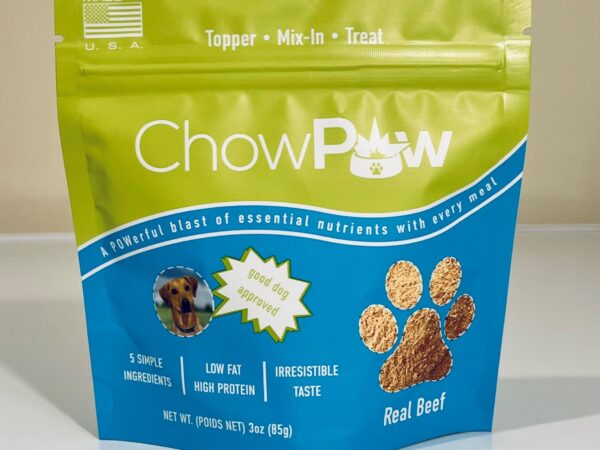 Dog Food Topper - Beef HeartOriginal price was: $14.99.$10.95Current price is: $10.95. - or subscribe and save up to 20%