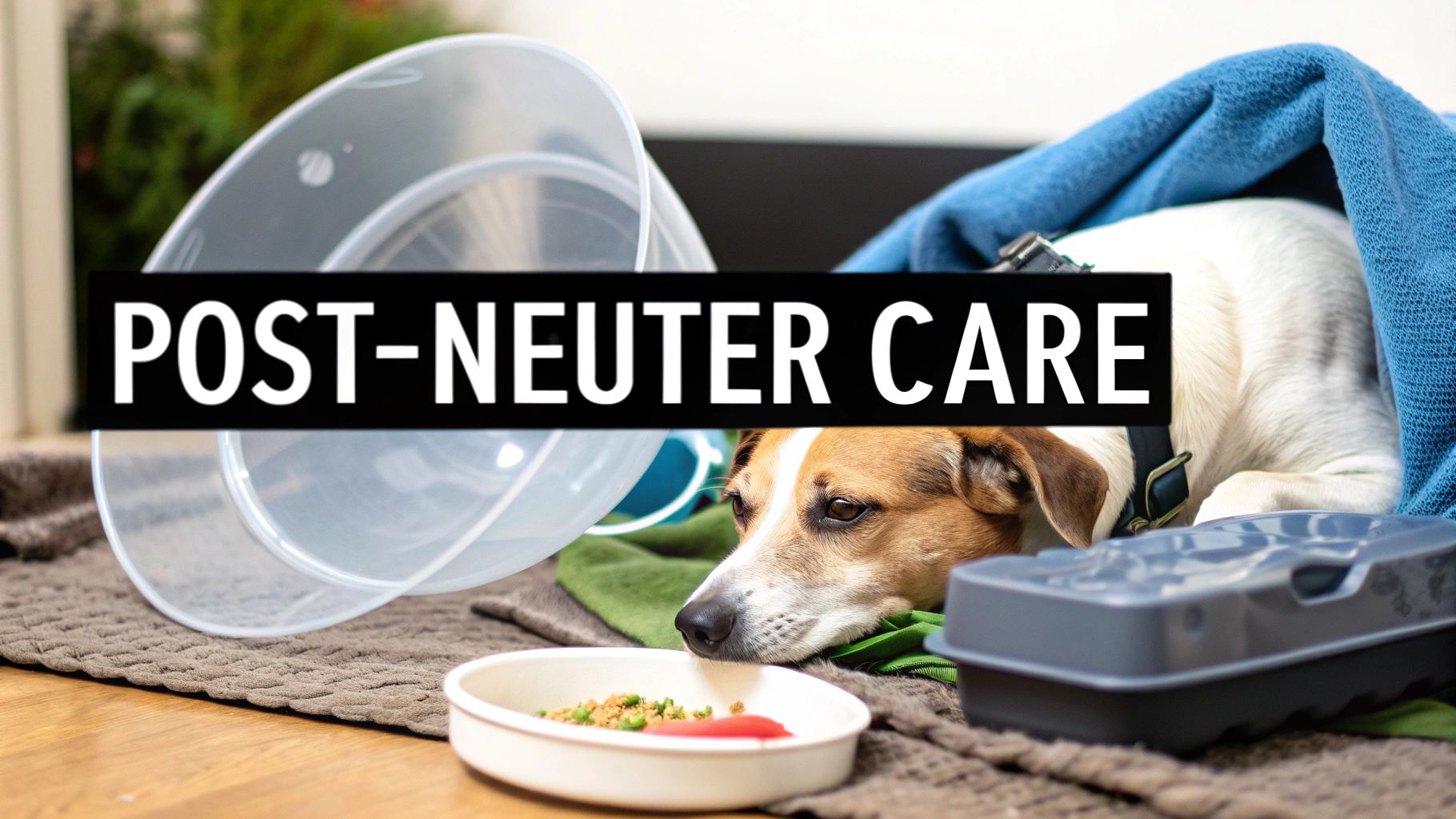
A Pet Parent’s Guide to Care After Neutering Dog Surgery
Okay, you've brought your dog home after his neuter surgery. The next 24 hours are all about quiet, rest, and observation. You can expect him to be pretty groggy and out of it from the anesthesia, so your main job is to provide a comfy, safe space where he can sleep it off, away from other pets or chaos. It’s completely normal for him to be lethargic and have zero interest in food right at first, so don't panic.
Navigating The First Day Home After Neuter Surgery
That car ride home from the vet is a weird mix of relief and nervousness. The procedure is done, but now it’s on you to manage the recovery. This first day is absolutely critical for setting your dog up for a smooth, easy heal. Your goals are simple: keep him calm, keep him comfortable, and keep him safe.
Creating a Safe Recovery Den
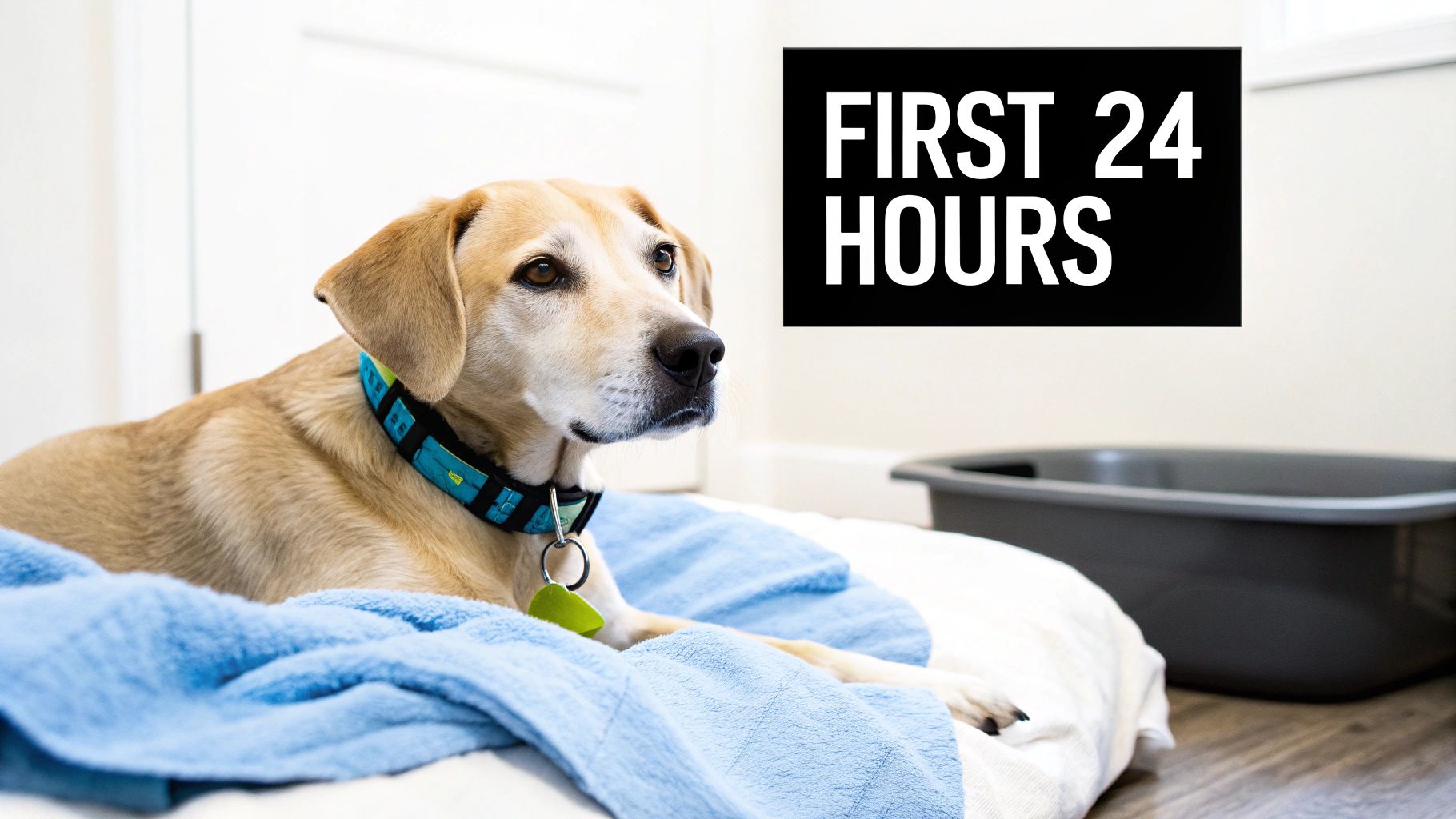
Before you even walk through the door, get his recovery zone ready. This isn’t the time for his usual spot in the middle of the living room. Pick a quiet corner or a separate room where he can truly rest without being stepped over or bothered by the kids.
- Comfort is King: A low-to-the-ground bed is perfect so he doesn’t have to jump up. Toss in some familiar blankets that smell like home to help him settle.
- Confine the Area: Use a crate (with the door open) or some baby gates. The goal is to stop him from wandering off, trying to tackle the stairs, or making a leap for the sofa.
- Keep Things Quiet: Turn down the TV, hold off on vacuuming, and try to keep loud play to a minimum. A calm environment is a must while he’s still feeling loopy from the anesthesia.
Understanding Post-Anesthesia Effects
Your dog is probably going to be drowsy, a little wobbly, and maybe even a bit whiny for the first few hours. It’s a totally normal reaction as the drugs wear off. He might stumble around like he’s had one too many, so you’ll need to stick close to make sure he doesn’t take a tumble.
Key Takeaway: Lethargy is expected. Your dog just went through a major medical procedure and is full of powerful medications. He's not sad—his body is just starting the important work of healing.
The First Potty Break and Feeding
When it's time to go outside, keep it short and sweet. Always use a leash, even in your fenced-in yard. You want to prevent any sudden sprints that could pull at his stitches. If he seems particularly unsteady, don't be afraid to offer a little support with your hands or a makeshift sling.
Don't be surprised if he turns his nose up at his food bowl. Nausea is a common side effect of anesthesia.
- Offer Water: Make sure fresh water is available, but don’t worry if he’s not drinking much at first.
- Small, Bland Meal: A few hours after you get home, you can try offering a tiny portion of his regular kibble or something bland and easy on the stomach, like plain boiled chicken with a bit of rice.
- Monitor Appetite: If he still has no interest in food after 24 hours, that’s your cue to give the vet a quick call just to check in.
For a deeper dive into the entire recovery process, take a look at our complete guide on post-surgery care for dogs. The most important thing today is to create a peaceful space so his body can get to work on healing.
Keeping a Watchful Eye on the Incision and Pain Levels
Once you have your pup settled into his cozy recovery space, your job shifts. Now, it's all about two things: managing his pain and keeping that incision clean and protected. Getting this right over the next 10 to 14 days is the secret sauce for a smooth, drama-free recovery.
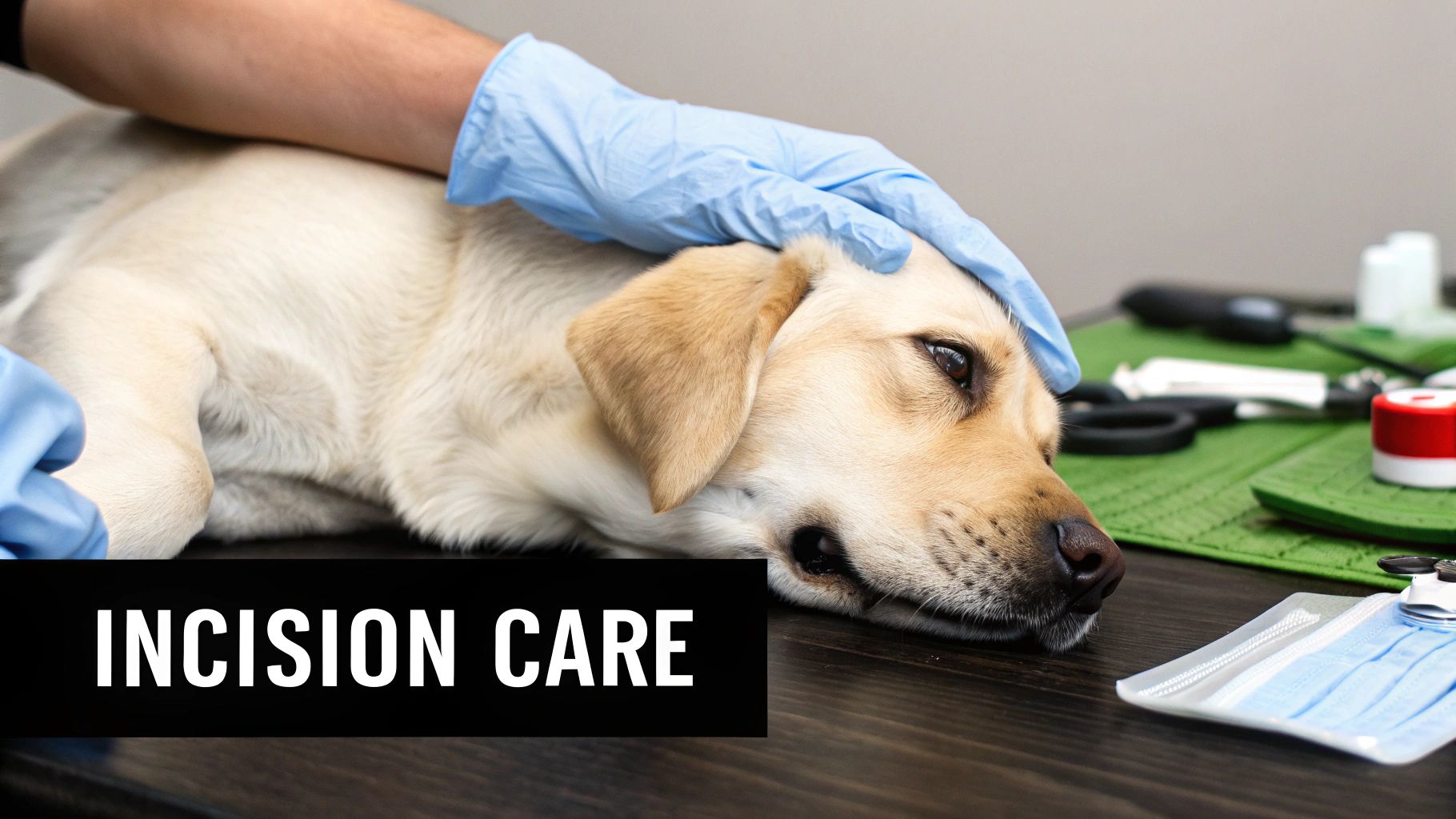
That surgical site is way more delicate than it looks. It only takes a few seconds of licking for bacteria from his mouth to set up shop, leading to a nasty infection. That means another trip to the vet and more stress for everyone involved. The bottom line? Preventing him from getting to the wound is absolutely non-negotiable.
Protecting The Surgical Site
Your vet's number one rule is going to be simple: do not let your dog lick, chew, or scratch the incision. This is where the dreaded "cone of shame" (or E-collar) makes its grand entrance. I know, they look ridiculous and cumbersome, but it’s still the most surefire way to protect that healing tissue.
If the classic plastic cone is causing a full-blown meltdown, you do have some other great options:
- Soft E-Collars: These are much more comfortable, almost like a travel pillow, which can make napping a lot easier.
- Surgical Recovery Suits: Think of it as a onesie for your dog. It covers the incision completely, blocking access while giving him a bit more freedom to move around.
No matter which option you land on, it has to stay on at all times unless he's right in front of you and you're actively watching him. A moment's distraction is all it takes for a dog to undo the surgeon's careful work.
Your Daily Incision Check-Up
Make it a habit to check the incision at least twice a day. When it’s healing well, the site should look clean with the skin edges held neatly together. Don’t be alarmed by a little bit of redness or some minor bruising right around the stitches in the first couple of days—that's totally normal.
What you're really looking for are the signs that something's not right.
Recovery Red Flags: Call your veterinarian right away if you spot significant swelling, any bleeding that doesn't stop, a bad smell, or any discharge (especially if it’s yellow or green). Also, get in touch if the edges of the skin look like they’re starting to separate.
This quick daily check is your best defense. You’ll quickly learn what "normal healing" looks like for your dog and be able to spot trouble early.
Don't Skip the Pain Meds
Your vet sent pain medication home for a good reason. The anesthesia wears off, but the post-op pain is very real. Managing it properly keeps your dog comfortable and actually helps him heal faster. It is so important to give the medication exactly as the label directs, even if you think he seems perfectly fine.
Dogs are masters of hiding pain—it's a survival instinct left over from their wild ancestors. So, you have to become a bit of a detective and watch for the subtle clues.
- Behavior Changes: Is he pacing and can't seem to get comfortable? Or is he the opposite—unusually quiet and withdrawn?
- Loss of Interest: Has he turned his nose up at his favorite squeaky toy or stopped his happy dance when you walk in the door?
- Physical Cues: Listen for whining or whimpering. Look for a hunched-over posture or if he seems to be guarding the surgical area.
Sticking to the medication schedule is vital. If pill time turns into a wrestling match, don't despair—there are plenty of tricks to make it easier. For a deep dive, you can learn how to give a dog a pill with ease in our guide. A consistent dose of pain relief lets his body put all its energy where it needs to go: healing.
Supporting Recovery Through Nutrition And Hydration
Proper nutrition is the fuel for healing, but it's totally normal for a dog's appetite to take a nosedive right after surgery. The lingering effects of anesthesia often leave them feeling nauseous and completely uninterested in food. This can be worrying, especially when you know they need calories to get better.
Your main goals right now are to gently reintroduce food, keep them hydrated, and make mealtime as tempting as possible without upsetting their stomach.
The key is to start small and slow. For the first few hours after you get home, just focus on offering fresh water. Later that evening, you can offer a tiny, bland meal—about one-quarter of their usual portion. If they keep that down without any issues, you can gradually work back to their normal feeding schedule over the next day or two.
What to Do When Your Dog Refuses to Eat
Don't panic if your dog sniffs his bowl and walks away. A poor appetite is one of the most common hurdles for owners after a neuter. Anesthesia can make dogs feel pretty crummy, and the discomfort from the surgery doesn't exactly scream "dinner time."
If your pup is turning his nose up at his regular kibble, it's time to get a little creative. Here are a few vet-approved tricks to entice him:
- Go Bland: Plain, boiled chicken (no skin or bones!) mixed with plain white rice is easy on the stomach and often way more appealing than dry kibble.
- Warm It Up: Gently warming their food for a few seconds in the microwave can release its aroma, making it much more interesting to a dog with a weak appetite.
- Add Some Moisture: A splash of low-sodium chicken or beef broth can soften their food and add a savory flavor that’s hard to resist.
If your dog still won't eat 24 hours after surgery, it's a good idea to give your vet a call. For a deeper dive into this common problem, check out our guide on what to do when your dog won't eat after surgery.
Boosting Nutrition to Power the Healing Process
This recovery period is when your dog’s body is working overtime to repair tissue and fight off potential infections. Providing high-quality, easily digestible nutrients is essential. This is where a premium meal enhancement can make a world of difference, especially for a reluctant eater.
A nutrient-dense supplement like ChowPow is designed for exactly this situation. It’s a simple, powerful meal enhancement made from dehydrated beef heart and other whole foods. Sprinkling just a small amount over their regular kibble can transform a bland meal into something they can't wait to eat. Often, the natural, rich aroma of beef heart is all it takes to convince a picky or nauseous dog to take that first bite.
ChowPow is a nutritional booster, not a meal replacement. It's designed to work with your dog's current food, adding a concentrated dose of protein, vitamins, and minerals that support healing without forcing a sudden diet change.
This approach ensures they get the extra nutritional horsepower they need for a speedy recovery, all while eating the food their system is already used to.
Post-Neuter Feeding Timeline
Navigating your dog's meals after surgery doesn't have to be complicated. The goal is to reintroduce food gently while making sure they get the nutrients they need to heal.
Here’s a general timeline to help you get your pup back on track.
| Timeframe | Feeding Goal | ChowPow Tip |
|---|---|---|
| First 12 Hours | Hydration only, then a small bland meal (25% of normal portion). | Hold off on supplements for now. Focus on water and a simple meal. |
| Day 1-2 | Gradually increase portion size back to normal with bland food. | Add a tiny pinch of ChowPow to the bland meal to spark their appetite. |
| Day 3-7 | Transition back to regular kibble, ensuring they're eating normally. | Sprinkle ChowPow on their regular food to boost protein for tissue repair. |
| Week 2 & Beyond | Monitor appetite and adjust food portions for new metabolic rate. | Use ChowPow as a healthy incentive to ensure they finish their meals. |
Remember, this is just a guide. Always watch your dog for any signs of stomach upset and adjust as needed.
Don't Forget Hydration
Hydration is every bit as important as nutrition. Water is critical for every single bodily function, from circulating nutrients to flushing out the last of the anesthesia drugs. But a groggy, sore dog might not feel like getting up for a drink.
Make it super easy for him. Place a clean, full water bowl right next to his recovery bed so he doesn’t have to go far. If he’s still not drinking, you can try adding a bit of flavor to the water with a splash of bone broth. You can even mix in a pinch of ChowPow to create a savory "beef tea" that might encourage him to start lapping it up.
Understanding advanced strategies to speed up muscle recovery—including smart nutrition and hydration—can make a huge difference in your dog's healing journey. The core principles of fueling the body for repair apply directly to his post-op needs.
It's also worth thinking about your dog's diet long-term. Many owners notice their dog's appetite changes after neutering, which can lead to weight gain if their diet isn't adjusted. In the U.S., where about 64% of dogs are neutered, studies show that these dogs have a 25-30% higher risk of obesity. This is largely because the procedure can reduce their metabolic rate by up to 30% and alters hormones that previously helped control hunger. Adjusting portion sizes once they've recovered is a key step for their long-term health.
Managing Activity For A Safe Healing Process
Trying to keep a high-energy dog calm for two weeks can feel like mission impossible, but trust me, it’s one of the most critical parts of their recovery. Far too often, complications like popped stitches or fluid-filled seromas are caused by too much activity, too soon. The trick is to swap out physical exercise for mental stimulation, keeping them happy and engaged without putting their healing incision at risk.
This period of strict rest isn't just a friendly suggestion; it’s a medical order. Every time your dog jumps, runs, or plays rough, it puts a ton of strain on both the internal and external stitches holding everything together. A single case of the zoomies can be all it takes to cause serious damage, potentially landing you another expensive and stressful trip back to the vet.
The First Week Is All About Rest
For the first 7 to 10 days, your dog's activity has to be seriously limited. This is the most crucial window for healing, and your main job is to keep things as physically boring as possible. That means absolutely no running, jumping, or roughhousing with other pets.
All potty breaks need to be short and on a leash—even if you have a fenced-in yard. This is non-negotiable. It prevents those sudden dashes after a squirrel or a blowing leaf. Keep walks slow and controlled, just long enough for them to do their business and head back inside.
Crucial Reminder: When you can't have eyes directly on them, confine your dog to a single, safe room or a crate. This stops them from getting a sudden urge to leap onto the couch or race to the door when the doorbell rings.
This is often the toughest part for pet parents, especially with young, bouncy dogs. It might feel like you're depriving them of all their fun, but you’re actually giving their body the quiet time it desperately needs to heal correctly.
Keeping Their Brain Busy
A bored dog is a restless dog. While you have to put the brakes on their physical movement, you can—and absolutely should—ramp up their mental exercise. Tiring out their brain is a fantastic way to burn off that pent-up energy and stop them from getting frustrated with the new, quiet routine.
Here are a few low-impact ways to keep them entertained:
- Puzzle Feeders: Instead of just dumping their food in a bowl, make them work for it. Puzzle toys and slow feeders force them to think and problem-solve, which is surprisingly exhausting for them.
- Snuffle Mats: These mats have tons of fabric strips where you can hide kibble or treats. Your dog gets to use their powerful nose to find the food, which is a naturally calming and rewarding activity.
- Gentle "Scent Work": Hide a few high-value treats around one room and encourage your dog to "find it." This simple nose work game taps into their natural instincts without any running or jumping.
These simple games can be a total lifesaver. They provide a positive outlet for their energy and can even strengthen your bond during a potentially stressful time.
This infographic provides a clear timeline for reintroducing food after your dog's neuter surgery.
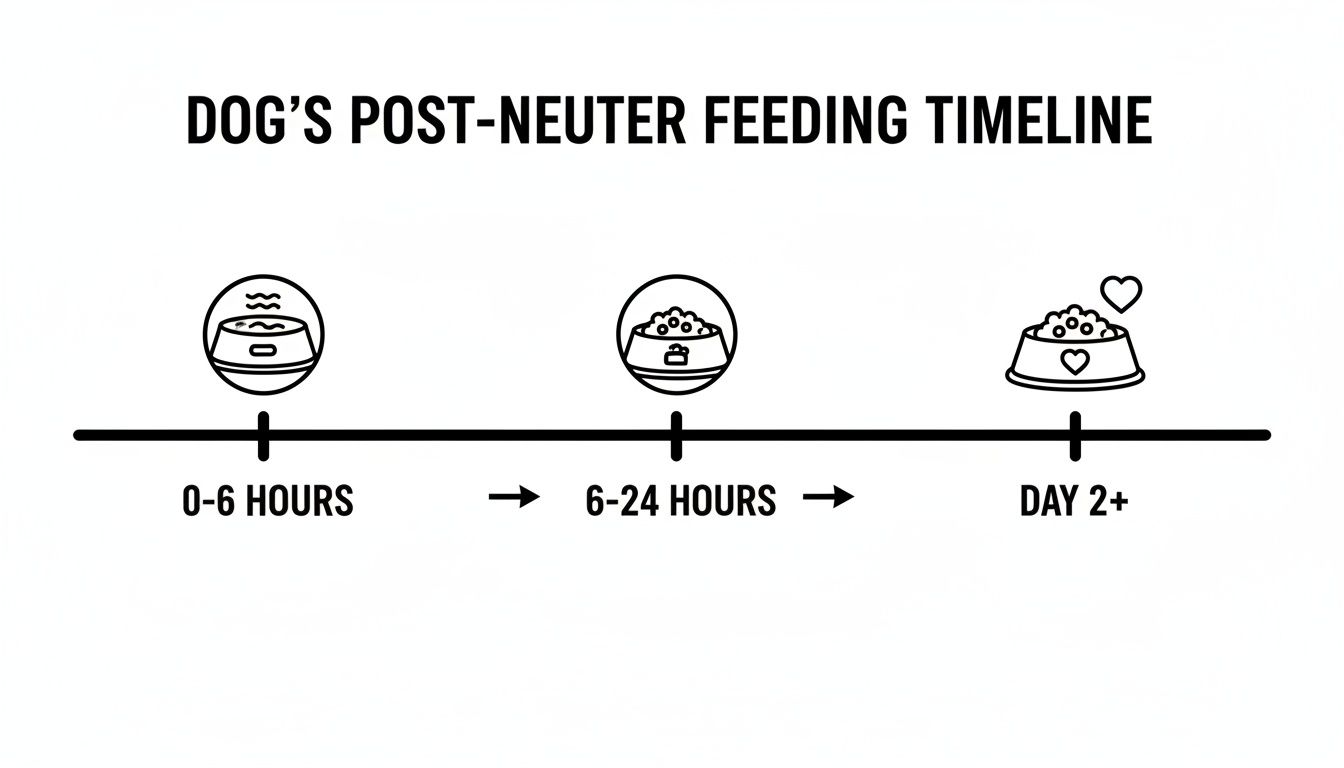
The visualization shows the progression from only offering water in the initial hours to reintroducing their full meals by the second day, highlighting a gradual return to normal feeding.
Gradually Reintroducing Exercise
Once your vet gives you the all-clear—usually at the 10-14 day recheck appointment when stitches come out—you can start to slowly bring back their normal activities. Please, don't go from zero to a full-blown sprint at the dog park on day one. A gradual reintroduction is key to avoid injuring the newly healed tissue.
Start with slightly longer leashed walks for the first few days. If your dog handles those well, with no soreness or swelling at the incision site, you can begin to reintroduce off-leash play in a secure area. Keep these initial play sessions short, maybe just five minutes at a time, and watch them closely. Over the next week, you can slowly build up the duration and intensity until they’re back to their normal, happy self.
When To Call Your Vet: Red Flags To Watch For
Most dogs bounce back from their neuter surgery like champs, but it’s still major surgery. Knowing the difference between a normal, sleepy recovery and a real problem is one of the most important jobs you have as their owner.
Your dog can’t just tell you something feels wrong, so you have to be their eyes and ears. A little bit of grogginess and maybe turning their nose up at dinner the first night is pretty standard. But when subtle signs turn into persistent problems, that's your cue to pick up the phone.
Problems at the Incision Site
You’ll want to get in the habit of gently checking the incision area at least twice a day. A little bit of redness and mild swelling is part of the healing process for the first few days. Anything beyond that, though, could be a sign of trouble brewing.
Keep a close eye out for these specific issues:
- Persistent Bleeding: A tiny spot of blood on the first day isn't a panic moment, but any active dripping or steady oozing that lasts more than 24 hours is not normal.
- Excessive Discharge: It’s okay to see a little clear or slightly pinkish fluid, but if you notice thick, yellow, or green pus, that’s a classic sign of infection.
- Foul Odor: A healing wound shouldn't have a smell. Any kind of foul or "off" odor is a huge red flag that a bacterial infection might be setting in.
- Opening of the Wound: If the stitches look like they're pulling apart or you can see a gap between the edges of the skin, don't wait. Call your vet.
Changes in Behavior and Appetite
How your dog is acting is a massive clue to how they're feeling. Being tired and out-of-sorts for the first day is expected. But if day two rolls around and they seem even more lethargic than before, it’s worth paying attention to.
While neutering is a routine procedure, proper aftercare is what makes it a success. In the US, the spay and neuter industry hit USD 945.6 million, with dogs representing 55-60% of that market. This shows just how many owners are invested in their pet's health, and careful post-op monitoring is a critical part of that investment. You can learn more about the latest trends in spay and neuter services on gminsights.com.
Key Takeaway: If your dog is so lethargic you can't rouse them, completely refuses all food and water for more than a full day, or has repeated vomiting or diarrhea, it’s time to call the vet.
Signs of Severe Pain or Distress
Your vet sent home pain medication for a reason—to keep your dog comfortable. Sometimes, though, the pain can be more severe than the standard dose can handle. You need to be able to spot when their discomfort is crossing the line into a real problem.
These signs are your signal to make an immediate call:
- Constant Crying or Whining: A dog that just can't get comfortable, is constantly shifting, and is crying out needs more pain relief.
- Labored Breathing: Heavy panting (when not hot), wheezing, or any visible struggle to breathe is always an emergency.
- Pale Gums: Take a peek at their gums. They should be a healthy pink. If they look pale, white, or even bluish, it could be a sign of internal bleeding or shock. This is urgent.
- Inability to Urinate: If you notice your dog straining to pee but nothing is coming out after several hours, call your vet right away.
Recovery Red Flags: Contact Your Vet Immediately
When you're worried, it can be tough to think clearly. Use this quick-reference chart to identify symptoms that require urgent veterinary attention.
| Symptom | What It Looks Like | Level of Urgency |
|---|---|---|
| Uncontrolled Bleeding | Active dripping or soaking through bandages that doesn't stop with gentle pressure. | High – Call immediately. |
| Incision Dehiscence | The wound has opened up, and you can see underlying tissues or stitches are broken. | High – Go to the vet now. |
| Signs of Infection | Thick, colored discharge (yellow/green), a bad smell, or the area is hot to the touch. | Medium – Call for an appointment today. |
| Extreme Lethargy | Your dog is unresponsive, can't be roused, or won't lift their head. | High – Emergency. |
| Pale Gums | Gums are white, very pale pink, or bluish instead of a healthy pink. | High – Emergency, could be shock. |
| Breathing Difficulty | Labored breathing, constant wheezing, or shallow, rapid breaths. | High – Emergency. |
| No Urination | Straining to urinate for over 8-12 hours with no success. | High – Call immediately. |
At the end of the day, you know your dog better than anyone. If your gut is telling you that something just isn't right, trust it. It’s always, always better to call your vet and be told everything is fine than to wait and wish you had called sooner.
Got Questions About Your Dog's Neuter Recovery? We've Got Answers.
Even with the best game plan, you're bound to have questions as your dog starts healing. Having clear, straightforward answers can make all the difference, giving you peace of mind and the confidence to handle whatever comes up.
Let's tackle some of the most common questions we hear from dog owners navigating the post-neuter journey.
How Long Does My Dog Really Need to Wear the Cone?
The honest answer? A full 10 to 14 days. I know, it feels like a long time, and nobody enjoys the "cone of shame." But this timeframe isn't just a suggestion—it's how long the incision genuinely needs to heal without being disturbed.
Removing the cone too early is one of the biggest recovery mistakes you can make. It only takes a few seconds of licking for your dog's mouth bacteria to spark a painful infection. Even worse, that licking can pull out stitches and completely reopen the wound. Trust me, that means another stressful (and expensive) trip back to the vet. It’s a classic case of short-term inconvenience for long-term safety.
Is It Normal for the Scrotum to Look Swollen?
Yes, a bit of scrotal swelling and even some bruising is completely normal for the first few days. The area just went through a major procedure, and this is the body's natural way of responding to the trauma.
What you're looking for is mild to moderate swelling that starts to go down after about 48 to 72 hours. If you see that the swelling is getting worse instead of better, feels very hard, or seems to be causing your dog a lot of pain, it's time to call the vet. This could signal a complication like a seroma (fluid buildup) or a hematoma (a blood-filled pocket).
Pro Tip: For the first day or two, you can apply a cloth-wrapped ice pack to the area for 10-15 minutes a few times a day. This can really help with the initial swelling and discomfort. Just make sure your dog is relaxed and you aren't forcing it on him.
For more complex issues or ongoing concerns, knowing where to find reliable veterinary clinics and pet services ahead of time can be a huge stress reliever.
My Dog Won’t Eat After His Neuter. What Should I Do?
This is incredibly common. Don't panic if your dog turns his nose up at his food for the first 24 hours after surgery. The lingering grogginess from the anesthesia often makes them feel nauseous and just plain uninterested in eating.
You can try to tempt him with a small, bland meal like boiled chicken and plain white rice. If he's still not interested, a high-value meal enhancer can be a lifesaver. Sprinkling a little ChowPow over his kibble can make it irresistible. The natural scent of beef heart is fantastic for triggering that feeding response in a picky eater.
Remember, ChowPow is a supplement designed to boost the nutritional value of his regular meal, not replace it. It adds extra protein and key nutrients his body needs to fuel the healing process. If his appetite doesn't return after a full day, that's when you should check in with your vet.
When Can I Finally Give My Dog a Bath?
Hold off on the tub time for at least 10 to 14 days. Getting that incision site wet before it's fully healed is asking for trouble.
Here’s exactly why you need to wait:
- Dissolving Stitches: Moisture can break down absorbable stitches way too early, before the tissue has had a chance to fuse back together.
- Infection Risk: A wet incision is a breeding ground for bacteria, which can lead to a nasty infection and set his recovery way back.
- Irritation: Soaps and shampoos are harsh and will irritate the delicate, healing skin, causing more discomfort.
If your dog gets a little grubby, use pet-safe grooming wipes to spot-clean him, making sure to stay far away from the surgical area. Once your vet gives you the all-clear at the 14-day follow-up, you can get back to your normal bathing routine.
A smooth recovery starts with great nutrition. ChowPow makes it easy to give your dog the extra protein and nutrients they need to heal, especially when their appetite is low. The irresistible beef heart aroma encourages them to eat, ensuring their body has the fuel it needs to get back on its paws. Give their kibble the boost it deserves at https://chowpownow.com.
-
Product on sale
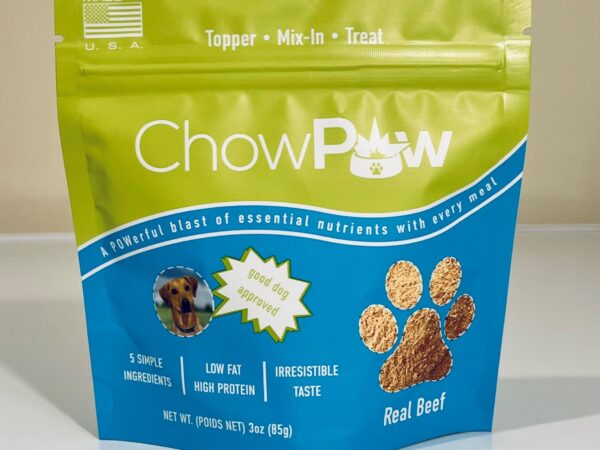 Dog Food Topper - Beef HeartOriginal price was: $14.99.$10.95Current price is: $10.95. - or subscribe and save up to 20%