Dog Allergy To Carrots: A Guide For Caring Pet Parents
It might seem strange to think that a healthy, crunchy snack like a carrot could cause problems for your dog. But yes, a dog allergy to carrots is a real thing. While it’s certainly not as common as an allergy to a protein like chicken or beef, it can happen, leaving your pup with uncomfortable symptoms like itchy skin or an upset stomach. This guide will help you understand why it happens, what to look for, and how to keep your dog happy and healthy.
Why Some Dogs Are Allergic To Carrots
So, how can a wholesome vegetable cause such a fuss? The "why" behind it all comes down to a simple case of mistaken identity inside your dog's body.
Think of your dog’s immune system as a super-dedicated security guard. Its main job is to spot and take down real threats like viruses and bacteria. But sometimes, this guard gets a little overzealous. In the case of a food allergy, the system misreads a harmless protein—in this case, from a carrot—as a dangerous invader.
This false alarm sets off a full-blown defensive reaction. The body unleashes chemicals like histamines to "fight off" what it thinks is a threat. It’s this over-the-top response that causes all the physical symptoms we see, from constant scratching to tummy troubles.
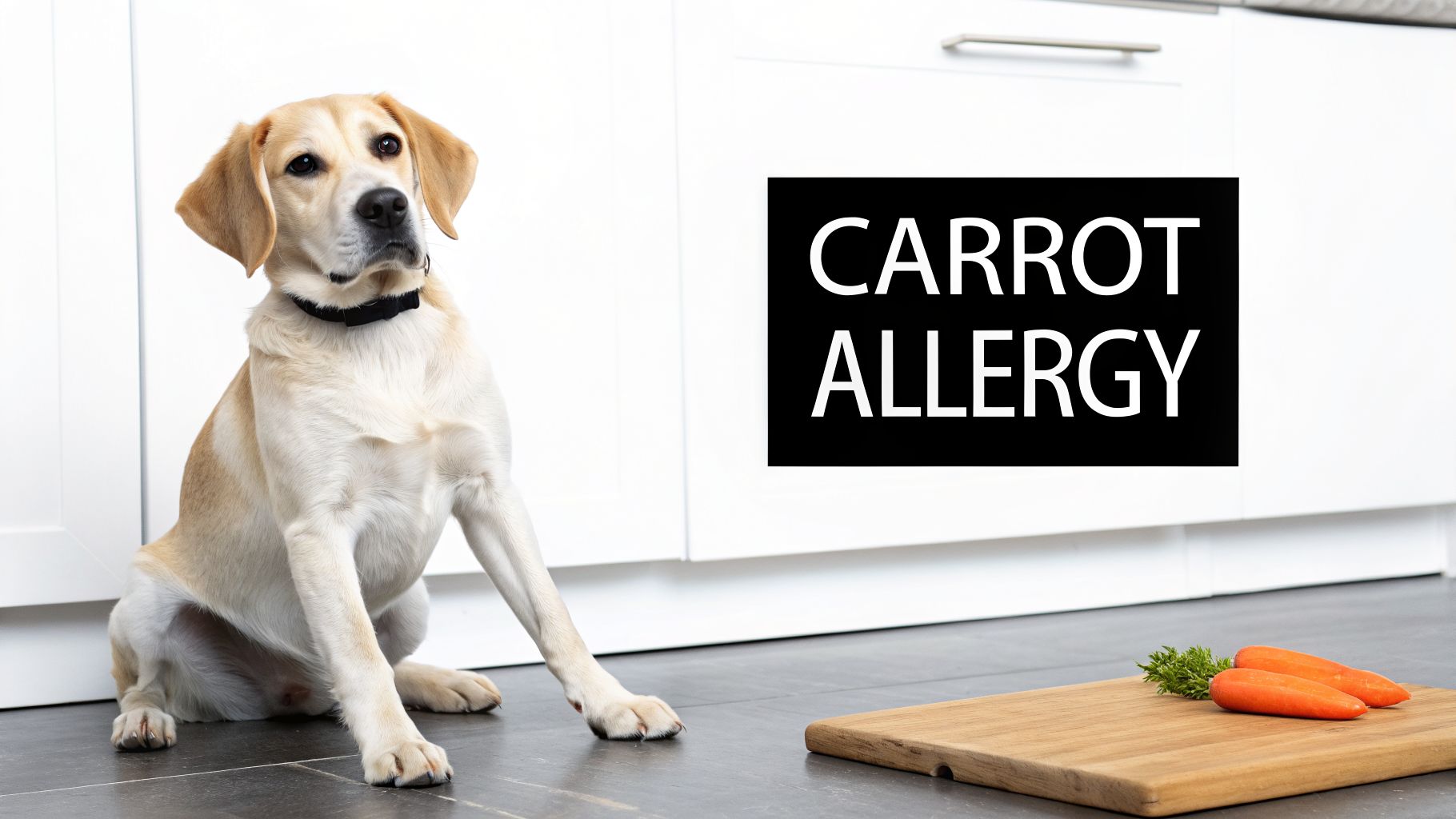
Alt text: A yellow Labrador puppy sits by a 'Carrot Allergy' sign, looking at fresh carrots on a wooden board.
The Immune System's Overreaction
This isn't just a random fluke; there’s a specific process happening behind the scenes. The main culprits are antibodies, particularly a type called Immunoglobulin E (IgE). The very first time a sensitive dog eats a carrot, their body might start creating these specific IgE antibodies that are programmed to recognize carrot proteins.
These antibodies then latch onto special immune cells called mast cells, which hang out in your dog's skin, gut, and airways. Now, everything is primed for a reaction. The next time your dog eats a carrot, the carrot proteins link up with these IgE-loaded mast cells, causing them to burst open and release a flood of histamines. This is what kicks off the itching, hives, or digestive upset.
If you want to get deeper into the science, you can learn more about what causes dog food allergies in our detailed guide.
Key Takeaway: A carrot allergy doesn't mean carrots are "bad." It's simply an individual dog's immune system making a mistake and flagging a perfectly safe food as a danger.
Are Carrots A Common Allergen For Dogs?
When you look at the most common culprits behind dog food allergies, carrots are pretty far down the list. Most of the time, the problem is a protein found in more common ingredients.
The usual suspects are:
- Beef
- Dairy
- Chicken
- Wheat
- Soy
That said, any food that contains protein has the potential to trigger an allergy, and that includes veggies like carrots. It’s a great reminder that every dog is unique, and what works beautifully for one might be a problem for another.
While our standard ChowPow formula proudly includes carrots for their fantastic nutritional benefits, we know how critical it is for pet parents to have safe, reliable options for their sensitive pups. This guide is here to arm you with the knowledge you need to navigate your dog's diet with confidence.
Spotting The Signs Of A Carrot Allergy
Catching an allergic reaction early is the fastest way to get your dog feeling comfortable again. When a dog has an allergy to carrots, the signs can pop up not long after a meal, ranging from a barely-there itch to much more serious issues.
Think of it this way: what starts as a mild, occasional scratch can quickly escalate if the trigger—in this case, carrots—isn't removed. The most common red flags involve the skin and the digestive system. Knowing what to look for is your first and most important step.
Skin And Coat Problems
By far, the most frequent sign of a food allergy is skin that just won't stop itching. This is the body's inflammatory response showing up on the outside. You might notice your dog is suddenly obsessed with licking, scratching, or chewing on themselves.
Keep an eye out for these tell-tale signs:
- Non-Stop Itching: Is your dog constantly scratching their face, paws, ears, or belly?
- Red, Angry Skin: You may see patches of pink or red, especially on the tummy or inner thighs where fur is thinner.
- Hives or Welts: Sudden bumps can appear on the skin. They can be tough to see under a thick coat, but you can often feel them.
- Chronic Ear Infections: If you’re constantly battling ear gunk and irritation, an underlying allergy is a classic culprit in dogs.
Digestive Upset
Just as the skin gets inflamed, the lining of the gut can too. An allergic reaction messes with normal digestion, leading to a whole host of tummy troubles that are often directly tied to mealtimes.
For many dogs, GI symptoms are the most obvious clue. If you notice a pattern of upset stomach after meals, it’s a strong signal that a specific ingredient, such as carrots, could be the problem.
Common digestive signs include:
- Vomiting or Diarrhea: These are clear signs your dog’s system has rejected something.
- Excessive Gas: All dogs get gassy, but a sudden increase or particularly foul-smelling wind can point to a bigger problem.
- Straining To Poop: Inflammation in the intestines can make it uncomfortable and difficult for your dog to go to the bathroom.
Respiratory And Severe Reactions
While not as common, a carrot allergy can sometimes cause respiratory issues. This happens when the allergic reaction triggers inflammation in the airways. You might hear your dog sneezing a lot, or notice a wheezing sound when they breathe.
In very rare instances, a dog can experience a severe, life-threatening allergic reaction called anaphylaxis. This is a true emergency that requires immediate vet care. Signs include sudden collapse, severe difficulty breathing, and pale gums.
To help you quickly identify what might be going on, here’s a simple breakdown of the most common symptoms.
Common Symptoms Of A Dog Carrot Allergy
| Symptom Category | What To Look For In Your Dog |
|---|---|
| Skin & Coat | Persistent scratching, red or inflamed skin, hives, hot spots, chronic ear infections. |
| Gastrointestinal | Vomiting, diarrhea, excessive gas, stomach cramping, or straining during bowel movements. |
| Respiratory | Sneezing, coughing, wheezing, or other breathing difficulties. |
| Severe (Anaphylaxis) | Sudden weakness or collapse, trouble breathing, pale gums, swelling of the face or muzzle. |
Keep in mind that while a carrot allergy can be worrying, these symptoms can also point to other health issues. Your best bet is always to get in touch with your veterinarian. They can give you a proper diagnosis and create a solid plan to help your best friend feel like themselves again.
How Your Vet Will Diagnose A Food Allergy
Figuring out if your dog has a food allergy can feel like trying to solve a big, frustrating puzzle. When you start to suspect an allergy to carrots or another food is behind your dog’s misery, your veterinarian becomes your most important partner. They’ll guide you through a step-by-step process to get a clear answer and get your pup back on the path to feeling great.
The whole diagnostic journey almost always kicks off with a thorough physical exam and a really detailed chat. Your vet will want to know everything: what symptoms you've seen, when they started, and what your dog eats every single day—and yes, that includes every last treat and table scrap! Any patterns you’ve noticed are critical clues.
The Gold Standard Elimination Diet
You might have heard about blood and skin tests for food allergies, but most vets will tell you the most reliable way to get a real diagnosis is with an elimination diet. Think of it as a little science experiment you get to control. It's considered the "gold standard" because it directly shows you how your dog's body reacts to specific ingredients in real-time.
The process starts by completely removing all of your dog's current foods and treats. For the next 8 to 12 weeks, you'll feed a special, simplified diet that your vet prescribes. This will usually be a food with a single protein and carbohydrate source your dog has probably never eaten before, like rabbit and potato. Another option is a hydrolyzed protein diet, where the proteins are broken down into pieces too tiny for the immune system to even recognize.
During this strict trial period, absolutely nothing else can pass your dog’s lips—no flavored toys, no dental chews, and definitely no licking a plate clean. Sticking to this is non-negotiable if you want accurate results.
Once the trial is over and your dog’s symptoms have hopefully vanished, it's time for the "challenge." This is where you start reintroducing the old ingredients one at a time, starting with carrots, and watch closely for any reaction over several days. If the itching, upset stomach, or other issues come roaring back after you add carrots, you’ve found your culprit. To get a deeper look at how this works, check out our guide on the dog food allergy elimination diet.
The infographic below shows the common signs that might lead you and your vet down this diagnostic path.
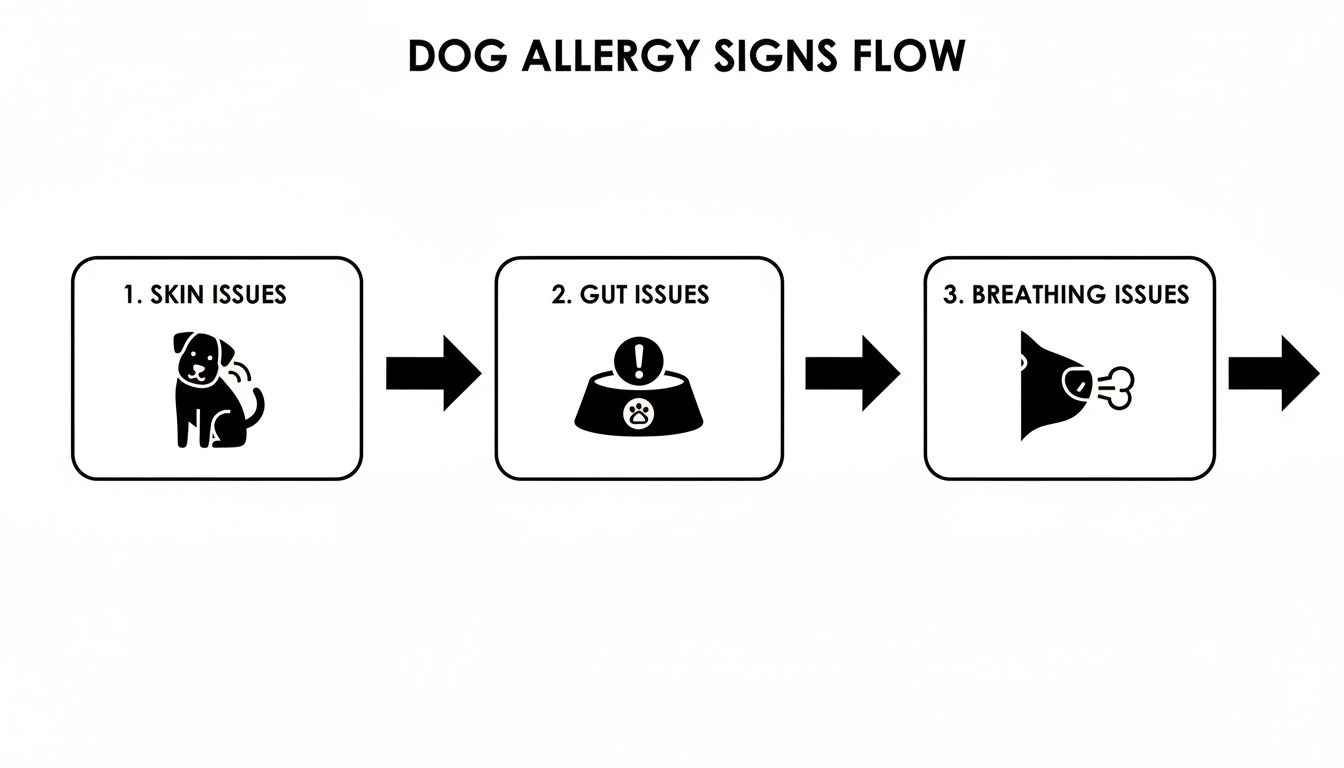
Alt text: Flowchart illustrating common dog allergy signs, starting with skin issues like itching, then moving to gut issues like vomiting, and finally to breathing issues like wheezing.
As you can see, allergic reactions can show up in different ways, often starting with the skin and gut before ever affecting breathing. By using an elimination diet to pinpoint a specific food trigger, you get the power to manage your dog's health effectively, turning all that confusion into clear, actionable steps.
Managing A Carrot Allergy: How To Enhance Your Dog's Diet Safely
So, the vet has confirmed it: your dog has a carrot allergy. What now? The path forward is all about careful management and strict avoidance. This means you’re about to become an expert-level ingredient detective, scanning every bag of food, every treat, and even supplements for that one offending veggie.
But here’s the good news: this diagnosis isn’t a sentence to bland, boring meals. Think of it as an opportunity to discover new, exciting, and perfectly safe ways to boost your dog's nutrition. The focus simply shifts from what you can't feed to all the wonderful things you can add to their kibble.
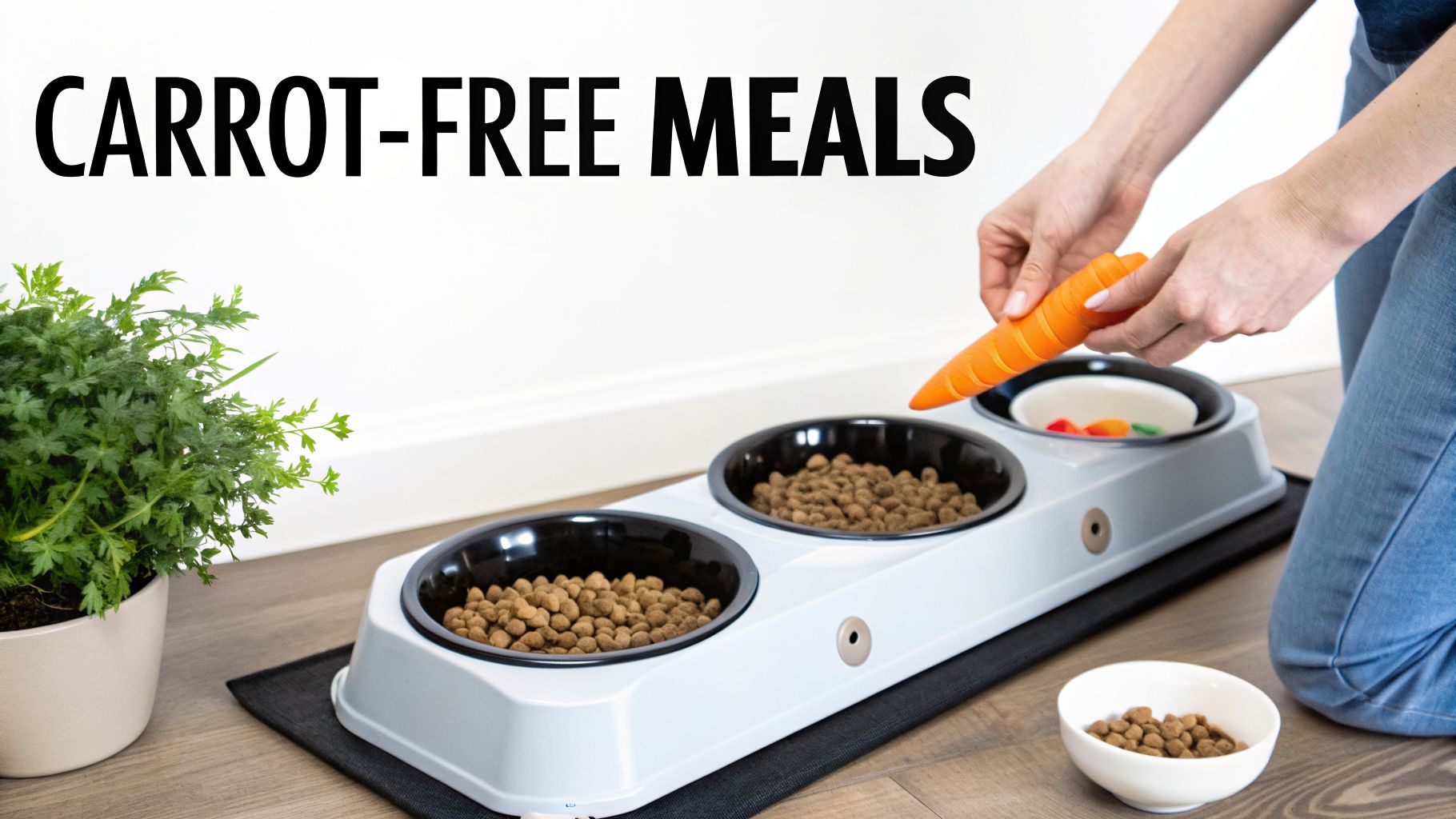
Alt text: A person places a toy carrot into an empty pet bowl, symbolizing the removal of carrots from a dog's diet, with two bowls of kibble nearby.
Enhancing Meals The Safe Way
A fantastic strategy is to use a meal enhancement or food topper. These supplements are designed to elevate your dog’s current food—not replace it. They're perfect for adding targeted nutrition and flavor without needing a complete diet overhaul. For instance, ChowPow is specifically made to be a meal enhancement, turning regular kibble into something more enticing and nutritionally powerful by boosting its value.
It's crucial to remember that a topper is a supplement to their main meals. It boosts the nutritional value and makes food more exciting, which is a lifesaver for picky eaters or dogs needing extra support. It is not, however, a substitute for their vet-approved base diet.
While our standard ChowPow formula does contain carrots, the principle of using a high-quality meal topper is what’s important here. Your mission is to find a powerful, carrot-free alternative that delivers those same kinds of benefits. This is where reading labels becomes your new superpower.
Key Insight: A food allergy diagnosis isn't about restriction; it's about smart substitution. Your goal is to replace the problem ingredient with safe, high-value alternatives that keep your dog healthy and happy.
Finding Safe Toppers And Alternatives
Walking down the pet food aisle can feel a bit overwhelming, but a few simple guidelines will help you find the perfect carrot-free options for your sensitive pup. Your new best friends are going to be foods with limited and transparent ingredient lists.
Here are some excellent carrot-free options to explore:
- Single-Ingredient Toppers: Look for dehydrated or freeze-dried meat toppers. Things like beef heart, lamb liver, or salmon are packed with protein and omega fatty acids, and they are naturally free of vegetables.
- Rotation Diet: Don't get stuck on just one food or topper. Rotating between two or three different safe protein sources can help prevent new sensitivities from developing and keeps mealtime interesting for your dog.
- DIY Purees: Simple, homemade purees of safe foods like pumpkin or blueberries can be a fantastic, low-cost way to add moisture and nutrients to kibble. Just be sure any other additions are also vet-approved!
Whenever you introduce a new food—even a "safe" one—go slowly. Start with a tiny amount, maybe a quarter teaspoon, mixed into their regular food. Keep a close eye on them for the next 24-48 hours for any signs of a reaction before you gradually increase the amount.
It can also be helpful to know what you're replacing. While you're avoiding carrots, you can discover the benefits of adding carrots to your dog's diet in our other article. This will give you an idea of what nutrients you might want to find in other safe sources. This careful approach ensures you can enrich your dog's diet with confidence, turning a tricky diagnosis into a positive step toward better health.
The Surprising Link Between Pollen and Carrots: Understanding Cross-Reactivity
Ever had one of those head-scratching moments where your dog, who has munched on carrots for years, suddenly develops an allergy to them? It can feel like it came out of thin air. But often, the real culprit is a sneaky process called cross-reactivity.
Think of it as a case of mistaken identity inside your dog's body. The proteins in something like birch pollen and the proteins in a raw carrot can look incredibly similar—like two people wearing the exact same hat. Your dog's immune system is on high alert for the "pollen hat," which it sees as a threat. When a carrot protein comes along wearing that same hat, the immune system panics and attacks, even though the carrot itself is totally harmless. That's cross-reactivity in a nutshell.
The Pollen-Food Connection
This phenomenon, which in humans is often called Oral Allergy Syndrome, is the reason seasonal allergies can suddenly turn certain foods into a problem. The protein structures in some pollens are just so close to those in raw fruits and veggies that the body gets them mixed up.
For a dog that’s sensitive to birch pollen, this means their body might also overreact to foods like:
- Carrots
- Celery
- Apples
- Pears
- Peaches
This is exactly why you might only see allergy symptoms pop up during high-pollen seasons, like spring. With the immune system already fired up from all the pollen in the air, it’s far more likely to go into overdrive when it spots those look-alike proteins in the food bowl.
Realizing there's a link between environmental and food allergens is a game-changer. It means that managing your dog's allergy isn't just about what they eat—it's also about keeping an eye on pollen counts and seasonal shifts.
And this isn't just a theory; it's a trend backed by some pretty solid data, especially in certain parts of the world. A huge EuroPrevall study, for instance, found a 3.6% prevalence of carrot sensitization across 13 European countries. Digging deeper, a German survey of patients with pollen-related food allergies found that carrots triggered reactions in an incredible 52% of them. This was often pinned on the cross-reactivity between the main birch pollen allergen (Bet v 1) and its carrot doppelgänger (Dau c 1). You can read more on the science and global data in this deep dive into carrot allergen data.
Understanding cross-reactivity helps a carrot allergy diagnosis make a lot more sense. It gives you the "why" behind your dog's sudden symptoms and helps you make smarter choices about their diet and environment, especially when the seasons start to change.
Frequently Asked Questions About Dog Carrot Allergies
Getting an allergy diagnosis for your dog can feel overwhelming, especially when it’s for something as common as carrots. It’s natural to have a ton of questions. Let's clear up some of the most common ones we hear from pet parents just like you.
Are Cooked Carrots Safer Than Raw Carrots?
This is a great question, and the logic makes sense. Cooking can change the protein structure in vegetables, which is what triggers an allergic reaction in the first place. For a dog with a very mild sensitivity, you might notice less of a reaction to cooked carrots versus raw ones.
However, cooking doesn't get rid of the allergenic proteins completely. For any dog with a true, confirmed allergy to carrots, the only safe bet is to avoid them entirely. That means no raw, cooked, dehydrated, or powdered carrots. It's the only way to keep them reaction-free and comfortable.
How Can I Be Sure A Dog Food Is Carrot-Free?
The secret is to become a bit of a detective when you read ingredient labels. Pet food manufacturers have to list everything that goes into their products, so take a moment to scan the full ingredient list on any food, treat, or supplement you're thinking of buying.
Watch out for vague terms like "vegetable blend," "garden medley," or even "natural flavoring." These can sometimes be hiding spots for carrot. If you're ever unsure, your best bet is to choose a limited-ingredient diet or just contact the company directly to get a 100% carrot-free confirmation.
Pro Tip: When you find a food or treat brand that works for your dog, it’s a good idea to stick with it. Consistency is your best friend when you're managing a food allergy.
If My Dog Is Allergic To Carrots Will They React To Other Vegetables?
It’s definitely a possibility. This happens because of something called cross-reactivity. It’s when the proteins in one food look so similar to the proteins in another that your dog’s immune system gets confused and reacts to both.
Carrots belong to the Apiaceae family of plants, which also includes:
- Celery
- Parsnip
- Parsley
- Dill
Because they're botanical cousins, an allergy to carrots makes a reaction to these other vegetables much more likely. While we're focused on carrot allergies here, understanding the broader spectrum of pet allergies, their causes, and treatments can give you a more complete picture. As always, the golden rule is to introduce any new food very slowly, in tiny amounts, and watch closely for any negative signs.
For dogs with tricky food sensitivities, finding a safe and delicious way to make mealtime more exciting is key. While our standard formula isn't the right fit for a dog with a carrot allergy, the ChowPow philosophy is all about boosting your dog's current kibble with top-notch, targeted nutrition. As a meal enhancement, ChowPow is designed to supplement, not replace, their main diet. We encourage you to explore carrot-free toppers that help you do just that, turning every bowl into a nourishing and exciting experience for your best friend. Learn more about boosting your dog's nutrition at https://chowpownow.com.
-
Product on sale
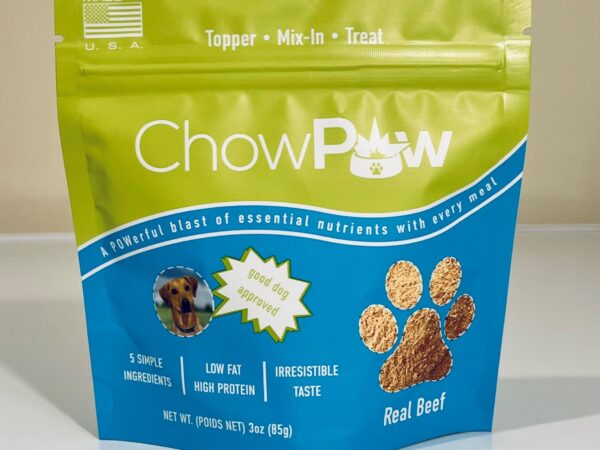 Dog Food Topper - Beef HeartOriginal price was: $14.99.$10.95Current price is: $10.95. - or subscribe and save up to 20%