Are Chicken Bones Good for Dogs? A Vet-Approved Guide
Your dog is sitting under the table, watching every bite of roast chicken like it's the most important event of the day. Dinner ends, and you're left holding a chicken wing or a little piece of carcass. It feels harmless to offer it as a treat. After all, dogs chew bones, right?
That question comes up all the time. Are chicken bones good for dogs? The short answer is no, not as a general treat, and cooked chicken bones are the biggest concern. The longer answer matters, because many loving owners aren't trying to do something reckless. They're usually trying to give their dog something satisfying, natural, or nutritious.
I get why this feels confusing. Bones are often talked about as if they're part of a normal dog diet. But chicken bones are a very specific risk, especially once they're cooked. And even raw chicken bones, which some people consider the safer version, still come with meaningful downsides.
If you're worried because your dog already ate one, or you're trying to make smarter feeding choices going forward, you don't need panic. You need clear information and a calm plan.
The Tempting Snack A Dangerous Dilemma
A leftover chicken bone doesn't look dramatic. It's small. It smells good. Your dog wants it. That combination tricks people into thinking the risk must be small too.
But chicken bones are not like many store-bought dog chews. They break differently, move through the body differently, and can create problems fast. That's why veterinary professionals tend to give a firm answer when people ask whether chicken bones are good for dogs.
Why people think bones must be fine
Most owners who offer a bone aren't being careless. They're usually thinking one of three things:
- It's natural: Dogs chew, so a bone seems like it should fit that instinct.
- It has nutrients: People often associate bones with calcium, phosphorus, and collagen.
- It feels like a reward: A leftover bone seems like a special treat instead of waste.
Those instincts make sense. The problem is that what seems natural isn't always safe in a home setting, especially with poultry bones.
Practical rule: If a food can splinter into sharp pieces, don't assume your dog's stomach will sort it out safely.
The real question underneath the question
When people ask, "are chicken bones good for dogs," they usually mean one of two things.
First, they may be asking, "Will this hurt my dog?"
Second, they may be asking, "Am I missing a health benefit if I don't give bones?"
Both are fair questions. The first needs a safety answer. The second needs a nutrition answer. And those two answers don't point in the same direction.
Chicken bones may look like a simple chew, but they carry a risk that often outweighs the reason people offer them in the first place. That's especially important if your dog is small, older, recovering from illness, or has a sensitive stomach.
Cooked Bones vs Raw Bones The Critical Difference
A lot of caring dog owners get tripped up here. They hear, "never give cooked chicken bones," then wonder if raw chicken bones are the safer answer.
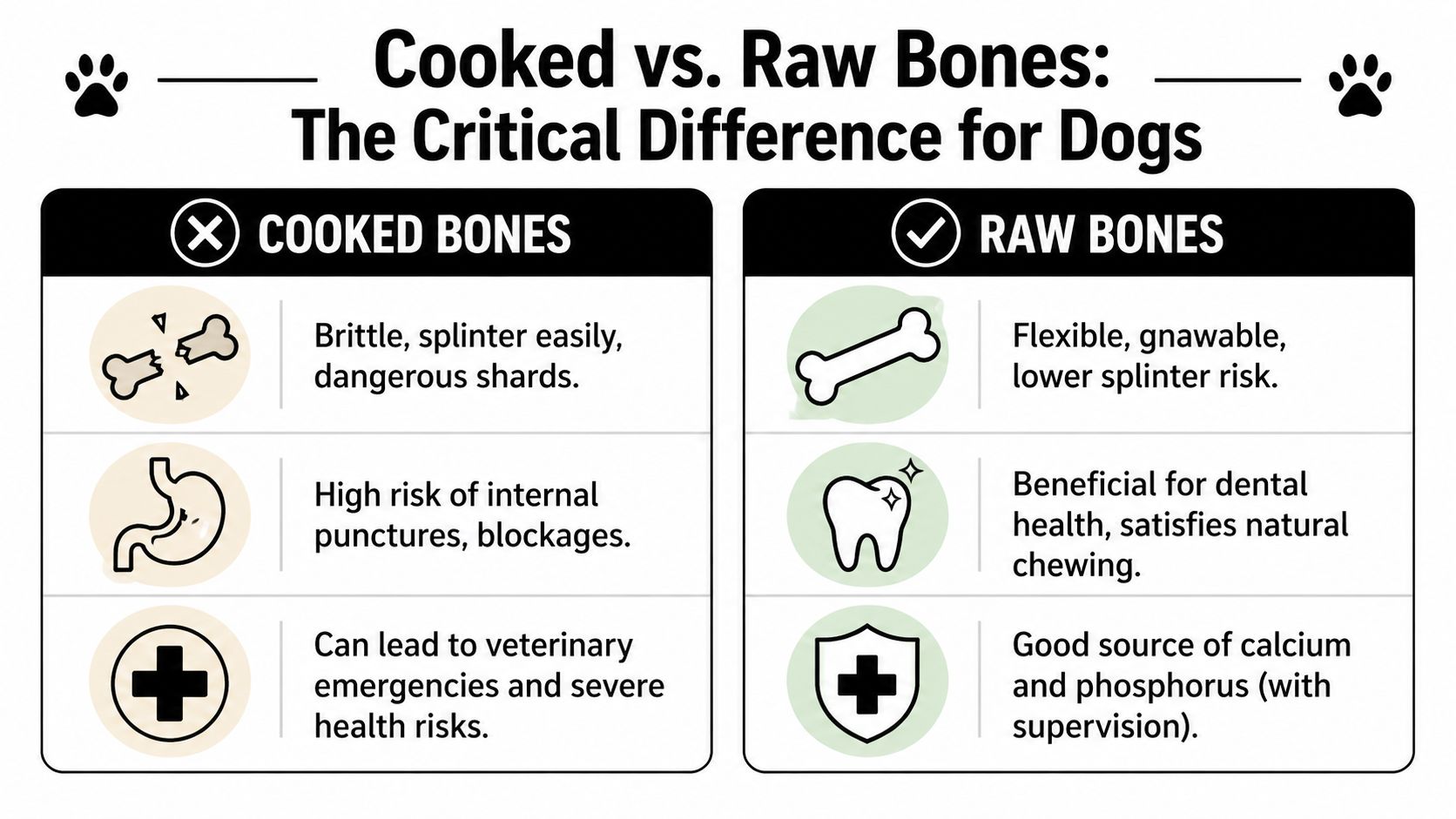
The safer way to frame it is simpler. Cooked chicken bones carry the highest splinter risk. Raw chicken bones may bend more, but they can still cause choking, broken teeth, stomach upset, and bacterial exposure.
What cooking changes
Heat changes the bone itself. After cooking, chicken bones become drier and more brittle, so chewing can snap them into sharp pieces more easily.
Raw bones are usually less brittle. A raw feeding guide from Raw Feeding 101 on raw chicken bones for dogs explains that raw bones are more flexible and less likely to splinter than cooked ones. That difference matters, but it only answers one part of the safety question.
A flexible bone can still be swallowed the wrong way.
Why raw bones still worry many veterinary professionals
Raw chicken bones do not carry the same brittleness as cooked bones, but they still create real problems. A dog can gulp a piece that is too large, lodge a small hollow bone in the throat, crack a tooth while chewing, or pick up bacteria from raw meat. The same source also notes bacterial concerns and greater choking issues for very small dogs.
That is why "raw is safer than cooked" can be misleading if it gets shortened to "raw is safe." Those are not the same statement.
Safety and nutrition are two different questions
This point often gets missed. Some owners are not really looking for a chew. They are trying to support calcium, phosphorus, trace minerals, joint support, or a more natural diet.
That goal makes sense.
But using a chicken bone to chase those benefits is a bit like using a sharp shell to add calcium to a meal. The nutrient may be there, but the delivery method creates avoidable risk. For dogs with sensitive stomachs, seniors, toy breeds, and enthusiastic gulpers, that tradeoff often makes even less sense.
If you are comparing fresh feeding approaches, this question often overlaps with the wider discussion about raw vs cooked food for dogs. Bones need separate caution because chewing and swallowing hazards are different from the usual pros and cons of food preparation.
Risk Comparison Cooked vs Raw Chicken Bones
| Attribute | Cooked Chicken Bones | Raw Chicken Bones |
|---|---|---|
| Texture | Brittle and prone to breaking sharply | More flexible, but still chewable into unsafe pieces |
| Splinter risk | High | Lower than cooked, but still present |
| Choking risk | Present, especially with small bones or fast eaters | Present, especially in small dogs and dogs that gulp |
| Internal injury risk | Higher because sharp fragments form more easily | Still possible if pieces are swallowed whole or lodge in the tract |
| Bacterial concern | Lower from the cooking process itself | Higher because raw meat can carry pathogens |
| General safety | Veterinary professionals advise against them | Still risky, even when owners use them intentionally |
Comparing raw bones with cooked bones is a comparison between a more dangerous option and a less brittle one. It is not a guarantee of safety.
The practical bottom line
If your goal is chewing enrichment, there are safer options than chicken bones. If your goal is nutrition, there are much safer ways to add whole-food support for calcium-related and mineral-related needs without asking your dog to crunch or swallow a risky object.
That is where a food-based topper such as ChowPow stands out, especially for sensitive dogs. It aims at the reason many owners reach for bones in the first place, nourishment, without relying on something that can splinter, lodge, or upset the gut.
Why Cooked Chicken Bones Are a Veterinary Emergency
Cooked chicken bones are the version that worries veterinary teams most, and for good reason. Once cooked, these bones can break into thin, pointed shards. Inside a dog's mouth, throat, stomach, or intestines, those shards can act a lot like broken glass.
That image is unpleasant, but it's accurate enough to help you understand the danger. A bone doesn't have to be large to cause serious harm. A small sharp piece in the wrong place is enough.

Where the damage can happen
A cooked chicken bone can injure a dog at several points along the digestive tract.
- Mouth and gums: Sharp edges can cut soft tissue while your dog chews.
- Esophagus: A shard can lodge on the way down and create a painful obstruction.
- Stomach: Some pieces sit there instead of breaking down safely.
- Intestines: Here, blockage or perforation can become life-threatening.
The shape of chicken bones makes this worse. Poultry bones are often hollow and thin. That means they don't just crack. They can splinter into narrow points.
What the veterinary data shows
According to Dogster's veterinary-reviewed discussion of chicken bones, cooked bones are a leading cause of gastrointestinal emergencies in dogs. The same source states that hollow bones from wings and carcasses easily fracture into sharp shards, and these incidents result in hospitalization in 20-30% of cases, with perforations occurring in roughly 10-20% of untreated ingestions.
Those numbers matter because they push this out of the "probably fine" category. A lot of dogs may look normal right after swallowing a bone. That doesn't mean the risk has passed.
Why the first few hours can be misleading
Some dogs don't cough. They don't gag. They don't cry out. They may swallow the bone and walk away as if nothing happened.
That's part of what makes cooked bone ingestion so deceptive.
A quiet dog after eating a bone isn't proof that the bone is harmless. It may only mean the problem hasn't shown itself yet.
Pain, obstruction, and internal injury often become more obvious later, once the fragment moves, lodges, or irritates tissue enough to trigger vomiting, lethargy, or belly pain.
Common problems vets worry about
Choking and lodging
If the bone doesn't go down properly, it can become stuck in the throat or esophagus. Dogs may drool, retch, paw at the mouth, or seem panicked. This is a true emergency.
Tears and punctures
A sharp fragment can scrape or puncture tissue. Even a very small tear matters inside the digestive tract because leaked stomach or intestinal contents can trigger severe illness.
Obstruction
Some bone pieces don't cut. They block. A blockage can stop food and fluid from moving normally and make a dog vomit repeatedly, refuse food, and become weak.
Constipation and painful straining
Bone fragments can also pack together lower in the digestive tract and make stools difficult or painful to pass.
Why "just one little bone" can still be a big deal
Owners often tell me the same thing. It was only one wing bone. Only a little bit of leftover chicken. Only a small dog bite before they could grab it away.
Unfortunately, danger isn't measured by how casual the moment felt. It's measured by what that bone turns into after chewing and swallowing.
Cooked chicken bones don't become safer because they were stolen quickly, eaten with enthusiasm, or swallowed whole. In fact, gulping can make things worse, because a dog that swallows fast may not break the bone down in any controlled way at all.
My Dog Ate a Chicken Bone What To Do Right Now
If this happened in the last few minutes, start with one goal. Stay calm enough to observe clearly. Your dog needs your attention more than your panic.
First do these three things
- Take away any remaining bones so your dog can't keep eating.
- Check your dog's breathing and behavior right away.
- Do not induce vomiting. Bringing sharp fragments back up can injure the throat and esophagus.
If your dog is choking, struggling to breathe, collapsing, or in obvious distress, go to an emergency veterinarian immediately.
Signs that mean don't wait
These signs need urgent veterinary attention:
- Active choking or gagging
- Repeated retching
- Pawing at the mouth
- Heavy drooling
- Vomiting
- Bloody stool
- Marked lethargy
- Signs of belly pain, such as a tense abdomen, whining, or restlessness
If you suspect an obstruction but aren't sure what that can look like, this overview of bowel obstruction in dogs can help you recognize the pattern of symptoms owners often miss early.
What information your vet will want
Call your veterinary clinic or emergency hospital and be ready to answer practical questions.
- What kind of bone was it? Wing, thigh, carcass, or unknown.
- Was it cooked or raw?
- How big is your dog?
- About how much was eaten?
- When did it happen?
- What symptoms have you noticed so far?
You don't need perfect answers. Even your best guess is helpful.
Quick guidance: If your dog is very small, very old, very young, or already has digestive problems, I'd lean toward calling the vet sooner rather than later.
When watchful monitoring may be advised
Sometimes a vet may tell you to monitor at home if your dog seems comfortable and the exposure sounds limited. If that happens, follow your vet's instructions closely and watch for any change over the next couple of days.
Things to monitor include:
- Appetite: Is your dog still interested in food?
- Energy: Are they acting like themselves?
- Stool: Are they passing stool normally, without blood or straining?
- Vomiting or gagging: Any new episode matters.
- Posture and comfort: Hunched posture, pacing, or reluctance to lie down can signal pain.
A short visual walkthrough can also help if you're flustered and need a calmer reminder of next steps.
What not to do
Owners often reach for home fixes when they're scared. That's understandable, but guessing can make things worse.
Avoid these mistakes:
- Don't induce vomiting
- Don't pull forcefully at a bone lodged in the mouth or throat unless your vet directs you and it's easily accessible
- Don't assume silence means safety
- Don't wait too long if symptoms start
The goal isn't to overreact. It's to respond early enough that your dog gets help before a manageable problem turns into a crisis.
Can a Dog's Stomach Just Dissolve the Bone
A lot of people have heard this idea: dogs have strong stomach acid, so the bone will probably dissolve. There is a grain of truth in that. Dogs can digest some hard materials better than people can. But the leap from "some bone fragments may break down" to "the stomach will reliably handle any chicken bone" is where owners get into trouble.
That belief becomes especially risky when it delays a phone call to the vet.
Why this myth sticks around
Sometimes a dog eats a small fragment and seems completely fine. The owner never sees a problem, so the story becomes, "their stomach dissolved it."
And sometimes small fragments really do pass.
But according to PetMD's guidance on what to do if a dog ate a chicken bone, while many small bone fragments can pass, the idea that a dog's stomach will reliably dissolve any bone is a myth. That same guidance warns that puppies, senior dogs, and dogs with underlying digestive issues face a significantly higher risk of obstruction.
What can go wrong before digestion helps
A stomach can't dissolve a bone that never makes it to the stomach safely. It also can't protect the esophagus from a sharp edge on the way down. And if a fragment moves into the intestines and gets stuck, digestion is no longer the main issue.
That's why "wait and hope" is such a weak strategy with chicken bones. The danger often comes from shape and location, not just whether bone material can eventually soften.
Dogs at higher risk
Some dogs have less margin for error.
- Puppies have immature systems and tend to gulp before chewing well.
- Senior dogs may have weaker digestion, slower gut movement, or poorer dentition.
- Dogs recovering from illness may already be dehydrated, underweight, or prone to stomach upset.
- Dogs with chronic digestive conditions may have less ability to move foreign material through smoothly.
If your dog falls into one of those groups, a bone isn't just a questionable treat. It's a gamble with less room for recovery.
If your dog is fragile in any way, don't use another dog's lucky outcome as your standard.
A safer mindset
Instead of asking, "Can my dog's stomach dissolve this?" ask a more useful question. "What am I risking if it doesn't?"
That shift helps people make clearer decisions. A bone might pass. It might not. But if the downside includes choking, obstruction, or internal injury, most owners decide quickly that it isn't worth the uncertainty.
Safer Ways to Satisfy Your Dogs Cravings and Boost Nutrition
Dog owners aren't drawn to bones because they want danger. They're drawn to bones because they want to give their dog something beneficial. Usually that means one of two things: a satisfying chew or a nutritional boost.
Those are reasonable goals. The good news is you don't need to use chicken bones to get there.
What owners are usually trying to provide
When someone asks whether chicken bones are good for dogs, they may be thinking about:
- Calcium and minerals
- Collagen and general "joint support" ideas
- A natural chewing outlet
- A special topper or reward that makes food more exciting
That motivation matters, because it means the best answer isn't just "don't do it." The better answer is "here's how to meet the same need with less risk."
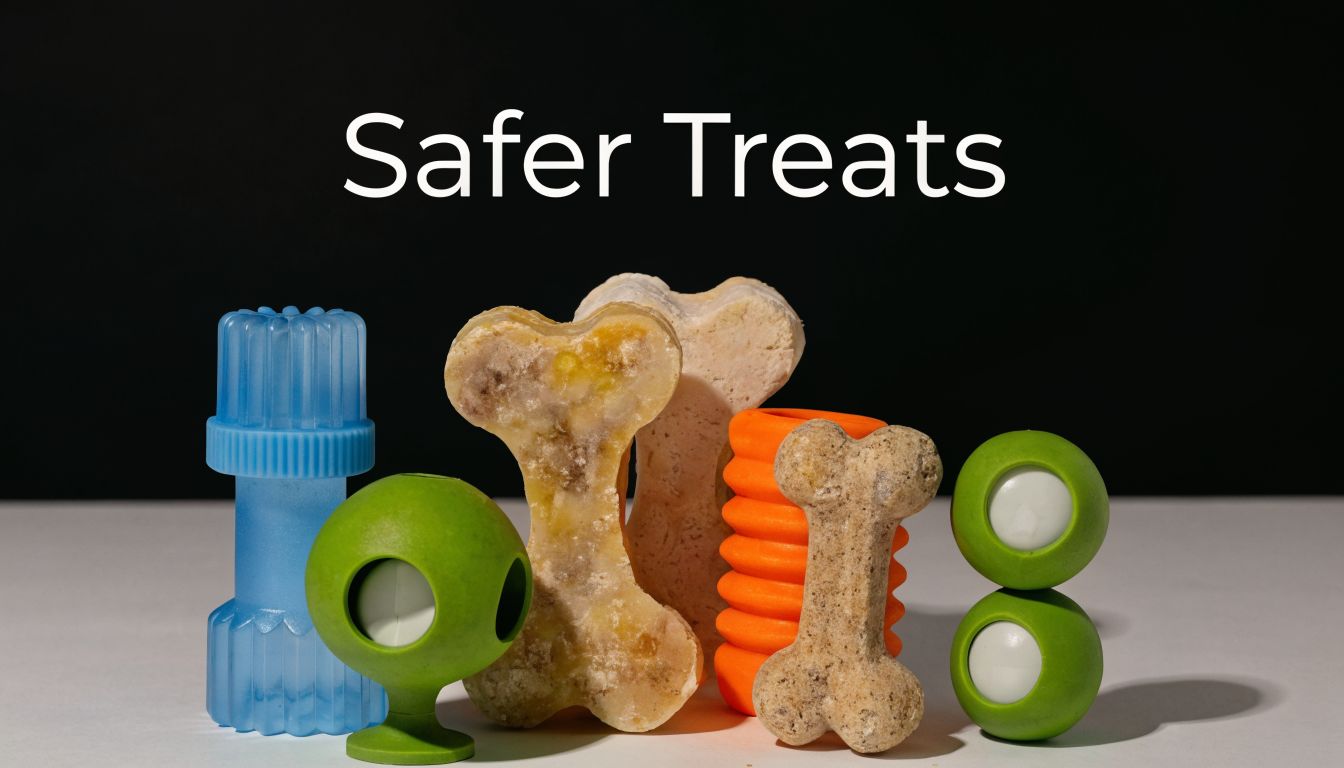
Better ways to handle the chewing need
If your dog wants to gnaw, choose products made for dogs rather than leftovers from your plate. Look for options sized to your dog's mouth and chewing style, and supervise any chew session.
Safer choices often include:
- Durable rubber toys that can be stuffed with part of your dog's regular meal
- Digestible chews chosen with your veterinarian's guidance
- Food puzzles that satisfy the urge to work for food
- Frozen meal portions using dog-safe ingredients for dogs who enjoy licking and chewing
The key is control. With a purpose-made chew or toy, you know what you're offering. With a chicken bone, you don't control how it breaks.
Better ways to handle the nutrition goal
This part gets ignored in a lot of bone articles, but it matters. Some owners give bones because they believe bones are a shortcut to better nutrition.
According to ChowPow's explanation of beef heart benefits for dogs, many owners give bones for perceived nutritional benefits like calcium and collagen. However, whole-food toppers made from organ meats like beef heart provide a superior, more bioavailable profile of essential amino acids and minerals without the risks of splintering, choking, or bacterial contamination associated with bones.
That matters most for dogs who need support, not stress.
Why sensitive dogs need gentler solutions
Some dogs can eat almost anything and seem unaffected. Others are much more delicate. If you live with a picky eater, a senior dog, or a dog recovering from surgery or illness, you already know how fast one bad food decision can throw things off.
For those dogs, the ideal nutrition boost has a few traits:
| Need | Helpful approach |
|---|---|
| Picky appetite | Add aroma and flavor to regular meals without changing the whole diet |
| Sensitive teeth | Use soft or powder-based meal enhancers instead of hard chews |
| Recovery support | Focus on digestible nutrients and hydration support |
| Senior feeding | Improve palatability while keeping mealtime gentle |
A meal topper makes sense here because it's an enhancer, not a replacement. You keep your dog's regular food and improve it thoughtfully, instead of tossing in a risky extra and hoping for the best.
Why a topper often makes more sense than a bone
A well-made topper lets you add nutrition with precision. It also removes the mechanical hazard. No splintering. No sharp shards. No guessing whether your dog swallowed a dangerous piece too fast.
If you're exploring that route, this article on the benefits of adding food toppers to your dog's diet is a helpful next read for understanding how toppers fit into a normal feeding routine.
The safest feeding upgrades are usually the least dramatic ones. Improve the bowl that's already working instead of turning a table scrap into a health experiment.
Think in terms of support, not substitution
This is a big mindset shift for many owners. You don't have to replace your dog's current kibble to feed more intentionally. In many homes, the smartest approach is to keep the core diet steady and add support where it's needed.
That could mean choosing a topper for appetite, using hydration-friendly additions during recovery, or picking supervised chews that are designed for dogs instead of giving bones from dinner.
Small changes tend to be easier on sensitive dogs, and easier for owners to use consistently.
How to Create a Bone-Safe Home for Your Dog
The easiest chicken bone emergency to manage is the one that never happens. Most accidents happen in ordinary moments. A plate left low on the coffee table. A trash can without a lid. A relative who thinks one little bone won't matter.
A few simple habits can lower the odds a lot.
Household habits that prevent trouble
- Secure the trash: Use a can with a lid your dog can't nose open or tip over.
- Clear plates quickly: Don't leave chicken bones on side tables, counters, or couch trays.
- Watch guests and kids: Many accidental feedings come from kind people who don't know the risk.
- Use a "leave it" cue: A reliable interruption skill can stop a grab before swallowing happens.
- Feed dogs separately during gatherings: Holiday meals and parties create the most temptation.
Match chewing outlets to your dog
Dogs who love to gnaw need a safe outlet. That means considering size, jaw strength, and chewing style. A tiny senior dog and a determined young power chewer should not get the same type of chew.
If you're shopping for tougher options for a heavy chewer, this guide to tough dog toys is a useful reference for choosing something more appropriate than kitchen scraps.
Keep your plan simple
You don't need a complicated safety system. You need rules everyone in the house can remember.
Try this short checklist:
- No poultry bones from the table
- No unsupervised access to trash or leftovers
- Only dog-specific chews
- Call the vet if a bone is swallowed and symptoms appear
- Choose nutrition boosts that belong in the food bowl, not the trash bin
That approach protects your dog without making feeding feel stressful or restrictive. It replaces risky habits with better ones.
If you want a safer way to boost what your dog already eats, ChowPow is designed as a meal enhancer, not a replacement for your dog's current kibble. Its dehydrated beef heart formula adds whole-food nutrition, rich flavor, and gentle support for picky eaters, seniors, and dogs recovering from illness, without the splintering and choking risks that come with chicken bones.
-
Product on sale
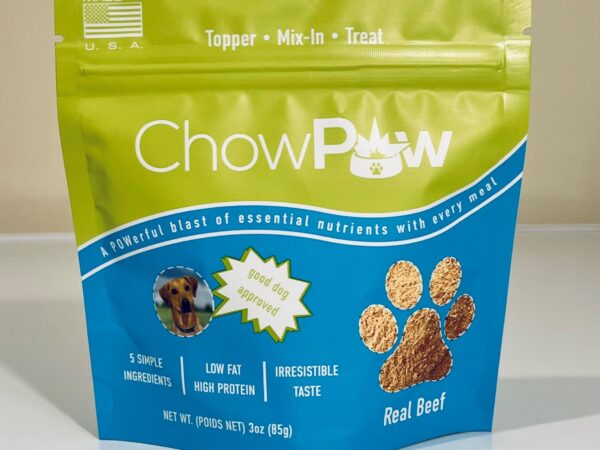 Dog Food Topper - Beef HeartOriginal price was: $14.99.$10.95Current price is: $10.95. - or subscribe and save up to 20%