

Best Dog Food Allergies: Top Picks for 2026
You've changed foods. You've bought the “sensitive skin” bag. You've washed bedding, checked for fleas, and tried to stop the paw licking. Still, your dog wakes up scratching, chews at their feet after dinner, or gets another ear flare just when you thought things were improving.
If that sounds familiar, you're not failing your dog. Food allergies are confusing because the signs overlap with so many other problems, and the internet often reduces the answer to “buy a limited ingredient food” and hope for the best.
That's rarely enough.
The best dog food allergies plan starts with understanding what's causing the reaction, then choosing a diet strategy that is strict enough to give you real answers. The two biggest reasons owners get stuck are easy to miss: over the counter foods that aren't as “clean” as the label suggests, and hidden allergens in treats, chews, supplements, and flavored medications.
Your Dog's Itching Is Not Your Fault
A worried owner usually says some version of the same thing: “I've tried everything, and nothing is working.”
Maybe your dog has itchy ears every few weeks. Maybe they lick their paws until the fur looks stained. Maybe their stool is inconsistent, and you've started wondering whether every meal is making things worse. You read ingredient labels at the store and feel like each bag promises relief, but your dog still seems miserable.
That frustration is real. So is the guilt.
Food allergy cases often feel personal to owners because feeding is one of the main ways we care for our dogs. When food might be part of the problem, every bowl starts to feel loaded with pressure. But this isn't about blame. It's about solving a puzzle with enough structure that the clues finally make sense.
Food allergy management works best when you stop guessing and start testing one controlled change at a time.
That shift matters. Instead of asking, “What's the magic food?” ask, “What process will tell me which ingredients my dog can tolerate?” Once you think that way, the path gets clearer.
A dog with a food allergy can improve. A dog with a food intolerance can often be managed well. A dog with both food and environmental triggers can still live very comfortably. The key is not random food switching. The key is choosing a plan your veterinarian can help you interpret.
Symptoms of a Food Allergy in Dogs
Food allergies don't always look dramatic at first. Many begin as a pattern that keeps repeating. The ears get red again. The paws get chewed again. The skin flares after seeming better for a week or two.
Food allergies in dogs manifest clinically in 10–15% of dogs presenting with skin problems, with beef and chicken identified as the primary allergens causing the majority of immunological reactions according to this guide on dog food allergy patterns.
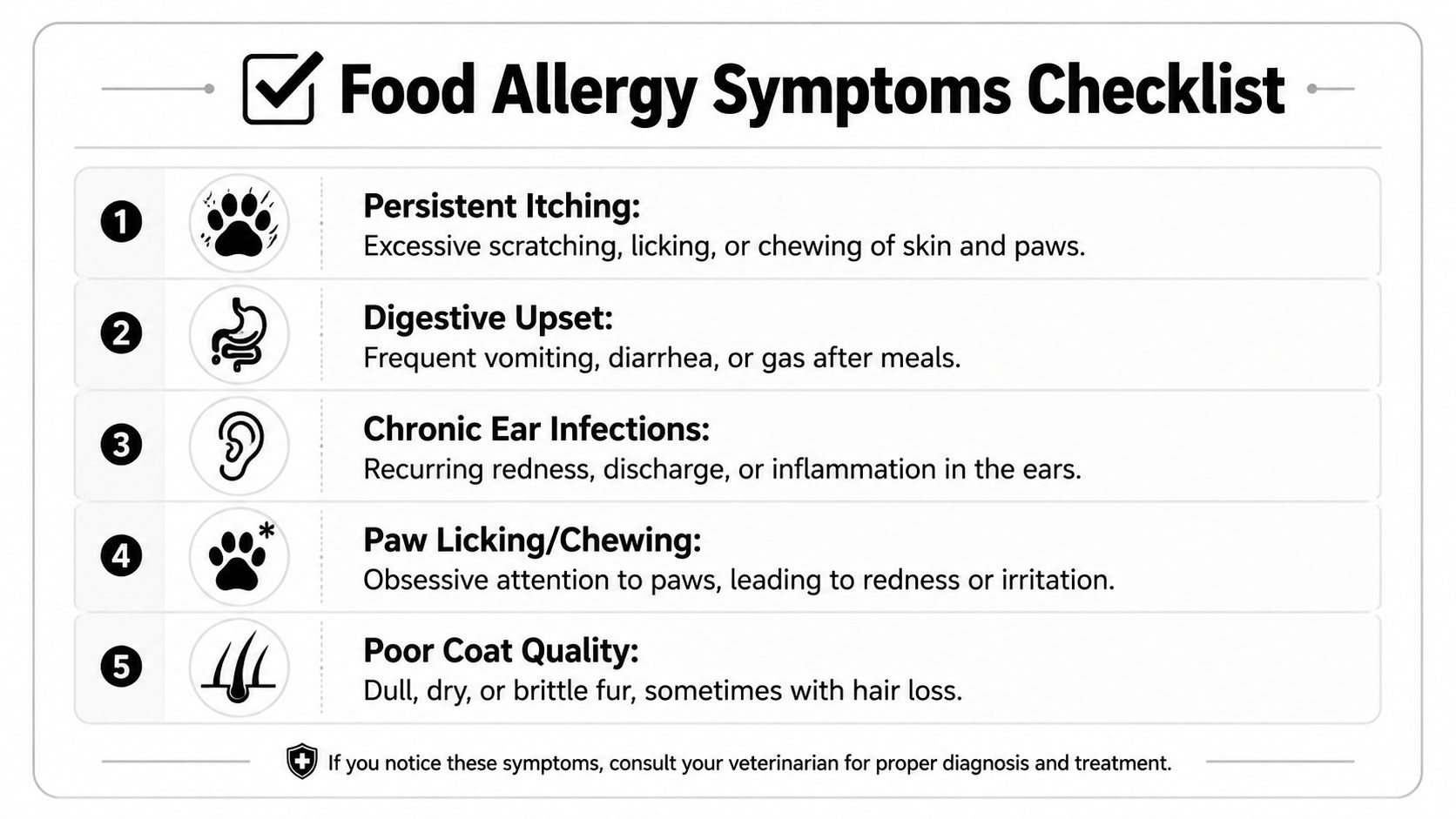
What food allergy signs often look like
A true food allergy is an immune response to a protein. In plain language, your dog's body treats part of the food like a threat. That can show up on the skin, in the ears, or in the digestive tract.
Common signs include:
- Persistent itching that doesn't seem tied to one season
- Paw licking or chewing that keeps coming back
- Recurring ear inflammation or discharge
- Digestive upset such as vomiting, diarrhea, or gas after meals
- Poor coat quality with dryness, dullness, or hair thinning
Ear problems confuse many owners. They think of ear infections as an ear issue only, but in allergic dogs, the ears are often part of a bigger skin inflammation pattern. The same is true for paw licking. Dogs don't usually obsess over their feet for no reason.
Food allergy versus intolerance versus environmental allergy
These terms get mixed together constantly.
| Condition | What it means | Typical pattern |
|---|---|---|
| Food allergy | The immune system reacts to a food protein | Skin issues, ear problems, and sometimes digestive signs |
| Food intolerance | The body struggles with a food but without the same immune reaction | More likely to look digestive, such as stool changes or stomach upset |
| Environmental allergy | The body reacts to things like pollen or dust | Often overlaps with itching and ear issues |
The hard part is that one dog can have more than one problem at the same time. A dog may react to food and still have seasonal flares from the environment.
Clues that make food worth investigating
Look more closely at food when you notice a stubborn, repeating pattern such as:
- Year round itching rather than symptoms tied to one season
- Skin plus stomach signs happening in the same dog
- Flares despite multiple food changes that weren't done in a structured way
- Symptoms after extras like treats, chews, or meal toppers
Practical rule: If your dog's skin and ears keep relapsing, don't judge a food by marketing words alone. Judge it by whether it allows a strict, clean trial.
The Gold Standard Elimination Diet Explained
If you want a real answer, the elimination diet is the method that matters most.
The only reliable method to definitively identify food allergies in dogs is conducting a strict elimination diet using a novel protein and novel carbohydrate fed exclusively for 8 to 12 weeks, with zero exposure to treats, table scraps, or flavored medications as explained in this elimination diet guide for dog food allergies.
Why strictness matters so much
Owners often hear “elimination diet” and think it means switching to a cleaner bag of food. It's much more exact than that.
The purpose is to remove suspected triggers long enough to see whether the immune system calms down. That only works if your dog eats the test diet and nothing else that could muddy the picture. One chicken flavored chew, one bite of table food, or one flavored medication can confuse the result.
That's why the process feels demanding. It isn't being overly rigid. It's protecting the test.
What counts as a proper trial
A solid elimination diet usually includes these rules:
- Feed one approved diet only. This is often a novel protein diet or a hydrolyzed diet chosen with your veterinarian.
- Stop all treats and scraps unless they are specifically approved for the trial.
- Check medications and supplements for flavorings or hidden animal proteins.
- Keep the timeline long enough. Skin can take time to settle.
- Track symptoms in writing so you can see whether itching, stools, ears, and paws are improving.
If you want a practical walkthrough, this dog food allergy elimination diet resource gives a helpful owner-focused overview of how to stay organized during the process.
What a novel protein means
A novel protein is one your dog hasn't eaten extensively before. The logic is simple. If the immune system hasn't been repeatedly exposed to that protein, it's less likely to react to it during the trial.
Examples can include duck, venison, rabbit, salmon, or other less common options, depending on your dog's diet history. The “best” choice depends on what your dog has already eaten. A food isn't novel just because it sounds unusual. It has to be new for your individual dog.
During an elimination diet, consistency beats enthusiasm. Owners often do the hard part of changing the main food, then accidentally break the trial with extras.
Why random switching slows everything down
Many itchy dogs have already been through several bags of food by the time they reach a proper trial. That can make things harder, because each new formula adds more ingredients to the dog's history. Over time, it gets tougher to identify a novel option.
If you're trying to find the best dog food allergies strategy for your own dog, structure starts saving time. A carefully chosen trial may feel slower upfront, but it usually prevents months of spiraling guesswork.
Comparing Novel Protein and Hydrolyzed Diets
Once you commit to an elimination diet, the next decision is what to feed during it. Most dogs end up on one of two paths: a novel protein diet or a hydrolyzed protein diet.
Hydrolyzed protein diets represent the gold-standard technical intervention for severe food allergies because the proteins are enzymatically broken down into individual amino acids or small peptides (<10 kDa), rendering them too small to be recognized by the dog's immune system as allergens according to this veterinary-focused comparison of allergy diets.
How the two approaches differ
A novel protein diet changes the protein source. A hydrolyzed diet changes the protein structure.
That distinction matters. With hydrolyzed food, the goal is to make the protein fragments so small that the immune system is less likely to react to them. This is why hydrolyzed diets are often the safer choice when reactions are severe, the dog has a long food history, or multiple ingredients may be involved.
Novel Protein vs. Hydrolyzed Diets
| Feature | Novel Protein Diet | Hydrolyzed Protein Diet |
|---|---|---|
| Main idea | Uses a protein the dog hasn't eaten extensively before | Uses protein broken into very small pieces |
| Best fit | Dogs with a clear, limited diet history | Dogs with severe reactions or many past food exposures |
| Owner appeal | Easy to understand conceptually | More technical, but often more controlled |
| Main risk | The protein may not be truly novel for that dog | Some dogs may be less enthusiastic about taste |
| Veterinary value | Useful when chosen carefully | Often preferred when strict control matters most |
When a novel protein diet makes sense
Novel protein diets can work very well when your dog's food history is simple and well documented. If you know your dog has eaten chicken, beef, lamb, and turkey for years, then a carefully selected alternative may give you a clean trial.
Verified options discussed in owner education materials include venison, rabbit, duck, lamb, goat, and kangaroo, with crocodile also mentioned as an uncommon option in some cases, as outlined in this novel protein overview for allergic dogs.
This approach can feel more intuitive to owners because the ingredient list looks familiar. But it requires honesty about what your dog has already had. If your dog has sampled many proteins through kibbles, treats, and toppers, “novel” may be harder to guarantee than it first appears.
When hydrolyzed food is the better call
Hydrolyzed diets are often the best tool when you need the highest level of control. They're especially helpful when:
- The allergy picture is messy and multiple ingredients may be involved
- Past food history is broad and true novelty is hard to establish
- Symptoms are intense and you want a more technically precise trial
- You need fewer loopholes than over the counter foods usually allow
Clinical feeding guidance for hydrolyzed diets can involve an initial trial period, with long-term use possible when the diet is vet approved and nutritionally complete, as noted in the source above.
A hydrolyzed diet doesn't “cure” the allergy. It gives the immune system less to react to.
What owners often misunderstand
The best dog food allergies choice isn't always the one with the most appealing label. It's the one that gives you the clearest answer.
If your dog is mildly itchy and has a straightforward diet history, a novel protein plan may be reasonable. If your dog has had repeated flares, many foods, or severe reactions, hydrolyzed diets often provide a cleaner path.
Hidden Allergens That Sabotage Your Progress
Many owners do the hardest part correctly. They change the main food. Then nothing improves, or things improve only halfway.
That's often where hidden allergens enter the story.
The 'cross-contamination gap' is a major issue; recent analysis confirms that most OTC limited-ingredient diets contain unlisted protein sources because they are produced on equipment that also processes allergenic foods, making true elimination impossible without dedicated facilities according to this analysis of contamination risks in dog allergy foods.

The cross-contamination gap
“Limited ingredient” sounds reassuring, but it doesn't automatically mean the food is clean enough for a diagnostic diet trial. If a product is made on shared equipment, trace proteins from other formulas can still end up in the final bag.
For a healthy dog, that may not matter. For a dog in the middle of an elimination diet, it can ruin the result.
This is why owners sometimes say, “I switched to a fish formula and my dog still reacted.” The label may not tell the whole story. If your goal is diagnosis, control matters more than clever branding.
A useful next step is learning what ingredients to avoid in dog food so you can audit labels more critically and spot common trigger patterns.
The extras that quietly break the diet
The second sabotage point is even more common. Dogs don't just eat kibble. They get rewards, chews, supplements, pill pockets, and handouts from well-meaning family members.
That matters because hidden exposures are often small but meaningful.
One source highlights that owners may unknowingly offer treats like gravy bones or cereal-based snacks containing the same allergens they're trying to remove, and that this is a frequent reason elimination diets fail, as described in this discussion of hidden triggers in treats and supplements.
What to audit in your home
Start with the items people forget to count:
- Treat bags tucked in a drawer or training pouch
- Dental chews given after meals
- Flavored medications or chewable preventives
- Supplements with meat-based flavoring
- Shared scoops and storage bins that may hold residue from older food
- Table bites from children or guests
Small exposures still count. Your dog's immune system doesn't care whether the allergen came from dinner or a reward biscuit.
If you're serious about finding the best dog food allergies solution, think beyond the bowl. A clean main diet with messy extras is still a messy diet.
Tips for a Successful Diet Transition
Even the right food won't help if your dog won't eat it, or if the transition causes enough stomach upset that everyone gives up too soon.

Start slow and stay boring
A calm transition usually works better than a dramatic one. If your veterinarian hasn't told you to make an immediate switch, blend the new diet in gradually and watch stools, appetite, scratching, and ear comfort.
Keep everything else as plain as possible during this period. This is not the time to add new chews, “just because” treats, or random pantry extras.
Protein sources account for 95% of all food allergies in dogs, with beef and chicken alone triggering approximately 70% of allergic cases, making them the primary allergens to eliminate rather than grains which are often mistakenly blamed according to this summary of common dog food allergy triggers.
That's why transition decisions should focus first on proteins, not on chasing grain-free labels or broad marketing claims.
Help picky dogs without breaking the plan
Some dogs resist allergy diets because they smell different, feel different, or seem bland compared with what they're used to. That doesn't mean you should panic and change foods again.
Try these practical adjustments first:
- Warm the meal slightly if your veterinarian says the diet allows it. Aroma can help interest.
- Use meal timing instead of free feeding. Hunger often improves acceptance.
- Offer fresh water nearby and keep the feeding environment quiet.
- Measure portions carefully so refusal is easier to track.
If your dog tends to have a delicate stomach during food changes, this guide to dog food toppers for sensitive stomach routines offers practical ideas on making meals more appealing without adding unnecessary complexity.
Before trying any topper or enhancer, though, ask one simple question: Is this protein already ruled out as safe? If the answer is no, don't add it during a diagnostic phase.
Here's a helpful visual overview on managing food changes and feeding routines:
Know when “helpful” becomes risky
Many good intentions go wrong when owners want to encourage eating, so they add broth, a beef topper, shredded chicken, or a little scrambled egg. Those choices may improve interest in the bowl, but they can also destroy the clarity of the trial.
If beef or chicken is a potential trigger for your dog, those ingredients must stay out. If your veterinarian later confirms they are safe, then meal enhancements can be considered more confidently.
The best dog food allergies plan is often the one that feels least exciting. Clean ingredients. Consistent feeding. No improvising.
Your Dog's Allergy Management Action Plan
Food allergies get easier to manage when you stop treating them like a mystery and start treating them like a checklist.
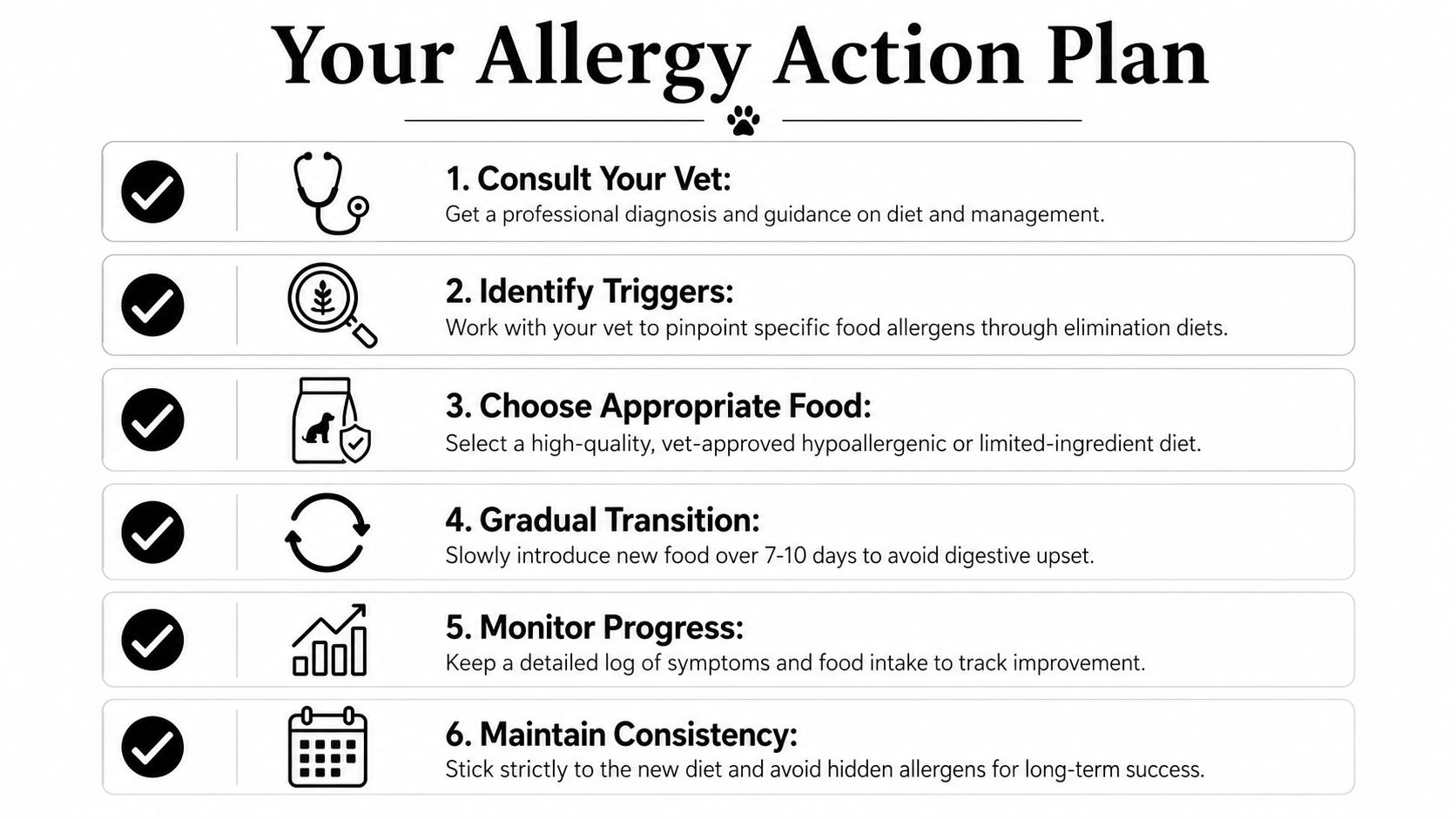
Six steps that keep you moving forward
Document symptoms clearly
Write down itching patterns, ear issues, paw licking, stool changes, and anything that seems tied to meals or treats.See your veterinarian early
Allergies can overlap with infections, parasites, and environmental triggers. You want a plan that rules out the obvious before you change everything at once.Commit to the elimination diet fully
Partial compliance gives partial answers. The trial works only when every family member follows the same rules.Choose the food strategy that fits your dog
Some dogs do well with a novel protein trial. Others need the tighter control of a hydrolyzed approach.Audit every extra
Treats, dental chews, supplements, and flavored medications matter just as much as the main bowl.Reintroduce foods methodically with veterinary guidance
That's how you move from suspicion to a more confident understanding of what your dog can and cannot tolerate.
The biggest mindset shift is this. You're not searching for a trendy food. You're building a repeatable system that protects your dog from flare-ups.
Most owners feel overwhelmed at first. Then the process gets simpler. Once you know the trigger, daily feeding usually becomes far less stressful.
If your dog is a picky eater, a senior who needs extra encouragement at mealtime, or a pup who could use more nutritional support on top of their regular food, ChowPow can be a practical meal enhancer after you've confirmed beef is safe for your dog. It's not a replacement for your dog's current kibble. It's a supplement designed to boost flavor and nutritional value. That makes it a better fit for dogs who need help eating well without completely changing their established diet.
-
Product on sale
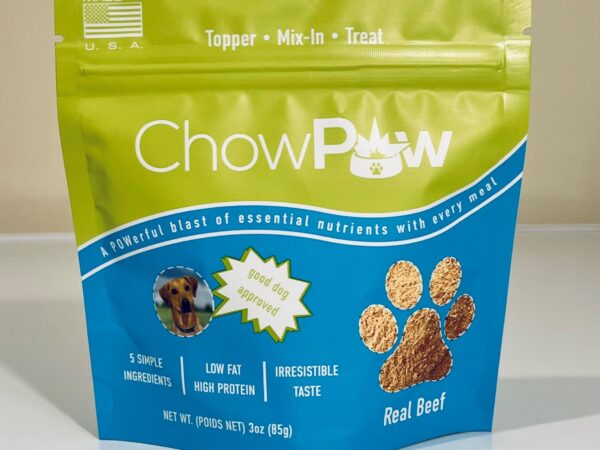 Dog Food Topper - Beef HeartOriginal price was: $14.99.$10.95Current price is: $10.95. - or subscribe and save up to 20%