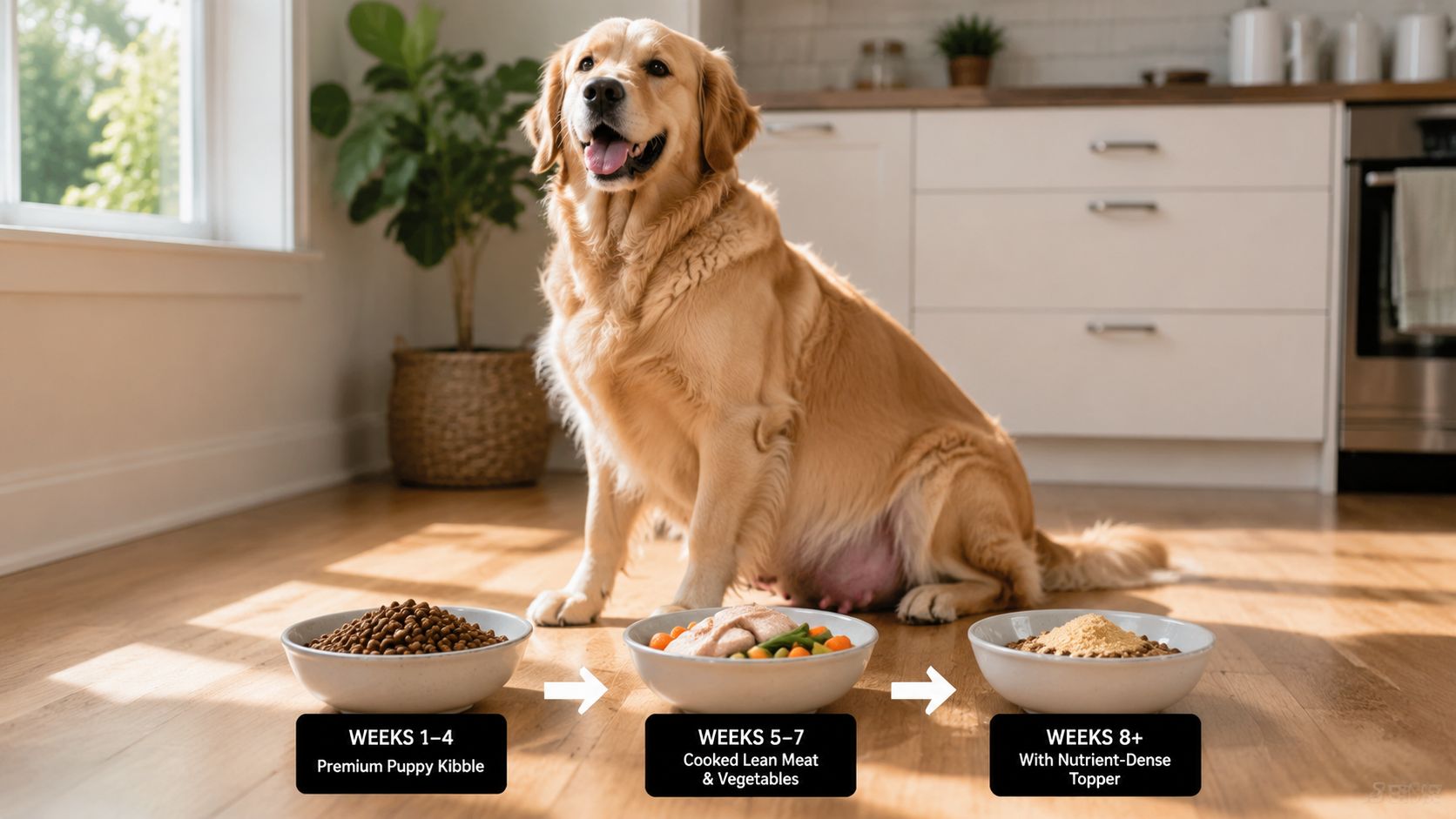
The Best Food for Pregnant Dogs: A Week-by-Week Guide
The positive test is exciting for about five minutes. Then the questions start.
Is she supposed to eat more already? Should you switch foods today? What if she's suddenly picky, or hungry all the time, or neither? First-time breeders often worry they'll miss some critical nutrition step and somehow affect the litter before the puppies are even visible on an ultrasound.
That worry is normal. Owners typically don't require a complicated feeding system. They need a calm plan, a good foundation food, and a clear sense of when to change course as pregnancy moves along.
Your Dog Is Pregnant Now What
A lot of owners start in the same place. Their dog seems normal one week, then a little clingier, a little sleepier, maybe a little less interested in breakfast. Pregnancy gets confirmed, and suddenly every scoop of kibble feels important.
The good news is that feeding a pregnant dog doesn't have to be mysterious. What matters most is understanding that her needs won't stay the same from breeding to whelping. Early on, you're mostly protecting routine and body condition. Later, you're supporting very fast puppy growth while your dog's appetite and comfort may change from day to day.
Start with the basics
Before you change anything, check these three things:
- Her current body condition: You don't want her getting heavy early in pregnancy, but you also don't want her losing condition.
- Her current food: If she's on a complete and balanced diet, that gives you a safer starting point than random add-ons.
- Her appetite pattern: Some dogs eat normally for weeks. Others become inconsistent and need smaller, more tempting meals.
Practical rule: Pregnancy nutrition works best when you make thoughtful adjustments, not panic changes.
A helpful way to think about the best food for pregnant dogs is this. The base diet does the heavy lifting. Meal extras should only support that diet, not replace it.
Keep your focus on consistency
Pregnant dogs usually do best when owners resist the urge to overdo supplements, treats, and homemade fixes. A steady feeding routine, clean water, close observation, and timely food changes matter more than a kitchen full of boosters.
If you're feeling unsure, you're not behind. You're exactly where many careful owners start. The next step is learning how her nutrition needs change across pregnancy so your feeding plan changes with her.
The Three Nutritional Stages of Canine Pregnancy
Canine pregnancy changes fast, but not all at once. If you break it into three feeding stages, it gets much easier to understand what your dog needs and when she needs it.

Early pregnancy
In the first part of pregnancy, most dogs don't need a major increase in food right away. According to PetMD's guidance on feeding pregnant dogs, a pregnant dog on a quality diet may need only a 10% increase in the first 5 to 6 weeks.
That surprises a lot of people. They assume pregnancy means immediate extra portions. In reality, overfeeding too early can work against you.
The Royal Kennel Club guidance summarized in the verified data makes the same point in a slightly different way. Weight gain in the first six weeks should stay at a maximum of 10%, because feeding too much too soon can increase the risk of dystocia, or difficult birth.
Mid pregnancy
Around the middle of gestation, the conversation changes. This is the point when many veterinarians recommend planning the move to a growth-focused diet if your dog isn't already eating one.
You may not see a dramatic body change yet, but your dog's nutritional demands are building. This stage is less about large meal increases and more about setting up the right food before late pregnancy arrives.
A few signs owners notice in this window include:
- More selective eating: She may sniff and walk away from meals she used to finish.
- Changing meal comfort: A big bowl can feel less appealing than a smaller portion.
- Subtle body changes: Her outline may start to soften even before her abdomen looks obviously enlarged.
Late pregnancy
Late gestation is where nutrition becomes much more important, and much more practical. Puppies grow rapidly in the final stretch, while the mother's abdominal space gets tighter. She needs more energy, but often feels less comfortable eating large meals.
PetMD notes that by the last 3 to 4 weeks, food should rise by about 15% to 25%, and the dog's total weight at delivery is often about 25% above pre-pregnancy weight when fed appropriately on a quality diet.
Feed the pregnancy that's in front of you. Early pregnancy asks for restraint. Late pregnancy asks for density, digestibility, and smarter meal timing.
That last point is where many owners get stuck. They keep the same bowl size and same schedule, then wonder why their dog seems less enthusiastic. Usually, the issue isn't stubbornness. It's comfort.
Choosing the Best Foundation Food for Your Pregnant Dog
When owners ask about the best food for pregnant dogs, the safest answer is usually not glamorous. It's a complete and balanced, highly digestible growth or puppy-lactation formula.

That recommendation isn't just habit. According to OVRS guidance on feeding a pregnant dog, the most evidence-based choice is a highly digestible growth or puppy-lactation formula that is complete and balanced, targeting at least 28 to 29% protein, 17% fat, and low fiber. The same guidance notes that the transition to this food should begin around week 5 to 6 of gestation.
Why puppy or growth food makes sense
Pregnancy asks for more than calories. Your dog needs a food that packs meaningful nutrition into a smaller physical volume. That's why digestibility matters so much.
A well-formulated puppy or growth food usually gives you:
- Higher energy density: Helpful when your dog can't comfortably eat large meals.
- Stronger protein support: Important for fetal tissue development and later milk production.
- Appropriate fat content: Useful for concentrated energy.
- Lower fiber: Helpful because bulky food can fill the stomach before enough nutrition is taken in.
If you're comparing labels, this guide to how to read dog food labels can help you sort through marketing language and focus on what is important.
Why homemade feeding gets risky fast
Homemade diets sound appealing because they feel wholesome and personal. The problem is balance. Pregnancy is the wrong time to guess your way through protein, fat, mineral, and vitamin levels.
You can make a meal look healthy and still miss what a pregnant dog needs. That's why a commercial growth formula is usually the safer foundation unless a veterinarian has designed a custom plan for your dog.
The foundation food should carry the pregnancy. Extras should only help your dog eat that food well and consistently.
If you're choosing between an adult maintenance kibble with lots of marketing claims and a straightforward puppy or growth formula, the puppy or growth formula is usually the more practical answer.
Enhancing Her Diet with a Nutrient-Dense Topper
Even when you've chosen a strong foundation food, pregnancy can make meal times unpredictable. Some dogs stay enthusiastic eaters. Others become choosier, especially when their body is changing and big meals feel less comfortable.
That's where a topper can help, as long as you use it the right way.
What a topper should do
A good topper should make the base food more appealing and easier to finish. It shouldn't take over the bowl or turn meals into a guessing game.
For a pregnant dog, a useful topper can help by:
- Improving palatability: This matters when smell and texture suddenly matter more to your dog than they used to.
- Supporting intake: If she eats her regular food more reliably, she gets the balanced nutrition that food was designed to deliver.
- Adding flexibility: Some dogs prefer a light sprinkle over kibble. Others do better when food is softened.
ChowPow fits best in this supportive role. It's a meal enhancer, not a replacement for a complete and balanced kibble. Used that way, it can make ordinary meals more enticing without pushing the diet off course. If you want a broader overview, this article on the benefits of adding food toppers to your dog's diet explains where toppers are most useful.
Practical ways to use it
One simple option is to sprinkle a small amount over the normal meal so the base food still makes up the bulk of what your dog eats. Another is to mix the topper with a little water and coat the kibble, which can improve aroma and texture.
That second option can be especially helpful for dogs that seem interested in food but hesitate once they get to the bowl.
A quick visual can help if you're deciding how to serve a topper during this stage:
Keep the base diet in charge
This is the part owners sometimes blur. A topper can encourage appetite, add variety, and make meals easier to accept. It should not replace the complete and balanced pregnancy-appropriate food underneath it.
If your dog only wants the topper and starts leaving the main food behind, pull back and reset. The goal is better meal completion, not topping-dependent eating.
A Practical Feeding Schedule From Mating to Whelping
The easiest feeding plan is one that changes gradually. Sudden food switches and abrupt portion jumps can leave a pregnant dog with an upset stomach right when you want steady intake.
How to make the food transition
If your dog isn't already on a growth or puppy formula, begin the transition around the point covered earlier when that switch is typically recommended. Move slowly enough that stools stay normal and appetite stays steady.
Keep your eyes on the dog, not just the measuring cup. A dog carrying a larger litter may need a different pace than one carrying fewer puppies, and some dogs lose meal enthusiasm before they visibly enlarge.
Sample weekly feeding increase schedule
This is a simple planning table based on the verified guidance already discussed earlier in the article. Use it as a framework, then work with your veterinarian for individual adjustments.
| Gestation Week | Recommended Food Increase |
|---|---|
| Weeks 1 to 5 | Keep food near maintenance, with only modest change if needed |
| Week 6 | About 10% increase |
| Week 7 | Gradually increase from the prior week based on appetite and body condition |
| Week 8 | Aim within the late-pregnancy range already discussed |
| Week 9 | Continue small, frequent meals as tolerated |
Change the meal size before you change the ingredient list
Late pregnancy often goes better when you split food into smaller meals. The reason is simple. Your dog may need more energy, but she has less comfortable room for one big serving.
A practical late-pregnancy approach looks like this:
- Smaller portions: Offer less food at each sitting so she doesn't feel stuffed.
- More frequent meals: Spread intake across the day instead of expecting one or two big meals.
- Closer observation: Watch whether she eats eagerly, slows down, or walks away midway.
- Water access at all times: Hydration matters, especially if you're feeding dry kibble.
If your pregnant dog is hungry but quits halfway through large meals, don't assume she's being fussy. Often she just needs the same daily food split into smaller servings.
What to watch near whelping
Close to delivery, some dogs naturally eat less. That can be normal, but you still want to pay attention to the whole picture. Energy, comfort, water intake, and general behavior all matter.
If appetite drops sharply, vomiting appears, or your dog seems unwell, call your veterinarian rather than trying to fix it with random foods.
Supplements and Foods You Must Avoid
Pregnancy makes people want to add things. More calcium. More vitamins. More meat. More treats. Usually, that instinct comes from good intentions, but it can create real problems.
Don't assume more supplements are safer
If your dog is eating a complete and balanced growth or puppy formula, that diet is meant to provide the nutritional base she needs. Adding extra supplements on top of it can throw off that balance.
Calcium is the classic example. Owners often reach for it because puppies are building bones and that sounds logical. In practice, supplementing calcium during pregnancy can interfere with normal hormonal regulation and raise the risk of problems after whelping. This is one of those areas where restraint is safer than enthusiasm.
Household foods that are not worth the risk
Some foods are unsafe for dogs, and pregnancy isn't the time to take chances.
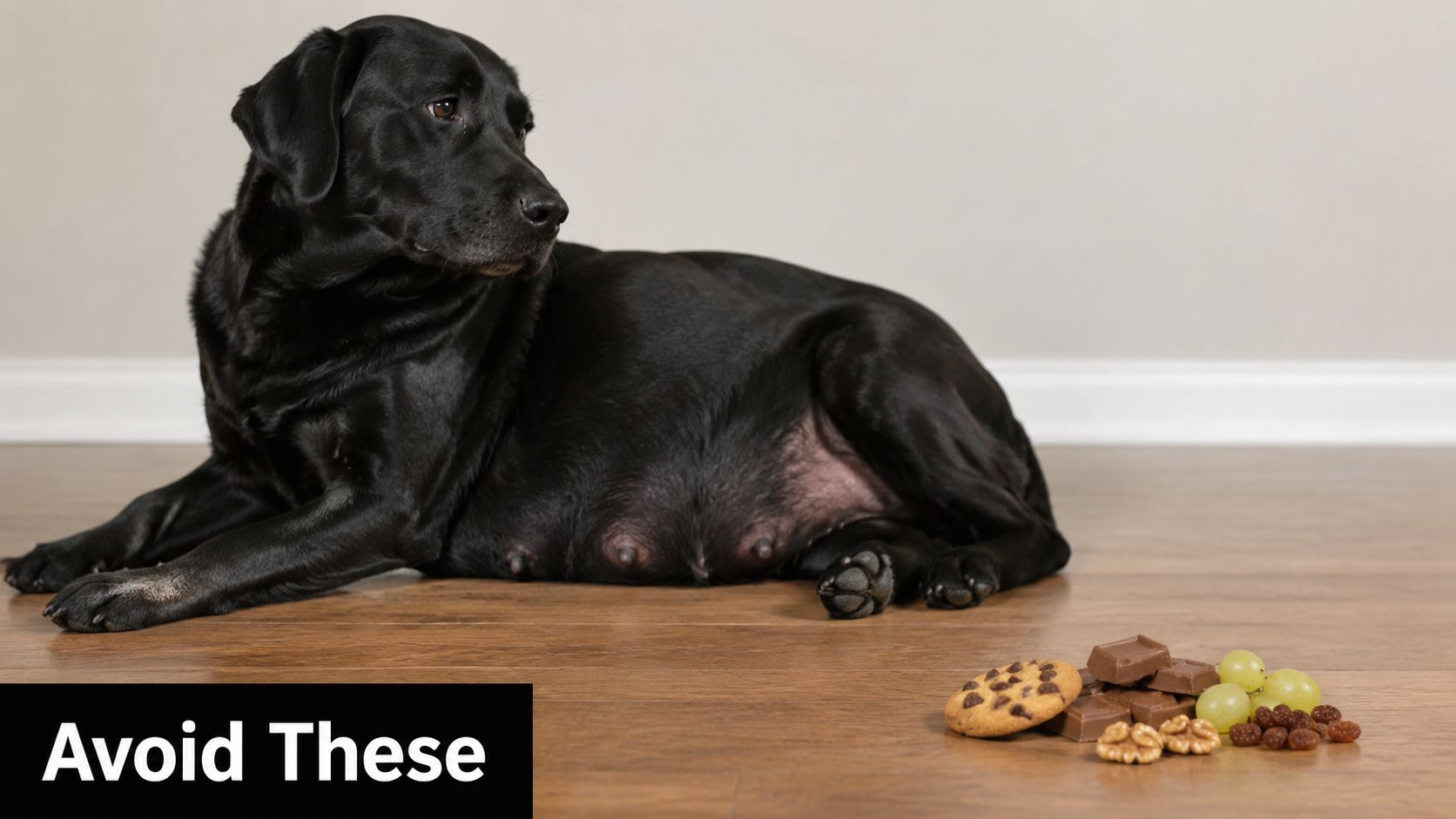
Keep these out of reach:
- Chocolate: Toxic to dogs and never an appropriate “energy boost.”
- Grapes and raisins: Unsafe even in small amounts for some dogs.
- Xylitol: Found in some sugar-free products and especially dangerous.
- Alcohol and caffeine: Both are clear no-gos.
- Rich table scraps: Fatty leftovers can upset digestion and complicate feeding.
For label-reading help beyond pregnancy, this guide on what ingredients to avoid in dog food is useful when you're sorting through treats, toppers, and packaged foods.
A simple do this, not that framework
Use this as your filter when friends, forums, or social posts suggest extras:
- Do trust a complete and balanced pregnancy-appropriate food.
- Don't add supplements just because they sound healthy.
- Do ask your veterinarian before introducing anything concentrated.
- Don't test random human foods to “see if she likes them.”
- Do keep meals boring in the best way: reliable, digestible, and consistent.
A quiet bowl is often the safest bowl.
Frequently Asked Questions About Pregnancy Nutrition
What if my pregnant dog won't eat?
Start with the simple fixes first. Offer smaller meals, serve food fresh, and make the texture easier to eat by softening kibble if needed. Stress, nausea, discomfort, and heat can all affect appetite.
If your dog skips more than a meal or two, seems lethargic, vomits, or acts unwell, call your veterinarian. Refusal to eat isn't something to manage casually during pregnancy.
Is raw food safe during pregnancy?
This is a conversation to have directly with your veterinarian. In general, pregnancy is not the ideal time to improvise or take on extra food safety risk. Most first-time breeders do best with a commercially prepared, complete and balanced growth diet because it's more predictable.
My dog was already overweight before pregnancy. Should I cut back?
Don't try to diet a pregnant dog on your own. At the same time, don't assume pregnancy means unlimited food. The goal is controlled support, not aggressive weight gain.
An overweight dog needs careful management from your veterinarian, especially because body condition can affect comfort, mobility, and delivery risk. Ask for a feeding plan based on her current condition rather than using generic internet advice.
Should I keep feeding puppy food after the puppies are born?
Most dogs stay on the same nutrient-dense food through lactation because nursing is demanding. Your veterinarian can tell you when it's appropriate to transition back based on your dog's condition and how the puppies are doing.
Can I use treats to make up for missed meals?
Treats can backfire fast. If your dog learns that skipping kibble earns tastier options, you're left with a worse feeding problem. It's better to make the main meal more acceptable than to fill the gap with snacks.
A pregnant dog doesn't need a buffet. She needs a reliable diet she can keep eating day after day.
When should I call the vet instead of adjusting food at home?
Call if you see vomiting, diarrhea, sudden appetite loss, weakness, obvious pain, unusual discharge, or any major behavior change. Feeding tweaks can help with normal appetite fluctuations. They can't solve medical problems.
What's the simplest way to remember all this?
Use this short checklist:
- Pick a strong foundation food
- Change it gradually
- Increase intake later, not too early
- Feed smaller meals when her belly gets crowded
- Avoid casual supplements
- Ask for help early if something seems off
If you want an easy way to make a pregnant dog's regular meals more appealing without replacing her core kibble, ChowPow is a practical option. It works best as a nutrient-dense topper that supports appetite and helps your dog stay interested in the complete and balanced food doing the main nutritional work.
-
Product on sale
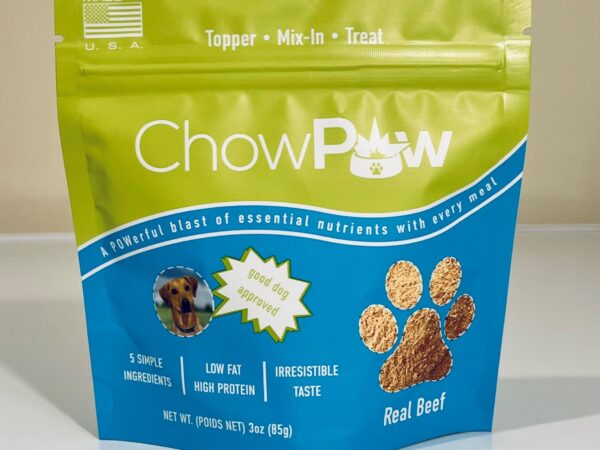 Dog Food Topper - Beef HeartOriginal price was: $14.99.$10.95Current price is: $10.95. - or subscribe and save up to 20%