
Acupuncture for Dogs: A Guide to Pain Relief & Healing
When your dog starts moving more slowly, hesitates before jumping onto the couch, or turns away from food while recovering from an illness, it can leave you feeling stuck. You want to help, but you also want to make careful, informed decisions.
That's where acupuncture for dogs often enters the conversation. Some owners hear about it from a friend, some from a rehabilitation vet, and some after medications alone haven't brought enough comfort. The good news is that veterinary acupuncture doesn't have to feel mysterious. It can be understood clearly, asked about confidently, and used thoughtfully as part of a larger care plan.
Is Acupuncture Right for Your Dog
A lot of dogs who may benefit from acupuncture don't look “dramatically sick.” They may seem stiff in the morning, slower on walks, less eager to climb stairs, or more tired during recovery after surgery or injury. Those changes matter.
Veterinary acupuncture is a treatment performed by a trained veterinarian who places very fine needles in specific points on the body to support pain control, healing, and function. It's best thought of as a complementary therapy, not a replacement for standard veterinary medicine.
When owners usually start considering it
Some common situations include:
- Ongoing pain: Dogs with arthritis, hip discomfort, or chronic soreness may need more support than medication alone provides.
- Neurologic recovery: Dogs recovering from spinal or nerve-related problems sometimes need help regaining comfortable movement.
- Senior slowing down: Older dogs often have a mix of stiffness, muscle loss, and reduced resilience.
- Post-procedure healing: Recovery can be physically draining, and some dogs need extra support to get back on track.
If your dog falls into one of those groups, asking your veterinarian about acupuncture is reasonable. It doesn't mean you're “trying something alternative” in place of real care. It means you're exploring one more tool that may fit into a medical plan.
Practical rule: If your dog's problem affects comfort, movement, or recovery, it's worth asking whether acupuncture belongs in the treatment mix.
For pet owners who want a local example of how clinics describe the service in practical terms, PAW Vet Practice offers a useful overview. If your dog is older and you're also sorting through age-related changes more broadly, this guide to senior dog health problems can help you separate normal aging from signs that deserve a veterinary workup.
How Veterinary Acupuncture Works
One reason acupuncture can feel confusing is that people explain it in two different languages. One comes from traditional Chinese medicine. The other comes from modern physiology. You don't have to choose one worldview to understand the treatment.
The traditional view
In traditional terms, the body is described as having pathways called meridians, through which Qi flows. A simple way to picture this is a river system.
If the river flows freely, the land it serves stays healthy. If debris blocks a section, problems show up downstream. In this framework, acupuncture is used to help restore balance and flow.

That analogy helps many owners because it turns an abstract idea into something physical. The goal isn't magic. The goal is to remove interference so the body can function more smoothly.
The scientific view
Modern veterinary medicine often explains acupuncture through the nervous system. When a veterinarian places a needle at a precise point, it can stimulate nerves and change the way the body processes pain and tension.
That stimulation may help in a few practical ways:
- Pain signaling can change: The nervous system may become less reactive to ongoing pain.
- Muscles may relax: Tight, guarded areas can soften.
- Blood flow may improve locally: Better circulation can support healing tissues.
- The dog may settle down: Many dogs visibly relax during treatment.
Reopening communication lines in a neighborhood after a storm serves as a useful comparison for this process. When the signals get through properly again, the system works better.
Why both explanations matter
Some owners connect more with the traditional language. Others want a strictly biologic explanation. Most dogs don't care what vocabulary we use. What matters is whether the treatment is appropriate, safely performed, and part of a sensible medical plan.
Acupuncture doesn't ask you to ignore anatomy, pain medicine, imaging, surgery, or rehabilitation. In good veterinary care, it sits alongside them.
That's why the best conversations happen with a veterinarian who can explain both the theory and the practical goal for your specific dog.
Common Conditions Treated with Canine Acupuncture
The strongest day-to-day use of acupuncture for dogs is in cases involving pain, mobility, and recovery of function. That doesn't mean every dog with these problems should get acupuncture, but it does mean these are the cases where it most often comes up in practice.
Musculoskeletal pain
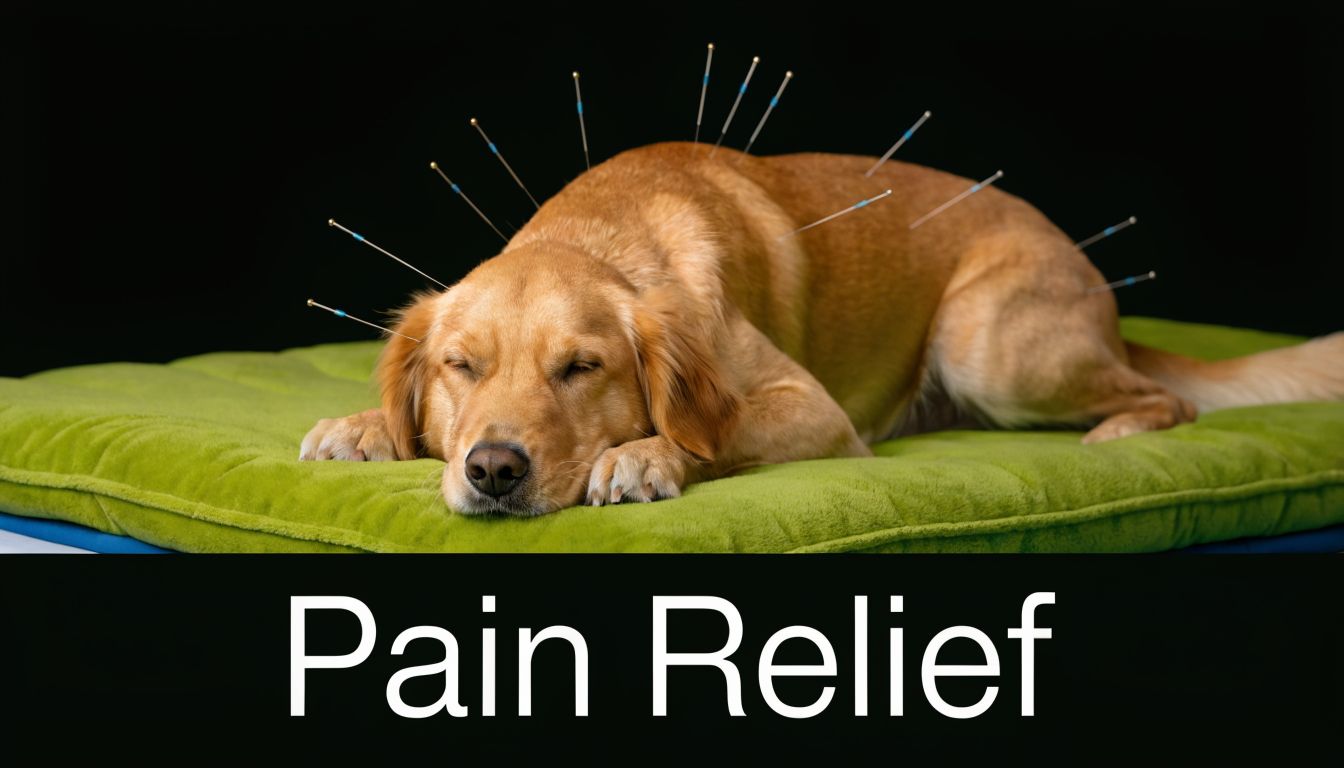
This is the category many owners are really asking about, even if they don't use that term. It includes sore joints, stiff hips, age-related mobility decline, and painful movement patterns.
A prospective study summarized in the National Library of Medicine article on veterinary acupuncture found that dogs with musculoskeletal disorders improved more than dogs with neurologic conditions, with significant improvement reported in pain and locomotion measures. The same source notes that gold implants at acupuncture points reduced pain scores by 65% in dogs with hip dysplasia and improved mobility and decreased pain signals in 83% of treated animals.
That matters because it supports what many owners hope for most: less pain and easier movement in daily life.
If your dog's main issue is stiffness, limping, reluctance to rise, or discomfort after activity, this broader guide to arthritis pain in dogs may help you frame the bigger picture before discussing options with your vet.
Neurologic and spinal conditions
Dogs recovering from nerve injury or spinal problems often need support for coordination, strength, and comfortable walking. In these cases, the therapeutic goal isn't just pain relief. It may also involve helping the nervous system regain more normal function.
Owners sometimes get confused here and assume acupuncture is only for “old dog arthritis.” It isn't. Neurologic cases are one of the most important clinical uses.
Senior dog support
Older dogs often don't have a single clean diagnosis. Instead, they have a blend of stiffness, weaker muscles, slower recovery, and lower tolerance for discomfort. Acupuncture can fit well in these dogs because it's gentle and can be combined with medications, rehab work, environmental changes, and weight management.
Post-operative and chronic recovery support
A dog healing from surgery or illness may struggle with pain, guarded movement, or poor engagement in physical therapy. In some cases, acupuncture can support the overall recovery process by helping the dog feel more comfortable participating in life again.
The best candidate usually isn't “a dog whose owner wants something natural.” It's a dog with a clear clinical problem that a veterinarian can target with a defined treatment goal.
The Scientific Evidence Behind Acupuncture
Owners deserve honesty on this point. The question isn't whether acupuncture has ever helped a dog. The question is whether there's meaningful clinical evidence for specific uses.
For some conditions, the answer is yes.
A strong example in neurologic recovery
One clinical study looked at dogs with Grade 3 to 4 spinal cord dysfunction who were not ambulatory. Dogs receiving electroacupuncture and dry needling with standard medication recovered walking ability in an average of 10.10 ± 6.49 days, compared with 20.83 ± 11.99 days for dogs receiving medication alone. That's reported as 51% faster recovery, and the walking recovery rate was 100% (10/10) in the acupuncture group versus 67% (6/9) in the conventional-treatment group, according to the clinical study published in the American Journal of Traditional Chinese Veterinary Medicine.
That same source also reported an overall clinical success rate of 88.5% (23/26) for dogs receiving electroacupuncture and dry needling with conventional medication, compared with 58.3% (14/24) for conventional medication alone.
Those are meaningful results. They also support an important point: acupuncture performed best alongside standard treatment, not instead of it.
What that evidence does and doesn't mean
A good study doesn't mean acupuncture works equally well for every disease. It also doesn't mean every dog responds at the same speed or in the same way.
Here's the practical takeaway:
| Question | Reasonable answer |
|---|---|
| Does acupuncture have evidence behind it? | Yes, especially in pain and certain neurologic recovery settings. |
| Is it a cure-all? | No. It's one tool in a broader medical plan. |
| Should it replace conventional care? | No. The strongest evidence supports it as a complementary treatment. |
Some areas still need better practical guidance. Appetite stimulation and digestive recovery, for example, are discussed clinically, but owners still don't have enough detailed information on timing, sequencing, and what to do at home when a recovering dog still isn't eating well.
That gap matters because recovery isn't only about reducing pain. It's also about getting the dog strong enough to heal.
What to Expect During an Acupuncture Session
Your dog steps into the exam room, sniffs the floor, and glances back at you. Many owners arrive bracing for a stressful procedure. What usually happens is much quieter. The visit often feels more like a gentle physical therapy appointment than something invasive.
The first visit
The appointment starts with observation and questions. Your veterinarian will ask about your dog's diagnosis, medications, comfort, mobility, sleep, appetite, and behavior at home. Those details matter because acupuncture is specific to the dog in front of them, not chosen from a one-size-fits-all chart.
You may also see a hands-on exam focused on movement. The veterinarian might watch your dog walk, turn, sit, or stand, then feel along the muscles and joints for tension, heat, or soreness. That process works like mapping out stiff and overloaded areas before starting treatment.
If your dog is recovering from surgery or injury, it helps to arrive with a clear home update. Notes about eating, bathroom habits, stiffness, and energy can make the plan more precise. Owners following a post-surgery care routine for dogs often notice patterns that are useful during this assessment.
Needle placement and the treatment period
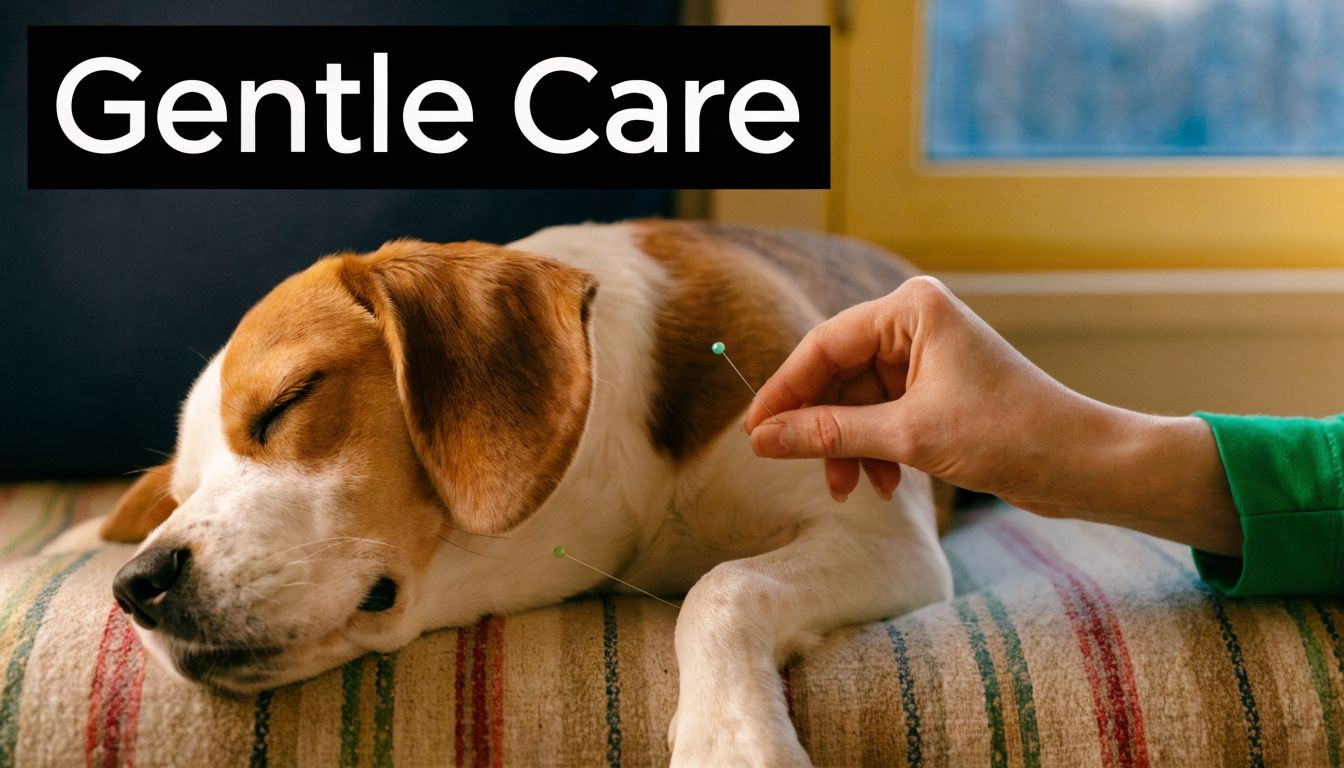
The needles used in veterinary acupuncture are extremely thin and sterile. Many dogs show only a brief reaction, if any. Some blink, shift, or look around for a moment, then settle once the needles are in place.
Treatment time varies. Some dogs do best with a short, low-stimulation session at first. Others can rest comfortably for longer. Your veterinarian adjusts the pace to your dog's condition, temperament, and energy level that day.
A common point of confusion is whether stillness means discomfort. Usually, it means the opposite. Dogs often relax during treatment in the same way they relax during a warm compress or a careful massage. Some even get sleepy.
After the session, your dog may seem tired and loose, or brighter and more willing to move. Either response can be normal.
If you want a visual sense of what a calm canine acupuncture visit can look like, this short video helps set expectations:
What owners often worry about
A few questions come up often, and they are reasonable ones.
- Will it hurt? Most dogs tolerate acupuncture well because the needles are so fine. You may see a small flinch at insertion, but many dogs settle quickly.
- Will my dog need sedation? Usually no. A quiet room, slow handling, and good restraint by trained staff are often enough.
- Will I see results right away? Some owners notice better comfort or easier movement after one visit. Other dogs need several sessions before change becomes clear.
- Should my dog eat after treatment? If your dog seems hungry, that is a good sign. Recovery uses energy, so eating well after treatment can support muscle repair, tissue healing, and overall strength.
That last point is easy to overlook. Acupuncture may help the body shift toward comfort and recovery, but healing still needs fuel. A dog that feels better yet eats poorly may not rebound as well as a dog whose pain care and nutrition improve together.
A typical session is calm, personalized, and easier on dogs than many owners expect.
Supporting Your Dogs Recovery at Home
Even the best in-clinic treatment can only do part of the job. Your dog still has to heal at home, and healing takes fuel.
That's where owners make a real difference. Rest, medication schedules, safe movement, hydration, and food intake all shape what recovery looks like over the following days and weeks.
Appetite matters more than many owners realize
One under-discussed part of recovery is appetite. A dog that's painful, stressed, nauseated, or worn out may not want to eat. That creates a second problem, because a body that isn't taking in enough nutrition has less raw material for tissue repair, strength, and resilience.
The University of Tennessee discussion of animal acupuncture points to an important gap here: while acupuncture is used creatively for issues like appetite and digestion, owners still need better practical guidance on how to pair nutritional support with acupuncture during recovery.
That's an important point. It means we shouldn't pretend the timing is fully mapped out by strong clinical protocols when it isn't.

What supportive feeding looks like
A practical home plan usually includes:
- Keep the base diet consistent: Don't overhaul your dog's entire food plan during recovery unless your veterinarian tells you to.
- Make meals easier to accept: Warm food slightly if appropriate, improve aroma, and offer small meals rather than one large portion.
- Use a meal enhancer when needed: A topper can increase palatability and nutritional density without replacing the main diet.
- Watch hydration too: Some recovering dogs will accept moisture-rich meals more readily than dry food alone.
For owners managing a dog after a procedure, this guide to post-surgery care for dogs can help you think through the larger recovery routine at home.
Recovery works best when treatment and nutrition pull in the same direction. Pain relief helps a dog feel able to eat. Good nutrition helps the body make use of that comfort.
The key idea is simple. Acupuncture may support comfort and function, but food provides the building blocks the body still needs to repair itself.
Finding a Professional and Common Questions
Choosing the right acupuncturist matters as much as choosing the treatment itself. Acupuncture for dogs should be performed by a licensed veterinarian who has formal training in veterinary acupuncture. Your dog is not just getting needles. Your dog is getting a medical plan that needs to fit the diagnosis, medications, pain control, and recovery goals already in place.
That coordination is especially important if your dog is healing from surgery, dealing with arthritis, or eating poorly. Comfort, movement, and nutrition affect each other. A dog that feels better may eat better, and a dog that eats better has more of the raw materials needed for tissue repair and day-to-day strength.
What to look for
Before you book, ask a few direct questions. A good practitioner should be comfortable answering them clearly.
- Veterinary license: Confirm that the person treating your dog is a veterinarian.
- Acupuncture credentials: Look for training through organizations such as Chi University or IVAS.
- Experience with your dog's condition: Ask whether they regularly treat dogs with your pet's diagnosis, such as arthritis, neurologic problems, recovery after surgery, or chronic pain.
- Communication with your primary vet: Acupuncture works best as part of the larger care plan. Your veterinarian should be willing to share notes and coordinate treatment decisions.
- A practical home plan: Ask what you should watch for between visits, including changes in mobility, sleep, appetite, and interest in food.
That last point gets missed often. The needles are only one part of recovery. Home care matters too.
Common questions owners ask
How often will my dog need treatment?
That depends on the problem being treated, how long it has been going on, and how your dog responds. Some dogs start with a series of closer-together visits and then switch to maintenance care. Others need treatment only during a flare-up or a specific recovery period.
How long does each visit take?
Needle time is often brief, but the full appointment may be longer because it can include an exam, discussion, and adjustment of the plan. As noted earlier, the actual treatment portion may be quite short for some dogs and longer for others.
Is it safe for every dog?
Safety depends on the dog in front of the veterinarian. Age alone does not rule it out, but pregnancy, bleeding disorders, severe illness, or a complicated medication plan may change whether acupuncture is a good choice or how it should be performed. A proper exam comes first.
How quickly will I know if it's helping?
Some owners notice small changes first. Their dog gets up with less stiffness, settles more comfortably at night, or seems more interested in meals. Others only notice improvement after several visits. It helps to track a few daily markers instead of relying on memory.
What should I track at home?
Keep it simple. Watch how easily your dog stands up, how far your dog wants to walk, whether stairs look easier or harder, how well your dog sleeps, and whether appetite improves. Appetite is a useful clue because pain and stress often suppress eating. If your veterinarian recommends supportive feeding, a palatable topper can help your dog keep taking in calories and protein while recovery is underway.
What about cost?
This is a reasonable concern. Ongoing care can add up, especially for chronic conditions. Ask the veterinarian what the main goal is, how progress will be measured, and whether there is a lower-frequency plan that still makes sense for your dog. Clear priorities help you spend money where it is most likely to help.
If your dog needs extra support during recovery, picky eating, or senior slowdowns, ChowPow can help you boost the nutritional value of your dog's current food without replacing it. It's a dehydrated beef heart meal enhancer designed to sprinkle over kibble, support appetite, and make meals more appealing when eating well really matters.
-
Product on sale
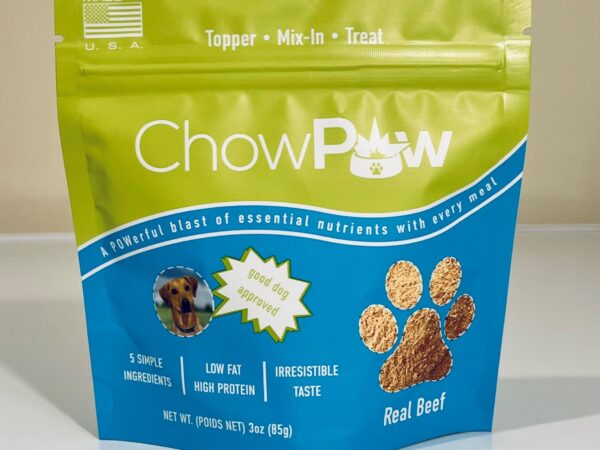 Dog Food Topper - Beef HeartOriginal price was: $14.99.$10.95Current price is: $10.95. - or subscribe and save up to 20%